



الصفحة 23
الصفحة 23
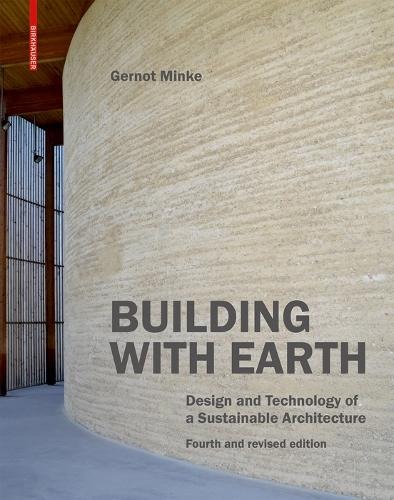
Building with earth : Design and technology of a sustainable architecture
Offers a practical systematic overview of the many uses of earth and techniques for processing it. Its properties and physical characteristics are described in informed and knowledgeable detail. The presentation reflects the rich and varied experiences gained over thirty years of building earth structures all over the world. Numerous photographs of construction sites and drawings show the concrete execution of earth architecture. Documentation of 30 international earth buildings. The characteristics of the building material earth and its applications in modern architecture
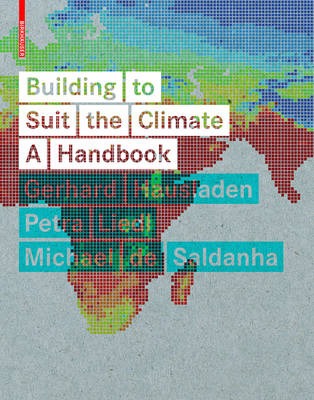
Building to suit the climate : A handbook
Serves as a concrete aid to planning and design. With the planning process as its roadmap, it accompanies the planner from the basic evaluation stage through conception and implementation planning all the way to building operation. The building-related characteristics of the various climatic zones form the basis for the made-to-measure development of integrated building solutions. Well-conceived graphics illustrate planning contexts and facilitate efficient planning decisions and realistic predimensioning. Materials, systems, and technologies are described, and their areas of application are pointed out. Reference parameters, costs, and the presentation of interrelationships equip the planner to make a strategic and well-informed selection.
Building Theories : Architecture as the Art of Building
Discusses the content of treatises, essays, articles, and letters by those who have been, throughout history, committed to the art of building. In this, Building Theories argues for the return of a practice of architectural theory that is set amongst building, buildings, and builders. This journey of close reading reinterprets the words of Vitruvius, Alberti, de L’Orme, Le Camus de Mézières, Boullée, Laugier, Rondelet, Semper, Viollet-le-Duc, Hübsch, Bötticher, Berlage, Muthesius, Wagner, Behrendt, Gropius, and Arup. With chapters dedicated to texts from antiquity, the Renaissance, and the nineteenth century, and with a critical eye on architectural theory popularized in the Anglo-Saxon world post-1968, readers are introduced to a wider, more inclusive definition of architectural ideas.
Building systems in interior design
Takes an entirely new approach to teaching this essential topic for Architects, Designers and Building Engineers. Written to prepare students for the real world and packed with practical examples, the book will foster an understanding of specific issues that are critical to those features of technical systems that most directly affect design. The book stresses the ever-present nature of these systems: they are everywhere, all the time. Taking a design oriented view, it outlines what can and cannot be done, and provides the student with the know-how and confidence to defend and promote their design intent when working with other industry professionals.
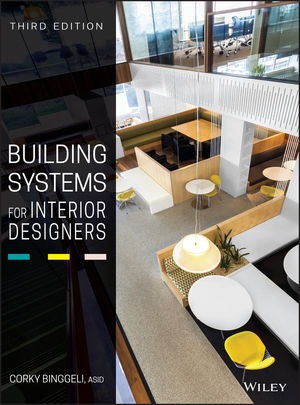
Building Systems for Interior Designers ; 3rd ed.
The ultimate interior designer's guide to building systems and safety Building Systems for Interior Designers, Third Edition is the single-source technical reference that every designer needs, and an ideal solution for NCIDQ exam preparation. Addresses the special concerns of the interior designer within the context of the entire design team. New coverage includes the latest information on sustainable design and energy conservation, expanded coverage of security and building control systems, and a new and expanded art program with over 250 new illustrations. Covering systems from HVAC to water to waste to lighting, this book explains technical building systems and engineering issues in a clear and accessible way to help interior designers communicate more effectively with architects, engineers, and contractors.
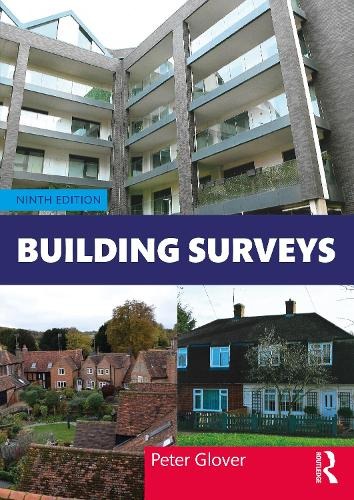
Building Surveys
A trusted guide for both students and professionals for nearly 40 years, evolving to address the challenges and responsibilities of the building surveying role. It covers everything needed for initial inspections such as equipment, know-how and procedures to writing an accurate report. This updated edition features new material on modern methods of construction, new sustainable materials, new surveying technologies, and industry developments in the wake of the Grenfell Fire. Essential reading for building construction students, professional surveyors, and others who may be required to inspect and report on buildings
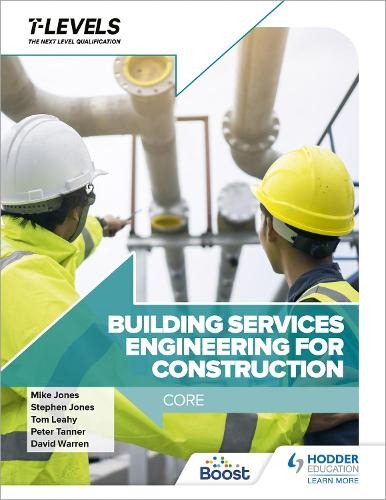
Building services engineering for construction T level: core
Provides complete coverage of the Building Services Engineering for Construction qualification's core units and will equip you with the skills you need to shape your career. - Break down complex topics with summary tables and hundreds of images and artworks - Apply your knowledge in real-world case studies and discover some of the dilemmas you can.
Building Services Design for Energy Efficient Buildings
"The following issues are addressed: background issues on climate change, whole-life performance and design collaboration / generic strategies for energy efficient, low-carbon design / health and wellbeing and post occupancy evaluation / building ventilation / air conditioning and HVAC system selection / thermal energy generation and distribution systems / low-energy approaches for thermal control / electrical systems, data collection, controls and monitoring / building thermal load assessment / building electric power load assessment / space planning and design integration with other disciplines."
Building performance analysis
presents a comprehensive and systematic overview of the subject. It provides a working definition of building performance, and an in-depth discussion of the role building performance plays throughout the building life cycle. The book also explores the perspectives of various stakeholders, the functions of buildings, performance requirements, performance quantification (both predicted and measured), criteria for success, and the challenges of using performance analysis in practice. Assembles the current body of knowledge on building performance analysis in one unique resource Offers deep insights into the complexity of using building performance analysis throughout the entire building life cycle, including design, operation and management Contributes an emergent theory of building performance and its analysis
Building from waste : Recovered materials in architecture and construction
"Reduce, Reuse, Recycle, and Recover" is the sustainable guideline that has replaced the "Take, Make, Waste" attitude of the industrial age. Based on their background at the ETH Zurich and the Future Cities Laboratory in Singapore, the authors provide both a conceptual and practical look into materials and products which use waste as a renewable resource. It looks into innovative concepts of how materials usually regarded as waste can be processed into new construction elements. The products are organized along the manufacturing processes: densified, reconfigured, transformed, designed and cultivated materials.
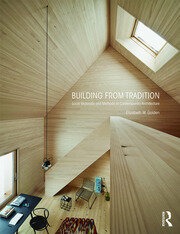
Building from tradition : Local materials and methods in contemporary architecture
Examines the recent resurgence of interest in the handmade building and the use of local and renewable materials in contemporary construction. In the past, raw materials were shaped to provide shelter and to accommodate the cultural, social, and economic needs of individuals and communities. This is still true today as architects, engineers, and builders turn once again to local resources and methods, not simply for constructing buildings, but also as a strategy for supporting social engagement, sustainable development, and cultural continuity. Building from Tradition features global case studies that allow readers to understand how building practices-developed and refined by previous generations-continue to be adapted to suit a broad range of cultural and environmental contexts. The book provides: a survey of historical and technical information about geologic and plant-based materials such as: stone, earth, reed and grass, wood, and bamboo; 24 detailed case studies examining the disadvantages and benefits to using traditional materials and methods and how they are currently being integrated with contemporary construction practices
Building for well-being : Exploring health-focused rating systems for design and construction professionals
The first introduction to health-focused building standards for design and construction professionals. More than a summary of the state of the field, this practical resource guides designers, builders, developers, and owners through considerations for incorporating WELL®, Fitwel®, and other systems from the planning phase to ground-breaking and beyond.Drawing on the authors’ backgrounds in sustainable design and public health, chapters on the evolution of the green building movement and the relationship between health and the built environment provide vital context for understanding health-focused standards and certifications. The final chapter looks toward the future of health and the built environment.

Building design, construction and performance in tropical climates
Outlines: the functional requirements of buildings in tropical climates; the challenges associated with the sustainability of the built environment, building form and whole life performance in the context of a tropical setting; the impact of potentially hostile tropical conditions upon building pathology and the durability of components, structure and fabric; the tasks which face those responsible for appraising the design, condition, maintenance and conservation of built heritage in tropical regions; the facilities management issues faced in tropical climates; and the refurbishment, upgrade and renewal of the tropical built environment.
Building construction methods and systems : principles, requirements and application details
Presents practical information about the design and construction of building projects by addressing the principles of each method, unveiling background factors for requirements, and state-of-the-art application details, and presents general design and application principles of construction methods and technologies without diving into engineering calculations and formulas to keep the content easily understandable by all AEC practitioners and participants.
Building construction illustrated
A leading visual guide to the principles of building construction. Filled with rich illustrations and in-depth content by renowned author Francis D.K. Ching, it offers students and practicing professionals the information needed to understand concepts in residential and commercial construction, architecture, and structural engineering. Includes all new sections on resilient design; diagrids; modular foundation systems; smart façade types and systems; lighting sources and systems; and mass timber materials, cross laminated timber (CLT) and nail laminated timber (NLT) Revised to reflect that latest updates in codes and standards requirements: 2018 International Building Code (IBC), LEED v4, and CSI MasterFormat 2018 Includes updated information on sustainability and green building; insulation materials; stair uses; stoves and inserts; and fire-rated wall and floor assemblies
Building construction and technology
Highlights various aspects of building construction industry based on data from field studies. It discusses the challenges, methodologies, technological applications in building construction, technology, and management. The book presents new approaches to effective building construction and an understanding of the impact of applications of latest technologies.

Building construction : From principle to detail ; Vol.1 : Fundamentals
Construction is the means by which designing architects and engineers transform a design idea into built reality. It is from this perspective that the subject of 'building construction design' is dealt with by the architect José Luis Moro in three comprehensive volumes. Each is dedicated to the methodological, physical and functional fundamentals, the conception of a constructional solution, and finally its implementation in the constructional detail. Not only do the three volumes provide extensive content; they also ensure the greatest possible clarity in the text and graphics, in order to make it easier for learners to access the material. Importantly, they focus not only on conveying technical and scientific information, but also on demonstrating the complex relationships and interactions between design, material and construction.

Building codes illustrated : A guide to understanding the 2018 International Building Code ; 6th ed.
Provides brand new chapters on plumbing fixture counts, elevators, special construction, and existing buildings while updating the remainder of the material to align with recent changes to the IBC. includes: Thorough introductions to navigating the Code, use and occupancy, special uses and occupancies, and building heights and areas / Full explorations of the types of construction, fire resistive construction, interior finishes, fire-protection systems, and means of egress / Practical discussions of accessibility, interior environment, exterior walls, roof assemblies, and structural provisions / In-depth examinations of special inspections and tests, soils and foundations, building materials and systems, and elevators

Building a collaborative project management system: (Click)
Speaking on construction projects, we can imagine the huge amount of work, effort and time spent to complete any project. Because of the need for tools that facilitate the process of managing and tracking work and managing huge data and information and making it common to all the stockholder involved in the project, this system has been found to meet those needs of engineers, where it can manage employees, materials ,workers and the huge amount of data and enables it to track the progress of work .This system provides the possibility of communication between managers and this The system is considered a tool of the BIM system, which stands for Building Information Modeling.
Brilliant light in life and material sciences
This book aim to create a synchrotron radiation facility, CANDLE, as an international laboratory for advanced research in life and material sciences. About 50 researchers from NATO, partner countries and Armenia gathered at Yerevan to discuss modern trends in developments of advanced light sources with high spectral brilliance and applications in basic and applied research in a wide range of fields. Research with high brilliant photon beams are used, for example for practical applications in pharmacy, electronics and nanotechnology. Such practical relevance promoted the design and construction of now more than 50 such facilities worldwide. Overview and specialized talks on the status and highlights of newly constructed light sources (ALBA, SPEAR3, European XFEL Facility, Siberian Synchrotron Radiation Center, CANDLE), on instrumentation and development of experimental techniques, and frontier research in life and material sciences using synchrotron radiation have been presented.
