



الصفحة 23
الصفحة 23

Elementi di fisica teorica = Elements of theoretical physics
The approach in this book is less formal than traditional Theoretical Physics Foundations courses. The goal is still to achieve a genuine understanding of physical concepts and the ability to independently solve problems. The style is conversational, with abundant examples, and the presentation of all important steps is detailed, answering all the questions students typically ask in advance. The author has given space to recent and interesting developments, such as the scanning tunneling microscope and quantum cryptography. He has always sought to explain the rationale behind mathematical manipulations and the physical meaning of all measurable quantities. Above all, he has emphasized the aspects that make Theoretical Physics a science full of practical implications and a particularly fascinating intellectual adventure.

Elementary logic : For software development
This book teaches readers how to better reason about software development, to communicate reasoning, to distinguish between good and bad reasoning, and to read professional literature that presumes knowledge of elementary logic. It explains fundamental concepts and provides reader-friendly instructions for applying logic to software development.

Elementary Functions : Algorithms and Implementation
This unique book provides concepts and background necessary to understand and build algorithms for computing the elementary functions—sine, cosine, tangent, exponentials, and logarithms. The author presents and structures the algorithms, hardware-oriented as well as software-oriented, and also discusses issues related to accurate floating-point implementation. The purpose is not to give "cookbook recipes" that allow one to implement a given function, but rather to provide the reader with tools necessary to build or adapt algorithms for their specific computing environment.

Electronic Devices and Circuit Design : Challenges and Applications in the Internet of Things
Offers a broad view of the challenges of electronic devices and circuits for IoT applications. The book presents the basic concepts and fundamentals behind new low power, high-speed efficient devices, circuits, and systems in addition to CMOS. It provides an understanding of new materials to improve device performance with smaller dimensions and lower costs. It also looks at the new methodologies to enhance system performance and provides key parameters for exploring the devices and circuit performance based on smart applications.

Electron transfer : Mechanisms and applications
Written by one of the top scientists in this field, this is a systematic overview of the fundamental concepts and powerful applications. The author presents the central theories and mechanisms in electron transfer, followed by several systems in nature where this is important, while also covering modern green applications.

Electromagnetic Field Theory for Engineers and Physicists
This established, didactically excellent textbook unifies intuitiveness with extraordinary precision of its terminology and the derivation of concepts. It was developed as manuscript to teach students in electrical engineering, and has served to do so for thousands of students over two decades.

Electromagnetic Compatibility of Integrated Circuits : Techniques for low emission and susceptibility
Electromagnetic Compatibility of Integrated Circuits: Techniques for Low Emission and Susceptibility focuses on the electromagnetic compatibility of integrated circuits. The basic concepts, theory, and an extensive historical review of integrated circuit emission and susceptibility are provided. Standardized measurement methods are detailed through various case studies. EMC models for the core, I/Os, supply network, and packaging are described with applications to conducted switching noise, signal integrity, near-field and radiated noise. Case studies from different companies and research laboratories are presented with in-depth descriptions of the ICs, test set-ups, and comparisons between measurements and simulations. Specific guidelines for achieving low emission and susceptibility derived from the experience of EMC experts are presented.

E-Learning Methodologies : Fundamentals, technologies and applications
Covers state of the art topics including user modeling for e-learning systems and cloud, IOT, and mobile-based frameworks. It also considers security challenges and ethical conduct using Blockchain technology. E-learning has become an important part of our educational life with the development of e-learning systems and platforms and the need for online and remote learning. ICT and computational intelligence techniques are being used to design more intelligent and adaptive systems. However, the art of designing good real-time e-learning systems is difficult as different aspects of learning need to be considered including challenges such as learning rates, involvement, knowledge, qualifications, as well as networking and security issues. The earlier concepts of standalone integrated virtual e-learning systems have been greatly enhanced with emerging technologies such as cloud computing, mobile computing, big data, Internet of Things (IoT), AI and machine learning, and AR/VT technologies.
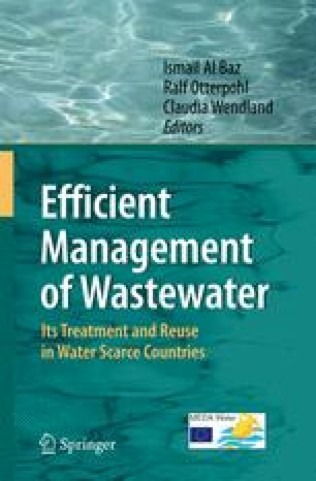
Efficient Management of Wastewater : Its Treatment and Reuse in Water-Scarce Countries
The book highlights non-conventional solutions within the field of wastewater treatment and reuse predominantly for professionals and decision makers. It focuses on technologies like anaerobic and extensive treatment of municipal, domestic wastewater and grey water which are reliable, sustainable, low cost and suitable for rural and sub urban areas. Additionally, particular innovative on site concepts are presented.

Efficient Learning Machines : Theories, Concepts, and Applications for Engineers and System Designers
Machine learning techniques provide cost-effective alternatives to traditional methods for extracting underlying relationships between information and data and for predicting future events by processing existing information to train models. Efficient Learning Machines explores the major topics of machine learning, including knowledge discovery, classifications, genetic algorithms, neural networking, kernel methods, and biologically-inspired techniques.

Education, Arts, and Morality : Creative Journeys
Inspired by Howard Gruber’s Evolving Systems Approach, these studies explore creativity in several domains. The idea that the creative person embodies a system of loosely coupled sub-systems – knowledge, purpose, and affect that work together, is viewed here in different chapters that explore this concept. These include autobiographies of incarcerated youth, curricula for moral and civic responsibility, changing attitudes of readers to text (romance novels), as well as case studies of highly creative individuals, such as George Bernard Shaw. Gruber’s approach provides concepts as well as methodological tools which the authors apply to diverse creative processes.

Economists Mathematical Manual
In particular, we have included some key concepts and results from trade theory, games of incomplete information and combinatorics. In addition there are scattered additions of new formulas in many chapters. Again we are indebted to a number of people who has suggested corrections, - provements and new formulas.

Economics of Accounting : Performance Evaluation
This book Performance Evaluation is divided into four parts. Volume I contains Parts A through D, and the concepts developed in Part A are fundamental to both volumes. In Volume II, Part E initially focuses on optimal contracts in a single-agent /single-task/single-period setting, and explores how performance measure characteristics affect the principal’s expected payoff. Multiple performance measures (including the stock price) and multiple tasks are introduced, thereby creating settings in which the principal is concerned with both the level of incentives and the congruency of the incentives with his own preferences. Part F considers the impact of start-of-period private management information (with communication to the principal) and limited commitment in single-period settings. These analyses serve as a bridge to the multi-period models explored in Part G. These multi-period models permit exploration of the impact of inter-period consumption preferences and limited inter-period commitments on preferences with respect to the inter-period correlation and timing of performance reports. Part H concludes the book with an analysis of multi-agent contracting in settings in which agents may coordinate their actions to their mutual benefit, and may even engage in overt collusion.

E-Commerce : Concepts, Principles, and Application
Discusses the background of e-commerce, the basic knowledge of e-commerce, the basic models of e-commerce, the basic principles of e-commerce and the cases of e-commerce. This book has formed a theoretical system of e-commerce with a clear integration boundary. The introduction of the systematic theory is guided by the background of e-commerce, centered on the model of e-commerce, paved with the principles of e-commerce and integrated with the cutting-edge cases.

Ecological Informatics : Scope, Techniques and Applications
Ecological Informatics promotes interdisciplinary research between ecology and computer science on elucidation of principles of information processing in ecosystems, ecological sustainability by informed decision making, and bio-inspired computation. The 2nd edition of the book consolidates the scope, concepts, and techniques of this newly emerging discipline by a new preface and additional chapters on cellular automata, qualitative reasoning, hybrid evolutionary algorithms and artificial neural networks. It illustrates numerous applications of Ecological Informatics for aquatic and terrestrial ecosystems, image recognition at micro- and macro-scale as well as computer hardware design.

E-CARGO and role-based collaboration : Modeling and solving problems in the complex
A model for collaboratively solving complex problems Explains the nature of collaboration, explores an easy-to-follow process of collaboration, and defines a model to solve complex problems in collaboration and complex systems. Written by a noted expert on the topic, the book initiates the study of an effective collaborative system from a novel perspective. The role-based collaboration (RBC) methodology investigates the most important aspects of a variety of collaborative systems including societal-technical systems. The models and algorithms can also be applied across system engineering, production, and management. Contains a set of concepts, models, and algorithms for the analysis, design, implementation, maintenance, and assessment of a complex system Presents computational methods that use roles as a primary underlying mechanism to facilitate collaborative activities including role assignment Explores the RBC methodology that concentrates on the aspects that can be handled by individuals to establish a well-formed team Offers an authoritative book written by a noted expert on the topic

Early Nutrition and its Later Consequences : New Opportunities; Perinatal Programming of Adult Health - EC Supported Research
Health problems such as hypertension, tendency to diabetes, obesity, blood lipids, vascular disease, bone health, behaviour and learning and longevity may be ‘imprinted’ during early life. This process is defined as ‘programming’ whereby a nutritional stimulus operating at a critical, sensitive period of pre and postnatal life imprints permanent effects on the structure, physiology and metabolism. For this reason, academics and industry set-up the EC supported Scientific Workshop -Early Nutrition and its Later Consequences: New Opportunities. The prime objective of the Workshop was to generate a sound exchange of the latest scientific developments within the field of early nutrition to look for opportunities for new preventive health concepts. Further, a closer look was taken at the development of food applications which could provide (future) mothers and infants with improved nutrition that will ultimately lead to better future health. The Workshop was organised by the Dept. of Pediatrics, University of Munich, Germany in collaboration with the Danone Institutes and the Infant Nutrition Cluster, a collaboration of three large research projects funded by the EU.

Dynamics of soils and their engineering applications
Offers systematic dynamic analysis of soils and their engineering applications, including machine foundations, and aims to develop a clear understanding of the subject. It comprises sixteen chapters. Chapter 1 introduces the reader to the various problems in soil dynamics. In Chapter 2, concepts of theory of vibrations are discussed along with their applications in designing Vibration Absorbers and Pickups. Wave propagation in elastic medium including wave refraction in layered medium is covered in Chapter 3. Chapter 4 deals with the procedure of determining dynamic properties of soils using various laboratory and field tests. Dynamic earth pressures in retaining walls and dynamic bearing capacity of footings are dealt with in Chapters 5 and 6 respectively

Dynamical Systems : Examples of Complex Behaviour
Our aim is to introduce, explain, and discuss the fundamental problems, ideas, concepts, results, and methods of the theory of dynamical systems and to show how they can be used in specific examples. Itis also important to find out when a certain dynamic behavior is stable under small perturbations, as well as to understand the various scenarios of instability. Finally, an essential aspect of a dynamic evolution is the transformation of some given initial state into some final or asymptotic state as time proceeds. The temporal evolution of a dynamical system maybe continuous or discrete, but it turns out that many of the concepts to be introduced a reuseful in either case.

Dynamical Oceanography
This textbook provides a mathematical introduction to the theory of large-scale ocean circulation and is accessible for readers with an elementary knowledge of mathematics and physics, including continuum mechanics and solution methods for ordinary differential equations. The book consists of four parts. Part I (chapters 1 - 4) is a very brief introduction to ocean circulation and the mathematical formulation of the governing equations of ocean flows. In addition, concepts are introduced that are necessary to describe and understand large-scale ocean currents. In part II (chapters 5 - 10), the theory of mid-latitude wind-driven ocean circulation is presented. Part III (chapters 11 - 12) focuses on the understanding of equatorial currents and El Nino. In the last part IV, chapters 13 - 16, the theory of planetary scale flows is presented, covering topics such as the thermocline problem, the Antarctic Circumpolar Current, the stability of the thermohaline circulation and the Arctic Ocean circulation.
