



الصفحة 22
الصفحة 22

Computer Algebra Recipes for Mathematical Physics
Over two hundred novel and innovative computer algebra worksheets or ""recipes"" will enable readers in engineering, physics, and mathematics to easily and rapidly solve and explore most problems they encounter in their mathematical physics studies. While the aim of this text is to illustrate applications, a brief synopsis of the fundamentals for each topic is presented, the topics being organized to correlate with those found in traditional mathematical physics texts. The recipes are presented in the form of stories and anecdotes, a pedagogical approach that makes a mathematically challenging subject easier and more fun to learn.

Computer Algebra Recipes : An Introductory Guide to the Mathematical Models of Science
Computer algebra systems are revolutionizing the teaching, the learning, and the exploration of science. Not only can students and researchers work through mathematical models more efficiently and with fewer errors than with pencil and paper, they can also easily explore, both analytically and numerically, more complex and computationally intensive models. Aimed at science and engineering undergraduates at the sophomore/junior level, this introductory guide to the mathematical models of science is filled with examples from a wide variety of disciplines, including biology, economics, medicine, engineering, game theory, mathematics, physics, and chemistry.

Computer Algebra Recipes : An Advanced Guide to Scientific Modeling
The text is built around a large number of computer algebra worksheets or "recipes" that have been designed using MAPLE to provide tools for problem solving and to stimulate critical thinking.
Computational studies of RNA and DNA
Computational Studies of RNA and DNA includes, in an integrated way, modern computational studies of nucleic acids, ranging from advanced electronic structure quantum chemical calculations through explicit solvent molecular dynamics (MD) simulations up to mesoscopic modelling, with the main focus given to the MD field. It gives an equal emphasis to the leading methods and applications while successes as well as pitfalls of the computational techniques are discussed.The systems and problems studied include: Accurate calculations of base pairing energies / Electronic properties of nucleic acids and electron transfer, through various types of nucleic acid / Calculating DNA elasticity

Computational intelligence for agent-based systems
In these last years the digital technology explosion has spawned so many new lifestyle models that the boundaries between "real" and "digital" are fiercely debated. This scenario has deeply changed the viewpoint about computer applications: computers become smaller, cheapest and hugely distributed in wired or unwired networks, applications become so flexible and intelligent as to tailor its communication facilities in order to increase the usability of the system. Such data-intensive, unstructured spaces featured by minimal or no centralized control flow, present a challenge for traditional methods of analysis, design and integration of advanced, distributed and intelligent computer systems. Within this challenge, an important role is played by two important research areas : Fuzzy Technology, thanks to its ability to exploit the tolerance for imprecision to achieve tractability and Agent Technology, thanks to its nature to employ agent-wise communities to carry out complex goals by means of smart interaction, cooperation, and pro-activeness.

Command-Line Rust : A Project-Based Primer for Writing Rust CLIs
Rather than focusing on the language as a whole, this guide teaches Rust using a single small, complete, focused program in each chapter. Author Ken Youens-Clark shows you how to start, write, and test each of these programs to create a finished product. You'll learn how to handle errors in Rust, read and write files, and use regular expressions, Rust types, structs, and more.

Collective Beings
With collective behaviors playing a fundamental role in many scientific and technical disciplines, COLLECTIVE BEINGS focuses its attention on socio-economic applications to be used, the book provides the reader with deep insights into modern conceptual tools of economy based on systemics.

Coastal architectures and politics of tourism : Leisurescapes in the global sunbelt
Offers a critical and complicated picture of how leisure tourism connected the world after the World War II, transforming coastal lands, traditional societies, and national economies in new ways. Analyzes selected case studies of architectures and landscapes around the world, contextualizing them within economic geographies of national development, the geopolitics of the Cold War, the legacies of colonialism, and the international dynamics of decolonization. Postwar leisure tourism evokes a rich array of architectural spaces and altered coastal landscapes, which is explored in this collection through discussions of tourism developments in the Mediterranean littoral, such as Greece, Turkey, and southern France, as well as compelling analyses of Soviet bloc seaside resorts along the Black Sea and Baltic coasts, and in beachscapes and tourism architectures of western and eastern hemispheres, from Southern California to Sri Lanka, South Korea, and Egypt.

Cloud Optics
Clouds affect the climate of the Earth, and they are an important factor in the weather. Therefore, their radiative properties must be understood in great detail. This book summarizes current knowledge on cloud optical properties, for example their ability to absorb, transmit, and reflect light, which depends on the clouds’ geometrical and microphysical characteristics such as sizes of droplets and crystals, their shapes, and structures. In addition, problems related to the image transfer through clouds and cloud remote sensing are addressed in this book in great detail. This book can be an important source of information on theoretical cloud optics for cloud physicists, meteorologists and optical engineers.

Closed-Loop Control of Blood Glucose
Introduces the ?eld of closed-loop blood g- cose control, in a simple manner, to the reader. This includes the hardware and software components that make up the control system (see Chapter 2). The hardware components involved the di?erent types of glucose sensor (- vasive, minimally-invasive and non-invasive) and the di?erent types of insulin.

Clinical Ultrasound in Benign Proctology : 2-D and 3-D Anal, Vaginal and Transperineal Techniques
Anal US may provide the clinician with useful information for both classification, diagnosis and management of anorectal sepsis, anal incontinence and anorectal-perineal chronic pain. Almost any case presented in this Atlas shows both imaging and clinical pictures, thus allowing both the radiologist and the clinician to assess the reliability of the exam and the outcome of the selected treatment.
Maritime Archaeology and Social Relations : British Action in the Southern Hemisphere
This book goes beyond a descriptive analysis of wrecks by exploring them and their cargoes as embodiments of 18th century social relations. Maritime Archaeology and Social Relations challenges traditional maritime approaches providing a different perspective that emphasises the richness, diversity and complexity of British action.By applying the concept of praxis, British action is integrated in both land and maritime spaces. A closer look into the associated experienced landscapes enhances our understanding of how social identities were projected at local and global levels.
Marine, Freshwater, and Wetlands Biodiversity
Marine, coastal and wetland habitats are threatened, not only through exploitation, but also by the prospect of climate change – as ocean currents change course, sea levels rise, and rainfall patterns change. Even the once-common cod is now under threat from the combined effects of over-fishing and a dramatic change-induced decrease in the plankton that cod larvae feed on. Meanwhile, coral reefs remain especially vulnerable to rapid sea-level changes exacerbated by the effects of tourism and disease. This book gathers together a wide range of papers reporting on key research into the biodiversity conservation of these critical and increasingly threatened habitats. Collectively these papers provide a snap-shot of the types of problems they are experiencing, and offer a wealth of topical examples which render this volume especially valuable to teachers of courses in marine, freshwater and wetlands ecology, biological conservation and ecological restoration.
Marine Organic Matter : Biomarkers, Isotopes and DNA
The oceans contain a great biodiversity of marine organisms. They include a rich variety of unusual genes and biochemistries and hence a diverse array of organic compounds ranging from colourful carotenoids and chlorophylls to lipids with structures ranging from the simple to the complex. This volume brings together ten chapters on the occurrence and identification of the lipid biomarkers and of pigments in marine waters. It describes how they can be used in conjunction with stable isotopes and molecular biology to ascertain the sources and fate of organic matter (both natural and pollutant) in the sea and underlying sediments. The authors are each experts in their field and the chapters provide both an overview of the state-of-the-art and knowledge gaps together with abundant detail to satisfy the needs of specialists and non-specialists alike.
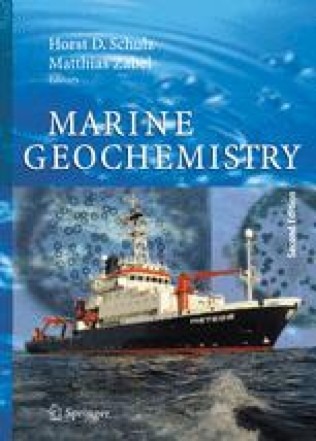
Marine Geochemistry
Since 1980 a considerable amount of scientific research dealing with geochemical processes in marine sediments has been carried out. This textbook summarizes the state of the art in this field of research. The topics comprise the examination of sedimentological and physical properties of the sedimentary solid phase, of pore water and pore water constituents, organic matter as the driving force of most microbiological processes, biotic and abiotic redox reactions, carbonates and stable isotopes as proxies for paleoclimate reconstruction, metal enrichments in ferromanganese nodules and crusts as well as in hot vents and cold seeps on the seafloor. A new chapter describes properties, occurrence and formation of gas hydrates in marine sediments. The textbook ends with a chapter on model conceptions and computer models to quantify processes of early diagenesis.
Map-based Mobile Services : Design, Interaction and Usability
It addresses methods and techniques for topics that range from design and rendering, context modelling, personalisation, multimodal interaction to usability test. Instead of striving for a seamless coverage of all essential theoretical and technical issues with an equal depth and extent, we attempt to pinpoint a number of research highlights and representative development activities at universities, research institutions and so- ware industry. The operational prototypes and platforms reported in the book are on the one hand outcome and feasibility proof of various approaches. On the other hand, they serve as a new starting point for the refinement of user interfaces and iterative usability tests.

Manipulating Quantum Coherence in Solid State Systems
Presents a fundamental introduction to three solid-state approaches to achieving quantum computation: semiconductor spin-based, semiconductor charge-based, and superconducting approaches.
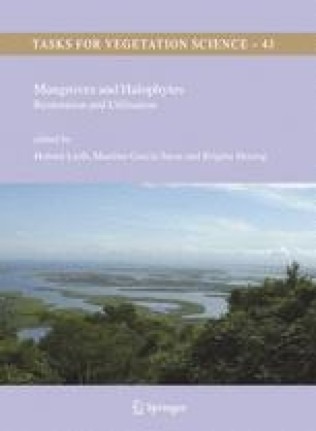
Mangroves and Halophytes : Restoration and Utilisation
Focusing on Venezuela and Mexico, this edited volume from the International Society of Halophyte Utilisation (ISHU) explores the environmental issues facing South and Central America's coastal ecosystems, and discusses the uses of mangrove species and other halophytes in addressing issues of both coastal pollution and upland soil salinisation. The book draws on expertise from Europe and South America to present a series of case studies that detail Venezuela’s saline ecosystems and examine the economic potential of mangrove restoration and halophyte production. It includes cutting-edge research into the establishment of new mangrove stands which could serve as prototypes for the sustainable use of halophytes, including Chenopodium quinoa and Tamarix aphylla. Moreover, the detailed examples from Venezuela and other Caribbean countries provide useful models for comparison with halophyte utilisation in other parts of the world – especially the Mediterranean region, where much of the earlier research of the ISHU had been conducted.
Managing Your Headaches
Frequent headaches seriously affect the lives of millions of sufferers. The result can be lost productivity and income, restrict activity, lower self-esteem, and even social isolation. For many, it takes years to find the appropriate medication to manage your headaches effectively. In Managing Your Headaches, Mark and Leah Green and John Rothrock explain what information you should record for your physician, what a physician is looking for in a neurological examination, and what you should (and should not) do to reduce the frequency and severity of your headaches. They discuss the effects of stress, psychological factors, possible food triggers, and environmental risk factors. The authors explain the symptoms of migraine, cluster, and tension-type headaches as well as less common types. They address common concerns and misconceptions and explain current knowledge about headache causes in understandable terms. The newest, most effective medications and their possible side effects are evaluated. The authors also explain how to prevent rebound headaches from over-medications and how non-medical treatments can be of value. Managing Your Headaches will tell you what you need to know to better control your headaches. Armed with the information in this book, you can be aware of the latest treatment options and can have more productive, informed discussions with your physician.
Managing Socio-ecological Production Landscapes and Seascapes for Sustainable Communities in Asia : Mapping and Navigating Stakeholders, Policy and Action
This book presents up-to-date analyses of community-based approaches to sustainable resource management of SEPLS (socio-ecological production landscapes and seascapes) in areas where a harmonious relationship between the natural environment and the people who inhabit it is essential to ensure community and environmental well-being as well as to build resilience in the ecosystems that support this well-being.
