



الصفحة 22
الصفحة 22

Collider Physics within the Standard Model : A Primer
In 2013 the late Prof. Altarelli wrote: The discovery of the Higgs boson and the non-observation of new particles or exotic phenomena have made a big step towards completing the experimental confirmation of the standard model of fundamental particle interactions. It is thus a good moment for me to collect, update and improve my graduate lecture notes on quantum chromodynamics and the theory of electroweak interactions, with main focus on collider physics. I hope that these lectures can provide an introduction to the subject for the interested reader, assumed to be already familiar with quantum field theory and some basic facts in elementary particle physics as taught in undergraduate courses.

Collective Phenomena in Synchrotron Radiation Sources : Prediction, Diagnostics, Countermeasures
This book helps to dispel the notion that collective phenomena, which have become increasingly important in modern storage rings, are an obscure and inaccessible topic. Despite an emphasis on synchrotron light sources, the basic concepts presented here are valid for other facilities as well. Graduate students, scientists and engineers working in an accelerator environment will find this to be a systematic exposition of the principles behind collective instabilities and lifetime-limiting effects. Experimental methods to identify and characterize collective effects are also surveyed. Among other measures to improve the performance of a projected or existing facility, a detailed account of feedback control of instabilities is given.

Collective Dynamics of Nonlinear and Disordered Systems
Phase transitions in disordered systems and related dynamical phenomena are a topic of intrinsically high interest in theoretical and experimental physics. This book presents a unified view, adopting concepts from each of the disjoint fields of disordered systems and nonlinear dynamics. Special attention is paid to the glass transition, from both experimental and theoretical viewpoints, to modern concepts of pattern formation, and to the application of the concepts of dynamical systems for understanding equilibrium and nonequilibrium properties of fluids and solids. The content is accessible to graduate students, but will also be of benefit to specialists, since the presentation extends as far as the topics of ongoing research work.

Collaborative Product Design and Manufacturing Methodologies and Applications
Collaborative Product Design and Manufacturing Methodologies and Applications is an introduction to a wide spectrum of collaborative engineering issues in design and manufacturing. It contains state-of-the-art chapters written by international experts from academia and industry and reflects the most up-to-date R&D work and applications, especially those from the last three to five years. Collaborative Product Design and Manufacturing Methodologies and Applications is an essential reference for academics, upper-level undergraduate and graduate students and practitioners specialising in collaborative design and manufacturing issues, concurrent engineering, Internet-based/intelligent design and manufacturing, CAD/PDM/CAPP/CAM, Internet applications, product lifecycle management, supply chain, etc.

Cold Micro Metal Forming : Research Report of the Collaborative Research Center “Micro Cold Forming” (SFB 747), Bremen, Germany
This book contains the research report of the Collaborative Research Center “Micro Cold Forming” (SFB 747) of the University of Bremen, Germany. The topical research focus lies on new methods and processes for a mastered mass production of micro parts which are smaller than 1mm (by forming in batch size higher than one million). The target audience primarily comprises research experts and practitioners in production engineering, but the book may also be of interest to graduate students alike.

Coherent Semiconductor Optics : From Basic Concepts to Nanostructure Applications
This book introduces the basic theoretical concepts required for the analysis of the optical response of semiconductor systems in the coherent regime. The entire presentation is based on a one-dimensional tight-binding model. Starting with discrete-level systems, increasing complexity is added gradually to the model by including band-structure and many-particle interaction.

Coherent Dynamics of Complex Quantum Systems
A large number of modern problems in physics, chemistry, and quantum electronics require a consideration of population dynamics in complex multilevel quantum systems. The purpose of this book is to provide a systematic treatment of these questions and to present a number of exactly solvable problems. It considers the different dynamical problems frequently encountered in different areas of physics from the same perspective, based mainly on the fundamental ideas of group theory and on the idea of ensemble average. Also treated are concepts of complete quantum control and correction of decoherence induced errors that are complementary to the idea of ensemble average. "Coherent Dynamics of Complex Quantum Systems" is aimed at senior-level undergraduate students in the areas of Atomic, Molecular, and Laser Physics, Physical Chemistry, Quantum Optics and Quantum Informatics. It should help them put particular problems in these fields into a broader scientific context and thereby take advantage of the well-elaborated technique of the adjacent fields.

Cloud Native Architecture and Design : A Handbook for Modern Day Architecture and Design with Enterprise-Grade Examples
Explains the fundamentals of cloud-native architecture and services, what cloud principles and patterns to use, and details of designing a cloud-native element. And Progresses to cover the details of how IT systems can modernize to embrace cloud-native architecture, and also provides details of various enterprise assessment techniques to decide what systems can move and cannot move into the cloud. Architecting and designing a cloud-native system isn’t possible without modernized software engineering principles, the culture of automation, and the culture of innovation. As such, this book covers the details of cloud-native software engineering methodologies, and process, and how to adopt an automated governance approach across enterprises with the adoption of artificial intelligence. You will: Discover cloud-native principles and patterns, and how you can leverage them to solve your business problems ; Gain the techniques and concepts you need to adapt to design a cloud-native application ; Use assessment techniques and tools for IT modernization ; Apply cloud-native engineering principles to the culture of automation and culture of innovation ; Harness the techniques and tools to run your cloud-native applications and automate infrastructure ; Operate your cloud-native applications by using AI techniques and zero operation techniques

Cloud Computing Solutions : Architecture, Data Storage, Implementation, and Security
Includes all the cloud-related technologies in a single platform, so that researchers, academicians, postgraduate students, and those in the industry can easily understand the cloud-based ecosystems. Discusses the evolution of cloud computing through grid computing and cluster computing. It will help researchers and practitioners to understand grid and distributed computing cloud infrastructure, virtual machines, virtualization, live migration, scheduling techniques, auditing concept, security and privacy, business models, and case studies through the state-of-the-art cloud computing countermeasures. The topics treated in the book include:The evolution of cloud computing from grid computing, cluster computing, and distributed systems / Covers cloud computing and virtualization environments / Discusses live migration, database, auditing, and applications as part of the materials related to cloud computing / Provides concepts of cloud storage, cloud strategy planning, and management, cloud security, and privacy issues / Explains complex concepts clearly and covers information for advanced users and beginners.

Clinical Pharmacology of Sleep
This volume covers the clinical and pharmacological treatment of several important sleep disorders such as insomnia, sleep apnea, narcolepsy, restless legs syndrome, and periodic limb movement syndrome. It further addresses the use of sleep medications in children, adolescents, and in the elderly. It offers a comprehensive overview of the currently available hypnotic medications and covers aspects of chronopharmacology and its implications for the pharmacology of sleep. It also reviews the basic science of sleep and sleep disorders, and thus the potential development of new pharmacological approaches. The book will be useful for physicians, psychopharmacologists, psychiatrists, sleep disorder specialists and other healthcare professionals such as nurses, social workers and graduate medical students.
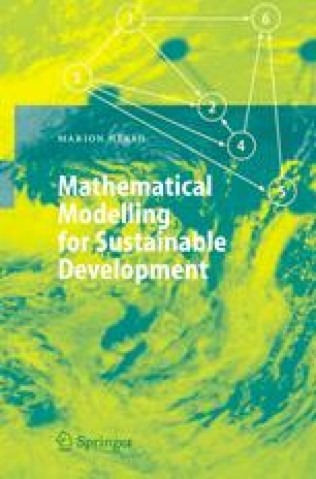
Mathematical Modelling for Sustainable Development
Mathematics needs Sustainable Development. When science was gradually reinvented in European medieval societies, it was legitimised as contributing to the disclosure of God’s divine creation. The conflicts that emerged became well known as a result of the clash between Galileo and the Church. Science found a new legitimacy through recognition that it was a powerful force against superstition. In the Enlightenment the argument was pushed forward by attributing Progress to the advancement of science: science could produce a better world by promoting rationality. In our modern society, science has become intimately linked to technology. Science for its own sake unfortunately rarely has positive outcomes in terms of research grant applications. Meanwhile, science and technology, and the progress they are supposed to produce, meet with wide scale scepticism. We all know of the current global problems: climate change, resource depletion, a thinning ozone layer, space debris, declining biodiversity, malnutrition, dying ecosystems, global inequity, and the risk of unprecedented nuclear wars
Mathematical Modeling, Simulation, Visualization and e-Learning ; Proceedings of an International Workshop held at Rockefeller Foundation' s Bellagio Conference Center, Milan, Italy, 2006
This book is a collection of articles written by some of the most prominent leading applied mathematicians, as well as articles from young and promising scientists from Africa, Asia and Europe. The common objective of these articles is to present an important issue which is currently widely discussed in scientific investigation with major human, economic or ecological implications. One main feature of the series, which the current book exemplifies, is that each article is as deep as an expert lecture but is also self-contained, so that even isolated scientists with limited resources can profit greatly from it. Another feature of this book is that each article is meant to present a collection of open questions which can fuel undergraduate or graduate research activities even in smaller or more isolated scientific communities.

Mathematical Implications of Einstein-Weyl Causality
The present work is the first systematic attempt at answering the following fundamental question: what mathematical structures does Einstein-Weyl causality impose on a point-set that has no other previous structure defined on it? The authors propose an axiomatization of Einstein-Weyl causality (inspired by physics), and investigate the topological and uniform structures that it implies. Their final result is that a causal space is densely embedded in one that is locally a differentiable manifold. The mathematical level required of the reader is that of the graduate student in mathematical physics.
Mathematical Formulas for Economists
The present collection of formulas has been composed for students of economics or management science at universities, colleges and trade schools. It contains basic knowledge in mathematics, financial mathematics and statistics in a compact and clearly arranged form. This volume is meant to be a reference work to be used by students of undergraduate courses together with a textbook and by researchers in need of exact statements of mathematical results. People dealing with practical or applied problems will also find this collection to be an efficient and easy-to-use work of reference.
Materials science for dentistry
A standard resource for undergraduate and postgraduate courses in dentistry. It provides fundamental coverage of the materials on which dentistry depends, covering the structure and chemistry that govern the behavior and performance of materials. Particular classes of materials include gypsum, polymers, acrylic, cements, waxes, ceramics and metals. Other chapters review surfaces, corrosion, mixing, casting, cutting and bonding, and mechanical testing. This updated edition, which includes substantial chapters on chemistry, has been extensively revised with new material on temporary restoration resins, hydraulic silicate cements and the practical aspects of wetting surfaces. Mindfully written to provide explanations for behavior, formulation, clinical and laboratory instructions and procedures, there is no comparable resource for researchers, students, teachers and practitioners in the field of dentistry.
Materials for Tomorrow : Theory, Experiments and Modelling
This book contains six chapters on central topics in materials science. Each is written by specialists in the field, and gives a state-of-the-art presentation of the subject for graduate students and scientists not necessarily working in that field. Computer simulations of new materials, theory and experimental work are all extensively discussed. As nanomaterials are of great current interest, most of the topics discussed have a bearing on nanomaterials and nanodevices. In addition to inorganic nanotubes, metallic nanocrystals, electronic nanodevices, spintronics and interfaces on an atomic scale, the text also presents computer simulations on one of the less well understood fields in solid-state physics and materials science: glasses and undercooled fluids.

Materials for Springs
“Materials for springs” is basically intended for engineers related to spring materials and technologies who graduated from metallurgical or mechanical engineering courses in technical high school, or in other higher engineering schools, as well as those who are related to the purchase or sales of spring materials. The first chapter introduces into the fundamental selection processes of spring materials including the information sources on materials database. It is followed by the basic mechanisms and theories of spring failures such as fatigue fracture, creep/stress relaxation and stress corrosion cracking of metallic materials.

Material Inhomogeneities and their Evolution : A Geometric Approach
The first part of the book deals with the geometrical description of uniform bodies and their homogeneity (i.e., integrability) conditions. In the second part, a theory of material evolution is developed and its relevance in various applied contexts discussed. The necessary geometrical notions are introduced as needed in the first two parts but often without due attention to an uncompromising mathematical rigour. This task is left for the third part of the book, which is a highly technical compendium of those concepts of modern differential geometry that are invoked in the first two parts (differentiable manifolds, Lie groups, jets, principal fibre bundles, G-structures, connections, frame bundles, integrable prolongations, groupoids, etc.).

Mastering Your PhD : Survival and Success in the Doctoral Years and Beyond
Mastering your PhD" helps guide PhD students through their graduate student days. Filled with practical advice on getting started, communicating with your supervisor, staying the course, and planning for the future, this book is a handy guide for graduate students who need that extra bit of help getting started and making it through. Every year, thousands of students around the world embark on the long and difficult journey toward a PhD. Some of these students will make it through their program with flying colors. Others will experience difficulty getting to the end: some will sink and some will manage to swim – barely. The doctoral years can be daunting. While mainly directed to PhD students in the sciences, the book's scope is broad enough to encompass the obstacles and hurdles that almost all PhD students face at some point in their doctoral training. Who should read this book? Students of the physical and life sciences, computer science, math, and medicine thinking about entering a PhD program, doctoral students at the beginning of their research and any graduate student who is feeling frustrated and stuck. It’s never too early or too late
Master dentistry ; Vol.2 : Restorative dentistry, paediatric dentistry and orthodontics
Provides a comprehensive overview of core elements of restorative adult and paediatric dentistry that students will need in order to pass their final exams. Edited by Professor Giles McCracken, the book provides key details and an overall broad summary of the multiple facets of restorative dentistry, pediatric dentistry and orthodontics. It includes conscious sedation, anxiety management and how law, ethics and professionalism interface with the delivery of dentistry. The book has been fully updated to include developments in restorative dentistry, the latest materials and new technology, and is ideal for undergraduate students, vocational trainees and those preparing for post-graduate examinations.
