



الصفحة 22
الصفحة 22
Challenges for Central Banks in an Enlarged EMU
In this book, a set of internationally renowned economists from both sides of the Atlantic analyse the challenges that lie in front of the EU as it used to be, the hurdles that have to be cleared by possible candidates, and the impact of these developments on important economic sectors like the financial markets, etc. The scientists are supported by Central Bankers from current and future Euro-zone members who give their views on the problems and chances of Euro-accession. The book is thus providing an overall view of the major developments regarding the Euro in the years to come.

Central European Functional Programming School ; 1st Central European Summer School, CEFP 2005, Budapest, Hungary, July 4-15, 2005, Revised Selected Lectures
This volume presents eight carefully revised texts of selected lectures given by leading researchers of the field at the first Central European Functional Programming School, CEFP 2005, held in Budapest, Hungary, in July 2005. The eight revised full papers presented were carefully selected during two rounds of reviewing and improvement for inclusion in the book. The lectures cover a wide range of topics such as new programming language concepts for subtyping.
Central European Functional Programming School : 2nd Summer School, CEFP 2007, Cluj-Napoca, Romania, June 23-30, 2007, Revised Selected Lectures
This volume presents texts from selected lectures given by leading researchers at the Second Central European Functional Programming School, CEFP 2007, held in Cluj-Napoca, Romania, in June 2007.
Cells and Robots : Modeling and Control of Large-Size Agent Populations
Cells and Robots is an outcome of the multidisciplinary research extending over Biology, Robotics and Hybrid Systems Theory. It is inspired by modeling reactive behavior of the immune system cell population, where each cell is considered as an independent agent. In our modeling approach, there is no difference if the cells are naturally or artificially created agents, such as robots. This appears even more evident when we introduce a case study concerning a large-size robotic population scenario. Under this scenario, we also formulate the optimal control of maximizing the probability of robotic presence in a given region and discuss the application of the Minimum Principle for partial differential equations to this problem. Simultaneous consideration of cell and robotic populations is of mutual benefit for Biology and Robotics, as well as for the general understanding of multi-agent system dynamics.The text of this monograph is based on the PhD thesis of the first author. The work was a runner-up for the fifth edition of the Georges Giralt Award for the best European PhD thesis in Robotics, annually awarded by the European Robotics Research Network (EURON).
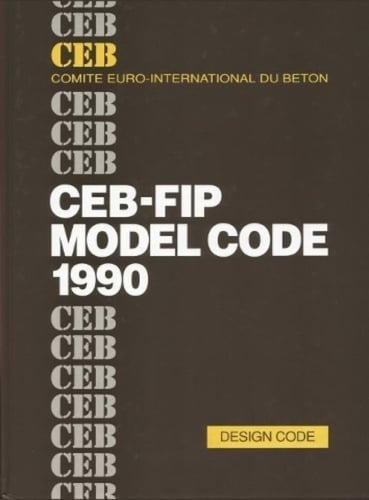
CEB-FIP Model code 1990 : Design code
This document is a comprehensive design code for concrete. It is the result of a comprehensive revision to the original model code of 1978, which was produced jointly by the Comite Euro-International du Beton (CEB) and the Federation Internationale de la Precontrainte (FIP). Model Code 1990 has more detailed guidelines and explanations than national codes and can be used as a basis for them. It has already influenced the codification work that is being carried out both nationally and internationally and will continue to do so. With the publication of Eurocode 2: Part 1 as a draft pre-standard, this document is a useful reference during the consultative period before Eurocode 2 becomes a European standard. It may be of use to anyone involved in codification work on concrete.
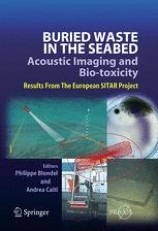
Buried Waste in the Seabed – Acoustic Imaging and Bio-Toxicity : Results from the European SITAR Project
Buried waste on the seabed is a major source of pollution. But, very often, waste sites are not known until a serious problem occurs, or are not adequately mapped. Recent examples around Europe include WWI and WWII ammunition dump sites (e.g. Beufort Dyke in the UK), dumped nuclear submarines in the Arctic Seas, clandestine or hidden toxic-waste in the Baltic Sea and the North Sea.. Even if properly documented, waste sites evolve with time (dumped material can move with currents and tides, especially on a scale of decades; toxic-material barrels can corrode and leak). This book shows the results of a concerted EU-funded effort to tackle this problem and find innovative ways to identify and map toxic waste sites ona the seabed, whether they have been covered with sediments or not. These results are applicable to any region on the seabed in the entire world.

Broadband in Europe: How Brussels Can Wire the Information Society
Broadband is a key enabler of the information society, increasing productivity and competitiveness across all sectors of the economy. Unlike traditional n- rowband connections, broadband provides high speed, always-on connections to the Internet and supports innovative content and services. Direct consumer welfare gains from mass-market adoption of broadband across the EU could easily reach 50 billion euros or more per annum. This is quite apart from the more profound societal shifts that ubiquitous broadband could bring. It may allow the individual to distribute content and ideas independent of traditional media and bring together communities of interest without regard to borders. Public policy for broadband will have a big impact on whether and how quickly these benefits are realised. Getting policy right could bring large benefits for consumers.
Bringing the Jobless into Work? : Experiences with Activation Schemes in Europe and the US
Over the last decade, many industrialized countries shifted from passive unemployment and welfare benefit regimes and traditional active labor market and social policies to activation strategies by making benefit receipt conditional upon accepting job offers or participation in active labor market schemes. But countries differ with regard to the design of activation instruments and their implementation, the definition of target groups and the effects of activation in the national labor market setting. This volume provides an up-to-date overview of activation strategies in unemployment benefit systems and social assistance in selected European countries and the US. A particular focus lies on the development of activation schemes, governance and implementation as well as on the outcomes of activation in terms of labor market and social integration. The volume is the first to address these issues both from a socio-economic and a legal perspective.
Brilliant light in life and material sciences
This book aim to create a synchrotron radiation facility, CANDLE, as an international laboratory for advanced research in life and material sciences. About 50 researchers from NATO, partner countries and Armenia gathered at Yerevan to discuss modern trends in developments of advanced light sources with high spectral brilliance and applications in basic and applied research in a wide range of fields. Research with high brilliant photon beams are used, for example for practical applications in pharmacy, electronics and nanotechnology. Such practical relevance promoted the design and construction of now more than 50 such facilities worldwide. Overview and specialized talks on the status and highlights of newly constructed light sources (ALBA, SPEAR3, European XFEL Facility, Siberian Synchrotron Radiation Center, CANDLE), on instrumentation and development of experimental techniques, and frontier research in life and material sciences using synchrotron radiation have been presented.

Brexit and the Control of Tobacco Illicit Trade
This book assesses the consequences of Brexit for the control of illicit trade in tobacco products in the UK and EU. Based on the currently applicable legal framework, it examines the significance of a possible non-application of the acquis communautaire in the UK in matters relating to anti-illicit trade in tobacco legislation.

Borderless Knowledge : Understanding the “New” Internationalisation of Research and Higher Education in Norway
this book analyses patterns of internationalisation comprising the national and supranational level, the level of higher education institutions and private companies, as well as the level of individual researchers and graduates. As a laboratory for studying internationalisation the book uses the case of Norway, a small knowledge system set in an open society, political system and economy. The case offers exceptionally good data on the developments in its research and higher education system that record changes over time and across the different parts and levels of a national knowledge system.
Biometrics and Identity Management ; 1st European Workshop, BIOID 2008, Roskilde, Denmark, May 7-9, 2008. Revised Selected Papers
This volume constitutes the post-conference proceedings of the First European Workshop on Biometrics and Identity Management, BIOID 2008, held in Roskilde, Denmark, during May 7-9, 2008.
Biodiversity in Enclosed Seas and Artificial Marine Habitats ; Proceedings of the 39th European Marine Biology Symposium, held in Genoa, Italy, 21-24 July 2004
The main themes of the Symposium were biodiversity in enclosed and semi-enclosed seas and artificial habitats, and the restoration of degraded systems. These themes are highly relevant today both from a basic scientific point of view and from an applied approach. The papers dealing with the first theme represent current research and concerns about marine biodiversity in enclosed seas and will have wide appeal to all those interested in understanding and preserving the biodiversity of the seas and in particular of the Mediterranean and Black Seas. The papers in the second theme represent a synthesis of up-to-date knowledge on artificial habitats and how they can contribute to protection of coastal marine ecosystems, to enhancement of species diversity and biological resources and to restoration of degraded marine environments.
Big Data in Bioeconomy : Results from the European DataBio Project
This book presents the comprehensive outcome of The European DataBio Project, which examined new data-driven methods to shape a bioeconomy. These methods are used to develop new and sustainable ways to use forest, farm and fishery resources.
Between Mobility and Migration : The Multi-Level Governance of Intra-European Movement
Offers a critical perspective on intra-European mobility and migration by using new empirical data and theoretical discussions. It develops a theoretical and empirical analysis of the consequences of intra-European movement for sending and receiving urban regions in The Netherlands, Sweden, Austria, Turkey, Poland and Czech Republic.The book conceptualizes Central and Eastern European (CEE) migration by distinguishing between different types of CEE migrants and consequences. This involves a mapping of migration corridors within Europe, a unique empirical analysis of consequences for urban regions, and an analysis of governance responses. Next to the European and country perspectives on this phenomenon, the book focuses on the local perspective of urban regions where most mobile citizens settle (either permanently or temporarily). This way the book puts the analysis of intra-European movement in the perspective of broader theoretical debates in migration studies and beyond.

Balancing Agility and Formalism in Software Engineering ; 2nd IFIP TC 2 Central and East European Conference on Software Engineering Techniques, CEE-SET 2007, Poznan, Poland, October 10-12, 2007, Revised Selected Papers
This book constitutes the thoroughly refereed post-conference proceedings of the Second IFIP TC 2 Central and East Conference on Software Engineering Techniques, CEE-SET 2007, held in Poznan, Poland, in October 2007.
Aviation Noise Impact Management : Technologies, Regulations, and Societal Well-being in Europe
This book provides a view into the state-of-the-art research on aviation noise and related annoyance. The book will primarily focus on the achievements of the ANIMA project (Aviation Noise Impact Management through Novel Approaches), but not exclusively.
AVENUE21. Connected and Automated Driving : Prospects for Urban Europe
This publication examines the impact of connected and automated vehicles on the European city and the conditions that can enable this technology to make a positive contribution to urban development. The authors argue for two theses that have thus far received little attention in scientific discourse: as connected and automated vehicles will not be ready for use in all parts of the city for a long time, previously assumed effects – from traffic safety to traffic performance as well as spatial effects – will need to be re-evaluated.

Autonomy : In the Law
Autonomy in the Law considers one of the most important benefits of the rule of law. Juxtaposing European and American conceptions of autonomy in the law of families, capital punishment and, criminal trials reveals the common values that justify all legal systems. Law protects the autonomy of individuals and associations by defending the boundaries of their own self-rule. This book illuminates the fundamental purpose of law by examining how European and American lawyers, judges and citizens do and should apply legal autonomy to the practical circumstances of litigation, legislation and the law.

Autonomic communication ; Vol. 3854 : 2nd International IFIP Workshop, WAC 2005, Athens, Greece, October 2-5, 2005, Revised Selected Papers
The Second IFIP Workshop on Autonomic Communication (WAC 2005) took place on October 2–5, 2005, IFIP TC6 provided scientific sponsorship through Working Groups IFIP WG6. 6 (Management of Networks and Distributed Systems) and IFIP WG6. 3 (Performance of Communication Systems). The workshop was organized at a time when the – yet to be well defined – field of autonomic communication (AC) is attracting the interest of both the scientific community and the research funding organizations. The latter is manifested, on one hand, by the numerous recent relevant research exploratory forums, workshop panels, preliminary forward-looking position papers, research outlooks and frameworks and, on the other hand, by the commitment of the FET program of the European Commission in Europe to funding long-term research in this area for the next four years.
