



الصفحة 22
الصفحة 22
Modeling decisions : Information fusion and aggregation operators
This book covers the underlying science and application issues related to aggregation operators, focusing on tools used in practical applications that involve numerical information. Starting with detailed introductions to information fusion and integration, measurement and probability theory, fuzzy sets, and functional equations.

Modeling Chemical Systems using Cellular Automata
The book will be of great value in undergraduate courses in chemistry, physics, biology, applied mathematics, and bioinformatics, and as a supplement for laboratory courses in introductory chemistry, organic chemistry, physical chemistry, medicinal chemistry, chemical engineering and other courses dealing with statistical and dynamic systems. It allows the exploration of a wide range of dynamic phenomena, many of which are not normally accessible within conventional laboratory settings due to limitations of time, cost, and experimental equipment. The book is both a textbook on applied Cellular Automata and a lab manual for chemistry (physics, engineering) courses with lab activity. It would supplement other lab work and be an additonal book the students would use in the course.

Modeling biological systems : Principles and applications
This extensively revised second edition of Modeling Biological Systems: Principles and Applications describes the essentials of creating and analyzing mathematical and computer simulation models for advanced undergraduates and graduate students. It offers a comprehensive understanding of the underlying principle, as well as details and equations applicable to a wide variety of biological systems and disciplines. Students will acquire from this text the tools necessary to produce their own models. The text contains two major sections: Principles and Applications. The first section discusses the principles of biological systems with a thorough description of the essential modeling activities of formulation, implementation, validation, and analysis. These activities are illustrated by a set of example models taken from recent and classical literature, chosen for their breadth of coverage and current timeliness. The new edition updates extensively many of these topics, especially quantitative model formulation, validation and model discrimination using information theory measures and Bayesian probability, and stability analysis and non-dimensionalization.

Modeling and Analysis of Transient Processes in Open Resonant Structures : New Methods and Techniques
The principal goal of the book is to describe new accurate and robust algorithms for open resonant structures with substantially increased efficiency. The book presents a systematic approach to the study of electromagnetic waves scattering which can be introduced in undergraduate/postgraduate education in theoretical and applied radiophysics and different advanced engineering courses on antenna and wave-guide technology.
Model-Driven Testing : Using the UML Testing Profile
Written by the original members of this standardization group, this book shows you how to use UML to test complex software systems. The authors introduce UTP step-by-step, using a case study that illustrates how UTP can be used for test modeling and test specification. You’ll learn how UTP concepts can be used for functional and non-functional testing, with example applications and best practices for user-interfaces and service oriented architectures. In addition, the authors demonstrate how to apply UTP using frameworks like TTCN-3 and the JUnit test framework for Java.
Model-Driven Development and Operation of Multi-Cloud Applications : The MODAClouds Approach
In this book readers will find technological discussions on the existing and emerging technologies across the different stages of the big data value chain. They will learn about legal aspects of big data, the social impact, and about education needs and requirements. And they will discover the business perspective and how big data technology can be exploited to deliver value within different sectors of the economy. The book is structured in four parts: Part I "The Big Data Opportunity" explores the value potential of big data with a particular focus on the European context. It also describes the legal, business and social dimensions that need to be addressed, and briefly introduces the European Commission's BIG project.
Model-driven architecture in practice ; A Software Production Environment Based on Conceptual Modeling
This book introduces all the relevant information required to understand and put Model Driven Architecture (MDA) into industrial practice. The book combines a sound theoretical approach based on more than 10 years' research.

Model-Based Reasoning in Science, Technology, and Medicine
The volume is based on the papers that were presented at the international conference Model-Based Reasoning in Science and Medicine (MBR’06 China), held at Sun Yat-sen University, Guangzhou, P.R. China in July 2006. The presentations given at the conference explored how scientific thinking uses models and explanatory reasoning to produce creative changes in theories and concepts. Some addressed the problem of model-based reasoning in technology, and stressed the issue of technological innovation and medical reasoning. The various contributions of the book are written by interdisciplinary researchers who are active in the area of creative reasoning in science and technology: the most recent results and achievements about the topics above are illustrated in detail in the papers.

Model-based Process Supervision : A Bond Graph Approach
Model-based fault detection and isolation requires a mathematical model of the system behaviour. Modelling is important and can be difficult because of the complexity of the monitored system and its control architecture. The authors use bond-graph modelling, a unified multi-energy domain modelling method, to build dynamic models of process engineering systems by composing hierarchically arranged sub-models of various commonly encountered process engineering devices. The structural and causal properties of bond-graph models are exploited for supervisory systems design.

Model-based Geostatistics
Geostatistics is concerned with estimation and prediction problems for spatially continuous phenomena, using data obtained at a limited number of spatial locations. The name reflects its origins in mineral exploration, but the methods are now used in a wide range of settings including public health and the physical and environmental sciences. Model-based geostatistics refers to the application of general statistical principles of modeling and inference to geostatistical problems. This volume is the first book-length treatment of model-based geostatistics. The authors have written an expository text, emphasizing statistical methods and applications rather than the underlying mathematical theory. Analyses of datasets from a range of scientific contexts feature prominently, and simulations are used to illustrate theoretical results. Readers can reproduce most of the computational results in the book by using the authors' R-based software package, geoR, whose usage is illustrated in a computation section at the end of each chapter.

Model-based Fault Diagnosis Techniques : Design Schemes, Algorithms, and Tools
The objective of this book is to introduce basic model-based FDI schemes, advanced analysis and design algorithms and the needed mathematical and control theory tools at a level for graduate students and researchers as well as for engineers.

Model Reduction and Coarse-Graining Approaches for Multiscale Phenomena
Model reduction and coarse-graining are important in many areas of science and engineering. How does a system with many degrees of freedom become one with fewer? How can a reversible micro-description be adapted to the dissipative macroscopic model? These crucial questions, as well as many other related problems, are discussed in this book. Specific areas of study include dynamical systems, non-equilibrium statistical mechanics, kinetic theory, hydrodynamics and mechanics of continuous media, (bio)chemical kinetics, nonlinear dynamics, nonlinear control, nonlinear estimation, and particulate systems from various branches of engineering. The generic nature and the power of the pertinent conceptual, analytical and computational frameworks helps eliminate some of the traditional language barriers, which often unnecessarily impede scientific progress and the interaction of researchers between disciplines such as physics, chemistry, biology, applied mathematics and engineering. All contributions are authored by experts, whose specialities span a wide range of fields within science and engineering.

Model Order Reduction : Theory, Research Aspects and Applications
The goal of this book is three-fold: it describes the basics of model order reduction and related aspects. In numerical linear algebra, it covers both general and more specialized model order reduction techniques for linear and nonlinear systems, and it discusses the use of model order reduction techniques in a variety of practical applications. The book contains many recent advances in model order reduction, and presents several open problems for which techniques are still in development. It will serve as a source of inspiration for its readers, who will discover that model order reduction is a very exciting and lively field.
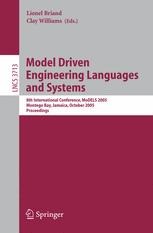
Model Driven Engineering Languages and Systems ; Vol. 3713 : 8th International Conference, MoDELS 2005, Montego Bay, Jamaica, October 2-7, 2005, Proceedings
Constitutes the proceedings of the 8th International Conference on Model Driven Engineering Languages and Systems, MoDELS 2005, held in Montego Bay, Jamaica, in October 2005. This book includes 52 papers and 2 keynote abstracts. It covers such topics as process modelling, product families, state/behavioral modeling, design strategies and more.
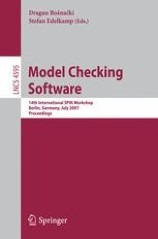
Model checking software ; 14th International SPIN Workshop, Berlin, Germany, July 1-3, 2007, Proceedings
This book presents the proceedings of the 14th International SPIN workshop on Model Checking Software, held in Berlin, Germany. The papers are organized into topical sections covering directed model checking, partial order reduction, program analysis, exploration advances, modeling and case studies, and tool demonstrations.

Model and Design of Bipolar and MOS Current-Mode Logic : CML, ECL and SCL Digital Circuits
many works and results have been published which reinforce the importance of Current-Mode digital circuits. In the topic of Current-Mode digital circuits, the authors properly exploited classical paradigms developed and used in the analog circuit domain (a topic in which one of the authors maturated a great experience).

Mobilizing Adults for Positive Youth Development : Strategies for Closing the Gap between Beliefs and Behaviors
"In today's fast-paced, often-dehumanizing world, increasing positive adult involvement and influence is particularly vital. To further that goal, Mobilizing Adults for Positive Youth Development: Strategies for Closing the Gap between Beliefs and Behaviors brings together, in one concise volume, the advice and expertise of leading scholars dedicated to affecting positive youth development. Taken together, the chapters in this book provide a multifaceted, multidisciplinary blueprint for social change." "Mobilizing Adults for Positive Youth Development: Strategies for Closing the Gap between Beliefs and Behaviors is a must-have volume for both practitioners and researchers - in fact, for anyone interested and involved in working toward achieving positive youth development.
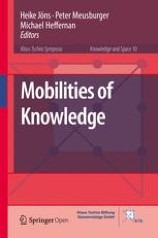
Mobilities of Knowledge
This collection of essays examines how spatial mobilities of people and practices, technologies and objects, knowledge and ideas have shaped the production, circulation, and transfer of knowledge in different historical and geographical contexts. Targeting an interdisciplinary audience, Mobilities of Knowledge combines detailed empirical analyses with innovative conceptual approaches. The first part scrutinizes knowledge circulation, transfer, and adaption, focussing on the interpersonal communication process, early techniques of papermaking, a geographical text, indigenous knowledge in exploration, the genealogy of spatial analysis, and different disciplinary knowledges about the formation of cities, states, and agriculture.
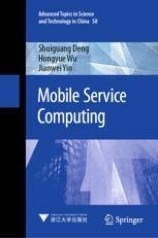
Mobile Service Computing
This book introduces readers to the background and principles of mobile service computing. It discusses various aspects of service computing in mobile environments, including key methods and techniques for service selection, recommendation, composition, offloading, execution, deployment, and provision.
Mobile Professional Voluntarism and International Development : Killing Me Softly?
This book explores the impact that professional volunteers have on the low resource countries they choose to spend time in. Whilst individual volunteering may be of immediate benefit to individual patients, this intervention may have detrimental effects on local health systems; distorting labour markets, accentuating dependencies and creating opportunities for corruption. Improved volunteer deployment may avoid these risks and present opportunities for sustainable systems change. The empirical research presented in this book stems from a specific volunteering intervention funded by the Tropical Health Education Trust and focused on improving maternal and newborn health in Uganda.
