



الصفحة 22
الصفحة 22

Multidimensional Screening
The book brings into a focus all necessary mathematical knowledge necessary to understand the economics of multidimensional results screening and applies them straightaway to economic models. The first part of this book contains a review of vector calculus, the theory of partial differential equations, and the theory of generalized convexity. These techniques are extensively used in multidimensional screening models. Part II is devoted to the economics of sceening models. It starts with a detailed discussion of economics and mathematics of unidimensional screening problems and three approaches to their solution: direct, dual, and Hamiltonian. It uses the Hamiltonian approach to unify all known results, which were previously obtained using different arguments. Then the major difficulties with direct and dual approach in the multidimensional context are discussed and the Hamiltonian approach is used to provide the most complete characterization of the solution known in the literature.

Multidetector-Row CT Angiography
Multidetector-row CT has dramatically improved the results of computed tomography in all clinical applications, but its beneficial impact has been most striking in vascular imaging. The simplicity of acquisition and the wide availability of equipment make this modality especially suitable for routine clinical application. In this book the basic aspects of multidetector-row CT angiography are comprehensively reviewed. Individual chapters are included on technical principles, image processing techniques and contrast agent administration. All clinical applications are then discussed in depth, with lucid descriptions of the examination technique for particular clinical indications and of the findings that characterize specific diseases. Limitations and advantages in comparison with other imaging modalities are considered. A large number of high-quality black and white and color illustrations help to explain the clinical findings.

Multicriteria Optimization
Decision makers in many areas, from industry to engineering and the social sector, face an increasing need to consider multiple, conflicting objectives in their decision processes. In many cases these real world decision problems can be formulated as multicriteria mathematical optimization models. The solution of such models requires appropriate techniques to compute so called efficient, or Pareto optimal, or compromise solutions that - unlike traditional mathematical programming methods - take the contradictory nature of the criteria into account. This book provides the necessary mathematical foundation of multicriteria optimization to solve nonlinear, linear and combinatorial problems with multiple criteria. Motivational examples illustrate the use of multicriteria optimization in practice. Numerous illustrations and exercises as well as an extensive bibliography are provided.

Multi-Criteria Decision Analysis for Risk Assessment and Management
Provides in-depth guidance on how to use multi-criteria decision analysis methods for risk assessment and risk management. The frontiers of engineering operations management methods for identifying the risks, investigating their roles, analyzing the complex cause-effect relationships, and proposing countermeasures for risk mitigation are presented in this book. The most significant feature of this book is that it provides various systematic multi-criteria decision analysis methods for risk assessment and management, and illustrates the application of these methods in different fields.

Multichain Immune Recognition Receptor Signaling : From Spatiotemporal Organization to Human Disease
The central idea of this book is to show that the structural similarity of the MIRRs determines the general principles underlying MIRR-mediated transmembrane signaling mechanisms and also provides the basis for existing and fixture therapeutic strategies targeting MIRRs. The reviews assembled in this book detail the prog-ress in defining and controlling the spatiotemporal organization of key events in immune cell activation. An improved understanding of MIRR-mediated signaling has numerous potential practical applications, fi-om the rational design of drugs and vaccines to the engineering of cells for biotechnological purposes.

Multibody Mechanics and Visualization
Multibody Mechanics and Visualization is designed to appeal to computer-savvy students who will acquire significant skills in mathematical and physical modelling of mechanical systems in the process of producing attractive computer simulations and animations.

Multibody Dynamics : Computational Methods and Applications
This book contains the revised and extended versions of selected conference communications, representing the state-of-the-art in the advances on computational multibody models, from the most abstract mathematical developments to practical engineering applications. This book will be highly valuable for experienced researchers that want to keep updated on the details of the latest driving ideas in this field. It will also be of interest to researchers approaching the field for the first time, since it provides a useful overview of the most active areas and the efforts devoted by many prominent research groups worldwide.

Multi-body Dynamic Modeling of Multi-legged Robots
This book describes the development of an integrated approach for generating the path and gait of realistic hexapod robotic systems. It discusses in detail locomation with straight-ahead, crab and turning motion capabilities in varying terrains, like sloping surfaces, staircases, and various user-defined rough terrains. It also presents computer simulations and validation using Virtual Prototyping (VP) tools and real-world experiments.
Multi-Arm Cooperating Robots : Dynamics and Control
This book will be useful to a wide audience of engineers, ranging from undergraduate and graduate students, new and advanced academic researchers, to practitioners (mechanical and electrical engineers, computer and system scientists). It is intended for readers whose work involves manufacturing, industrial, robotics, automation, computer and control engineering, and who wish to find out about this important new technology and its potential advantages for control engineering applications.
Multi-Agent Systems and Applications IV ; 4th International Central and Eastern European Conference on Multi-Agent Systems, CEEMAS 2005, Budapest, Hungary, September 15-17, 2005, Proceedings
In the very competitive field of agent oriented conferences and workshops nowadays (such as AAMAS, WI/IAT, EUMAS, CIA, MATES) the special profile of CEEMAS is that it is trying to bridge the gap between applied research achievements and theoretical research activities. Our ambition is to provide a forum for presenting theoretical research with an evident application potential, implemented application prototypes and their properties, as well as industrial case studies of successful (but also unsuccessful) agent technology deployments. This is why the CEEMAS proceedings volume provides a collection of research and application papers. The technical research paper section of the proceedings (see pages 11–499) contains pure research papers as well as research results in application settings while the application papers section (see pages 500–530) contains papers focused on application aspects. The goal is to demonstrate the real life value and commercial reality of multi-agent systems as well as to foster communication between academia and industry in this field.

Multi-Agent Programming : Languages, Platforms and Applications
Part I describes four approaches that are based on computational logic or process algebra--Jason, 3APL, IMPACT, and CLAIM/SyMPA. These programming languages have formal semantics and use heavy machinery based on formal methods, but also provide working platforms for the development of multi-agent systems. Part II presents agent languages and platforms that extend or are based on Java--JADE, Jadex, and JACKTM. Although these have no formal semantics, the languages are well documented and the platforms provide a variety of tools that have been extensively used in practice. Part III provides two significant industry specific applications--The DEFACTO System for coordinating human-agent teams for the future of disaster response, and the ARTIMIS rational dialogue agent technology. The book also features seven appendices, summarising each of the agent programming languages, hence facilitating comparison of the approaches. In particular, Appendix A describes the criteria used for comparing the agent languages and platforms.
Multiagent Engineering : Theory and Applications in Enterprises
1 Multiagent Engineering: A New Software Construction Paradigm Multiagent systems have a long academic tradition. They have their roots in distributed problem solving in Artificial Intelligence (AI) from where they emerged in the mid-eighties as a distinctive discipline. Research in multiagent systems owes much to the work of Rosenschein on rationality and autonomy of intelligent agents, the European MAAMAW workshop series
Multiagent based Supply Chain Management
The authors takes a close look at what has been done recently in the field of supply chain management using agent technology and more specifically multiagent systems. The book contains sixteen chapters organized in four main parts; Introductory Papers; Multiagent Based Supply Chain Modeling, Collaboration and Coordination Between Agents in a Supply Chain and Multiagent Based Supply Chain Management: Applications. This book is intended as reference material for researchers, graduate students, and practitioners alike who are interested in pursuing research and development in this area, and who need for that, a comprehensive view of the existing literature, and some ideas for future directions.
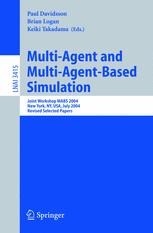
Multi-Agent and Multi-Agent-Based Simulation ; Joint Workshop MABS 2004
The aim of the workshop was to provide a forum for work in both appli- tions of multi-agent-based simulation and the technical challenges of simulating large multi-agent systems (MAS). There has been considerable recent progress in modelling and analyzing multi-agent systems, and in techniques that apply MAS models to complex real-world systems such as social systems and organi- tions. Simulation is an increasingly important strand that weaves together this work. In high-risk, high-cost situations, simulations provide critical cost/benefit leverage, and make possible explorations that cannot be carried out in situ: – Multi-agent approaches to simulating complex systems are keytools in interdisciplinary studies of social systems. Agent-based social simulation (ABSS) research simulates and synthesizes social behavior in order to understand real social systems with properties of self-organization, scalability, robustness, and openness. – In the MAS community, simulation has been applied to awide range of MAS research and design problems, from models of complex individual agents - ploying sophisticated internal mechanisms to models of large-scale societies of relatively simple agents which focus more on the interactions between agents.

Multi story building
The project is a concrete multi story building with storage block located in Damascus.
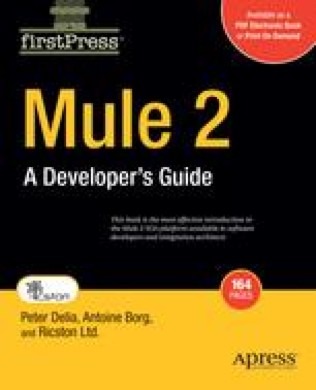
Mule 2 : A Developers Guide
Mule 2: A Developer's Guide introduces the Mule 2.0 integration platform for developers of enterprise integration applications who wish to leverage Mule as a lightweight messaging framework that contains a distributable object broker for managing communication between applications. The book is based on insight, knowledge, and experience resulting from working with Mule. The text provides support, consulting, and training to developers implementing Mule in a broad range of scenarios ranging from small projects through to large corporations developing major deployments.

Mud and Mudstones : Introduction and Overview
Our book provides the first elementary overview of mud and mudstone written for a broad spectrum of professionals, teachers and students in geology, petroleum geology and engineering, urban planning and development, paleontology and paleoecology, and architecture and archaeology. Mud and mudstone provide the foundations to master all their aspects and prepares you to dig deeply into the many fascinating questions of their origin, relationships to earth history and practical uses. Key topics include the production of mud, its transport, the important role of bottom oxygen, sites of deposition, burial, provenance, mudstones in basins and an overview of practical uses followed by an appendix and extended glossary.

Mucosal Immunology and Virology
Mucosal Immunology and Virology is designed to provide the clinician with a thorough and yet approachable textbook describing the relationships between immunology, virology and the disease process. It includes a vast wealth of information and illustrations to enable the reader to become familiar with the clinical presentation of these diseases, the tests needed to establish the diagnosis, and the treatment of the disease including specific antiviral agents. Suitable for residents and clinicians in immunology, infectious diseases, internal medicine and dermatology the book reviews the systematic manifestations of mucosal viral infections, including those involving the mouth, gastrointestinal tract, respiratory system, anogenital mucosa and ocular infections

Mucins : Methods and protocols
Explores the latest advancements in mucin research. The chapters in this book are organized into 8 parts and cover a wide range of topics such as mucin extraction, isolation, physicochemical property analysis, and experimental methods. The chapters also discuss the origins of mucins in jellyfish, feces, saliva and salivary glands, bronchi, stomach, and cervical tract; organic synthesis of peptides glycosylated at specific sites; analysis of mucin gene expression and methylation-specific electrophoresis of genes; imaging of mucin networks by AFM; and experimental methods using supported molecular matrix electrophoresis. Written in the highly successful Methods in Molecular Biology series format, chapters include introductions to their respective topics, lists of the necessary materials and reagents, step-by-step, readily reproducible laboratory protocols, and tips on troubleshooting and avoiding known pitfalls.

M-Solid Varieties of Algebras
It provides a complete and systematic introduction to the fundamentals of the hyperequational theory of universal algebra, offering the newest results on M-solid varieties of semirings and semigroups. The book aims to develop the theory of M-solid varieties as a system of mathematical discourse that is applicable in several concrete situations. It applies the general theory to two classes of algebraic structures, semigroups and semirings. Both these varieties and their subvarieties play an important role in computer science.
