



الصفحة 22
الصفحة 22
Common Chinese Materia Medica ; Vol.4
Describes 256 species of medicinal plants from 5 families, which are commonly used in Chinese medicine. The most important species are Agrimonia pilosa, Amygdalus persica, Armeniaca mume, Armeniaca vulgaris, Armeniaca sibirica, Chaenomeles sinensis, Eriobotrya japonica of Rosaceae; Chimonanthus praecox of Calycanthaceae;Albizia julibrissin, Archidendron clypearia, Entada phaseoloides, Bauhinia championii of Mimosoideae; Caesalpinia sappan, Cassia tora, Gleditsia sinensis of Caesalpiniaceae; Abrus cantoniensis, Astragalus membranaceus, Astragalus membranaceus, Dalbergia odorifera, Desmodium caudatum, Desmodium styracifolium, Erythrina variegata, Euchresta japonica, Flemingia prostrata, Glycyrrhiza uralensis, Glycyrrhiza inflata, Glycyrrhiza glabra, Lablab purpureus, Sophora japonica and Spatholobus suberectus of Butterflyaceae. In each specie, it introduces the scientific names, medicinal names, morphologies, habitats, distributions, acquisition and processing methods of these medicinal plants, the content of medicinal properties, therapeutic effects, usage and dosage of these medicinal plants, and attaches unedited color pictures and pictures of part herbal medicines of each species. This book series has 10 volumes in total, which covers over 2000 kinds of Chinese medicines that are commonly used. These volumes not only introduce the efficacy function and some prescriptions of the medicines, but also introduce the biological characteristics of them in detail with clear photos of the habitats, so that readers can identify them in the field. Apart from the growing environment, the books expound the distribution areas and other information to facilitate researches and other applications. The volumes are targeted at readers of general interests and it is also of high referential value for scientific researcher and teachers. It can be used as a guide to researchers, clinical doctors, and students in the department of pharmaceutics and traditional Chinese medicine.
Common Chinese materia medica ; Vol.2
Contains 231 species of 40 families of medicinal plants. The most important family of which are Magnoliaceae, such as Magnolia officinalis and Magnolia officinalis subsp. biloba; Schisandra chinensis of Schisandraceae; Cinnamomum aromaticum of Lauraceae, Coptis chinensis Franch., Coptis omeiensis and Coptis teeta of Berberidaceae; Isatis indigotica, Lepidium apetalum and Raphanus sativus of Cruciferae; Rheum palmatum, Rheum officinale and Rheum taguticum of Polygonaceae, etc. In each specie, it introduces the scientific names, herbal medicine names, characteristics, habitats, distributions, Acquisition and processing methods, medicinal traits, tastes, functions, use and dosages, and other information of medicinal plants, and attaches unedited color pictures and pictures of part herbal medicines for each species. This book series has totally 10 volumes, which covers 2000 kinds of Chinese medicines that are commonly seen or used. These volumes not only introduce the efficacy, function and some prescriptions of the medicines, but also introduce the biological characteristics of them in detail with clear photos of the habitats, so that readers can identify them in the field. Apart from the growing environment, the books expound the distribution areas and other information to facilitate researches and other applications. The volumes are targeted at readers of general interests and it is also of high referential value for scientific researcher and teachers. It can be used as a guide to researchers, clinical doctors, and students in the department of pharmaceutics and traditional Chinese medicine.
Common Chinese materia medica ; Vol.10
Records 5 species of resin, 74 species of animals, 41 species of minerals and fossils. There are resins such as Liquidambar orientalis, Commiphore myrrha, Boswellia carterii, Garcinia hanburyi; animals such as Solenognathus hardwickii, , Cervus nippon, Scolopendra subspinipes, Cryptotympana pustulata, Agkistrodon acutus, Bombyx mori, Collocalia esculenta, Moschus moschiferus, Hippocampus kelloggi, Gekko gekko; minerals and fossils such as mercury, gypsum, alum, mirabilite, cinnabar, actinolite, calomel, keel, dens draconis, lithodes, fossilia spiriferis.

Clinical guide to oral diseases
A concise reference on the common diseases encountered in daily practice. Presenting a large selection of clinical cases, this user-friendly resource covers a range of oral and perioral lesions located in hard and soft tissues of the mouth and neck, as well as oral manifestations of various systemic diseases. Nearly 300 high-quality color images complement succinct descriptions of clinical cases seen in both community and hospital care settings. Provides nearly 300 high-quality clinical photos and relevant questions to help lead readers to the proper diagnosis of common oral diseases Contains concise tables relevant to each chapter with a list of common oral lesions and conditions Offers MCQs of varying levels of difficulty to help readers test their knowledge in Oral Medicine Includes clinical flow charts according to the location and duration of oral lesions Incorporates the ICD-10 Codes of oral lesions and diseases

Clinical dental pharmacology
Quick reference for drugs relevant to clinical dentistry. It delivers an essential reference for dental practitioners seeking quick, easy access to current and accurate information about drugs used by dentists in clinical practice. The book covers common drugs prescribed by dental practitioners as well as systemic medications which may impact on provision of clinical dental care. A separate section on recognition and management common medical emergencies in dental practice is also included.
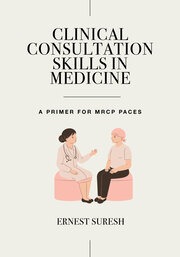
Clinical consultation skills in medicine : A primer for MRCP PACES
Follows the revised format of the Practical Assessment Clinical Examination Skills (PACES) exam conducted by the Royal College of Physicians in the UK, where ‘clinical consultation skills’ will be tested twice in two separate stations. Thus, coming closest to what doctors do in real life: obtain a structured history, perform a focussed examination and explain the problem to the patient in lay terms. This book takes readers through a rational approach to 63 common presenting symptoms or laboratory abnormalities in medicine. It is aimed at improving the clinical consultation skills of young doctors and preparing them for the new format of MRCP PACES

Clinical cases in periodontics ; 1st ed.
Describes the core principles of periodontics and demonstrates their practical, every-day application through a range of representative cases building from the simple to the complex and from the common to the rare. This unique approach supports the new trend in case-based and problem-based learning, thoroughly covering topics ranging from infant oral health to complex pulp therapy.
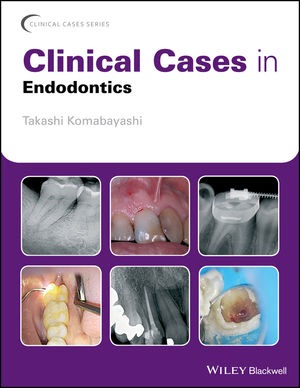
Clinical cases in endodontics
Presents actual clinical cases, accompanied by academic commentary, that question and educate the reader about essential topics in endodontic therapy. It begins with sets of cases illustrating the most common diagnoses and the steps involved in preparing a treatment plan. Subsequent chapters continue in this style, presenting exemplary cases as the basis of discussing various treatment options, including nonsurgical root canal treatment, re-treatment, periapical surgery, internal and external resorption, emergencies and trauma, and treating incompletely developed apices.

Clinical cases in early orthodontic treatment an atlas of when, how, and why to treat
Describes the most common types of malocclusion in children and presents illustrated step-by-step guidance on the procedures employed in their management, with the focus on early intervention. Advice is provided on the challenging decisions of when to start orthodontic treatment and whether to choose a one-phase or a two-phase treatment, taking into account the malocclusion, its severity, and its etiology.

Clinical applications of botulinum toxin
Botulinum toxin (BoNT) is a neurotoxin produced by the Gram-positive, rod-shaped, sporeforming anaerobic bacterium Clostridium botulinum. Although there are seven major serotypes of Botulinum Neurotoxin (BoNT/A-G), only type A and B are used clinically. For the purpose of this research paper, we will refer to this agent as BoNT. This research paper primarily serves to provide a historical review of the toxin, assess its mechanism of action, and highlight the most common clinical applications of BoNT therapy across multiple medical specialties in an organized, specialty-based manner, including their complications and recommended BoNT dosages.
Climate of the middle : Understanding climate change as a common challenge
This book presents a multidisciplinary perspective to increase our understanding of climate policies that are rooted in the natural moral inclinations of people, families and firms. Which policies prevent a widening gap between higher and lower educated people? Which policy instruments are there, and how could they be used? What is the role of free entrepreneurship?

Click chemistry
In chemical synthesis, click chemistry is a class of simple atomic economy reactions commonly used to join two selected molecular entities. Click chemistry is not one specific reaction, but describes a method for generating products that follow examples in nature, which also generates substances by joining small modular units. In many applications, click interactions that join a biomolecule and a reporter molecule. Click chemistry is not limited to biological conditions: the concept of a 'click' reaction has been used in protein chemistry, pharmacokinetics, and many biomimetic applications. However, they have been made remarkably useful in the discovery, localization and qualification of biomolecules.

Classifying madness : A philosophical examination of the diagnostic and statistical manual of mental disorders
Classifying Madness examines the conceptual foundations of the D.S.M., the main classification of mental disorders used by psychiatrists world-wide. It will be of interest to both mental health professionals and to philosophers interested in classification in science. The D.S.M. has become extremely controversial, and the possibility that there may be philosophical difficulties with it has become a commonplace in the mental health literature. Classifying Madness offers mental health professionals an opportunity to explore suspicions that there might be conceptual problems with the D.S.M. For philosophers, this book aims to contribute to debates in the philosophy of science concerning natural kinds, the theory-ladenness of classification, and the effect of sociological factors in science. These issues are normally approached via a consideration of the natural sciences and, as will be seen, approaching them via a consideration of psychiatry helps shed new light on old problems.

Civil jurisdiction and judgments
States, analyses, illuminates and evaluates the law of civil jurisdiction and the enforcement of foreign judgments in English law, with this new edition taking into account the implications of the new Brussels I Regulation recast, Regulation (EU) 1215/2012, as well as the great number of developments in the case law which have taken place since 2009. This book looks in detail at: the jurisdictional rules put in place by the (recast) Brussels I Regulation; the common law rules of jurisdiction.
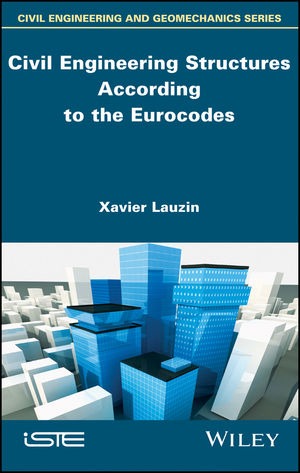
Civil engineering structures according to the Eurocodes : Inspection and maintenance
This standard assumes that the structure, after completion, is used as intended in the project and subject to planned inspection and maintenance to meet the expected project lifetime and to detect any unforeseen weakness or behavior" (EN 13670 4.1)An important decision factor in the design of new structures and repairs to existing structures is the lifetime or expected service life. This concept, which is common for civil engineering works, has been extended to all engineering and building works by applying the European Structural Design Codes.
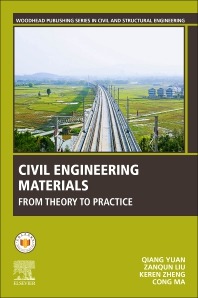
Civil engineering materials : From theory to practice ; 1st ed.
Presents the state-of-the-art in civil engineering materials, including the fundamental theory of materials needed for civil engineering projects and unique insights from decades of large-scale construction in China. The title includes the latest advances in new materials and techniques for civil engineering, showing the relationship between composition, structure and properties, and covering ultra-high-performance concrete and self-compacting concrete developed in China. This book provides comprehensive coverage of the most commonly used, most advanced materials for use in civil engineering. This volume consists of eight chapters covering the fundamentals of materials, inorganic cementing materials, Portland cement concrete, bricks, blocks and building mortar, metal, wood, asphalt and polymers.
Civil engineering for disaster risk reduction
Brings together all diverse disciplines of civil engineering and related areas (for example, geotechnical engineering, water resources engineering, structural engineering, transportation engineering, environmental engineering, construction management, GIS, and remote sensing) towards a common goal of disaster resilience through an interdisciplinary approach. It contains methods and case studies focusing on civil engineering solutions to reduce the disaster risk. The book contents are aligned in line with the priorities set by UN-Sendai Framework for Disaster Risk Reduction and UN-SDGs to promote a global culture of risk-awareness and disaster reduction. The book will be a useful comprehensive reference for disaster risk reduction beneficial for engineering students, teaching faculty, researchers, industry professionals and policymakers.
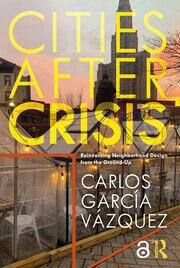
Cities After Crisis : Reinventing Neighborhood Design from the Ground-Up
The book details how these crises have led to a new urban vision—from avantgarde modern design to an artisan aesthetic that calls for simplicity and the everyday, from the sustainable development paradigm to a resilient vision that defends de-growth and the re-wilding of cities, from a homogenizing globalism to a new localism that values what is distinctive and nearby, from the privatization of the public realm to the commoning and self-governance of urban resources, and from top-down to bottom-up processes based on the engagement and empowerment of communities.

Cigarette Smoke and Oxidative Stress
From a public health point of view, there is little doubt that one of the most important preventable causes of disease worldwide is tobacco smoking. From a scientifc point of view, we found it of interest to make a comprehensive ov- view of what we presently know about oxidative stress and tobacco smoke, because sm- ing is presently the best-known common condition associated with oxidative stress, and it may serve as a model for others. To this end, we have asked distinguished researchers from the public and the private sectors to evaluate the present scientifc status in their particular area. Authors were selected purely because of their scientifc merits.

Chronic Pain and Family : A Clinical Perspective
Chronic pain affects every facet of a patient’s life, and nowhere is this more evident than in the complex arena of family life. Chronic Pain and Family: a Clinical Perspective examines typical family issues associated with prolonged illness, offering realistic ways to approach them in therapy. Informed by current practice and his own experience, noted author/clinician Ranjan Roy brings fresh insights to common pain scenarios and therapeutic impasses, and provides a framework for assessing marital and family relationships when chronic pain is a defining factor. Clinicians will get not only a clearer understanding of sensitive issues, but also effective strategies for engaging clients without turning them off.
