



الصفحة 22
الصفحة 22
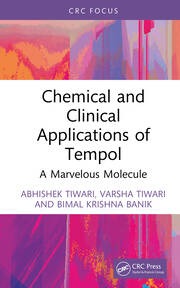
Chemical and clinical applications of tempol : A marvelous molecule
A comprehensive and authoritative exploration of Tempol (4-Hydroxy-TEMPO), an exceptional chemical compound with diverse applications in both scientific research and medical practice. This book delves into Tempol's unique properties, mechanisms of action, and its potential role in combating oxidative stress-related disorders. Includes a chapter devoted to the safe handling, storage, and disposal of Tempol in compliance with pharmaceutical regulations. The authors pay particular attention to pharmaceutical regulations in the industry.

Chemical abundances and mixing in stars in the milky way and its satellites ; Proceedings of the ESO-Arcetrie Workshop held in Castiglione della Pescaia, Italy, 13-17 September, 2004
The proceedings of this book cover topics from chemical abundances in the different components of the Milky Way and in local group galaxies, via observational and theoretical papers on mixing in stars to big bang nucleosynthesis and galaxy formation and evolution. As all volumes in this series of ESO Astrophysics Symposia this one gives a comprehensive state-of-the-art overview of the forefront of research in its area. It is thus a valuable reference for both students specializing in the field and researchers alike.

Chemical residues in food from animal produce
One Health' is an approach to designing and implementing programmers, policies, legislation and research in which multiple sectors communicate and work together to achieve better public health outcomes . The areas of work in which a One Health approach is particularly relevant include food safety, the control of zoo noses (diseases that can spread between animals and humans, such as flu, rabies and Rift Valley Fever), and combating antibiotic resistance (when bacteria change after being exposed to antibiotics and become more difficult to.
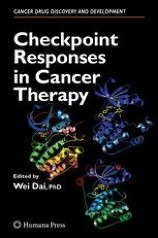
Checkpoint Responses in Cancer Therapy
This book’s distinguished panel of authors takes a close look at topics ranging from the major molecular players affecting DNA synthesis and the response to DNA damage to advances made in the identification of chemical compounds capable of inhibiting individual mitotic kinases. Illuminating and authoritative, Checkpoint Responses in Cancer Therapy offers a critical summary of findings for researchers in the pharmaceutical and biotechnology industries and a valuable resource for academic scientists in cancer research and the study of cell-cycle regulation, signal transduction and apoptosis.

Charge Migration in DNA : Perspectives from Physics, Chemistry, and Biology
Charge migration through DNA has been the focus of considerable interest in recent years. A deeper understanding of the nature of charge transfer and transport along the double helix is important in fields as diverse as physics, chemistry and nanotechnology. It has also important implications in biology, in particular in DNA damage and repair. This book presents contributions from an international team of researchers active in this field.
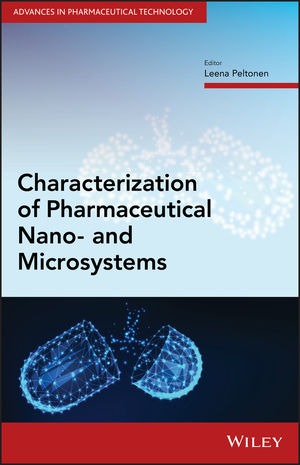
Characterization of Pharmaceutical Nano- and Microsystems
Offers readers a full understanding of the basic physicochemical characteristics, material properties and differences between micro- and nanosystems. It explains how and why greater experience and more reliable measurement techniques are required as particle size shrinks, and the measured phenomena grow weaker.

Characterization II
Molecular Sieves - Science and Technology covers, in a comprehensive manner, the science and technology of zeolites and all related microporous and mesoporous materials. Authored by renowned experts, the contributions to this handbook-like series are grouped together topically in such a way that each volume deals with a specific sub-field. Volume 5 complements Volume 4 (Characterization I) in that it is devoted to the characterization of molecular sieves by a variety of non-spectroscopic techniques (Characterization II). Thus, Volume 5 comprises Chemical Analysis, Thermal Analysis, Pore-Size Characterization by Molecular Probes, Characterization by 129Xe NMR, Coke Characterization, Synthesis and Characterization of Isomorphously Substituted Molecular Sieves.
Cellulose : Molecular and Structural Biology : Selected Articles on the Synthesis, Structure, and Applications of Cellulose
Cellulose: Molecular and Structural Biology is an up-to-date treatise on the most advanced and provocative research into the biosynthesis, structure, and applications of nature’s most abundant macromolecule and renewable resource, cellulose.Molecular, biochemical, and evolutionary aspects of cellulose biosynthesis are reviewed in a variety of living organisms, including cyanobacteria, eubacteria, (Acetobacter, Salmonella, and E. coli), vascular plants (including Arabidopsis, forest trees, and maize), and tunicates.
Cell Stress Proteins
This comprehensive volume, written by experts in the field, provides a current understanding of the molecular properties of the heat shock proteins and their roles in health and disease. Cell Stress Proteins includes advances in several aspects of stress protein research, with chapters ranging from basic studies of the role of heat shock proteins in protein folding to reviews examining the breakdown of stress protein regulation during disease. It also provides analysis of the biochemical and molecular properties of heat shock proteins which can be utilized in evaluating their role in human physiology and pathology. Cell Stress Proteins is an ideal book for researchers, clinicians, physicians, and graduate students in the fields of biochemistry, cell biology, microbiology, immunology, and genetics.
Cell Motility
Cell motility is a fascinating example of cell behavior which is fundamentally important to a number of biological and pathological processes. It is based on a complex self-organized mechano-chemical machine consisting of cytoskeletal filaments and molecular motors. In general, the cytoskeleton is responsible for the movement of the entire cell and for movements within the cell. The main challenge in the field of cell motility is to develop a complete physical description on how and why cells move. For this purpose new ways of modeling the properties of biological cells have to be found. This long term goal can only be achieved if new experimental techniques are developed to extract physical information from these living systems and if theoretical models are found which bridge the gap between molecular and mesoscopic length scales. Cell Motility gives an authoritative overview of the fundamental biological facts, theoretical models, and current experimental developments in this fascinating area.
Cell Culture Engineering
Many patients suffering with life-threatening diseases or chronic dysfunctions, which were medically untreatable not long ago, can attest to the wonder these drugs have achieved. Although the first generation of p- tein therapeutics was produced in recombinant Escherichia coli, most recent products use mammalian cells as production hosts. Not long after the first p- duction of recombinant proteins in E. coli, it was realized that the complex tasks of most post-translational modifications on proteins could only be efficiently carried out in mammalian cells.

Cathodic Arcs : From Fractal Spots to Energetic Condensation
Cathodic Arcs: From Fractal Spots to Energetic Condensation is the first book in over a decade dedicated to the physics and technology of cathodic arcs. It includes a detailed account of arc history, a textbook-like introduction to cathode phenomena, and some basic physics of expanding plasmas; it deals with the infamous macroparticle issue and describes a host of practical plasma filter solutions. In contrast to previous books on cathodic arcs, the focus is on the relation of arc plasmas and their properties to surface modification and thin film deposition. The book contains sections on basic plasma physics and thin film materials science. It also deals with practical issues of coatings such as stress control and the often-underrated issue of the coating’s color. By stressing the fractal nature of cathode spots, the theme of fluctuations can be found throughout the book: fluctuations affect all plasma properties and thereby have consequences for plasma-based surface modifications and film growth.
Catalytic Carbonylation Reactions
Carbonylation reactions are of major importance in both organic and industrial chemistry. Due to the availability, price and reactivity pattern, carbon monoxide is becoming a more and more important building block for fine and bulk chemicals. The major reaction types of carbon monoxide are comprehensively discussed by leading experts from academia and industry. The authors highlight important carbonylation reactions such as hydroformylation, alkoxy-carbonylations, co/olefin-copolymerization, Pauson-Khand reactions and others. They illustrate applications in organic synthesis and give industrial examples.
Cardiac reconstructions with allograft tissues
Cryopreserved allograft tissues are now standard materials for the reconstructive cardiac surgeon. Since publication of the first edition ("Cardiac Reconstructions with Allograft Valves") in 1989, the field has progressed dramatically with increased clinical use of cardiovascular allograft tissues, with the development of new surgical techniques, and with advances in the understanding of the fundamentals of valve transplantation biology and cryopreservation. As a result, over two-thirds of the present volume represents new material. Fifty-six authors bring their expertise to thirteen comprehensive, lavishly illustrated sections which discuss the principles of the use of homograft valves, major clinical series of homograft valves for both left and right ventricular outflow tracts, cryopreserved allograft tissue for cardiac reconstruction, cell biology of heart valve leaflets, cryobiology of heart valve preservation, morphological, biochemical, and explant pathology studies of allograft heart valves, allograft valve banking, as well as detailed explanation of surgical techniques for valve and root methods for left and right ventricular outflow tract reconstructions, the Ross operation and variants, and complex reconstructions. A final section presents potential future directions for the field. Over 400 illustrations, created expressly for this book, depict the surgical techniques from the perspective of the surgeon standing at the operating table.
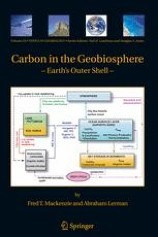
Carbon in the Geobiosphere : Earth's outer shell
Carbon and carbon dioxide always played an important role in the geobiosphere that is part of the Earth’s outer shell and surface environment. The book’s eleven chapters cover the fundamentals of the biogeochemical behavior of carbon near the Earth’s surface, in the atmosphere, minerals, waters, air-sea exchange, and inorganic and biological processes fractionating the carbon isotopes, and its role in the evolution of inorganic and biogenic sediments, ocean water, the coupling to nutrient nitrogen and phosphorus cycles, and the future of the carbon cycle in the Anthropocene. This book is mainly a reference text for Earth and environmental scientists; it presents an overview of the origins and behavior of the carbon cycle and atmospheric carbon dioxide, and the human effects on them. The book can also be used for a one-semester course at an intermediate to advanced level addressing the behavior of the carbon and related cycles.
Carbon and Its Domestication
Carbon is chemically versatile and is thus the body and soul of biological, geological, ecological and economic systems. Its appropriation by humans through diversion of its biogeochemical cycle has been a mainstay of development. This domestication is characterized by a number of thresholds: control of fire, development of agriculture, expansion of Europe, fossil-fuel use and biotechnology. All have exacted an environmental toll, not least being climatic change and biodiversity loss. Carbon management now and in the future is a ‘hot’ political issue.

Carbohydrate-protein interactions : Methods and protocols
Provides new and updated tools for studying protein-carbohydrate interactions ranging from traditional biochemical methods to state-of-the-art techniques. This book focuses on four different research themes detailing methods for screening and quantifying CAZyme activity, investigating the interactions between proteins, carbohydrate ligands, methods for the visualization of carbohydrates, protein-carbohydrate complexes, structural and “omic” approaches for studying systems of CAZymes.
Cancer : Cell Structures, Carcinogens and Genomic Instability
Tumors can be induced by a variety of physical and chemical carcinogens. The resulting tumor cells are usually abnormal in their morphology and behavior and transmit their abnormalities to their daughter tumor cells. Most theories of the pathogenesis of tumors suggest that carcinogens in some way cause alterations either of the genomes or of inheritable patterns of gene expression in normal cells, which then cause morphological and behavioral changes. This volume presents a collection of articles aimed at the question by what genetic or epigenetic mechanisms carcinogens can cause morphological abnormalities of tumor cells. It includes reviews of cellular targets of known carcinogens, and presents varying viewpoints of how morphological abnormalities and the actions of carcinogens might be related.

Calixarenes in the Nanoworld
Calixarenes have been widely exploited in all areas of supramolecular chemistry over the past three decades and many recent developments have concerned their applications in the production of chemical entities with the dimensions of nanometres, as in "nanochemistry".Calixarenes in the Nanoworld Relates calixarenes to nanochemistry – key information for industries engaged in the production of high-tech materials. Provides a timely review of both what is known and the exciting prospects provided by calixarenes, Contains several review articles which define the importance of calixarenes as reagents in nanochemistry.
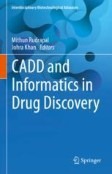
CADD and informatics in drug discovery
Updates knowledge on recent advances in computational and bioinformatics tools/techniques and their practical applications in modern drug design and discovery programme. Also it encompasses fundamental principles, advanced methodologies and applications of various CADD approaches including several cutting-edge areas / presenting recent developments covering ongoing trends in the field of computer-aided drug discovery. Having contributions by a global team of experts, the book is expected to be an ideal resource for drug discovery scientists, medicinal chemists, pharmacologists, toxicologists, phytochemists, biochemists, biologists, RandD personnel, researchers, students, teachers and those working in the field of drug discovery. It will fill the knowledge gaps that exist in the current CADD approaches and methodologies/ protocols being widely used in both academic and research practices. Further, a special focus on current status of various computational drug design approaches (SBDD, LBDD, De-novo drug design, Pharmacophore-based search), bioinformatics tools and databases, computational screening and modeling of phytochemicals/natural products, artificial intelligence and machine learning, and network pharmacology and system biology would certainly guide researchers, students or readers to conduct their research in the emerging area(s) of interest. It is also expected to be highly beneficial to different stakeholders working in the pharmaceutical and biotechnology industries (RandD), the academic as well as research sectors. .
