



الصفحة 22
الصفحة 22

Metaheuristic Optimization Algorithms in Civil Engineering : New Applications
Discusses the application of metaheuristic algorithms in a number of important optimization problems in civil engineering. Advances in civil engineering technologies require greater accuracy, efficiency and speed in terms of the analysis and design of the corresponding systems. As such, it is not surprising that novel methods have been developed for the optimal design of real-world systems and models with complex configurations and large numbers of elements.

Metagraphs and Their Applications
The graph is a critical and useful concept in designing many information processing systems. Systems such as transaction processing systems, decision support systems, and workflow systems are all helped immensely by a graphical structure. Simple graphs and digraphs allow for the construction of a variety of system design tools that provide a convenient and appealing format for illustrating information infrastructures, while allowing any subsequent analyses to be performed by the user. However, the metagraph, a new graphical structure that is developed in this book, goes beyond the representational and provides Information Systems with a robust, analytical modeling graphic tool.

Metabolome Analyses : Strategies for Systems Biology
Metabolome Analyses is intended as a follow-up to Metabolic Profiling: Its Role in Biomarker Discovery and Gene Function Analysis (Kluwer, 2003). That text offered guidelines to currently available technology, bioinformatics and databases. Evidence was presented showing metabolic profiling as a valuable addition to genomics and proteomics strategies devoted to drug discovery and development. This book focuses on how metabolic profiling is being more comprehensively integrated with the other "omics" technologies. It provides more practical applications of such "panomics" or "Systems Biology" approaches. The expanding use of mass spectrometry as a measurement technology in metabolic profiling is addressed through demonstrated applications. The integration of metabolic profiling and proteomics is probably most developed for plant-based studies, which was not addressed in Volume 1. Other areas related to metabolic profiling continue to show significant development. These include database strategies and an increased acceptance by the pharmaceutical industry of metabolic profiling. Also covered is the use of in silico metabolic networks. Again the focus is primarily on the pharmaceutical industry but the importance of metabolic profiling to studies on human nutrition (a burgeoning area) is discussed.

Messenger RNA therapeutics
Focuses on the fundamentals and applications of messenger RNA (mRNA)-based therapeutics and discusses the strengths and key challenges of this emerging class of drugs. In the past 30 years, extensive research and technological development in many areas have contributed to the emergence of in vitro transcribed mRNA as a therapeutic that has now reached clinical testing. Formulations that protect the mRNA from nucleases and accelerate its cellular uptake, combined with improvements to the mRNA molecules themselves, have been critical advancements for mRNAs to become viable therapeutics. Though once regarded as a serious impediment, the transient nature of mRNA technology is now considered a major advantage in making mRNA therapies safe and, ultimately, a potential game changer in the field of medicine. This new book in the RNA Technologies series provides a state-of-the-art overview on the emerging field of mRNA therapeutics covering essential strategies for formulation, delivery, and application. It also reviews the promising role in cancer immunotherapy, respiratory diseases, and chronic HBV infection and discusses RNA vaccines in light of the current COVID-19 pandemic. mRNA-based approaches have great potential to revolutionize molecular biology, cell biology, biomedical research, and medicine.
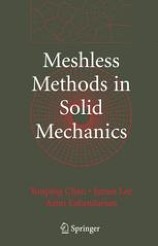
Meshless Methods in Solid Mechanics
The main objective of this book is to provide a textbook for graduate courses on the computational analysis of continuum and solid mechanics based on meshless (also known as mesh free) methods. It can also be used as a reference book for engineers and scientists who are exploring the physical world through computer simulations. Emphasis of this book is given to the understanding of the physical and mathematical characteristics of the procedures of computational solid mechanics. It naturally brings the essence, advantages and challenging problems of meshless methods into the picture. The subjects in this book cover the fundamentals of continuum mechanics, the integral formulation methods of continuum problems, the basic concepts of finite element methods, and the methodologies, formulations, procedures, and applications of various meshless methods. It also provides general and detailed procedures of meshless analysis on elastostatics, elastodynamics, non-local continuum mechanics and plasticity with a large number of numerical examples. Some basic and important mathematical methods are included in the Appendixes. For the readers who want to gain knowledge through hands-on experience, the meshless programs for elastostatics and elastodynamics are also introduced in the book and included in the disc.
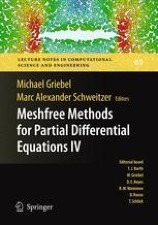
Meshfree Methods for Partial Differential Equations IV
The numerical treatment of partial differential equations with particle methods and meshfree discretization techniques is a very active research field both in the mathematics and engineering community. Due to their independence of a mesh, particle schemes and meshfree methods can deal with large geometric changes of the domain more easily than classical discretization techniques. Furthermore, meshfree methods offer a promising approach for the coupling of particle models to continuous models. This volume of LNCSE is a collection of the proceedings papers of the Fourth International Workshop on Meshfree Methods held in September 2007 in Bonn. The articles address the different meshfree methods (SPH, PUM, GFEM, EFGM, RKPM, etc.) and their application in applied mathematics, physics and engineering. The volume is intended to foster this very active and exciting area of interdisciplinary research and to present recent advances and results in this field.

Meshfree Methods for Partial Differential Equations III
Meshfree methods for the numerical solution of partial differential equations are becoming more and more mainstream in many areas of applications. Their flexiblity and wide applicability are attracting engineers, scientists, and mathematicians to this very dynamic research area. This volume represents the state of the art in meshfree methods. It consists of articles which address the different meshfree techniques, their mathematical properties and their application in applied mathematics, physics and engineering.

Meshfree Methods for Partial Differential Equations II
A Particle Strategy for Solving the Fokker-Planck Equation Modelling the Fiber Orientation Distribution in Steady Recirculating Flows Involving Short Fiber Suspensions.- Extended Meshfree Method for Elastic and Inelastic Media.- Meshfree Petrov-Galerkin Methods for the Incompressible Navier-Stokes Equations.- The ?-shape Based Natural Element Method in Solid and Fluid Mechanics.- A Particle-Partition of Unity Method Part VI: A p-robust Multilevel Solver.- Enriched Reproducing Kernel Approximation: Reproducing Functions with Discontinuous Derivatives.- Reproducing Kernel Element Interpolation: Globally Conforming I m/C n/P k Hierarchies.- Multi-scale Analysis Using Two Influence Radii in EFGM.- Solution of a Dynamic Main Crack Interaction with a System of Micro-Cracks by the Element Free Galerkin Method.- Finite Cover Method for Physically and Geometrically Nonlinear Problems.- A Numerical Scheme for Solving Incompressible and Low Mach Number Flows by the Finite Pointset Method.- SPH Renormalized Hybrid Methods for Conservation Laws: Applications to Free Surface Flows.- Discontinuous Radial Basis Function Approximations for Meshfree Methods.- Treating Moving Interfaces in Thermal Models with the C-NEM.- Bridging Scale Particle and Finite Element Methods.

MEMS/NEMS : (1) Handbook Techniques and Applications Design Methods, (2) Fabrication Techniques, (3) Manufacturing Methods, (4) Sensors and Actuators, (5) Medical Applications and MOEMS
Micro-Electro Mechanical Systems (MEMS) is the integration of mechanical elements, sensors, actuators, and electronics on a common silicon substrate. While the electronics are fabricated using integrated circuit (IC) process sequences (e.g., CMOS, Bipolar, or BICMOS processes),the micromechanical components are fabricated using compatible micromachining processes that selectively etch away parts of the silicon wafer or add new structural layers to form the mechanical and electromechanical devices. MEMS promises to revolutionize nearly every product category by bringing together silicon-based microelectronics with micromachining technology, thereby, making possible the realization of complete systems-on-a-chip.

Membrane Computing; 8th International Workshop, WMC 2007 Thessaloniki, Greece, June 25-28, 2007 Revised Selected and Invited Papers
This volume contains a selection of papers presented at the Eighth Workshop on Membrane Computing, WMC8, which took place in Thessaloniki, Greece, during June 25–28, 2008. Special attention was paid to the interaction of membrane computing with biology and computer science, focusing on the - ological roots of membrane computing, on applications of membrane computing in biology and medicine, and on possible electronically based implementations.

Membrane Computing ; Vol. 4361 ; 7th International Workshop, WMC 2006, Leiden, Netherlands, July 17-21, 2006, Revised, Selected, and Invited Papers
The present volume contains a selection of papers presented at the Seventh Workshop on Membrane Computing, WMC7, which took place in Leiden, The Netherlands, during July 17–21, 2006. The ?rst three workshops on membrane computing were organized in Curtea de Arge¸ s, Romania – they took place in August 2000 (with the proceedings published in Lecture Notes in Computer Science, volume2235),in August 2001(with a selection of papers published asa special issue of Fundamenta Informaticae, volume 49, numbers 1–3, 2002), and in August 2002 (with the proceedings published in Lecture Notes in Computer Science, volume 2597). The next three workshops were organized in Tarragona, Spain, in July 2003, in Milan, Italy, in June 2004, and in Vienna, Austria, in July 2005, with the proceedings published as volumes 2933, 3365, and 3850, respectively, of Lecture Notes in Computer Science. The 2006edition of WMC wasorganized(and supported) byLorentzCenter, Leiden, under the auspices of the European Molecular Computing Consortium (EMCC). Special attention was paid to the interaction of membrane computing with biology, focusing both on the biological roots of membrane computing and on applications of membrane computing in biology and medicine.

Membrane Computing ; Vol. 3365 ; 5th International Workshop, WMC 2004, Milan, Italy, June 14-16, 2004, Revised Selected and Invited Papers
Constitutes the refereed extended postproceedings of the 5th International Workshop on Membrane Computing, held in Italy, in June 2004. This book addresses various topics in the area of membrane computing, ranging from mathematics and theoretical computer science to applications in biology, linguistics, and computer graphics.

Medicinal roots and tubers for pharmaceutical and commercial applications
The root and tuber are vital parts of medicinal plants providing mechanical support, producing critical growth regulators, and storing food. Bioactive compounds obtained from plant roots and tubers demonstrate health benefits presenting antioxidative, antimicrobial, hypoglycaemic, hypocholesterolaemic, and immunomodulatory properties. Roots of many medicinal plants have been used for the treatment of disease and formulation of drugs, and they are also known for their commercial value, being used as an ingredient in the pharmaceutical and cosmetic industries.

Medicinal plants of the world ; Vol.3 : Chemical constituents, traditional and modern medicinal uses
The author's exhaustive summary of available scientific data for each plant provides detailed information on how the plant is used in different countries, describing its traditional therapeutic applications and what is known from its use in clinical trials. Additional material presented includes a botanical description with a color photo of each plant for identification, the common names used for the plant throughout the world, and a listing of the plant's known chemical constituents. A comprehensive bibliography cites the literature available from a wide range of disciplines. Medicinal Plants of the World: Chemical Constituents, Traditional and Modern Medicinal Uses, Volume 3, offers a unique collection of vital scientific information for pharmacologists, herbal medicine practitioners, drug developers, phytochemists, medicinal chemists, phytologists, toxicologists, and researchers who want to explore the many uses of plant materials for medicinal and related purposes. Its wealth of significant information will reveal little-known facts about these plants and open new horizons of application for the many novel drugs and drug candidates found in them.

Medicinal compounds in modern healthcare : From tradition to innovation
Reviews the evolution, development, and application of medicinal compounds, beginning with their historical context and advancing to modern innovations. The book describes the therapeutic potential of bioactive compounds from microorganisms, the role of antioxidants and anti-inflammatory agents in managing chronic diseases, and the use of small molecules in pain management and mental healthcare. It further explores immunomodulatory compounds, epigenetic modifiers, and the latest advancements in drug development, including integrative medicine approaches and the applications of nanotechnology in traditional medicine. Additionally, the book addresses the use of immunomodulatory agents like methotrexate and paclitaxel in cancer treatment, regulatory considerations for ensuring safety and efficacy in medicinal compounds, and the growing field of nutraceuticals. Towards the end, the book covers the extraction, profiling, and ADMET evaluation of medicinal compounds, intellectual property challenges, and the significance of traditional medicine in modern healthcare.

Medicinal Chemistry and Pharmacological Potential of Fullerenes and Carbon Nanotubes
Medicinal Chemistry and Pharmacological Potential of Fullerenes and Carbon Nanotubes features important insights into the applications of fullerenes and carbon nanotubes. It discusses the fullerene and nanotubes derivatives which are effective against viruses, cells, and bacteria and those which are able to interact and inhibit certain enzymes. Also covered in this book are the formation of complex structures between biologically active molecules and carbon materials. Furthermore, the application of fullerenes in certain medical therapies is explored, including the very recent discovery of new bio-compatible media which could be used as carriers in the delivery of fullerenes in vivo. An additional topic of this text is the formation of hybrids between nanotubes and biological molecules and their use as chemical sensors.

Medical Reprints: 3D ed.
3D printing or additive manufacturing is a novel method of manufacturing parts directly from a digital model by using layer by layer material build-up approaches. This discovery is predicted to have the greatest impact on the future industries. Additive manufacturing has numerous applications in different areas including healthcare. Applications encompass many medical fields such as dentistry, surgery, and medical devices as well as the pharmaceutical field. Due to transplant donor deficiencies, ‘bioprinting’ has been invented to print biocompatible organs. Adding ‘time’ as a 4th dimension, 4D printing uses ‘smart materials’ to initiate the ‘smart drugs’ era.

Medical Informatics : Knowledge Management and Data Mining in Biomedicine
Knowledge Management and Data Mining in Biomedicine covers the basic foundations of the area while extending the foundational material to include the recent leading-edge research in the field. The newer concepts, techniques, and practices of biomedical knowledge management and data mining are introduced and examined in detail. It is the research and applications in these areas that are raising the technical horizons and expanding the utility of informatics to an increasing number of biomedical professionals and researchers. These concepts and techniques are illustrated with detailed case studies.

Medical imaging systems : An introductory guide
Gives a complete and comprehensive introduction to the fields of medical imaging systems, as designed for a broad range of applications. The authors of the book first explain the foundations of system theory and image processing, before highlighting several modalities in a dedicated chapter. The initial focus is on modalities that are closely related to traditional camera systems such as endoscopy and microscopy. This is followed by more complex image formation processes: magnetic resonance imaging, X-ray projection imaging, computed tomography, X-ray phase-contrast imaging, nuclear imaging, ultrasound, and optical coherence tomography.
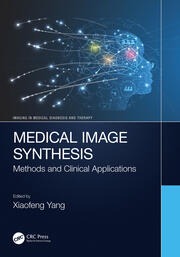
Medical image synthesis : Methods and clinical applications
Image synthesis across and within medical imaging modalities is an active area of research with broad applications in radiology and radiation oncology. This book covers the principles and methods of medical image synthesis, along with state-of-the-art research. First, various traditional non-learning-based, traditional machine-learning-based, and recent deep-learning-based medical image synthesis methods are reviewed. Second, specific applications of different inter- and intra-modality image synthesis tasks and of synthetic image-aided segmentation and registration are introduced and summarized, listing and highlighting the proposed methods, study designs, and reported performances with the related clinical applications of representative studies. Third, the clinical usages of medical image synthesis, such as treatment planning and image-guided adaptive radiotherapy, are discussed. Last, the limitations and current challenges of various medical synthesis applications are explored, along with future trends and potential solutions to solve these difficulties.
