



الصفحة 214
الصفحة 214

Artificial Intelligence : Applications and innovations
It's about the science of artificial intelligence (AI). AI is the study of the design of intelligent computational agents. This book provides a valuable resource for researchers, scientists, professionals, academicians and students dealing with the new challenges and advances in the areas of AI and innovations. This book also covers a wide range of applications of machine learning such as fire detection, structural health and pollution monitoring and control. Provides insight into prospective research and application areas related to industry and technology / Discusses industry- based inputs on success stories of technology adoption / Discusses technology applications from a research perspective in the field of AI / Provides a hands- on approach and case studies for readers of the book to practice and assimilate learning
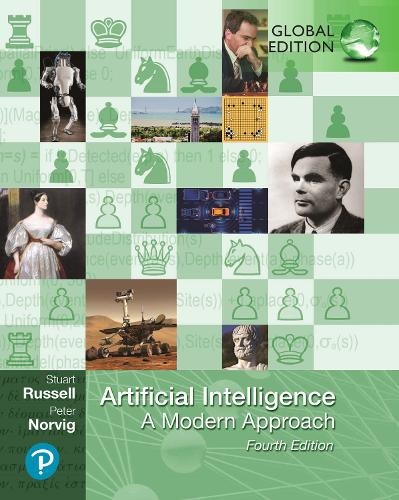
Artificial intelligence : A modern approach ; global ed.
Explores the full breadth and depth of the field of artificial intelligence (AI). The 4th edition brings readers up to date on the latest technologies, presents concepts in a more unified manner, and offers new or expanded coverage of machine learning, deep learning, transfer learning, multi agent systems, robotics, natural language processing, causality, probabilistic programming, privacy, fairness, and safe AI

Artificial immune systems ; Vol. 4163 : 5th International conference, ICARIS 2006, Oeiras, Portugal, September 4-6, 2006, Proceedings
ICARIS 2006 is the ?fth instance of a series of conferences dedicated to the comprehension and the exploitation of immunological principles through their translation into computational terms.Their axis of research tries to stabilize an on-going identity somewhere in the crossroad of engineering (building useful artifacts), natural sciences (biologyor psychology— improving the comprehension and prediction of natural phenomena) and t- oretical computer sciences (developing and mastering the algorithmic world). Accordingly and depending on which of these perspectives receives more s- port, they attempt at attracting di?erent kinds of scientists and at stimul- ing di?erent kinds of scienti?c attitudes. For many years and in the previous ICARIS conferences, it was clearly the “engineering.

Artificial immune systems ; Vol. 3627 ; 4th International conference, ICARIS 2005, Banff, Alberta, Canada, August 14-17, 2005, Proceedings
Your immune system is unique. It is in many ways as complex as your brain, butit is not centred in one location, like the brain. It is not a single organ—it consistsof many different cell types, diverse methods of intercellular communication, andmany different organs. Its functionality is blurred throughout you—we can’textract the immune system, or point to where it begins and ends. The immunesystem is not separable from the system it protects. It has integral links to everyorgan of our bodies.This has radical implications for the field of Artificial Immune Systems (AIS),that we are only now beginning to comprehend. One of the first insights is thatmodelling the immune system, or developing any kind of immune algorithm, isdifficult. The immune system is one aspect of biology that we find difficult toapply simple reductionist explanations to. We can very successfully extract sub-processes of the whole and create immune algorithms based on those processes.

Artificial immune systems ; 7th International Conference, ICARIS 2008, Phuket, Thailand, August 10-13, 2008. Proceedings
This book constitutes the refereed proceedings of the 7th International Conference on Artificial Immune Systems, ICARIS 2008, held in Phuket, Thailand, in August 2008.

Artificial immune systems ; 6th International Conference, ICARIS 2007, Santos, Brazil, August 26-29, 2007, Proceedings
This book contains sections on search and optimization, classification and clustering, anomaly detection and negative selection, robotics, control and electronics. Modeling papers, conceptual papers, and technical papers and general applications are also included.
Artificial gravity
"This book reviews the principle and rationale for using artificial gravity during space missions, and describes the current options proposed, including a short-radius centrifuge contained within a spacecraft. In Artificial Gravity, experts provide recommendations on the research needed to assess whether or not short-radius centrifuge workouts can help limit deconditioning of physiological systems.""Aided by an exquisite group of experts, Gilles Clement and Angie Bukley have managed to put together THE new, comprehensive reference book on artificial gravity. This book will be an essential resource for students, scientists, and program planners alike."

Artificial general intelligence
This book focused on engineering general intelligence – autonomous, self-reflective, self-improving, commonsensical intelligence.Each author explains a specific aspect of AGI in detail in each chapter, while also investigating the common themes in the work of diverse groups, and posing the big, open questions in this vital area.

Artificial evolution ; 8th International Conference, Evolution artificielle, EA 2007, Tours, France, October 29-31, 2007, revised selected papers
This book constitutes the thoroughly refereed post-conference proceedings of the 8th International Conference on Artificial Evolution, EA 2007, held in Tours, France in October 2007.

Artificial evolution ; 7th International Conference, Evolution artificielle, EA 2005, revised selected papers
This book constitutes the thoroughly refereed post-proceedings of the 7th International Conference on Artificial Evolution, EA 2005, held in Lille, France, in October 2005. They cover all aspects of artificial evolution: genetic programming, machinelearning, combinatorial optimization, co-evolution, self-assembling, artificial lifeand bioinformatics.In addition, the program included an invited talk by David Corne on “Evolu-tionary Computation in Bioinformatics: How to Save Lives and Make ScientificBreakthrough.
Artificial economics : Agent-based methods in finance, game theory and their applications
The purpose of this book is to give an up-to date view of the scientific production in the fields of Agent-based Computational Economics (mainly in Market Finance and Game Theory). Based on communications given at AE'2005 (Lille, USTL, France), this book offers a wide panorama of recent advances in ACE (both theoretical and methodological) that will interest academics as well as practitioners.

Artifical intelligence for human computing ; ICMI 2006 and IJCAI 2007 International Workshops, Banff, Canada, November 3, 2006 Hyderabad, India, January 6, 2007 Revised Selceted Papers
This book contains the thoroughly refereed post-proceedings of two events discussing AI for Human Computing.It presented a vision of the future of computing technology in which AI, in particular machine learning and agent technology, plays an essential role.

Articulated motion and deformable objects ; 5th International Conference, AMDO 2008, Port d’Andratx, Mallorca, Spain, July 9-11, 2008. Proceedings
This book constitutes the refereed proceedings of the 5th International Conference on Articulated Motion and Deformable Objects, AMDO 2008, held in Port d'Andratx, Mallorca, Spain, in July 2008.

Artery guidebook : Artery - transforming riversides for the future
"Artery" is an initiative on a European scale, funded by the INTERREG IIIB NWE programme, which puts riverside restoration and regeneration at the heart of regional strategies, helping communities across Europe ‘turn back to face the water’. In this book the implemented strategies will be discussed, including public-private-partnership, public participation, awareness programs and regional development strategies. The book functions as a guide to facilitate similar future projects in other regions. The valuable experience and methods of trans-national cooperation should be made available to other developers, regional planners, project managers and politicians.
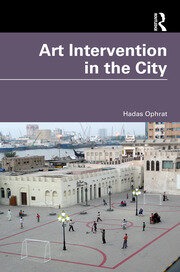
Art Intervention in the City
This book focuses on the phenomenon of art intervention—an expression of local initiatives by artists, collectives, and art centers wishing to influence the design of the space or make a change in its lifestyle.
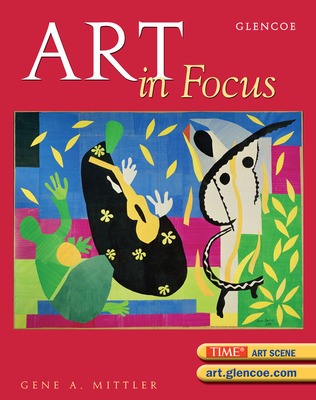
Art in Focus
The premier art history text! This integrated, chronological approach to the study of art demonstrates the interrelationships of aesthetics, art criticism, art history, and studio art.
Arnolds Problems
Arnold's Problems contains mathematical problems.The invariable peculiarity of these problems was that Arnold did not consider mathematics a game with deductive reasoning and symbols, but a part of natural science (especially of physics), i.e. an experimental science. Many of these problems are still at the frontier of research today and are still open, and even those that are mainly solved keep stimulating new research, appearing every year in journals all over the world.The second part of the book is a collection of commentaries, mostly by Arnold's former students, on the current progress in the problems' solutions (featuring a bibliography inspired by them).

Arnheim, Gestalt and Art : A Psychological Theory
The book discovers an unappreciated unity to Arnheim’s thinking. Not content to simply summarize Arnheim’s theory, however, Arnheim, Art, and Gestalt goes on to enrich (and occasionally question) Arnheim’s findings with the contemporary results of gestalt-theoretical research from around the world, but especially in Italy and Germany. The result is a workable overview of the psychology of art with bridges built to contemporary research, making Arnheim’s approach living and sustainable.
Aritmetica, crittografia e codici = Arithmetic, cryptography and codes
The basic techniques of algebra and number theory useful in recent applications to cryptography and codes are developed, with the aim of being elementary and self-sufficient. The emphasis is on computational problems. This part of the volume can be useful as a textbook for a first course in algebra for mathematicians, computer scientists or engineers. Important applications of algebra and geometry to cryptography and codes are then illustrated. Both, cryptography and codes have significant applications in daily life which are illustrated here. Cryptography is developed in detail in much of its classic and current aspects, and both private and public key cryptography are developed. Cryptography with the use of elliptic curves on finite fields is also illustrated. A chapter introducing the subject is dedicated to linear codes.
Arithmetical investigations : Representation theory, orthogonal polynomials, and quantum interpolations
In this volume the author further develops his philosophy of quantum interpolation between the real numbers and the p-adic numbers. The p-adic numbers contain the p-adic integers Zp which are the inverse limit of the finite rings Z/pn. This gives rise to a tree, and probability measures w on Zp correspond to Markov chains on this tree. From the tree structure one obtains special basis for the Hilbert space L2(Zp,w). The real analogue of the p-adic integers is the interval [-1,1], and a probability measure w on it gives rise to a special basis for L2([-1,1],w) - the orthogonal polynomials, and to a Markov chain on "finite approximations" of [-1,1]. For special (gamma and beta) measures there is a "quantum" or "q-analogue" Markov chain, and a special basis, that within certain limits yield the real and the p-adic theories. This idea can be generalized variously. In representation theory, it is the quantum general linear group GLn(q)that interpolates between the p-adic group GLn(Zp), and between its real (and complex) analogue -the orthogonal On (and unitary Un )groups. There is a similar quantum interpolation between the real and p-adic Fourier transform and between the real and p-adic (local unramified part of) Tate thesis, and Weil explicit sums.
