



الصفحة 21
الصفحة 21

IUTAM symposium on elementary vortices and coherent structures : Significance in turbulence dynamics ; Proceedings of the IUTAM Symposium held at Kyoto International Community House, Kyoto, Japan, 26-28 October, 2004
This book contains 40 contributions presented there, the subjects of which cover vortex dynamics, coherent structures, chaotic advection and mixing, statistical properties of turbulence, rotating and stratified turbulence, instability and transition, dynamics of thin vortices, finite-time singularity, and superfluid turbulence. The book should be useful for readers of graduate and advanced levels in the field of fluid turbulence.
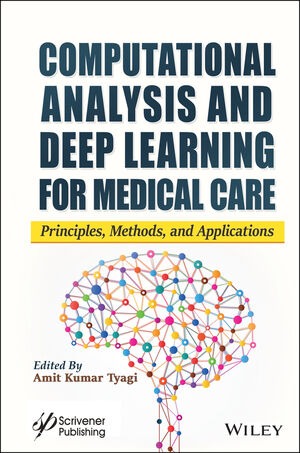
Computational analysis and deep learning for medical care : Principles, methods, and applications
Focuses on the sophisticated methods for improving dye extraction and dyeing properties which will minimize the use of bioresource products. This book also brings out the innovative ways of wet chemical processing to alleviate the environmental impacts arising from this sector.
Composite Materials : Properties as Influenced by Phase Geometry
This book deals with the mechanical and physical behavior of composites as influenced by composite geometry. This monograph provides a comprehensive introduction for researchers and students to modern composite materials research with a special emphasis on the influence of geometry to materials properties. Composite Materials enables the reader to a better understanding of the behavior of natural composites, improvement of such materials, and design of new materials with prescribed properties.
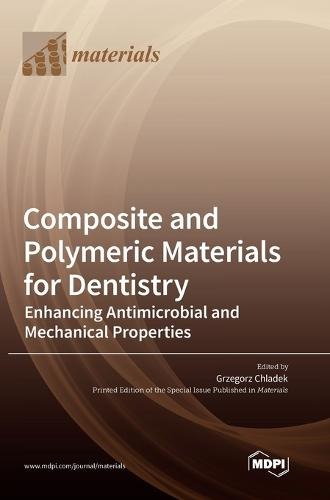
Composite and polymeric materials for dentistry: enhancing antimicrobial and mechanical properties
Focuses on enhancing antimicrobial and mechanical properties of polymeric materials and composites for dentistry. In recent years, special attention has been focused on the possibility of giving materials new or improved properties by the introduction of nano or submicron size additives, fibers or whiskers. Another area of research is the application of antibacterial monomers, which can be copolymerized in resins to kill oral pathogenic microflora. In addition, we are currently looking for new data regarding colonization of dental materials by pathogenic microbes and their influence on the other properties. Further, there are many new commercially available materials which should be investigated to verify their properties, which is important from the point of view of clinical practice. Original new research and reviews related to any of the topics mentioned above indicate the current directions of development of dental materials.
Complexity in chemistry, biology, and ecology
This book, written by an international team of experts, introduces the reader to various aspects of complexity theory and its applications. It illustrates the latest trends in science to go beyond the mechanistic Newtonian view of the world by shifting the focus to self-organization, adaptation, and emergent phenomena. The authors discuss these properties of complex systems in biology, ecology and chemistry along with the structure and interconnectedness of the "layers" of complexity. The qualitative description is complemented by a discussion of methods for complexity quantification. Networks are covered in detail as a universal language of the complex world.
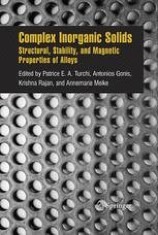
Complex Inorganic Solids : Structural, Stability, and Magnetic Properties of Alloys
One the key aspects of this volume is to cut across the traditional taxonomy of disciplines in the study of alloys. Hence there has been a deliberate attempt to integrate the different approaches taken towards alloys as a class of materials in different fields, ranging from geology to metallurgical engineering. The emphasis of this book is to highlight commonalities between different fields with respect to how alloys are studied. The topics in this book fall into several themes, which suggest a number of different classification schemes. We have chosen a scheme that classifies the papers in the volume into the categories Microstructural Considerations, Ordering, Kinetics and Diffusion, Magnetic Considerations and Elastic Considerations. The book has juxtaposed apparently disparate approaches to similar physical processes, in the hope of revealing a more dynamic character of the processes under consideration. This monograph will invigorate new kinds of discussion and reveal challenges and new avenues to the description and prediction of properties of materials in the solid state and the conditions that produce them
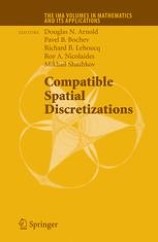
Compatible Spatial Discretizations
Compatible spatial discretizations are those that inherit or mimic fundamental properties of the PDE such as topology, conservation, symmetries, and positivity structures and maximum principles. It offer a snapshot of the current trends and developments in compatible spatial discretizations. The reader will find valuable insights on spatial compatibility from several different perspectives and important examples of applications compatible discretizations in computational electromagnetics, geosciences, linear elasticity, eigenvalue approximations and MHD. The contributions collected in this volume will help to elucidate relations between different methods and concepts and to generally advance our understanding of compatible spatial discretizations for PDEs.

Commutative algebras of Toeplitz Operators on the Bergman Space
This book is devoted to the spectral theory of commutative C*-algebras of Toeplitz operators on the Bergman space and its applications. For each such commutative algebra there is a unitary operator which reduces Toeplitz operators from this algebra to certain multiplication operators, thus providing their spectral type representations. This yields a powerful research tool giving direct access to the majority of the important properties of the Toeplitz operators studied herein, such as boundedness, compactness, spectral properties, invariant subspaces.
Common Chinese materia medica ; Vol.6
Describes 226 species of 32 families of medicinal plants, which are commonly used in Chinese medicine. The most important species are Aquilaria sinensis and Daphne genkwa of Thymelaeaceae; Benincasa hispida, Siraitia grosvenorii, Trichosanthes kirilowii and Trichosanthes rosthornii of Cucurbitaceae; Camellia sinensis of Theaceae; Cleistocalyx operculatus, Eugenia caryophyllata and Rhodomyrtus tomentosa of Myrtaceae; Osbeckia chinensis of Melastomataceae; Quisqualis indica and Terminalia chebula of Combretaceae; Hypericum japonicum of Hypericaceae; Microcos paniculata of Tiliaceae; Hibiscus mutabilis of Malvaceae; Croton crassifolius, C. lachnocarpus, C. tiglium, Euphorbia humifusa, E. lathyris, E. pekinensis, Phyllanthus emblica and Sauropus spatulifolius of Euphorbiaceae. In each specie, it introduces the scientific names, medicinal names, morphologies, habitats, distributions, acquisition and processing methods of these medicinal plants, the content of medicinal properties, therapeutic effects, usage and dosage of these medicinal plants, and attaches unedited color pictures and pictures of part herbal medicines of each species.
Common Chinese Materia Medica ; Vol.4
Describes 256 species of medicinal plants from 5 families, which are commonly used in Chinese medicine. The most important species are Agrimonia pilosa, Amygdalus persica, Armeniaca mume, Armeniaca vulgaris, Armeniaca sibirica, Chaenomeles sinensis, Eriobotrya japonica of Rosaceae; Chimonanthus praecox of Calycanthaceae;Albizia julibrissin, Archidendron clypearia, Entada phaseoloides, Bauhinia championii of Mimosoideae; Caesalpinia sappan, Cassia tora, Gleditsia sinensis of Caesalpiniaceae; Abrus cantoniensis, Astragalus membranaceus, Astragalus membranaceus, Dalbergia odorifera, Desmodium caudatum, Desmodium styracifolium, Erythrina variegata, Euchresta japonica, Flemingia prostrata, Glycyrrhiza uralensis, Glycyrrhiza inflata, Glycyrrhiza glabra, Lablab purpureus, Sophora japonica and Spatholobus suberectus of Butterflyaceae. In each specie, it introduces the scientific names, medicinal names, morphologies, habitats, distributions, acquisition and processing methods of these medicinal plants, the content of medicinal properties, therapeutic effects, usage and dosage of these medicinal plants, and attaches unedited color pictures and pictures of part herbal medicines of each species. This book series has 10 volumes in total, which covers over 2000 kinds of Chinese medicines that are commonly used. These volumes not only introduce the efficacy function and some prescriptions of the medicines, but also introduce the biological characteristics of them in detail with clear photos of the habitats, so that readers can identify them in the field. Apart from the growing environment, the books expound the distribution areas and other information to facilitate researches and other applications. The volumes are targeted at readers of general interests and it is also of high referential value for scientific researcher and teachers. It can be used as a guide to researchers, clinical doctors, and students in the department of pharmaceutics and traditional Chinese medicine.
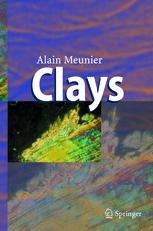
Clays
Here is a comprehensive and up to-do-date presentation of the origins, and properties of clay minerals at the Earths surface. Concluding chapters show that clay minerals can form in variety of different environments: meteorites, lavas, subduction zones, among others.

Classics in total synthesis IV : new targets, strategies, and methods
A compilation of highly important synthetic methods which lead to complex molecules with valuable properties. From the complex architectures of natural products to the streamlined synthesis of functional molecules, each chapter in Classics in Total Synthesis IV unfolds a unique story. The interplay of mechanisms, reactivity, selectivity, and stereochemical aspects is thoroughly examined, echoing the pedagogical format that has become synonymous with this series. Well-designed graphics are included throughout, and all important parts of the reaction sequences are highlighted.

Classical Nucleation Theory in Multicomponent Systems
Nucleation is the initial step of every first-order phase transition, and most phase transitions encountered both in everyday life and industrial processes are of the first-order. Using an elegant classical theory based on thermodynamics and kinetics, this book provides a fully detailed picture of multi-component nucleation. As many of the issues concerning multi-component nucleation theory have been solved during the last 10-15 years, it also thoroughly integrates both fundamental theory with recent advances presented in the literature. It covered are: the basic relevant thermodynamics and statistical physics; modelling a molecular cluster as a spherical liquid droplet; predicting the size and composition of the nucleating critical clusters; kinetic models for cluster growth and decay; calculating nucleation rates; and a full derivation and application of nucleation theorems that can be used to extract microscopic cluster properties from nucleation rate measurements.
Classical geometries in modern contexts : Geometry of real inner product spaces
This book is based on real inner product spaces X of arbitrary (finite or infinite) dimension greater than or equal to 2. With natural properties of (general) translations and general distances of X, euclidean and hyperbolic geometries are characterized. For these spaces X also the sphere geometries of Möbius and Lie are studied (besides euclidean and hyperbolic geometry), as well as geometries where Lorentz transformations play the key role. The geometrical notions of this book are based on general spaces X as described. This implies that also mathematicians who have not so far been especially interested in geometry may study and understand great ideas of classical geometries in modern and general contexts.
Classical geometries in modern contexts : Geometry of real inner product spaces
This book is based on real inner product spaces X of arbitrary (finite or infinite) dimension greater than or equal to 2. With natural properties of (general) translations and general distances of X, euclidean and hyperbolic geometries are characterized.

Class 2 Transferases VIII : EC 2.6.1.58 - 2.7.1.37
Springer Handbook of Enzymes provides data on enzymes sufficiently well characterized. It offers concise and complete descriptions of some 5,000 enzymes and their application areas. Data sheets are arranged in their EC-Number sequence and the volumes themselves are arranged according to enzyme classes. This new, second edition reflects considerable progress in enzymology: many enzymes are newly classified or reclassified. Each entry is correlated with references and one or more source organisms. New datafields are created: application and engineering (for the properties of enzymes where the sequence has been changed). The total amount of material contained in the Handbook has more than doubled so that the complete second edition consists of 39 volumes as well as a Synonym Index.

Class 2 Transferases VI : EC 2.5.1.31 - 2.6.1.57
Springer Handbook of Enzymes provides data on enzymes sufficiently well characterized. It offers concise and complete descriptions of some 5,000 enzymes and their application areas. Data sheets are arranged in their EC-Number sequence and the volumes themselves are arranged according to enzyme classes. This new, second edition reflects considerable progress in enzymology: many enzymes are newly classified or reclassified. Each entry is correlated with references and one or more source organisms. New datafields are created: application and engineering (for the properties of enzymes where the sequence has been changed). The total amount of material contained in the Handbook has more than doubled so that the complete second edition consists of 39 volumes as well as a Synonym Index.

Class 2 Transferases IX : EC 2.7.1.38 - 2.7.1.112
Springer Handbook of Enzymes provides data on enzymes sufficiently well characterized. It offers concise and complete descriptions of some 5,000 enzymes and their application areas. Data sheets are arranged in their EC-Number sequence and the volumes themselves are arranged according to enzyme classes. This new, second edition reflects considerable progress in enzymology: many enzymes are newly classified or reclassified. Each entry is correlated with references and one or more source organisms. New datafields are created: application and engineering (for the properties of enzymes where the sequence has been changed). The total amount of material contained in the Handbook has more than doubled so that the complete second edition consists of 39 volumes as well as a Synonym Index.

Class 2 Transferases I : EC 2.1.1
This new, second edition reflects considerable progress in enzymology: many enzymes are newly classified or reclassified. Each entry is correlated with references and one or more source organisms. New datafields are created: application and engineering (for the properties of enzymes where the sequence has been changed). The total amount of material contained in the Handbook has more than doubled so that the complete second edition consists of 39 volumes as well as a Synonym Index. In addition, starting in 2009, all newly classified enzymes are treated in Supplement Volumes. Springer Handbook of Enzymes is an ideal source of information for researchers in biochemistry, biotechnology, organic and analytical chemistry, and food sciences, as well as for medicinal applications

Class 2 · Transferases IV EC 2.4.1.1. -2.4.1.89 ; Vol.31
Springer Handbook of Enzymes provides data on enzymes sufficiently well characterized. It offers concise and complete descriptions of some 5,000 enzymes and their application areas. Data sheets are arranged in their EC-Number sequence and the volumes themselves are arranged according to enzyme classes. This new, second edition reflects considerable progress in enzymology: many enzymes are newly classified or reclassified. Each entry is correlated with references and one or more source organisms. New datafields are created: application and engineering (for the properties of enzymes where the sequence has been changed). The total amount of material contained in the Handbook has more than doubled so that the complete second edition consists of 39 volumes as well as a Synonym Index. In addition, starting in 2009, all newly classified enzymes are treated in Supplement Volumes.
