



الصفحة 21
الصفحة 21

Genetics and Genomics of Soybean
The book covers recent progress on genome research in soybeans, including the genetic map with classical, RFLP, SSR and SNP markers; genomic and cDNA libraries, functional genomics platforms (e.g., cDNA, Affymetrix and oligonucleotide based DNA microarrays); physical maps, and the efforts to fully sequence the genome. Given the pending release of the soybean genome sequence, through the efforts of the Department of Energy’s Joint Genome Institute, this book will stand as a critical source of information on soybean.

Genetic surgery : from genes to solutions
As a tool for modifying the genome, gene editing technologies has developed rapidly in recent years, the application of these technologies in basic biomedical research has yielded significant advances in identifying and studying key molecular targets relevant to human diseases and their treatment. The clinical translation of genome editing techniques offers unprecedented biomedical engineering capabilities in the diagnosis, prevention, and treatment of disease or disability...
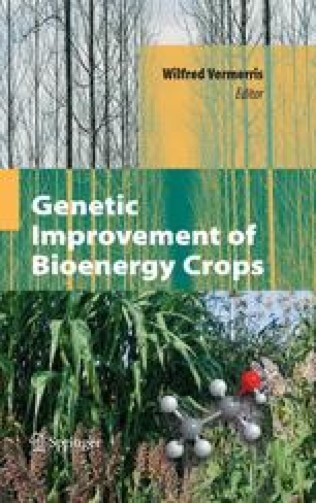
Genetic Improvement of Bioenergy Crops
This book presents an overview of the major bioenergy crops that can be used for the production of biomass and ethanol, with a focus on their genetic improvement. In order to maintain focus, biodiesel and the genetic improvement of oil crops are not covered. The available genetic resources are largely untapped and offer major opportunities to significantly enhance the contribution of bioenergy, while addressing many of the economic and ecological concerns.

Genetic Engineering of Mesenchymal Stem Cells
MSC (mesenchymal stem cells) have been reported to initiate revascularization after injury, to facilitate engraftment of blood-forming stem cells, and to reduce the incidence of graft-vs. host disease through their immune-suppressive qualities. Finally, bone marrow-derived MSC have been reported to home to areas of solid tumor revascularization, and thus may be used as delivery vehicles to target ablative agents into dividing tumor cells. Recently the characteristics of human MSC from adipose (fat) tissue have also been identified. The possibility of repairing tissues, speeding stem cell engraftment, and targeting solid tumors for specific killing, using MSC easily harvested from bone marrow, or better yet, from unwanted fat tissue, holds broad appeal, and is an intriguing possibility that could have dramatic effect on health care. This book has information on how to isolate, grow, and characterize MSC from marrow and fat, and gives important insight into how these cells may be used for gene delivery and cellular therapies in the future. Updates on emerging clinical trials are given.

Genetic Engineering : Principles and Methods
Genetic Engineering: Principles and Methods presents state-of-the-art discussions in modern genetics and genetic engineering. Recent volumes have covered gene therapy research, genetic mapping, plant science and technology, transport protein biochemistry, and viral vectors in gene therapy, among many other topics.

Genetic Engineering
Genetic Engineering: Principles and Methods presents state-of-the-art discussions in modern genetics and genetic engineering. Recent volumes have covered gene therapy research, genetic mapping, plant science and technology, transport protein biochemistry, and viral vectors in gene therapy, among many other topics.

Genetic control of neuronal migrations in human cortical development
Introduction Cortical development is a complex, tightly regulated process that eventually leads to the six-layered adult human neocortex, the substrate of the unique cognitive, emotional, and social abilities of our species. The basic mechanisms of early cortical development are believed to be very similar among mammals, which has led to a tendency of extrapolating experimental data from rodents on humans.

Genetic Basis for Respiratory Control Disorders
The objective of the book is to supply state-of-the-art contributions about all aspects of respiratory control genetics, from the molecular to the system level. The book aims to review the full spectrum of available knowledge, which starts with early physiological studies in health and disease in humans and studies in rodents that suggested a hereditary component to respiratory control. The spectrum extends to recent work elucidating crucial molecular aspects of respiratory control development, from early embryonic specifications in the neural tube to the function of respiratory rhythm generators.

Genes, development, and cancer : The life and work of Edward B. Lewis
Edward B. Lewis' science is the bridge linking experimental genetics as conducted in the first half of the twentieth century, and the powerful molecular genetic approaches that revolutionized the field in its last quarter. For the first time Lewis' key publications in the fields of genetics, developmental biology, radiation and cancer are compiled within one volume.

General Principles of Tumor Immunotherapy : Basic and Clinical Applications of Tumor Immunology
Brings together the world’s leading authorities on tumor immunology. This book describes the basic immunology principles that form the foundation of understanding how the immune system recognizes and rejects tumor cells. The role of the innate and adaptive immune responses is discussed and the implications of these responses for the design of clinical strategies to combat cancer are illustrated through both experimental clinical trials and review of current standard of care therapeutic agents. This information will be invaluable to both students of immunology and cancer research and practicing physicians who have patients with cancer. The book provides a comprehensive overview of the field, demonstrates how advances in basic immunology can and are being applied to cancer, and describes the current status of approved immunotherapy regimens.
General Concepts in Integrated Pest and Disease Management
The first volume of the Integrated Management of Plant Pests and Diseases book series presents general concepts on integrated pest and disease management, organized in three sections. Section one (modeling, management, environment) includes chapters on infection models, resurgence and replacement. The second section (emerging technologies) includes remote sensing and information technology. In the third section (molecular aspects) the management of insect-borne viruses with transmission interference.

Gene Therapy of Autoimmune Disease
Gene Therapy of Autoimmune Diseases comprehensively reviews research in gene therapy for autoimmune diseases with viral or non-viral vectors. Gene therapy offers the possibility of long-term, continuous delivery of a wide variety of immunosuppressive, anti-inflammatory, or tolerance-inducing agents. Moreover, highly specific genetically modified cells can be produced. This book discusses the most promising avenues in this exciting new field.
Gene Expression and Regulation
This book offers a comprehensive look into the science of gene expression and regulation. Focusing on topics such as actions of nuclear receptors, RNA processing, and DNA methylation and imprinting, Gene Expression and Regulation is edited by a leading biologist and includes contributions by experts in the field. Presented in the following five sections, this book covers a full spectrum of topics: The History; The Machinery; The Regulators; The Genome; and Special Topics. The Machinery section covers the transcriptional apparatus and general transcription factors. The Regulators section examines selected gene-specific transcription factors important to regulating gene expression. The Genome section covers issues relevant to the behavior of the genome in relation to gene regulation. The Special Topics section discusses several selected topics ranging from bacterial and plant gene expression to DNA topology and interference RNA. The book’s focus is on scientific concepts and issues, rather than specific organisms or experimental approaches.

Gender and migration : IMISCOE short reader
This short reader offers a critical review of the debates on the transformation of migration and gendered mobilities primarily in Europe, though also engaging in wider theoretical insights. Building on empirical case studies and grounded in an analytical framework that incorporates both men and women, masculinities, sexualities and wider intersectional insights, this reader provides an accessible overview of conceptual developments and methodological shifts and their implications for a gendered understanding of migration in the past 30 years. It explores different and emerging approaches in major areas, such as: gendered labour markets across diverse sectors beyond domestic and care work to include skilled sectors of social reproduction; the significance of families in migration and transnational families.

Gap Junctions in Development and Disease
Starting with a comprehensive review of the various mouse and human genes encoding the channel-forming protein connexin, further chapters describe the most important connexin mutations that lead to diseases such as hereditary deafness and female infertility in humans. Erroneous signaling mediated via connexin-protein interactions, thought to be responsible for disfunction of organs such as heart, muscle, brain, skin, lens, placenta, and endocrine tissue in mice and men, is also addressed.

Galling Arthropods and Their Associates ; Ecology and Evolution
The book addresses recent developments in the ecology, evolution, systematics, physiology, and biodiversity of gall-inducing arthropods, with individual contri butions ranging in scope from detailed descriptions to profoundly synthetic stud ies. One underlying theme of the book is the various impacts of gall induction that indirectly affect insect communities on the host plant. The other important contri bution is the highly intricate and dynamic interactions between galling arthropods and their uniquely specialized host plants. Included also are chapters that discuss biodiversity and distribution patterns of gall-inducing arthropods, and biological control of invasive gall-inducing arthropods and of invasive trees. We believe that this book makes an important contribution to the knowledge of galling arthropods and their associates and to the development of robust, general principles of the ecology and evolution of these organisms.

Galactose Regulon of Yeast : From Genetics to Systems Biology
The galactose regulon of yeast is one of the best studied regulons. It is an ideal paradigm for demonstrating fundamental and evolving concepts in biology and is used in this book as a model system to explain various facets of conventional and modern biology. The book starts with a brief historical overview on yeast research, i.e. early observations in enzyme adaptation, classical genetics, formulating hypotheses based on genetic inference. This is followed by molecular genetics of the galactose regulon, isolation of genes and testing of the hypotheses. The power of mutational analysis in deciphering molecular mechanisms is conveyed. Further, contemporary topics such as genomics, evolution, single cell analysis of transcriptional switching, binary and graded responses, biological consequences of feed back regulation in genetic circuits, and stochasticity are addressed.

Fungal Immunology: From an Organ Perspective
This book will serve as a comprehensive review of all known immune mechanisms for common medically important fungal pathogens. Its novelty lies in the organization: Rather than chapters devoted to specific fungi, chapters are organized by organ system. All other texts in the field, which are now quite old, are arranged according to specific fungi.

Fungal Genomics
Presents an overview on mutualistic and pathogenic interactions between fungi and plants. This book offers reviews on fungal lifestyles, mechanisms of their interactions with their host plants, signal perception and transduction, and plant defense responses directed against attack by fungal pathogens. It is suitable for students in microbiology.

Fundamentals of Protein Structure and Function
This book serves as an introduction to the fundamentals of protein structure and function. Starting with their make up from simple building blocks called amino acids, the 3-dimensional structure of proteins is explained. This is followed by an introduction into enzymology and modern concepts of enzyme kinetics, taking into account the physiological and medical significance of this often neglected topic.
