



الصفحة 208
الصفحة 208
Arctic Alpine ecosystems and people in a changing environment
This book addresses the significant environmental changes experienced by high latitude and high altitude ecosystems at the beginning of the 21st c- tury. Increased temperatures and precipitation, reduction in sea ice and glacier ice, the increased levels of UV-radiation and the long-range tra- ported contaminants in arctic and alpine regions are stress factors that challenge terrestrial and aquatic ecosystems. The large natural variation in the physical parameters of these extreme environments is a key factor in structuring the biodiversity and biotic productivity, and the effect of the new stress factors can be critical for the population structures and the - teraction between species. These changes may also have socio-economic effects if the changes affect the bio-production, which form the basis for the marine and terrestrial food chains. The book is uniquely multidisciplinary and provides examples of va- ous aspects of contemporary environmental change in arctic and alpine - gions. The 21 chapters of the book are organised under the fields of •Climate change and ecosystem response, •Long range transport of poll- ants and ecological impacts, and •UV radiation and biological effects, each also including aspects of the •Socio-economic effects of environmental change. The introductory chapter presents and explains the internal c- nection and integration of all chapters.

Architecture of computing systems ; 34th International Conference, ARCS 2021, Virtual Event, June 7–8, 2021, Proceedings
This book constitutes the proceedings of the 34th International Conference on Architecture of Computing Systems, ARCS 2021, held virtually in July 2021. The 12 full papers in this volume were carefully reviewed and selected from 24 submissions. 2 workshop papers (VEFRE) are also included. ARCS has always been a conference attracting leading-edge research outcomes in Computer Architecture and Operating Systems, including a wide spectrum of topics ranging from fully integrated, self-powered embedded systems up to high-performance computing systems. It also provides a platform covering newly emerging and cross-cutting topics, such as autonomous and ubiquitous systems, reconfigurable computing and acceleration, neural networks and artificial intelligence. The selected papers cover a variety of topics from the ARCS core domains, including heterogeneous computing, memory optimizations, and organic computing.
Architecture of computing systems - ARCS 2008 ; 21st International Conference, Dresden, Germany, February 25-28, 2008. Proceedings
This book constitutes the refereed proceedings of the 21st International Conference on Architecture of Computing Systems, ARCS 2008, held in Dresden, Germany, in February 2008.

Architecture of computing systems - ARCS 2007 ; 20th International Conference, Zurich, Switzerland, March 12-15, 2007, Proceedings
The ARCS is reporting hi- quality results in computer architecture and operating systems research.It is also represent a - namic, evolving community that closely follows new research trends and topics. ARCS has evolved towards a strong focus on s- tem aspects of pervasive computing and self-organization techniques (organic and autonomic computing).

Architecture of computing systems - ARCS 2006 ; 19th International Conference, Frankfurt / Main, Germany, March 13-16, 2006, Proceedings
Technological progress is one of the driving forces behind the dramatic devel- mentofcomputersystemarchitecturesoverthe pastthreedecades.Eventhough it is quite clear that this development cannot only be measured by the ma- mum number of components on a chip, Moore’s Law may be and is often taken as a simple measure for the non-braked growth of computational power over the years. The more components are realizable on a chip, the more innovative and unconventional ideas can be realized by system architects. As a result, research in computer system architectures is more exciting than ever before. This book coversthe trends that shape the ?eld of computer system archit- tures.
Architecture of advanced numerical analysis systems: designing a scientific computing system using ocaml
Applies the functional OCaml programming language to numerical or computational weighted data science, engineering, and scientific applications. This book is based on the authors' first-hand experience building and maintaining Owl, an OCaml-based numerical computing library. You'll first learn the various components in a modern numerical computation library. Then, you will learn how these components are designed and built up and how to optimize their performance. After reading and using this book, you'll have the knowledge required to design and build real-world complex systems that effectively leverage the advantages of the OCaml functional programming language.
Architecture description languages ; IFIP TC-2 workshop on architecture description languages (WADL), World Computer Congress, Aug. 22-27, 2004, Toulouse, France
These proceedings record the papers presented at the Workshop onArchitecture Description Languages held in the city of Toulouse in thesouth of France.The aim of an ADL (Architecture Description Language) is to formallydescribe software and hardware architectures. Usually, an ADL describescomponents, their interfaces, their structures, their interactions (structureof data flow and control flow) and the mappings to hardware systems. Amajor goal of such descriptions is to allow analysis with respect to severalaspects like timing, safety, reliability, ...
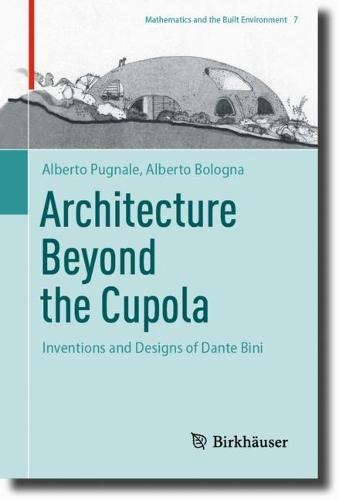
Architecture beyond the cupola : Inventions and designs of Dante Bini
This book reviews Dante Bini’s inventions and designs, focusing on his form-resistant Binishell and other pneumatic construction systems. Dante Bini’s double profile of architect and builder underpins the narrative of the entire book. It is used to analyse the evolution of the early reinforced-concrete Binishell patent into a variety of automated construction systems based on the use of air. Dante Bini has always been quite proactive in promoting his work and disseminating the results of his experimentations and achievements via journal articles, conference presentations and public talks.
Architecture and the novel under the Italian fascist regime
The book is divided into seven chapters, which in turn analyze the interconnections between the novel and architecture in theory and in practice. The first six chapters cover debates on State art, on the novel and on architecture, as well as their historical development and their unfolding in key journals of the period. The last chapter offers a detailed analysis of some important novels and buildings, which have in practice realized some of the key principles articulated in the theoretical disputes.
Architecture and design for industry 4.0 : Theory and practice
The book is structured into three sections (research, practice, and technologies), with the goal of creating a new framework useful for widespread awareness necessary to initiate technology transfer processes for the benefit of the public sector, universities, research centers, and innovative companies, and a new professional figure capable of controlling the entire process is essential. Thus, the book chapters arouse a series of relevant topics such as computational and parametric design, performance-based architecture, data-driven design strategies, parametric environmental design and analysis, computational and parametric structural design and analysis
Architectural interior lighting
Essential guide to creating well-lit, visually appealing interior spaces. The book begins with an overview of light and color theory, lighting fundamentals, and design principles. It then covers artificial, natural, decorative, and professional lighting in interior design, as well as standards and regulations, controls and systems, sustainable lighting, energy efficiency, light pollution reduction, and the use of environmentally friendly materials. With a focus on practical applications and real-world examples, this book provides readers with the tools and knowledge necessary to achieve their design goals while considering the latest trends and techniques in the field. A valuable resource for professionals and students in architecture and lighting design, it will also appeal to anyone interested in creating visually stunning and functional interior spaces.
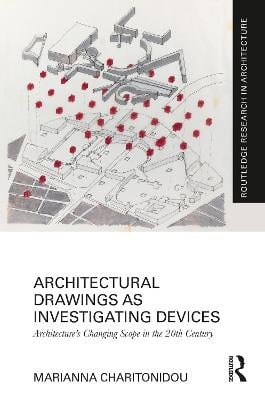
Architectural drawings as investigating devices : Architecture’s changing scope in the 20th century
Explores how the changing modes of representation in architecture and urbanism relate to the transformation of how the addressees of architecture and urbanism are conceived. Diagnoses the dominant epistemological debates in architecture and urbanism during the 20th and 21st centuries. It traces their transformations, paying special attention to Le Corbusier and Ludwig Mies van der Rohe’s preference for perspective representation, to the diagrams of Team 10 architects, to the critiques of functionalism, and the upgrade of the artefactual value of architectural drawings in Aldo Rossi, John Hejduk, Peter Eisenman, and Oswald Mathias Ungers, and, finally, to the reinvention of architectural programme through the event in Bernard Tschumi and the Office for Metropolitan Architecture (OMA). Particular emphasis is placed on the spirit of truth and clarity in modernist architecture, the relationship between the individual and the community in post-war era architecture, the decodification of design process as syntactic analogy and the paradigm of autonomy in the 1970s and 1980s architecture, the concern about the dynamic character of urban conditions and the potentialities hidden in architectural programme in the post-autonomy era.

Architecting Systems with Trustworthy Components ; International Seminar, Dagstuhl Castle, Germany, December 12-17, 2004. Revised Selected Papers
This book constitutes the thoroughly refereed post-proceedings of the International Dagstuhl-Seminar on Architecting Systems with Trustworthy Components, held in Dagstuhl Castle, Germany, in December 2004. The 10 revised full papers presented together with 5 invited papers contributed by outstanding researchers were carefully selected and included in the book reflecting ongoing impovement from the seminar. Core problems addressed by the seminar are measurement and normalization of non-functional properties, modular reasoning over non-functional properties, capture of component requirements in interfaces and protocols, interference and synergy of top-down and bottom-up aspects, duality of componentization and architecture, system properties, and opportunities for correctness by construction/static checking.
Architecting dependable systems V
As software systems become increasingly ubiquitous, the issues of dependability become more and more crucial. Given that solutions to these issues must be considered from the very beginning of the design process, it is reasonable that dependability is addressed at the architectural level. This book was born of an effort to bring together the research communities of software architectures and dependability.
Architecting dependable systems IV
As software systems become ubiquitous, the issues of dependability become more and more crucial. Given that solutions to these issues must be considered from the very beginning of the design process, it is reasonable that dependability is addressed at the architectural level. It also contains sections on architectural description languages, architectural components and patterns, architecting distributed systems, and architectural assurances for dependability.
Architecting dependable systems III
As software systems become ubiquitous, the issues of dependability become more and more crucial. Given that solutions to these issues must be considered from the very beginning of the design process, it is reasonable that dependability is addressed at the architectural level. This book comes as a result of an effort to bring together the research communities of software architectures and dependability. The papers are organised in topical sections on architectures for dependable services, monitoring and reconfiguration in software architectures, dependability support for software architectures, architectural evaluation, and architectural abstractions for dependability
Arabic Computational Morphology : Knowledge-based and Empirical Methods
The morphology of Arabic poses special challenges to computational natural language processing systems. The exceptional degree of ambiguity in the writing system, the rich morphology, and the highly complex word formation process of roots and patterns all contribute to making computational approaches to Arabic very challenging. Indeed many computational linguists across the world have taken up this challenge over time, and many of the researchers with a track record in this research area have contributed to this book.
Arabic and Chinese Handwriting Recognition ; SACH 2006 Summit College Park, MD, USA, September 27-28, 2006 Selected Papers
Cheriet provides an overview of the problems of Arabic recognition and how systems can use natural language processing techniques to correct errors in lexicon-based systems.
Aquatic Biodiversity II : The Diversity of Aquatic Ecosystems
The present book comprises a unique collection of primary research papers spanning a wide range of topics in aquatic biodiversity studies, and including a first global assessment of specific diversity of freshwater animals. The book also presents a section on the interaction between scientists and science policy managers
Aquaponics Food Production Systems : Combined Aquaculture and Hydroponic Production Technologies for the Future
This book, written by world experts in aquaponics and related technologies, provides the authoritative and comprehensive overview of the key aquaculture and hydroponic and other integrated systems, socio-economic and environmental aspects. Aquaponic systems, which combine aquaculture and vegetable food production offer alternative technology solutions for a world that is increasingly under stress through population growth, urbanisation, water shortages, land and soil degradation, environmental pollution, world hunger and climate change.
