



الصفحة 202
الصفحة 202
Ancient Philosophy of the Self
This volume explores the various ways in which selfhood was approached and conceptualised in antiquity. They also describe how the ancient philosophers understood human agents as capable of causing changes and being affected in and by the world. The themes of persistence, identity, self-examination and self-improvement recur in many of these essays. The articles of the collection combine systematic and historical approaches to ancient sources that range from Socrates to Plotinus and Augustine.
Anatomy of the forehead, face, and neck: a dissection manual
Provides a detailed step-by-step approach to the dissection of the forehead, face, and neck, in a structural, layered approach. This dissection manual follows an atlas format, with color photographs from past professional lectures and classroom courses, as well as line drawings, enhancing descriptions. Clinical correlations are also interjected throughout to highlight the importance of individual anatomic structures. Chapters describe the preparation and storage of specimens and the dissection of the forehead and eyebrows, the midface, nose, ear, and lower face, and the neck.
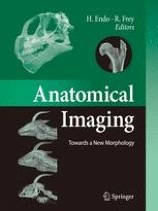
Anatomical Imaging : Towards a New Morphology
This book presents selected works of contemporary evolutionary morphologists and includes such topics as broad scale reconstructions of the brain and ear of dinosaurs, inference of locomotor habits from cancellous bone architecture in fossil primates, and a comparison of the independently evolved manipulating apparatuses in the lesser and giant pandas. Insight is provided into the application of modern noninvasive technologies, including digital imaging techniques and virtual 3D reconstruction, to the investigation of complex anatomical features and coherences. In combination with traditional methods, this allows for the formulation of improved hypotheses on coordinated function and evolution. The creation of virtual translucent specimens makes it possible to realize the age-old dream of the classical anatomists: looking through the skin into the inner organization of an organism. On full display here is the dramatic and promising impact that modern imaging techniques have on scientific progress in evolutionary morphology.

Anaphora and Type Logical Grammar
This book develops a hybrid architecture that allows to incorporate anaphora resolution into grammatical deduction while avoiding these consequences. To this end, the grammar logic is enriched with a connective that specifically deals with anaphora.After giving a self-contained introduction into Type Logical Grammar in general, the book discusses the formal properties of this connective. In the sequel, Jäger applies this machinery to numerous linguistic phenomena pertaining to the interaction of pronominal anaphora, VP ellipsis and quantification. In the final chapter, the framework is extended to indefiniteness, specificity and sluicing.

Anand's Human Anatomy for Dental Students
Presents with six sections. The initial part of first section deals with general anatomy, a must for laying foundation of body structure, chapter 4 is ""organization of body"", gives a comprehensive overview of composition of body, its various parts with essentials of regional anatomy of limbs, thorax and abdomen. Subsequent chapters till chapter no. 17 deals with systemic anatomy, i.e. anatomy of various systems of body with their clinical significance.

Analyzing T cell responses : How to analyze cellular immune responses against tumor associated antigens
Active specific immunotherapy is a promising but investigational modality in the management of cancer patients. Currently, several different cancer vaccine formulations such as peptides, proteins, antigen-pulsed dendritic cells, whole tumor cells, etc. in combination with various adjuvants and carriers are being evaluated in clinical trials (1-3). To determine the optimal cancer

Analyzing Islamic banking trends in Syria and comparing them with islamic banks in the UAE, according to customer size and product type
In the Arabic country there are a lot of peoples follows the Islamic sharia, and these people have avery big investments, and big corporate, and they don’t usually deal or transact with the conventional banks (ribawi banks). So in order to start working with this group of peoples, the first Islamic bank established in the united Arab Emirates in 1975 (Dubai Islamic Bank), with a new products, services, policies, strategies, and it was developed to meet the market needs according to Islamic sharia. Now a day the Islamic banks compete the conventional banks, and eash new products in the conventional banks have an equivalents Islamic products with a specific regulation...
Analyzing computer system performance with Perl::PDQ
Analyzing computer system performance is often regarded by most system administrators, IT professionals and software engineers as a black art that is too time consuming to learn and apply. Finally, this book by acclaimed performance analyst Dr. Neil Gunther makes this subject understandable and applicable through programmatic examples. The means to this end is the open-source performance analyzer Pretty Damn Quick (PDQ) written in Perl As the epigraph in this book points out, Common sense is the pitfall of performance analysis. The performance analysis framework that replaces common sense is revealed in the first few chapters of Part I. The important queueing concepts embedded in PDQ are explained in a very simple style that does not require any knowledge of formal probability theory. Part II begins with a full specification of how to set up and use PDQ replete with examples written in Perl. Subsequent chapters present applications of PDQ to the performance analysis of multicomputer architectures, benchmark results, client/server scalability, and Web-based applications.
Analytics of Protein-DNA Interactions
This book covers trends in modern biotechnology. All aspects of this interdisciplinary technology, where knowledge, methods and expertise are required from chemistry, biochemistry, microbiology, genetics, chemical engineering and computer science, are treated. More information as well as the electronic version is available at springer.com.
Analytical Ultracentrifugation VIII
This book presents a comprehensive collection of 21 contributions from leading scientists in this field covering a broad spectrum of topics and presenting recent progress concerning instrumentation, data analysis and modeling, biological systems, particles, colloids, synthetic macromolecules, interacting systems. Due to the versatility of this fascinating and powerful technique, information and original publications are widespread and comprehensive collections are rare. Therefore, this volume presents a valuable source for biologists, chemists, materials scientists, and physicists interested in most recent information, results and development related to this important analytical method.

Analytical Ultracentrifugation of Polymers and Nanoparticles
Analytical ultracentrifugation (AUC) is a powerful method for the characterization of polymers, biopolymers, polyelectrolytes, nanoparticles, dispersions, and other colloidal systems. The method is able to determine the molar mass, the particle size, the particle density and interaction parameters like virial coefficients and association constants. Because AUC is also a fractionation method, the determination of the molar mass distribution, the particle size distribution, and the particle density distribution is possible. A special technique, the density gradient method, allows fractionating heterogeneous samples according to their chemical nature that means being able to detect chemical heterogeneity.

Analytical Techniques in the Oil and Gas Industry for Environmental Monitoring
The book discusses the conventional analyses for oil and natural gas feeds, along with their limitations. It offers detailed descriptions of advanced analytical techniques that are commercially available, plus explanations of gas and oil industry equipment and instrumentation. You’ll find technique descriptions supplemented with a list of references as well as with real-life application examples. With this book as a reference, you can prepare to apply specific analytical methods in your organization’s lab environment. Analytical Techniques can also serve as your comprehensive resource on key techniques in the characterization of oil and gas samples, within both refinery and environmental contexts.
Analytical Methods for Problems of Molecular Transport
"This book is designed to serve a dual function. It is intended that it be capable of serving as a teaching instrument, either in a classroom environment or independently, for the study of basic analytical methods and mathematical techniques that may be used in the Kinetic Theory of Gases and is primarily suitable for use in graduate level physics and engineering courses on the subject. This book should also be useful as a reference for scientists and engineers working in the fields of Rarefied Gas Dynamics and Aerosol Mechanics. In addition, the material in this book may be of interest to individuals working in such areas as Physical Chemistry, Chemical Engineering, or any other applied discipline in which gas-surface interactions should play a significant role."-
Analytical Chemistry : Theoretical and Metrological Fundamentals
Fundamentals of Analytical Chemistry are usually presented as a sum of chemical and physical foundations, laws, axioms and equations for analytical methods and procedures. In contrast, this book delivers a practice-oriented, general guiding theory valid for all methods and techniques. Starting with a closer look to analytical signals and their dependencies, all the important figures of merit characterizing the power of analytical procedures and the reliability of analytical results are discussed and quantified, such as sensitivity, precision, accuracy and ruggedness. Elements of signal theory, information theory, statistics and fundamentals of calibration are also presented for this aim.

Analytic Number Theory : Lectures given at the C.I.M.E. Summer School held in Cetraro, Italy, July 11-18, 2002
The four contributions collected in this volume deal with several advanced results in analytic number theory. Friedlander’s paper contains some recent achievements of sieve theory leading to asymptotic formulae for the number of primes represented by suitable polynomials. Heath-Brown's lecture notes mainly deal with counting integer solutions to Diophantine equations, using among other tools several results from algebraic geometry and from the geometry of numbers. Iwaniec’s paper gives a broad picture of the theory of Siegel’s zeros and of exceptional characters of L-functions, and gives a new proof of Linnik’s theorem on the least prime in an arithmetic progression. Kaczorowski’s article presents an up-to-date survey of the axiomatic theory of L-functions introduced by Selberg, with a detailed exposition of several recent results.
Analysis, Modeling and Simulation of Multiscale Problems
This book reports recent mathematical developments in the Programme "Analysis, Modeling and Simulation of Multiscale Problems", which started as a German research initiative in 2006. Multiscale problems occur in many fields of science, such as microstructures in materials, sharp-interface models, many-particle systems and motions on different spatial and temporal scales in quantum mechanics or in molecular dynamics. The book presents current mathematical foundations of modeling, and proposes efficient numerical treatment.
Analysis of Structures by Matrix Methods
Deals with the analysis of engineering structures made of skeletal members and covers the type of structures that are commonly used in practice. It builds up on the subject matter dealing with matrix algebra, analysis of bar elements, special forms of members, stability and vibration of structures, and pin-connected, rigid-plane, and 3D frames. It treats the important step of formulating the overall stiffness matrix of a structure in a systematic and straightforward manner and uses simple mathematical approaches wherever possible.

Analysis of seawater : A guide for the analytical and environmental chemist
It is only in the past few years that methods of adequate sensitivity have become available for true ultra-trace metal determinations in water. In the case of organics in seawater it has now become possible to resolve the complex mixtures of organics in seawater and achieve the required very low detection limits. Fortunately, the interest in micro-constituents in the seawater both from the environmental and the nutrient balance points of view has coincided with the availability of advanced instrumentation capable of meeting the analytical needs. This complete and up-to-date compilation of the currently employed proven methods for the chemical analysis of seawaters includes 45 tables and 48 figures.
Analysis of failure in fiber polymer laminates : the theory of Alfred Puck
This book presents for the first time comprehensively the Theory of Alfred Puck on failure in Fiber Polymer Laminates. After a brief introduction into the failure analysis of laminates and its history, the text focuses first on Puck’s fracture criteria and gives detailed information on their physical background, mathematical derivation and application. Another core part of Puck’s Theory is his concept for Post Failure Analysis. Here, too, the physical background and the analytical procedure are presented. The theoretical chapters are completed by the presentation of the latest developments, namely the consideration of residual stresses and probabilistic effects. The second main part of the book deals with the extensive experimental verification program which has been accomplished since the mid 1990’s. As a result of this work, the Puck Theory can be regarded as better verified than any other theory. All experimental set ups and the major results are presented and explained.

Analysis II : Differential and Integral Calculus, Fourier Series, Holomorphic Functions
Functions in R and C, including the theory of Fourier series, Fourier integrals and part of that of holomorphic functions.It is suitable for both teaching and self-study. In his familiar, personal style, the author emphasizes ideas over calculations and, avoiding the condensed style frequently found in textbooks, explains these ideas without parsimony of words.
