



الصفحة 200
الصفحة 200

Africa-Europe Research and Innovation Cooperation : Global Challenges, Bi-regional Responses
Concerned with the evolution and achievements of cooperation in research and innovation between Africa and Europe, and points to the need for more diversified funding and finance mechanisms, and for novel models of collaboration to attract new actors and innovative ideas. It reflects on the political, economic, diplomatic and scientific rationale for cooperation, while also examining practical developments, illustrated with examples, in the fields of food security, health, and climate change. The need to mobilise scientific knowledge and to ensure equality and fairness in the cooperation are recurrent themes. Africa-Europe Cooperation in Research and Innovation is essential reading for policy makers and researchers in international relations and science diplomacy.
Affirmative aesthetics and wilful women : Gender, space and wobility in contemporary cinema
Adopts a fluid approach to space designed to accommodate wilful, affirmative, and imaginative perspectives of gender on screen.

Affective computing and intelligent interaction ; 2nd International Conference, ACII 2007, Lisbon, Portugal, September 12-14, 2007, Proceedings
Organized in topical sections on affective facial expression and recognition, affective body expression and recognition, affective speech processing, affective text and dialogue processing, recognising affect using physiological measures, computational models of emotion and theoretical foundations, affective databases, annotations, tools and languages, affective sound and music processing, affective interactions: systems and applications, as well as evaluating affective systems.

Affect and Mathematics Education : Fresh Perspectives on Motivation, Engagement, and Identity
Presents the latest trends in research in the area. Following an introduction and a survey chapter providing a concise overview of the state-of-art in the field of mathematics-related affect, the book is divided into three main sections: motivation and values, engagement, and identity in mathematics education. Each section comprises several independent chapters based on original research, as well as a reflective commentary by an expert in the area. Collectively, the chapters present a rich methodological spectrum, from narrative analysis to structural equation modelling.
Affect and Emotion in Human-Computer Interaction : From Theory to Applications
The present book provides an account of the latest work on a variety of aspects related to affect and emotion in human-technology interaction. It covers theoretical issues, user experience and design aspects as well as sensing issues, and reports on a number of affective applications that have been developed in recent years.

Aesthetic Surgery of the Abdominal Wall
We have come a long way since the days when abdominal wall contouring was p- formed by simple dermolipectomies, with no attention to diastasis correction and muscular reinforcement, and little regard for the final aesthetic result. Nowadays, an abdominoplasty may be indicated for even the most demanding of patients. Details such as placement of the incision and umbilicoplasty are meticulously planned so as to conceal undesirable scars. Since the advent of suction-assisted lipectomy, in as- ciation with a classical operation or as an isolated procedure, the plastic surgeon has become capable of remodeling the entire trunk, assuring removal of considerable amounts of adipose tissue.
Advertising management : Concepts, theories, research and trends
Explores the concept of advertising and the different ways advertising is understood and evaluated. It dives deep into planning, designing, and executing advertising campaigns on different mediums. It discusses the theoretical and research parts of advertising by critically examining how over the years various hierarchical models and theories are developed by advertising experts. It examines various models and theories that explain why and how advertising is successful in persuading customers target audiences to buy a product or accept an idea for behavioural change.
Advertising in contemporary consumer culture
This is the first scholarly book dedicated to reading the work of contemporary filmmakers and their impact on modern marketing and advertising. Drawing from consumer culture theory, film and media studies, the author presents an expansive analysis of a range of renowned filmmakers who have successfully applied their aesthetic and narrative vision to commercial advertising. It challenges some traditional advertising tropes and sheds light on the changing nature of advertising in the contemporary media context. Utilising Deleuze and Guattari’s notion of assemblage, This book addresses themes of spatiality and time, narrative and aesthetics and consumer reception within a new frame of reference that re-contextualises classical concepts of genre, platform and aesthetic categories. These diverse elements are embedded into a larger discussion of the resonance of contemporary advertising for consumer culture and the implications of the hybridity characteristic of convergent media platforms for understanding the potential of advertising in the twenty-first century.
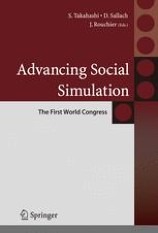
Advancing Social Simulation: The First World Congress
Agent-based modeling and social simulation have emerged as both developments of and challenges to the social sciences. The developments include agent-based computational economics and investigations of theoretical sociological concepts using formal simulation techniques. Among the challenges are the development of qualitative modeling techniques, implementation of agent-based models to investigate phenomena for which conventional economic, social, and organizational models have no face validity, and the application of physical modeling techniques to social processes. Bringing together diverse approaches to social simulation and research agendas.
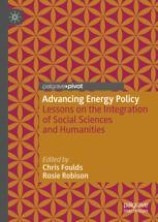
Advancing Energy Policy : Lessons on the integration of Social Sciences and Humanities
Advocates for the Social Sciences and Humanities to be more involved in energy policymaking. It forms part of the European platform for energy-related Social Sciences and Humanities’ activities, and works on the premise that crossing disciplines is essential. All of its contributions are highly interdisciplinary, with each chapter grounded in at least three different Social Sciences and Humanities disciplines. These varying perspectives come together to cover an array of issues relevant to the energy transition, including: energy poverty, justice, political ecology, governance, behaviours, imaginaries, systems approaches, modelling, as well as the particular challenges faced by interdisciplinary work. As a whole, the book presents new ideas for future energy policy, particularly at the European level. It is a valuable resource for energy researchers interested in interdisciplinary and society-relevant perspectives. Those working outside the Social Sciences and Humanities will find this book an accessible way of learning more about how these subjects can constructively contribute to energy policy.
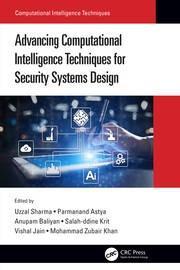
Advancing Computational Intelligence Techniques for Security Systems Design
Security systems have become an integral part of the building and large complex setups, and intervention of the computational intelligence (CI) paradigm plays an important role in security system architecture. This book covers both theoretical contributions and practical applications in security system design by applying the Internet of Things (IoT) and CI. It further explains the application of IoT in the design of modern security systems and how IoT blended with computational intel- ligence can make any security system improved and realizable. Focuses on the computational intelligence techniques of security system design / Covers applications and algorithms of discussed computational intelligence techniques / Includes convergence-based and enterprise integrated security systems with their applications / Explains emerging laws, policies, and tools affecting the landscape of cyber security / Discusses application of sensors toward the design of security systems

Advances on testing and experimentation in civil engineering : Materials, structures and buildings
Presents the most recent advances on testing and experimentation in civil engineering, especially in the branches of materials, structures, and buildings, complementing the authors’ publication Advances on Testing and Experimentation in Civil Engineering - Geotechnics, Transportation, Hydraulics and Natural Resources. It includes advances in physical modelling, monitoring techniques, data acquisition and analysis, and provides an invaluable contribution to the installation of new civil engineering experimental facilities.

Advances on mechanics, design engineering and manufacturing III ; Proceedings of the international joint conference on mechanics, design engineering & advanced manufacturing, JCM 2020, June 2-4, 2020
This open access book gathers contributions presented at the International Joint Conference on Mechanics, Design Engineering and Advanced Manufacturing (JCM 2020), held as a web conference on June 2–4, 2020.
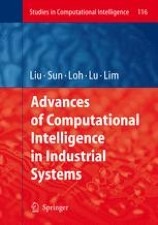
Advances of Computational Intelligence in Industrial Systems
Advances of Computational Intelligence in Industrial Systems reports the exploration of CI frontiers with an emphasis on a broad spectrum of real-world applications. Section I – Theory and Foundation presents some of the latest developments in CI.

Advances in web-based learning - ICWL 2005 ; 4th international conference, Hong Kong, China, July 31 - August 3, 2005, proceedings
With the rapid development of Web-based learning, a new set of learning - vironments including virtual classrooms, virtual laboratories and virtual universities are being developed. These new learning environments, however, also introduce new problems that need to be addressed. On the technical side, there is a need for the deployment of effective technologies on Web-based education. On the learning side, the cyber mode of learning is very different from tra- tional classroom-based learning. On the management side, the establishment of a cyber university imposes very different requirements for the set up. ICWL 2005, the 4th International Conference on Web-Based Learning, was held in Hong Kong, China from July 31 to August 3, 2005, as a continued - tempt to address many of the above-mentioned issues. Following the great success of ICWL
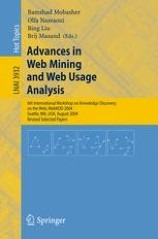
Advances in web mining and web usage analysis ; 6th International workshop on knowledge discovery on the web, WEBKDD 2004, Seattle, WA, USA, August 22-25, 2004, Revised Selected Papers
The Webisaliveenvironmentthatmanagesanddrivesawidespectrumofapp- cations in which a user may interact with a company, a governmental authority, a non-governmental organization or other non-pro?t institution or other users. User preferences and expectations, together with usage patterns, form the basis for personalized, user-friendly and business-optimal services. Key Web business metrics enabled by proper data capture and processing are essential to run an e?ective business or service. Enabling technologies include data mining, sc- able warehousing and preprocessing, sequence discovery, real time processing, document classi?cation, user modeling and quality evaluation models for them. Recipient technologies required for user pro?ling and usage patterns include recommendation systems, Web analytics applications, and application servers, coupled with content management systems and fraud detectors.
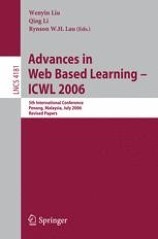
Advances in web based learning -- ICWL 2006 ; 5th International conference, Penang, Malaysia, July 19-21, 2006, Revised Papers
The conference program was organized in a single-track 3-day workshop. It included a tutorial, a keynote talk, and oral/poster paper presentations in several sessions dedicated to specific topics. Session topics included “Personalization in E-Learning,” “Designs, Model and Framework of E-Learning Systems,” “Implementations and Evaluations of E-Learning Systems,” “Tools in E-Learning,” and “Learning Resource Deployment, Organization and Management. ” We received a total of 99 submissions from all over the world.

Advances in web and network technologies, and information management ; APWeb/WAIM 2007 International Workshops : DBMAN 2007, WebETrends 2007, PAIS 2007 and ASWAN 2007, Huang Shan, China, June 16-18, 2007, Proceedings
With the increasing ubiquity of personal computing devices, such as mobile phones and PDAs, and the increasing deployment of sensor networks, new distributed applications are developed over networked databases posing interesting challenges. It aimed to bring together researchers in different fields related to database management and application over networks and to provide a forum where researchers and practitioners could share and exchange their knowledge and experience.

Advances in visual computing ; Vol. 4292 ; 2nd International symposium, ISVC 2006, Lake Tahoe, NV, USA, November 6-8, 2006, Proceedings, Part II
This year, the program consisted of 13 oral sessions, one poster session, ten special tracks, and six keynote presentations. The response to the call for - pers was very strong. We received more than twice the papers received last year. Specifcally, we received over 280 submissions for the main symposium from which we accepted 65 papers for oral presentation (23% acceptance) and 56 papers for poster presentation (20% acceptance). Special track papers were solicited separately through the Organizing and Program Committees of each track. A total of 57 papers were accepted for presentation in the special tracks. All papers were reviewed with an emphasis on potential to contribute to the state of the art in the ?eld. Selection criteria included accuracy and originality of ideas, clarity and signi?cance of results, and presentation quality. The review process was quite rigorous, involving two to three independent blind reviews followed by several days of discussion.

Advances in Visual Computing ; Vol. 4291 ; 2nd International Symposium, ISVC 2006, Lake Tahoe, NV, USA, November 6-8, 2006, Proceedings, Part I
This year, the program consisted of 13 oral sessions, one poster session, ten special tracks, and six keynote presentations. The response to the call for - pers was very strong. We received more than twice the papers received last year. Specifcally, we received over 280 submissions for the main symposium from which we accepted 65 papers for oral presentation (23% acceptance) and 56 papers for poster presentation (20% acceptance). Special track papers were solicited separately through the Organizing and Program Committees of each track. A total of 57 papers were accepted for presentation in the special tracks. All papers were reviewed with an emphasis on potential to contribute to the state of the art in the ?eld. Selection criteria included accuracy and originality of ideas, clarity and signi?cance of results, and presentation quality. The review process was quite rigorous, involving two to three independent blind reviews followed by several days of discussion. During the discussion period we tried to correct anomalies and errors that might have existed in the initial reviews.
