



الصفحة 20
الصفحة 20
Big data and artificial intelligence in digital finance : Increasing personalization and trust in digital finance using big data and AI
This book presents how cutting-edge digital technologies like Machine Learning, Artificial Intelligence (AI), and Blockchain are set to disrupt the financial sector. The book illustrates how recent advances in these technologies facilitate banks, FinTechs, and financial institutions to collect, process, analyze, and fully leverage the very large amounts of data that are nowadays produced and exchanged in the sector. To this end, the book also introduces some of the most popular Big Data, AI and Blockchain applications in the sector, including novel applications in the areas of Know Your Customer (KYC), Personalized Wealth Management and Asset Management, Portfolio Risk Assessment, as well as variety of novel Usage-based Insurance applications based on Internet-of-Things data.

Best of Detail : Fassaden / Facades : Architectural highlights from DETAIL on the topic 'Facades' - best of DETAIL
The facade serves as the building's public face, allowing rapid assessment of its architecture. 'Best of Detail: Facades' explores this topic with theoretical discussions and an in-depth look at a range of selected projects, which, besides showcasing suitable materials and designs, give the reader a detailed look behind the scenes. It turns out that quality architecture can only result from a coherency between the facade, structure, internal organisation and building services design elements that interact directly with each other. This presents the architect with enormous challenges, particularly as the unity between the exterior and interior is no longer a given, as today's range of materials and design possibilities offer nearly limitless creativity.

Benefit/Cost-Driven Software Development : With Benefit Points and Size Points
This book presents a set of basic techniques for estimating the benefit of IT development projects and portfolios. It also offers methods for monitoring how much of that estimated benefit is being achieved during projects. Readers can then use these benefit estimates together with cost estimates to create a benefit/cost index to help them decide which functionalities to send into construction and in what order. This allows them to focus on constructing the functionality that offers the best value for money at an early stage.

Behavioral consultation and primary care : A guide to integrating services
Comprehensive, wise, and incredibly practical, this exciting volume walks through the joys and challenges of an entirely new vision of behavioral health consultation in primary care settings. Gently, and with good humor, the authors show how to avoid key errors, and provide a detailed, point by point guideline for success in an effective and needed new form of practice. You will forever think differently about the proper role of behavioral health providers in health care delivery. Even better, you will be prepared to do something about it. -- Steven C. Hayes, University of Nevada The Primary Care Behavioral Health (PCBH) model is fast emerging as the future of integration between mental health and primary care services.

Battery management systems : Accurate state-of-charge indication for battery-powered applications
Builds further on the contents of the first volume in the Philips Research Book Series, Battery Management Systems - Design by Modelling. Since the subject of battery SoC indication requires a number of disciplines, this book covers all important disciplines starting from (electro)chemistry to understand battery behaviour, via mathematics to enable modelling of the observed battery behaviour and measurement science to enable accurate measurement of battery variables and assessment of the overall accuracy, to electrical engineering to enable an efficient implementation of the developed SoC indication system. It will therefore serve as an important source of information for any person working in engineering and involved in battery management.
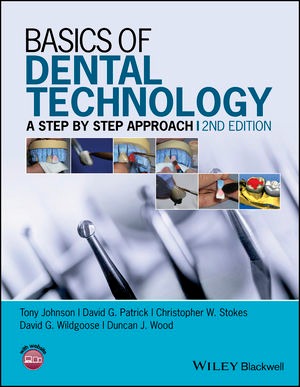
Basics of dental technology : a step by step approach
A complete reference for the current techniques and materials used in dental technology. Retains the accessible, task-based approach and step-by-step guidance. Features digital dental technology and an interactive student website to support self-assessment. Explains key competencies, concepts, instruments, and equipment, and also introduces more specialist techniques and procedures, such as denture prosthetics, fixed prosthodontics and orthodontic work. Provides essential information for trainee dental technicians and students learning about dental technology, including study tips and strategies for working effectively within a dental team

Basic guide to infection prevention and control in dentistry
Provides step-by-step guidance on the safe running of a dental practice, clear and concise explanations of the key issues and concepts, an overview of the evidence base, and coverage of legal and regulatory issues about which all staff members need to be aware. With more colour photographs and illustrations than the first edition, it also includes appendices full of useful practical and clinical information, and a companion website offering helpful instructional videos and self-assessment questions.

Atlas of breast surgery
In recent years, there have been several important developments in the surgical management of breast diseases, such as new techniques for tumor resection, reconstructive surgery, lymph node assessment, and cosmetic surgery. Thus, perhaps more than in any other field, breast surgery has evolved into both a surgical science and an art. This atlas describes various surgical techniques for treating diseases of the breast, incorporating both the science and art of this unique field.

Assessment Reform in Science : Fairness and Fear
The conclusions and recommendations made in this book are derived from a study of ten teachers in Hong Kong as they tried to change their practice following a reform of the Hong Kong assessment system.
Assessment of the fate and effects of toxic agents on water resources
Like all limited and vulnerable resources, water has become one of the potential targets of terrorists. Coastal lagoons are especially vulnerable as they are densely populated centers of commerce and/or tourism. This volume addresses the basic scientific concepts that must be integrated by decisionmakers to minimize damages and optimize recovery operations in the aftermath of such an attack. Scientists from many disciplines including water resource management, hydrodynamics, aquatic ecology and social science combine their expertise in an effort to assess and model emergency scenarios for coastal lagoon systems. This case study uses existing numerical models such as-EFCD, WASP and AQUATOX are used to demonstrate how to optimize rapid response and decision-making

Assessment of syrian physicians’ knowledge and management of dental trauma – combined survey
Dental trauma (traumatic dental injury, TDI) encompasses injuries to teeth, periodontium, and surrounding tissues, with significant physical, psychological, and socioeconomic consequences. Despite its high prevalence, particularly among children, many physicians lack adequate training in TDI management. This cross-sectional survey assessed Syrian physicians’ knowledge, practices, and confidence in managing dental trauma, identifying gaps and barriers to optimal care.

Assessment of mandibular angle and condyle morphology in a sample of Syrian people
The purpose of this study was to determine the prevalence of radiographic changes in the mandibu‐ lar angle (bone apposition) and osseous alterations in the temporomandibular joints (TMJs) in a sample of adult Syrian population . In addition, the study intended to investigate possible correlations between the two sites of contour bone changes (mandibular angle and TMJ) and to analyze various patient‐related factors, including sex, age and dental status.
Assessment of hydrogen energy for sustainable development
Proceedings of the NATO Advanced Research Workshop on Assessment of Hydrogen Energy for Sustainable Development: Energy & Environmental Security, Istanbul, Turkey, 7-10 August 2006
Assessment of Energy-Efficient Building Details for Seismic Regions
Presents a methodology for the assessment of structural building details, taking into account the contemporary guidelines for earthquake-resistant and energy-efficient buildings. A review of structural details for energy-efficient buildings revealed that in some cases the structural system is interrupted, leading to solutions which are not suitable for earthquake-prone regions. Such typical examples would be the use of thermal insulation under the building foundation and reduction of the load-bearing elements’ dimensions – also at the potential locations of plastic hinges which are crucial for the dissipation of seismic energy.
Assessment of climate change over the Indian Region : A report of the Ministry of Earth Sciences (MoES), Government of India
Discusses the impact of human-induced global climate change on the Indian subcontinent and regional monsoon, the adjoining Indian Ocean and the Himalayas. It also examines the regional climate change projections based on the climate models used by the IPCC Fifth Assessment Report (AR5) and national climate change modeling studies using the IITM Earth System Model (ESM) and CORDEX South Asia datasets
Assessment of climate change for the Baltic Sea Basin
Offers an up-to-date overview of the latest scientific findings in regional climate research on the Baltic Sea basin. This includes climate changes in the recent past, climate projections up until 2100 using the most sophisticated regional climate models available, and an assessment of climate change impacts on terrestrial, freshwater and marine ecosystems.
Assessment of cancer screening : A primer
Provides an in-depth look at the many aspects of cancer screening and its assessment, including screening phenomena, performance measures, population-level outcomes, research designs, and other important and timely topics.
Assessment in mathematics education : Large-scale assessment and classroom assessment
Provides an overview of current research on a variety of topics related to both large-scale and classroom assessment. First, the purposes, traditions and principles of assessment are considered, with particular attention to those common to all levels of assessment and those more connected with either classroom or large-scale assessment. Assessment design based on sound assessment principles is discussed, differentiating between large-scale and classroom assessment, but also examining how the design principles overlap. The focus then shifts to classroom assessment and provides specific examples of assessment strategies, before examining the impact of large-scale assessment on curriculum, policy, instruction, and classroom assessment.
Assessment and remediation of contaminated sediments
Contaminated sediments pose some of the most difficult site remediation issues. Contaminated sediments typically reside in spatially variable and dynamic systems subject to seasonal flow variations and episodic storm events. The volume of sediments that must be managed at particular sites often exceeds one million cubic meters, dwarfing many contaminated soil sites. These sediments are also associated with equally daunting volumes of water and efforts to remove the contamination typically entrains even more water. The environmental security of both NATO and partner countries is at risk due to the pervasive nature of sediment contamination of rivers, lakes and harbors. A NATO Advanced Research Workshop was convened in Bratislava in May 2005 to discuss current approaches to managing contaminated sediments and to identify research necessary to overcome outstanding problems.

Assessment and future directions of nonlinear model predictive control
Thepastthree decadeshaveseenrapiddevelopmentin the areaofmodelpred- tive control with respect to both theoretical and application aspects. Over these 30 years, model predictive control for linear systems has been widely applied, especially in the area of process control. However, today’s applications often require driving the process over a wide region and close to the boundaries of - erability, while satisfying constraints and achieving near-optimal performance. Consequently, the application of linear control methods does not always lead to satisfactory performance, and here nonlinear methods must be employed. This is one of the reasons why nonlinear model predictive control (NMPC) has - joyed signi?cant attention over the past years,with a number of recent advances on both the theoretical and application frontier. Additionally, the widespread availability and steadily increasing power of today’s computers, as well as the development of specially tailored numerical solution methods for NMPC, bring thepracticalapplicabilityofNMPCwithinreachevenforveryfastsystems.This has led to a series of new, exciting developments, along with new challenges in the area of NMPC.
