



الصفحة 20
الصفحة 20

Domain Decomposition Methods for the Numerical Solution of Partial Differential Equations
Domain decomposition methods are divide and conquer methods for the parallel and computational solution of partial differential equations of elliptic or parabolic type. They include iterative algorithms for solving the discretized equations, techniques for non-matching grid discretizations and techniques for heterogeneous approximations. This book serves as an introduction to this subject, with emphasis on matrix formulations. The topics studied include Schwarz, substructuring, Lagrange multiplier and least squares-control hybrid formulations, multilevel methods, non-self adjoint problems, parabolic equations, saddle point problems (Stokes, porous media and optimal control), non-matching grid discretizations, heterogeneous models, fictitious domain methods, variational inequalities, maximum norm theory, eigenvalue problems, optimization problems and the Helmholtz scattering problem. Selected convergence theory is included.
Do Smart Adaptive Systems Exist? : Best Practice for Selection and Combination of Intelligent Methods
This book is intended as a reference and a guide summarising and focusing on best practices when using intelligent techniques and building systems requiring a degree of adaptation and intelligence. Another attractive feature of the book is that it brings together experts from neural network, fuzzy, machine learning, evolutionary and hybrid systems communities who will provide their views on how these different intelligent technologies have contributed and will contribute to creation of smart adaptive systems of the future.

DNA Conformation and Transcription
the first book that compiles the fruits of the studies that have been performed to date to solve the riddle ‘written’ in DNA conformation ("conformation code"). This book provides a comprehensive overview of the field by covering history of the field, up-to-date topics, clarifications of present day research, and future perspective of what is still to be discovered. Thus, it serves as an invaluable source of information on the "conformation code".
DNA Computing ; 7th International Workshop on DNA-Based Computers, DNA7, Tampa, FL, USA, June 10-13, 2001, Revised Papers
Constitutes the post-proceedings of the 7th International Workshop on DNA-Based Computers, held in Florida in 2001. The 26 papers cover experimental tools, theoretical tools, probabilistic computational models, computer simulation and sequence design, algorithms, experimental solutions and more.

Diversity and Inclusion in Global Higher Education : Lessons from Across Asia
This book offers pioneering insights and practical methods for promoting diversity and inclusion in higher education classrooms and curricula. It highlights the growing importance of international education programs in Asia and the value of understanding student diversity in a changing, evermore interconnected world

Distributed, High-Performance and Grid Computing in Computational Biology ; International Workshop, GCCB 2006, International Workshop, GCCB 2006, Eilat, Israel, January 21, 2007, Proceedings
Modern computational biology and bioinformatics are characterized by large and complex structured data and by applications requiring considerable computing resources, such as processing units, storage elements and software programs. In addition, these disciplines are intrinsically geographically distributed in terms of their instruments, communities and computing resources. Tackling the computational challenges in computational biology and bioinformatics increasingly requires high-end and distributed computing infrastructures, systems and tools.
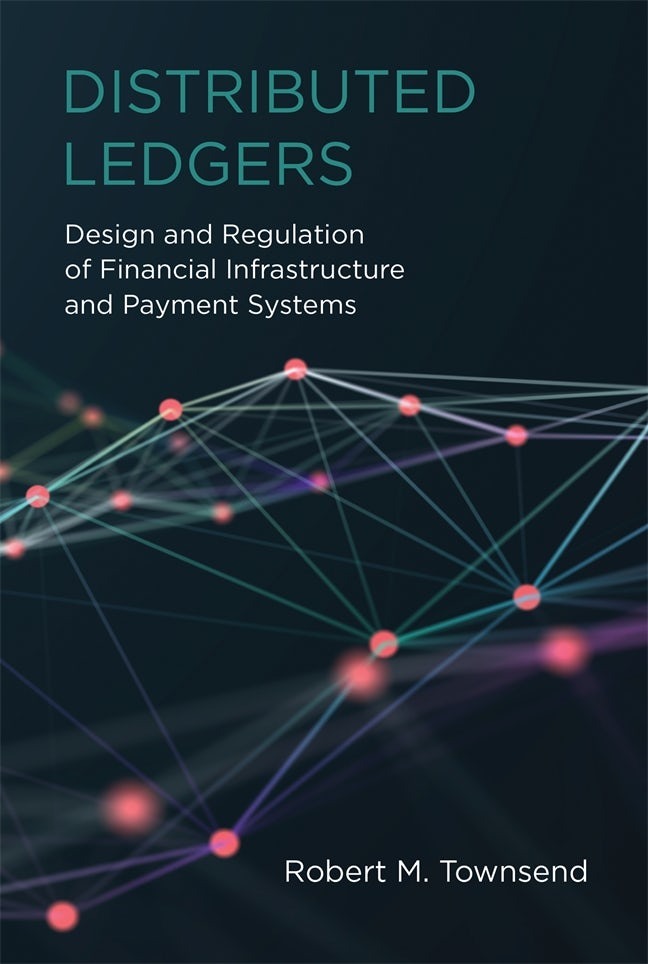
Distributed Ledgers : Design and Regulation of Financial Infrastructure and Payment Systems
In this book, Robert Townsend steps back from the hype and controversy surrounding DLT (and the related, but not synonymous, innovations of blockchain and Bitcoin) to offer an economic analysis of what distributed ledgers can do and a blueprint for the optimal design and regulation of financial systems. He analyzes four crucial components of distributed ledgers—ledgers as accounts, e-messages and e-value transfers, cryptography, and contracts—assessing each in terms of both economics and computer science, and forges some middle ground. Relatedly, Townsend highlights hybrid systems in which some of these components allow useful innovation while legacy or alternative pieces deal with the problem of scale.

Distributed Cooperative Laboratories : Networking, Instrumentation, and Measurements
This is a highly interdisciplinary topic, where various aspects converge: multimedia communications and networking, sensor networks, Grid technology, Quality of Service (QoS) provisioning and control, network management, measurement instrumentation and methodology, architecture of measurement systems. The material is organized into six parts: Technologies for Real-Time Interactive Multimedia Communications; Monitoring, Management and Configuration of Networks and Networking Devices; Data Acquisition and Aggregation in Sensor Networks; Grid Structures for Distributed Cooperative Laboratories; Architectures and Techniques for Tele-Measurements; Virtual Immersive Communications and Distance Learning. Each contribution presents a self-contained treatment, within a framework that provides the reader with an up-to-date picture of the most recent state-of-the-art developments.

Distributed computing in sensor systems ; 3rd IEEE International Conference, DCOSS 2007, Santa Fe, NM, USA, June 18-20, 2007, Proceedings
The book covering the areas of algorithms, applications, and systems, thus bridging the gap between theory and practice and between the broader field of distributed computing and the specific issues arising in sensor networks and related systems.
Distributed computing – IWDC 2005 ; 7th International Workshop, Kharagpur, India, December 27-30, 2005, Proceedings
This book constitutes the refereed proceedings of the 7th International Workshop on Distributed Computing, IWDC 2004, held in Kharagpur, India in December 2005. The 28 revised full papers and 33 revised short papers presented together with 5 invited keynote talks were carefully reviewed and selected from 253 submissions. The papers are organized in topical sections on theory of distributed computing, sensor networks, fault tolerance, optical networks, peer-to-peer networks, wireless networks, network security, grid and networks, middleware and data management, mobility management, and distributed artificial intelligence.
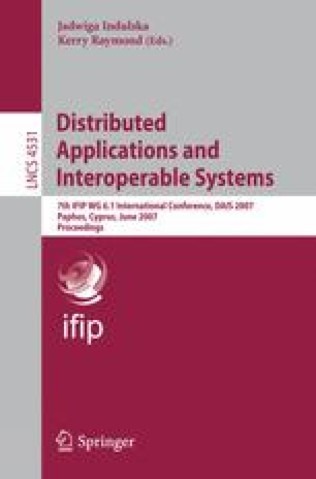
Distributed Applications and Interoperable Systems ; 7th IFIP WG 6.1 International Conference, DAIS 2007, Paphos, Cyprus, June 6-8, 2007, Proccedings
This book presented context-awareness, adaptation, mobility, distributed applications and peer-to-peer computing, all of which relate to the sustainability of distributed applications and integrated systems.

Distributed and Parallel Systems : In Focus : Desktop Grid Computing
In this book contributors investigate parallel and distributed techniques, algorithms, models and applications; present innovative software tools, environments and middleware; focus on various aspects of grid computing; and introduce novel methods for development, deployment, testing and evaluation.

Distributed and Parallel Systems : From Cluster to Grid Computing
This book devoted to general algorithmic aspects of parallel and distributed computing and grid computing. This book includes a good overview of recent advances in various aspects of parallel and distributed computing. This volume also includes various crucial questions tied to the infrastructure and advanced problems and challenges of grid computing.

Distributed and Parallel Systems : Cluster and Grid Computing
DAPSY (Austrian-Hungarian Workshop on Distributed and Parallel Systems) is an international conference series with biannual events dedicated to all aspects of distributed and parallel computing. DAPSY started under a different name in 1992 (Sopron, Hungary) as regional meeting of Austrian and Hungarian researchers focusing on transputer-related parallel computing; a hot research topic of that time. A second workshop followed in 1994 (Budapest, Hungary). As transputers became history, the scope of the workshop widened to include parallel and distributed systems in general and the 1st DAPSYS in 1996 (Miskolc, Hungary) reflected the results of these changes.

Distributed and parallel computing ; 6th International conference on algorithms and architectures for parallel processing, ICA3PP, Melbourne, Australia, October 2-3, 2005, Proceedings
There are many applications that require parallel and distributed processing to allow complicated engineering, business and research problems to be solved in a reasonable time. Parallel and distributed processing is able to improve company profit, lower costs of design, production, and deployment of new technologies, and create better business environments. The major lesson learned by car and aircraft engineers, drug manufacturers, genome researchers and other specialist is that a computer system is a very powerful tool that is able to help them solving even more complicated problems. That has led computing specialists to new computer system architecture and exploiting parallel computers, clusters of clusters, and distributed systems in the form of grids.

Dissonant Heritages and Memories in Contemporary Europe
This book discusses political, economic, social, and humanitarian challenges that influence both how people deal with their past and how they build their identities in contemporary Europe. Ongoing debates on migration, on local, national, inter- and transnational levels, prove that it is a divisive issue with regards to understanding European integration and identity. At the same time, the European Union increasingly invests in projects related to European heritage, museums, and cultural memory networks, while having to take dissonant heritages into account. These processes in their combination offer an interesting dynamic and form the complex puzzle that poses challenging questions for anyone involved in academic research, heritage practices, and policy debates. With this puzzle at its core, this book explicitly focuses on slippery and transforming notions of Europe and critically discusses ongoing and transforming power structures of heritage and memory in today’s Europe.

Discrete-Time Markov Chains : Two-Time-Scale Methods and Applications
The motivation stems from existing and emerging applications in optimization and control of complex hybrid Markovian systems in manufacturing, wireless communication, and financial engineering. Much effort in this book is devoted to designing system models arising from these applications, analyzing them via analytic and probabilistic techniques, and developing feasible computational algorithms so as to reduce the inherent complexity. This book presents results including asymptotic expansions of probability vectors, structural properties of occupation measures, exponential bounds, aggregation and decomposition and associated limit processes, and interface of discrete-time and continuous-time systems. One of the salient features is that it contains a diverse range of applications on filtering, estimation, control, optimization, and Markov decision processes, and financial engineering.

Discrete, continuous, and hybrid Petri Nets
The book is a scientific monograph as well as a didactic tutorial which is easy to understand due to many exercises with solutions, detailed figures and several case studies. It demonstrates that Petri nets are a deep, practical and alive field important for researchers, engineers and graduate students in engineering and computer science.

Discovery Science ; 11th International Conference, DS 2008, Budapest, Hungary, October 13-16, 2008. Proceedings
This book constitutes the refereed proceedings of the 11th International Conference on Discovery Science, DS 2008, held in Budapest, Hungary, in October 2008, co-located with the 19th International Conference on Algorithmic Learning Theory, ALT 2008.

Direct and Large-Eddy Simulation VI ; Proceedings of the Sixth International ERCOFTAC Workshop on Direct and Large-Eddy Simulation, held at the University of Poitiers, September 12-14, 2005
this workshop addressed numerous theoretical and physical aspects of transitional and turbulent flows. At an applied level it contributed to the solution of problems related to energy production, transportation and the environment. Since the prediction and analysis of fluid turbulence and transition continues to challenge engineers, mathematicians and physicists, DLES-6 covered a large range of topics, from the more technical ones like numerical methods, initial and inflow conditions, the coupling of RANS and LES zones, subgrid and wall modelling to topics with a stronger focus on flow physics such as aero-acoustics, compressible and geophysical flows, flow control, multiphase flow and turbulent combustion, to quote only a few.
