



الصفحة 20
الصفحة 20

Bone disorders
• Bone is the specialized type of connective tissue that has extracellular matrix containing calcium salts. • As bone is a connective tissue, it consists of cells and matrix. • Mineralized extracellular matrix provides hardness to bones. • Bone is a living tissue that shows dynamic structural changes in response to physical stress and hormonal changes. • In addition to support and protection of vital organs, bones act as a storehouse for calcium and phosphates. • Bone also performs hematopoietic function (production of blood cells).
Biotic elicitors: Production, purification, and characterization
Details techniques to study biotic elicitors involved in the field of agriculture for the benefit of the environment and growers. Chapters guide readers through protein, carbohydrate, lipid, glycoprotein and glycolipid components derived from microorganisms and their production, purification, and characterization.
Biotechnology for the Future
One area that has attracted much attention is the use of cell factories for the production of a wide range of chemicals. This area illustrates very well the definition of biochemical engineering , and it has therefore been chosen as the focus of this volume. The use of cell factories for production of chemicals dates back to the production of penicillin, ethanol, acetone–butanol, glycerol and further to enzymes and other antibiotics. All these products were traditionally produced by cell factories that naturally produce these compounds. With the introduction of genetic engineering it has,This volume therefore contains chapters on concepts of metabolic engineering on detailed modeling of cellular systems
Biotechnology for Odor and Air Pollution Control
An international board of authors from universities, research institutes, and industries describe various biotechnological methods ranging from laboratory, to pilot evaluation and to full-scale process implementation. Topics include bioprocesses for the treatment of odors and air pollutants in wastewater treatment plants, rendering plants, chemical production facilities, and food and flavor manufacturing facilities. In addition to the basic microbiological and engineering aspects, the design, modeling and control of bioreactors are also presented.
Biotechnology for Fuels and Chemicals : The Twenty-Ninth Symposium
In Biotechnology for Fuels and Chemicals: The Twenty-Ninth Symposium, leading US and international researchers from academia, industry, and government exchange cutting-edge technical information and update current trends in the development and application of biotechnology for sustainable production of fuels and chemicals. This symposium emphasizes advances in biotechnology to produce high-volume, low-price products from renewable resources, while improving the environment. The major areas of interest include advanced feedstock production and processing, enzymatic and microbial biocatalysis, bioprocess research and development, opportunities in biorefineries, and commercialization of biobased products. International and domestic progress on producing liquid biofuels, especially ethanol and biodiesel, is highlighted, and related topics, including bioseparations and optimal integration of biochemical and thermochemical conversion technologies, are featured.
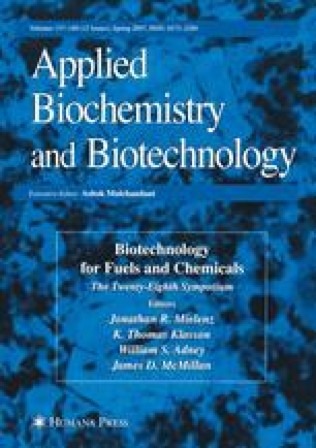
Biotechnology for fuels and chemicals : The Twenty-Eighth symposium
In Biotechnology for Fuels and Chemicals: The Twenty-Eighth Symposium, leading US and international researchers from academia, industry, and government exchange cutting-edge technical information and update current trends in the development and application of biotechnology for sustainable production of fuels and chemicals. This symposium emphasizes advances in biotechnology to produce high-volume, low-price products from renewable resources, while improving the environment. The major areas of interest include advanced feedstock production and processing, enzymatic and microbial biocatalysis, bioprocess research and development, opportunities in biorefineries, and commercialization of biobased products.
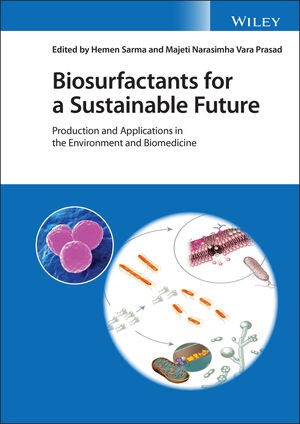
Biosurfactants for a sustainable future : Production and applications in the environment and biomedicine
The book emphasizes the different techniques that are used for the production of biosurfactants from microorganisms and their characterization. Various aspects of biosurfactants, including structural characteristics, developments, production, bio-economics and their sustainable use in the environment and biomedicine, are addressed, and the book also presents metagenomic strategies to facilitate the discovery of novel biosurfactants producing microorganisms.

Bioprocessing Technology for Production of Biopharmaceuticals and Bioproducts
Written for industrial and academic researchers and development scientists in the life sciences industry, Bioprocessing Technology for Production of Biopharmaceuticals and Bioproducts is a guide to the tools, approaches, and useful developments in bioprocessing. This important guide: •Summarizes state-of-the-art bioprocessing methods and reviews applications in life science industries •Includes illustrative case studies that review six milestone bio-products •Discuses a wide selection of host strain types and disruptive bioprocess technologies
Bionanotechnology : Proteins to Nanodevices
Bionanotechnology is the key integrative technology of the 21st century and aims to use the knowledge, gathered from the natural construction of cellular systems, for the advancement of science and engineering. Investigating the topology and communication processes of cell parts can lead to invention of novel biological devices with exciting applications. Though microscale to nanoscale research offers an excellent space for the development of futuristic technologies, a number of challenges must be overcome. Due to paucity of a dedicated literature on the protein based nanodevices we bring you this monograph that combines collective research works of scientists probing into this fascinating universe of bionanotechnology. The monograph has been written with an aim of surveying engineering design principles of biomolecular nanodevices, prototype nanodevices based on redox proteins, bacteriorhodopsins and natural fibers, and touching upon the future developments in the field.
Biomineralization II : Mineralization Using Synthetic Polymers and Templates
In nature, biological organisms produce mineralized tissues such as bone, teeth, diatoms, and shells. Biomineralization is the sophisticated process of production of these inorganic minerals by living organisms. Construction of organic–inorganic hybrid materials with controlled mineralization analogous to those produced by nature has recently received much attention because it can aid in understanding the mechanisms of the biomineralization process and development of biomimetic materials processing. The biomineralization processes use aqueous solutions at temperatures below 100 ◦C and no toxic intermediates are produced in these systems. This series presents critical reviews of the present position and future trends in modern chemical research. The short and concise reports on chemistry are each written by world renowned experts. This series is still valid and useful after 5 or 10 years.
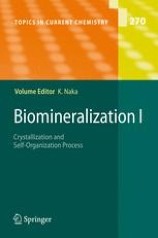
Biomineralization I : Crystallization and Self-Organization Process
The five chapters of Biomineralization, volume 1, provide a bridge between the mineralogy and the organic substrates that enable the mineral formation by organisms in nature and under laboratory conditions. The book is a most useful reference for all concerned with biomineralization and biogenic minerals.In nature, biological organisms produce mineralized tissues such as bone, teeth, diatoms, and shells. Biomineralization is the sophisticated process of production of these inorganic minerals by living organisms. Construction of organic–inorganic hybrid materials with controlled mineralization analogous to those produced by nature has recently received much attention because it can aid in understanding the mechanisms of the biomineralization process and development of biomimetic materials processing.
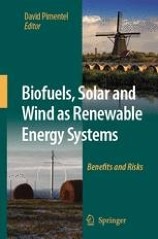
Biofuels, Solar and Wind as Renewable Energy Systems : Benefits and Risks
With shortages of fossil energy, especially oil and natural gas, and heavy biomass energy use occurring in both developed and developing countries, a major focus has developed worldwide on renewable energy systems. Renewable energy systems include wind power, biomass, photovoltaics, hydropower, solar thermal, thermal ponds, and biogas. Currently, a heavy focus is on biofuels made from crops, such as corn, sugarcane, and soybeans, for use as renewable energy sources. Wood and crop residues also are being used as fuel. Though it may seem beneficial to use renewable plant materials for biofuel, the use of crop residues and other biomass for biofuels raises many concerns about major environmental problems, including food shortages and serious destruction of vital soil resources.
Biofuels
In line with the current focus on a sustainable economy, bioethanol and other biofuels have received tremendous attention, making many headlines. Being produced in steadily growing volumes has made it necessary to consider production of biofuels from renewable raw materials that are not currently used. Therefore, the production of biofuels is at the gateway of moving from traditional raw materials to others such as lignocellulosic materials. However, sucha transfer requires new production processes that are economically feasible.This volume addresses and discusses the current status of biofuels, covering aspects from enabling technologies to different technology and processes options, as well as economical and policy perspectives.
Bioeconomy and Global Inequalities Socio-Ecological Perspectives on Biomass Sourcing and Production
This book explores bioeconomy and bioenergy policies across South America, Asia and Europe. It discusses how a transition away from a fossil and towards a bio-based economic order alters, reinforces and challenges socio-ecological inequalities. A series of conceptual discussions and case studies with a multidisciplinary background in the Social Science illuminate how the deployment of biomass sources from the agricultural and forestry sectors affect societal changes concerning knowledge production, land and labour relations, political participation and international trade
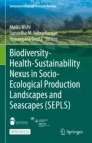
Biodiversity-health-sustainability Nexus in socio-ecological production landscapes and seascapes (SEPLS)
It is a compilation of case studies that provide useful knowledge and lessons that derive from on-the-ground activities and contribute to policy recommendations, focusing on the interlinkages between biodiversity and multiple dimensions of health (e.g., physical, mental, and spiritual) in managing socio-ecological production landscapes and seascapes (SEPLS). This book provides insights on how SEPLS approaches can contribute to more sustainable management of natural resources, achieving global biodiversity and sustainable development goals, and good health for all. It is also expected to offer useful knowledge and information for an upcoming three-year thematic assessment of “the interlinkages among biodiversity, water, food, and health” (the so-called “nexus assessment”) by the Intergovernmental Science-Policy Platform on Biodiversity and Ecosystem Services (IPBES). The book begins with an introductory chapter followed by eleven case study chapters demonstrating the nexus between biodiversity, health, and sustainable development, and then a synthesis chapter clarifying the relevance of the case study findings to policy and academic discussions. It will be of interest to scholars, policymakers, and professionals in the field related to sustainable development.
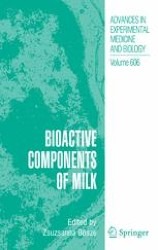
Bioactive components of milk
Of all food products dairy foods have the most potential concerning functional foods. Therefore, there is a tremendous amount of interest in value-added milk products and the identification of components in food which have health benefits. Bioactive Components of Milk provides an overview of these derived components and their diverse activities including: the stimulation of beneficial microflora, alerting the immune system to the presence of potential pathogens and allergens, binding and eliminating toxins, etc. The book is divided into four parts. The first part focuses on bioactive milk lipid components, which very widely among mammalian species. The second part describes different aspects of biological active colostrums and milk proteins and their derivatives, with special concern on species specific effects. The third part reviews the production of recombinant human proteins in the milk of livestock animals - including ethical issues - and the aims of altering milk composition for the benefit of both the animals themselves and the consumers. The final part focuses on the influence of ruminants nutrition on the biological activity of milk.
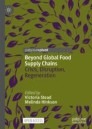
Beyond global food supply chains : Crisis, disruption, regeneration
Through a set of incisive essays, this incredibly timely book shows how much the COVID-19 pandemic has exposed both vulnerabilities and opportunities - for (racial) capitalism and its discontents alike to intervene in food supply chains. A most welcome publication! This book takes the upheaval of the global COVID-19 pandemic as a springboard from which to interrogate a larger set of structural, environmental and political fault lines running through the global food system. In a context in which disruptions to the production, distribution, and consumption of food are figured as exceptions to the smooth, just-in-time efficiencies of global supply chains, these essays reveal the global food system as one that is inherently disruptive of human lives and flourishing, and of relationships between people, places, and environments. The pandemic thus represents a particular, acute moment of disruption, offering a lens on a deeper, longer set of systemic processes, and shining new light on transformational possibilities.

Beginning Ruby on Rails E-Commerce : From novice to professional
Beginning Ruby on Rails E-Commerce: From Novice to Professional is the first book of its kind to guide you through producing e-commerce applications with Rails, the stacked web framework taking the world by storm. The book dives right into the process of creating a production-level web application using agile methodologies and test-driven development combined with Rails best practices.

Basics of PET Imaging : Physics, Chemistry, and Regulations
This unparalleled text on the basics of PET imaging technology is an ideal resource for technologists and residents preparing for board examinations. the book also serves as a useful reference for practicing nuclear medicine professionals. Chapters are concise but comprehensive and emphasize the fundamentals, including physics, instrumentation and data acquisition, image reconstruction, production of PET radionuclides and radiopharmaceuticals, and regulatory and reimbursement issues.

Basic methods and protocols on Sourdough
Details traditional and modern approaches to characterize sourdough and to monitor its features during production, propagation and use, through state-of- the art analytical tools. Chapters guide reader through procedures to prepare and propagate the mature sourdough, to analyse and monitor microbiological, biochemical and rheology features of sourdough, sensory, and nutritional attributes of baked goods. Written in the format of the Methods and Protocols in Food Science series, chapters list necessary materials and methods for readily reproducible protocols.
