



الصفحة 20
الصفحة 20
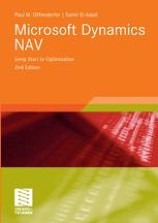
Microsoft Dynamics NAV : Jump Start to Optimization
Mastering Microsoft Dynamics NAV for beginners and IT professionals: from jump start to optimization. This book covers general use and shows you how to tailor Microsoft Dynamics NAV to mirror your firm's unique needs. Learn skills that enable you to navigate and interpret the world of possibilities locked within the ERP system. Through easy, concrete examples, you will master the layered environment and be able to use and create reports, forms, import/export functions and more. This book gives you the basis you need to demand the best information infrastructure for your enterprise.

Microsoft Content Management Server Field Guide
Microsoft Content Management Server Field Guide provides simple crisis-management instructions for intermediate- to advanced-level network administrators who work in the trenches. It offers practical procedural information, reference materials, and focused presentations. This book also features self-contained topics so you do not have to look further to obtain prerequisite information.

Microsoft .NET framework 2.0 web-based client development : MCTS self-paced training Kit (Exam 70-528)
Designed to help you make the most of your study time. Maximize your performance on the exam by learning to: * Create, trace, configure, and deploy Web applications * Integrate data into your application using Microsoft ADO.NET, XML, and data-bound controls * Implement forms authentication, impersonation, and login controls * Configure server controls and create custom Web controls * Use themes, user profiles, and Web parts for customizable, personalized Web sites * Manage server-side and client-side application state PRACTICE TESTS Assess your skills with practice tests on CD. You can work through hundreds of questions using multiple testing modes to meet your specific learning needs. You get detailed explanations for right and wrong answers?including a customized learning path that describes how and where to focus your studies. Your kit includes: * Official self-paced study guide. * Practice tests with multiple, customizable testing options and a learning plan based on your results. *400+ practice and review questions. * Case scenarios and lab exercises. * Microsoft Visual Basic and Visual C# code samples on CD.
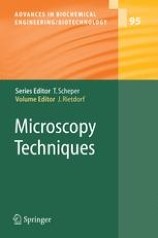
Microscopy Techniques
Light Microscopy has returned to fashion through the synergy of green fluorescent protein and a clutch of techniques involving some permutation of lasers, mathematics and acronyms, which offer the prospect of watching biological molecules at work inside living cells. This volume provides an introduction to these techniques … . this volume will be a longer-term reference for anyone who wants to understand how these methods actually work. In this respect it is excellent.

Microscale Diagnostic Techniques
Microscale Diagnostic Techniques highlights the most innovative and powerful developments in microscale diagnostics. It provides a resource for scientists and researchers interested in learning about the techniques themselves, including their capabilities and limitations.

Microorganisms in the deterioration and preservation of cultural heritage
This book offers a comprehensive overview of the role and potential of microorganisms in the degradation and preservation of cultural materials (e.g. stone, metals, graphic documents, textiles, paintings, glass, etc.).

Micrometeorites and the Mysteries of Our Origins
This book relates an attempt to decrypt the still-obscure first billion years of history of the young Earth, during a cataclysmic period during which our planet was heavily bombarded by bodies ranging in size from that of Mars to 0.1 mm sized tiny micrometeorites. It was thus found that micrometeorites played an essential role in the formation of the post-lunar atmosphere. They also provided a surprisingly large diversity of reactions in the organic prebiotic chemistry required for the birth of life on our blue planet. The author presents a wide-ranging review of the type of knowledge required to decrypt this history, which provides extensive background information from astronomy, planetary dynamics, planetology, astrobiology and earth sciences. This book will appeal to both the scientist and the general reader. It will be a source of material for lectures, and possibly new investigations, in these fields.

Micromammals and Macroparasites : From Evolutionary Ecology to Management
Small mammals are among the most ubiquitous and important components of terrestrial ecosystems. They have coevolved, and now coexist, with a diverse array of parasites, such that not only are all aspects of their biology influenced by parasitism but they also play key roles in the transmission and maintenance of parasitic diseases. This book provides a comprehensive survey of the diversity and biology of metazoan parasites affecting small mammals, of their impact on host individuals and populations, and of the management implications of these parasites for conservation biology and human welfare. Designed for a broad, multidisciplinary audience, it will be an essential resource for researchers, students, and practitioners alike in the fields of parasitology, evolutionary ecology, wildlife management, and conservation biology.

Microlithography/Molecular Imprinting
The series presents critical reviews of the present and future trends in polymer and biopolymer science including chemistry, physical chemistry, physics and material science. It is addressed to all scientists at universities and in industry who wish to keep abreast of advances in the topics covered.Molecular recognition is central to how biological systems work. The molecular imprinting technique is a valuable polymerisation method for preparing synthetic materials able to mimic the molecular recognition phenomena present in living systems. A molecule that acts as a template is associated with functional monomers to form a complex by means of covalent linkages or noncovalent interactions. A polymerisation-crosslinking reaction is then performed around this complex. Upon removal of the template species, functionalised cavities, that have memorized the special features and bonding preferences of the template, are left inside the polymer network.

Microelectronic Circuits
Devices and basic circuits -- Signals, amplifiers and semiconductors -- Operational amplifiers -- Diodes -- Bipolar junction transistors (BJTS) -- Mos field-effect transistors (MOSFETS) -- Transistor amplifiers -- Analog integrated circuits -- Building blocks of integrated-circuit amplifiers -- Differential and multistage amplifiers -- Frequency response -- Feedback -- Output stages and power amplifiers -- Operational-amplifier circuits -- Filters and oscillators -- Digital integrated circuits -- CMOS digital logic circuits -- Digital Design: Power, Speed, and Area -- Memory and Clocking Circuits

Microearthquake Seismology and Seismotectonics of South Asia
This volume comprehensively deals with plate tectonics and seismic waves in general and earthquake monitoring by permanent and temporary networks for active fault mapping, aftershock, swarm and induced seismicity investigations in interplate collision and subduction zones and in intraplate shield region.

The 8051 microcontroller and embedded systems
The Classical Period: Nineteenth Century Sociology Auguste Comte (1798-1857) on Women in Positivist Society Harriett Martineau (1802-1876) on American Women Bebel, August (1840-1913) on Women and Socialism Emile Durkheim (1858-1917) on the Division of Labor and Interests in Marriage Herbert Spencer (1820-1903) on the Rights and Status of Women Lester Frank Ward (1841-1913) on the Condition of Women Anna Julia Cooper (1858-1964) on the Voices of Women Thorstein Veblen (1857-1929) on Dress as Pecuniary Culture The Progressive Era: Early Twentieth Cent.

Microbiologically Influenced Corrosion : An Engineering Insight
Microbiologically-influenced corrosion (MIC) is one of the greatest mysteries of corrosion science and engineering, due to the complexities resulting from the involvement of living things such as bacteria. Bacteria are not only able to affect our health, but are also capable of impacting upon everyday life through a wide range of industrial sectors and the economy. Microbiologically Influenced Corrosion: An Engineering Insight introduces a new approach to the basics of MIC and explains how to recognise, understand, mitigate and/or prevent this type of corrosion. Topics explored include stress corrosion cracking and microbial corrosion, the pros and cons of biocides, the involvement of magnetic bacteria in microbial corrosion, and a new interpretation of cathodic protection based on recent research in microbial environments.

Microbial Root Endophytes
Plant roots may not only be colonized by mycorrhizal fungi, but also by a myriad of bacterial and fungal root endophytes that are usually not considered by the investigators of classic symbioses. This is the first book dedicated to the interactions of non-mycorrhizal microbial endophytes with plant roots. The phenotypes of these interactions can be extremely plastic, depending on environmental factors, nutritional status, genetic disposition and developmental stages of the two partners. The book deals with diversity, life history strategies, interactions, applications in agriculture and forestry, methods for isolation, cultivation, and both conventional and molecular methods for identification and detection of these endophytes. The comprehensive reviews demonstrate the high diversity of interactions and will provoke further studies to better understand the mechanisms which determine whether a plant-microbial interaction remains asymptomatic, leads to disease or to a mutualistic interaction.

Microbial protein toxins
Since the initial establishment of Robert Koch’s postulates in the nineteenth century, microbial protein toxins have been recognized as a major factor of bacterial and fungal virulence. An increasing number of proteins produced and secreted by various bacteria, yeasts and plants are extremely toxic and most of them developed remarkably "intelligent" strategies to enter, to penetrate and to finally kill a eukaryotic target cell by modifying or blocking essential cellular components. This book describes the strategies employed by protein toxins to render their pro- and eukaryotic producers a selective growth advantage over competitors. In providing an up-to-date overview on the mode of protein toxin actions, it accommodates biomedically and biologically relevant toxin model systems. As a result, it significantly broadens our perspective on biochemical architecture and molecular ploy behind the lethal principles of pro- and eukaryotic toxins.

Microbial Processing of Metal Sulfides
The application of microbiological methods to the extraction of metals from minerals has definitely gained a prominent role and is supported by the several bioleaching and biooxidation processes operating in different sites over the world. In recent years new techniques and new results about proteomic and bioinformatics are bringing a new perspective on the microbial processes.This book focuses on the basic aspects of the process with special emphasis on recent contributions regarding the chemical and microbial aspects of the bioleaching process and the use of microorganisms in the treatment of complex ores and concentrates.

Microbial Phosphate Solubilization
Last decade has seen a significantly increased knowledge about phosphate solubilizing microorganisms. Sixty specialists from thirteen countries met in Salamanca to discuss the problems of the high P-unavailability as a soil nutrient for crops, and the hazards of an increasing phosphate input to aquatic habitats from industrial and mining activities, sewage disposal, detergents, and other sources. Updated solutions to enhance P-uptake by plants, bioremediation potential in the rehabilitation of ecosystems, taxonomic characterization interactions with mycorrizae, the physiological and molecular basis of PSM, and possibilities of genetic modifications of rhizospheric microorganisms were among the contributions presented. Challenges in commercializing a phosphate solubilizing microorganism were also outlined by a relevant biotech company.
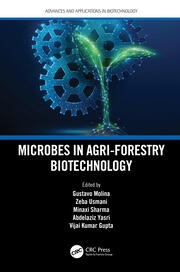
Microbes in agri-forestry biotechnology
Explores recent advances on the use of microbes for agri-forestry biotechnological applications. It provides technical concepts and discussions on the use of microorganisms for processes such as bioprocessing, bioremediation, soil enhancement, aquaponics advances, and plant-host symbiosis. The book provides an overview of the microbial approach to the tools and processes used in agriculture and forestry that make or modify products, improve plants for specific uses, and make use of livestock in agricultural systems. The authors discuss the main process conditions that enhance agri-forestry applications with the use of microbes and introduce the use of genetically modified (GM) microbes in agrobiotechnology. Finally, the authors explore the main technological advances in the production of secondary metabolites with potential applications in agri-forestry.

Microbes and oral squamous cell carcinoma : A network spanning infection and inflammation
Helps in understanding the relationship between microorganisms and oral carcinogenesis, and the possible oncogenic mechanisms enhancing the association. The book highlights the association between oral cancer, primarily oral squamous cell carcinoma (OSCC), a major global health problem with high incidence and low survival rates with infection and inflammation. Establishing the association of the oral microbiome with cancer risk may lead to significant advances in the understanding cancer etiology, potentially opening a new research paradigm for cancer prevention.
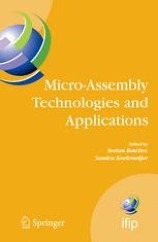
Micro-Assembly Technologies and Applications ; IFIP TC5 WG5.5 Fourth International Precision Assembly Seminar (IPAS’2008) Chamonix, France February 10–13, 2008
The IFIP series publishes state-of-the-art results in the sciences and technologies of information and communication. The scope of the series includes: foundations of computer science; software theory and practice; education; computer applications in technology; communication systems; systems modeling and optimization; information systems; computers and society; computer systems technology; security and protection in information processing systems; artificial intelligence; and human-computer interaction. Proceedings and post-proceedings of referred international conferences in computer science and interdisciplinary fields are featured. These results often precede journal publication and represent the most current research.
