



الصفحة 20
الصفحة 20

Modern asset allocation for wealth management
This book provides a complete taxonomy of modern methods for constructing investment portfolios. It goes beyond the simplest models and heuristics that are commonly used today and brings advances that are otherwise buried in Ph.D.-level mathematics to the financial advisor community. It covers all aspects of creating client portfolios, including choosing asset classes to invest in, selecting securities within asset classes, client risk preference assessment, portfolio construction, and portfolio rebalancing.

Modern Aspects of Spin Physics
The volume investigates central aspects of modern spin physics in the form of extensive lectures on semiconductor spintronics, the spin-pairing mechanism in high- temperature semiconductors, spin in quantum field theory and the nucleon spin.

Modern aspects of pharmaceutical quality assurance : developing and proposing application models, SOPs, practical audit systems for pharma industry
Aims to develop a tool that will substantially decrease the number of Inspectional Observations and Warning letters, thus eliminating Import Alerts and Consent Decree. This book targets the Pharmaceutical Industry and students of Pharmaceutical Quality Assurance so they can get in hand-ready consolidated information on Pharmaceutical Quality guidelines, Quality metrics, and implementation of simplified SOP guidelines, plant layouts to implement Quality metrics for Pharmaceutical Manufacturing systems in tablets, capsules, liquid orals, and semi-solid dosage forms.

Modern Aspects of Electrochemistry ; Vol. 42
MODERN ASPECTS OF ELECTROCHEMISTRY No. 42 Edited by Constantinos Vayenas University of Patras, Greece Topics in Number 42 include: The electrochemistry and electrocatalysis of Ruthenium in regards to the development of electrodes for Polymer Electrolyte Membrane (PEM) fuel cells Breakthroughs in Solid Oxide Fuel Cell (SOFC) anodes and cathodes leading to improved electrocatalysis Electrocatalysis of the electrochemical reduction of CO2 on numerous metals The interfacial phenomena of electrodeposition and codeposition, and the need for new theoretical analyses of the electrode-electrolyte interface Advantages of scanning tunneling microscopy (STM) in understanding the basics of catalysis, electrocatalysis and electrodeposition The role of electrochemistry in emerging technologies including electrodeposition and electroforming at the micro and nano levels, semiconductor and information storage, including magnetic storage devices.

Modern Aspects of Electrochemistry ; Vol. 41
The 41st volume in this series covers a range of topics that touch on issues of potential interest to those working in electrochemistry-related fields. … Overall, this text contains a diverse collection of topics that would be of varying degrees of interest to the broader electrochemistry community. More likely, the individual chapters would be most valued by specialists working in these areas."As the most recent volume of a successful series established 1954 and carefully continued this book provides a timely collection of four review papers covering widely distributed aspects of electrochemistry in representative contributions.

Modern Aspects of Electrochemistry ; Vol. 39
This volume of Modern Aspects covers a wide spread of topics presented in an authoritative, informative and instructive manner by some internationally renowned specialists. Professors Politzer and Dr. Murray provide a comprehensive description of the various theoretical treatments of solute-solvent interactions, including ion-solvent interactions. Both continuum and discrete molecular models for the solvent molecules are discussed, including Monte Carlo and molecular dynamics simulations. The advantages and drawbacks of the resulting models and computational approaches are discussed and the impressive progress made in predicting the properties of molecular and ionic solutions is surveyed.

Modern Aspects of Electrochemistry ; Vol. 38
Solid State Electrochemistry encompassing modern equilibria concepts, thermodymanics and kinetics of charge carriers in solids.,Electron transfer processes, with special sections devoted to hydration of the proton and its heterogeneous transfer.Electrosorption at electrodes and its relevance to electrocatalysis and electrodeposition of metals,The behavior of Pt and other alloy electrocatalyst crystallites used as the electrode materials for phosphoric acid electrolyte fuel-cells.Applications of reflexology and electron microscopy to the materials science aspect of metal electrodes.Electroplating of metal matrix composites by codeposition of suspended particles, a process that has improved physical and electrochemical properties.

Modern Aryne Chemistry
The book reveiws the recent use of aryne chemistry for the development of new multicomponent reactions. New advances in this area has shown rapid emergence of a new class of reactions classified under rearrangement reactions. The author also includes information on aryne methods that have been employed for the synthesis of several natural products. The simplicity and sophistication of the synthetic strategy using arynes can serve as a springboard for organic chemists to explore new possibilities and imagine applications of the concept of arynes.

Modern architecture and climate design before air conditioning
explores how leading architects of the twentieth century incorporated climate-mediating strategies into their designs, and shows how regional approaches to climate adaptability were essential to the development of modern architecture. Focusing on the period surrounding World War II'before fossil-fuel powered air-conditioning became widely available'Daniel Barber brings to light a vibrant and dynamic architectural discussion involving design, materials, and shading systems as means of interior climate control. He looks at projects by well-known architects such as Richard Neutra, Le Corbusier, Lúcio Costa, Mies van der Rohe, and Skidmore, Owings, and Merrill, and the work of climate-focused architects such as MMM Roberto, Olgyay and Olgyay, and Cliff May. Drawing on the editorial projects of James Marston Fitch, Elizabeth Gordon, and others, he demonstrates how images and diagrams produced by architects helped conceptualize climate knowledge, alongside the work of meteorologists, physicists, engineers, and social scientists. Barber describes how this novel type of environmental media catalyzed new ways of thinking about climate and architectural design.

Modern apartment design
Provides guidelines to the design of modern apartment buildings as well as a summation of current cutting-edge practice in engineered timber construction.The book covers a brief history of apartment buildings around the world, a broad outline of different types of apartment blocks, and a strong focus on the design and actual construction of apartment buildings, especially those utilising mass timber, such as cross laminated timber and laminated veneer lumber. It also features six Case Study chapters from industry-leading practitioners in the area, enabling best practice in architecture and engineering of these new apartment building types to be more widely understood and propagated worldwide.

Modern Anesthetics
Some important constraints of anesthesia must be taken into consideration when the pharmacological properties of modern anesthetics are discussed. The most imp- tant of these could be that the target effect be achieved preferably within seconds, at most within a few minutes. Similarly, offset of drug action should be achieved within minutes rather hours. The target effects, such as unconsciousness, are pot- tially life-threatening, as are the side effects of modern anesthetics, such as respi- tory and cardiovascular depression. Finally, the patient’s purposeful responses are not available to guide drug dosage, because, either the patient is unconscious, or more problematically, the patient is aware but unable to communicate pain because of neuromuscular blockade. in this book the very mechanism of anesthetic action at the biophase” was discussed within the theoretical framework of the “u- tary theory of narcosis”.

Modern Actuarial Risk Theory : Using R
"The book gives a comprehensive survey of non-life insurance mathematics. … Originally written for use with the actuarial science programs at the Universities of Amsterdam and Leuven, it is now in use at many other universities as well as for the non-academic actuarial education program organized by the Dutch Actuarial Society. The methods presented can not only be used in non-life insurance, but also in other branches of actuarial science, as well as in actuarial practice. (Pavel Stoynov, Zentralblatt MATH, Vol. 1148, 2008). This book gives an introduction to non-life insurance mathematics. … Throughout the book, the software R is used for the implementation of the techniques presented. One finds also many exercises with hints for their solution in an appendix.

Models, Mysteries, and Magic of Molecules
Molecular behaviour, which is no less than magical, holds the key to the understanding, not only of chemistry, but of all biology and of life itself. It is a mystery why molecular behaviour should remain poorly understood and why the authoritative theories of physics have produced no more than superficial models to elucidate this vital issue. This book explores the common ground to guide chemists, biologists, crystallographers, spectroscopists and theorists into a deeper recognition of their individual relevance towards painting a holistic picture of scientific endeavour. This effort to stimulate interest in multidisciplinary research is rare, if not unique.

Models, Methods and Tools for Product Service Design : The Manutelligence Project
This book summarizes research being pursued within the Manutelligence project, the goal of which is to help enterprises develop smart, social and flexible products with high value added services. Manutelligence has improved Product and Service Design by developing suitable models and methods, and connecting them through a modular, collaborative and secure ICT Platform. The use of real data collected in real time by Internet of Things (IoT) technologies underpins the design of product-service systems and makes it possible to monitor them throughout their life cycle. Available data allows costs and sustainability issues to be more accurately measured and simulated in the form of Life Cycle Cost (LCC) and Life Cycle Assessment (LCA). Analysing data from IoT systems and sharing LCC and LCA information via the ICT Platform can help to accelerate the design of product-service systems, reduce costs and better understand customer needs. Industrial partners involved in Manutelligence provide a clear overview of the project's outcomes, and demonstrate how its technological solutions can be used to improve the design of product-service systems and the management of product-service life cycles.

Models of the Atomic Nucleus
Models of the Atomic Nucleus is a largely non-technical introduction to nuclear theory – an attempt to explain the nucleus in a way that makes nuclear physics as comprehensible as chemistry or cell biology. Unlike many other scientific fields, the "popularization" of nuclear physics has not previously been successful because many fundamental issues remain controversial and a unified theory of nuclear structure has not yet been established. The theme developed in this book is that the many models of nuclear theory each provide a partial perspective on the nucleus and that the many models can in fact be integrated into a coherent whole and expressed in terms of a lattice of nucleons.

Models of Mechanics
This is a textbook on models and modeling in mechanics. It introduces a new unifying approach to applied mechanics: through the concept of the open scheme, a step-by-step approach to modeling evolves. The unifying approach enables a very large scope on relatively few pages: the book treats theories of mass points and rigid bodies, continuum models of solids and fluids, as well as traditional engineering mechanics of beams, cables, pipe flow and wave propagation.
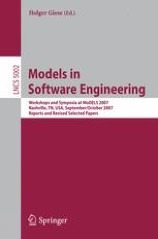
Models in Software Engineering ; Workshops and Symposia at MoDELS 2007, Nashville, TN, USA, September 30 - October 5, 2007, Reports and Revised Selected Papers
This book constitutes the thoroughly refereed post-workshop proceedings of 10 internationl workshops and 2 symposia held as satellite events of the 10th International Conference on Model Driven Engineering Languages and Systems, MoDELS 2007, in Nashville, TN, USA, in September/October 2007 (see LNCS 4735).The 29 revised full papers were carefully selected for inclusion in the book and are presented along with a doctoral and an educators' symposium section. The papers are organized in topical sections representing the various workshops: aspect-oriented modeling (AOM 2007), language engineering (ATEM2007), model driven development of advanced user interfaces (MDDAUI 2007), model size metrics (MSM 2007).

Models in Software Engineering ; Workshops and Symposia at MoDELS 2006, Genoa, Italy, October 1-6, 2006, Reports and Revised Selected Papers
This book constitutes the thoroughly refereed post-proceedings of 11 international workshops held as satellite events of the 9th International Conference on Model Driven Engineering Languages and Systems, MoDELS 2006, in Genoa, Italy, in October 2006 (see LNCS 4199). The 32 revised full papers were carefully selected for inclusion in the book.

Models in Cooperative Game Theory : Crisp, Fuzzy, and Multi-Choice Games
This book investigates the classical model of cooperative games with transfer able utility (TU-games) and models in which the players have the possibility to cooperate partially, namely fuzzy and multichoice games. In a crisp game the agents are either fully involved or not involved at all in cooperation with some other agents, while in a fuzzy game players are allowed to cooperate with infinitely many different participation levels, varying from non-cooperation to full cooperation. A multichoice game describes an intermediate case in which each player may have a fixed number of activity levels. Part I of the book is devoted to the most developed model in the theory of cooperative games, that of a classical TU-game with crisp coalitions, which we refer to as crisp game along the book. It presents basic notions, solutions concepts and classes of cooperative crisp games in such a way that allows the reader to use this part as a reference toolbox when studying the corresponding concepts from the theory of fuzzy games (Part II) and from the theory of multichoice games (Part III).

Models in Cooperative Game Theory
Cooperative game theory is a booming research area with many new developments in the last few years. So, our main purpose when prep- ing the second edition was to incorporate as much of these new dev- opments as possible without changing the structure of the book. First, this o?ered us the opportunity to enhance and expand the treatment of traditional cooperative games, called here crisp games, and, especially, that of multi-choice games, in the idea to make the three parts of the monograph more balanced. Second, we have used the opportunity of a second edition to update and enlarge the list of references regarding the three models of cooperative games. Finally, we have benefited from this opportunity by removing typos and a few less important results from the ?rst edition of the book, and by slightly polishing the English style and the punctuation, for the sake of consistency along the monograph.
