



الصفحة 20
الصفحة 20
Banking on (artificial) intelligence : Navigating the realities of ai in financial services
Provides a tailored overview of what AI specifically means for financial services, a highly regulated yet also disrupted industry. it investigates the current state of AI applications in financial services today along with the state of funding and partnerships between tech and banking industries. it also examines the key pillars of responsible AI and the importance of keeping humans in the loop. the book takes a deep dive into the use cases in the financial services industry, the challenges and opportunities, and the fragmented regulatory landscape. how can we effectively assess risks, and balance innovation and customer centricity with trust in AI in financial services? can smaller organizations reap the benefits of the technology? how can institutions deploy AI responsibly and securely, and promote a fairer and more equitable future for more people?

Balancing Exploration and Exploitation by Creating Organizational Think Tanks
Key for successful knowledge management is a balance between exploration and exploitation. Danger arises when exploration is neglected in favour of exploitation since that may result in an organization which lacks innovation capability. In order to prevent this, an idea has been put forward in recent knowledge management research called ambidexterity, which means the simultaneous and balanced pursuing of both exploration and exploitations activities. Tatjana-Xenia Puhan follows up on this idea by concluding that ambidexterity need not necessarily be implemented in one single organization but can also be realised in a network of associated organizations. The interorganizational ambidexterity is based on co-specialisation: one organisation is devoted solely to exploration while associated organizations focus on their competences in exploitation. Furthermore, the author develops the concept of think tanks as organizations that concentrate on radical innovations while their network associates exploit this newly generated knowledge commercially.

Autonomous vehicles technological trends
The automotive industry has always been synonymous with research and innovation, but nowadays the industry is adding pressure and is establishing the agenda of the researchers from the field. Visions have been provided, and the hardware and the software exist; the only question remaining is: “who is going to deliver”? To answer this question, we encouraged scientists, researchers, industry specialists, and academics to share their vision of autonomous vehicles. What will the platform look like? What kind of hardware and software is most suitable? Who will make the connection between these two interdependent environments (and how), so that in the end the AI will define the process? These are the pressing issues of the current moment, and this Special Issue will help all those interested in the topic to promote their vision and ideas.
Autonomous driving : Technical, legal and social aspects
This book takes a look at fully automated, autonomous vehicles and discusses many open questions: How can autonomous vehicles be integrated into the current transportation system with diverse users and human drivers? Where do automated vehicles fall under current legal frameworks? What risks are associated with automation and how will society respond to these risks? How will the marketplace react to automated vehicles and what changes may be necessary for companies?

Automotive software - connected services in mobile networks ; 1st Automotive software workshop, ASWSD 2004, San Diego, CA, USA, January 10-12, 2004, Revised Selected Papers
Software development for the automotive domain is currently subject to a silent revolution. On the one hand, software has become the enabling technology for almost all safety-critical and comfort functions o?ered to the customer. A total of 90 % of all innovations in automotive systems are directly or indirectly - abled by software. the following list highlights three of the corresponding challenges: First, the dependencies between safety-critical and comfort functions are rapidly increasing;a simple example is the interplay of airbag controland power seat control in the case of an accident. Careful analysis and design of these dependencies are necessary to yield correct software solutions. Second, advances in wired and wireless networking infrastructures enable - terconnection between cars and backend service providers .
Assistive technologies, robotics, and automated machines in the health domain
The field of healthcare is constantly evolving and advancing with new technologies and innovations. Among these, assistive technologies, robotics, and automated machines are rapidly gaining ground as powerful tools to improve the quality of care and enhance patient outcomes. From wearable devices that monitor vital signs to surgical robots that assist in complex procedures, these technologies have the potential to revolutionize the way we deliver healthcare. The development and the integration of assistive technologies, care robots, and automated machines are strategic both as single components, when paired together, and when interconnected in the health domain.This reprint explores the latest developments in assistive technologies, robotics, and automated machines in the health domain, providing a comprehensive overview of their applications and potential impact. The reprint is for the benefit of healthcare professionals, researchers, engineers, and students interested in these rapidly evolving fields.
Artificial Intelligent Techniques for Wireless Communication and Networking
Wireless communication and networking based on AI concepts and techniques are explored in this book, specifically focusing on the current research in the field by highlighting empirical results along with theoretical concepts. The possibility of applying AI mechanisms towards security aspects in the communication domain is elaborated; also explored is the application side of integrated technologies that enhance AI-based innovations, insights, intelligent predictions, cost optimization, inventory management, identification processes, classification mechanisms, cooperative spectrum sensing techniques, ad-hoc network architecture, and protocol and simulation-based environments.
Artificial Intelligence, Business and Civilization : Our Fate Made in Machines
Looks at what exactly artificial intelligence is, how it can be classified, how it differentiates from other concepts such as machine learning, big data, blockchain, or the Internet-of-Things, and how it has evolved and might evolve over time.
Artificial intelligence in the financial services industry
Today, the financial services sector is facing a period of rapid disruption and innovation, and artificial intelligence (AI) is at the heart of these changes. Artificial intelligence can be used to gather enormous amounts of data, detect abnormalities, and solve complex problems. Financial institutions are already experimenting extensively with AI strategies to enhance and streamline financial institutions, BSA and AML compliance, CRA requirements, fraud detection, and real estate valuations, all while reducing cost levels. This book looks at how artificial intelligence is affecting the financial services industry.

Artificial intelligence in education ; 21st International conference, AIED 2020, Ifrane, Morocco, July 6–10, 2020, Proceedings, Part II
This two-volume set LNAI 12163 and 12164 constitutes the refereed proceedings of the 21th International Conference on Artificial Intelligence in Education, AIED 2020, held in Ifrane, Morocco, in July 2020.* The 49 full papers presented together with 66 short, 4 industry & innovation, 4 doctoral consortium, and 4 workshop papers were carefully reviewed and selected from 214 submissions. The conference provides opportunities for the cross-fertilization of approaches, techniques and ideas from the many fields that comprise AIED, including computer science, cognitive and learning sciences, education, game design, psychology, sociology, linguistics as well as many domain-specific areas.

Artificial intelligence in education ; 21st International conference, AIED 2020, Ifrane, Morocco, July 6–10, 2020, Proceedings, Part I
This two-volume set LNAI 12163 and 12164 constitutes the refereed proceedings of the 21th International Conference on Artificial Intelligence in Education, AIED 2020, held in Ifrane, Morocco, in July 2020.* The 49 full papers presented together with 66 short, 4 industry & innovation, 4 doctoral consortium, and 4 workshop papers were carefully reviewed and selected from 214 submissions. The conference provides opportunities for the cross-fertilization of approaches, techniques and ideas from the many fields that comprise AIED, including computer science, cognitive and learning sciences, education, game design, psychology, sociology, linguistics as well as many domain-specific areas.
Artificial intelligence in dentistry
Provides an introduction to next-generation applications and technologies for improving diagnostic accuracy and prediction of treatment outcomes in dentistry through the use of artificial intelligence (AI) and machine learning (ML). The authors attempt to bridge the gap between dental research and global health outcomes, as well as provide a comprehensive guide to general and clinical aspects of dental and oral health issues and the etiology, prevalence, assessment, and management of these conditions.
Artificial intelligence for business : A roadmap for getting started with AI
Artificial Intelligence for Business: A Roadmap for Getting Started with AI will provide the reader with an easy to understand roadmap for how to take an organization through the adoption of AI technology. It will first help with the identification of which business problems and opportunities are right for AI and how to prioritize them to maximize the likelihood of success. Specific methodologies are introduced to help with finding critical training data within an organization and how to fill data gaps if they exist.

Artificial Intelligence for a better future : An ecosystem perspective on the ethics of AI and emerging digital technologies
This book proposes a novel approach to Artificial Intelligence (AI) ethics. AI offers many advantages: better and faster medical diagnoses, improved business processes and efficiency, and the automation of boring work.

Artificial intelligence applications and innovations II; IFIP TC12 and WG12.5 ; 2nd IFIP conference on artificial intelligence applications and innovations (AIAI-2005), Sept. 7-9, 2005, Beijing, China
Artificial Intelligence is one of the oldest and most exciting subfields of computing, covnering such areas as intelligent robotics, intelligent planning and scheduling, model-based reasoning, fault diagnosis, natural language processing, maching translation, knowledge representation and reasoning, knowledge-based systems, knowledge engineering, intelligent agents, machine learning, neural nets, genetic algorithms and knowledge management. The papers in this volume comprise the refereed proceedings of the Second International Conference on Artificial Intelligence Applications and Innovations,held in Beijing, China in 2005.

Artificial intelligence applications and innovations ; 3rd IFIP Conference on Artificial Intelligence Applications and Innovations (AIAI), 2006, June 7-9, 2006, Athens, Greece
The IFIP series publishes state-of-the-art results in the sciences and technologies of information and communication. The scope of the series includes: foundations of computer science; software theory and practice; education; computer applications in technology; communication systems; systems modeling and optimization; information systems; computers and society; computer systems technology; security and protection in information processing systems; artificial intelligence; and human-computer interaction. Proceedings and post-proceedings of referred international conferences in computer science and interdisciplinary fields are featured. These results often precede journal publication and represent the most current research.

Artificial intelligence applications and innovations ; 16th IFIP WG 12.5 International Conference, AIAI 2020, Neos Marmaras, Greece, June 5–7, 2020, Proceedings, Part I
This 2 volume-set of IFIP AICT 583 and 584 constitutes the refereed proceedings of the 16th IFIP WG 12.5 International Conference on Artificial Intelligence Applications and Innovations, AIAI 2020, held in Neos Marmaras, Greece, in June 2020.* The 70 full papers and 5 short papers presented were carefully reviewed and selected from 149 submissions. They cover a broad range of topics related to technical, legal, and ethical aspects of artificial intelligence systems and their applications

Artificial intelligence applications and innovations . AIAI 2020 IFIP WG 12.5 International Workshops ; MHDW 2020 and 5G-PINE 2020, Neos Marmaras, Greece, June 5–7, 2020, Proceedings
This book constitutes the refereed proceedings of two International Workshops held as parallel events of the 16th IFIP WG 12.5 International Conference on Artificial Intelligence Applications and Innovations, AIAI 2020, in Neos Marmaras, Greece, in June 2020: the 9th Mining Humanistic Data Workshop, MHDW 2020, and the 5th Workshop on 5G-Putting Intelligence to the Network Edge, 5G-PINE 2020.*
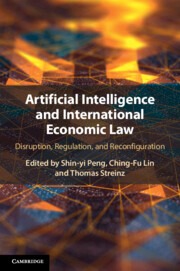
Artificial Intelligence and International Economic Law : Disruption, Regulation, and Reconfiguration
This book was finalized while countries around the world were still confronting a global public health crisis caused by the COVID-19 pandemic. Many came to rely on digital services as an infrastructure for social interaction and professional endeavors, including academic and educational work. The pandemic seems to have precipitated a further shift towards digital technologies and artificial intelligence. It is our hope that this book will contribute to an informed discussion about the relevance of and implications for international economic law beyond the pandemic"

Artificial intelligence and innovations 2007 : from theory to applications ; Proceedings of the 4th IFIP International Conference on Artificial Intelligence Applications and Innovations (AIAI2007)
This book brings together leading research from engineers and practitioners interested in the technical advances, business and industrial applications of intelligent systems.It is focused on providing insights on how AI can be implemented in real world applications. Intelligent Internet Systems: Emerging Technologies and Applications
