



الصفحة 20
الصفحة 20

Foundations of Data Mining and Knowledge Discovery
This volume presents the results of investigations into the foundations of the discipline, and represents the state-of-the-art for much of the current research. This book will prove extremely valuable and fruitful for data mining researchers, no matter whether they would like to uncover the fundamental principles behind data mining, or apply the theories to practical applications.

Foundations and novel approaches in data mining
Data-mining has become a popular research topic in recent years for the treatment of the "data rich and information poor” syndrome. Currently, application oriented engineers are only concerned with their immediate problems, which results in an ad hoc method of problem solving. Researchers, on the other hand, lack an understanding of the practical issues of data-mining for realworld problems and often concentrate on issues that are of no significance to the practitioners. In this volume, we hope to remedy problems by (1) presenting a theoretical foundation of data-mining, and (2) providing important new directions for data-mining research. A set of well respected data mining theoreticians were invited to present their views on the fundamental science of data mining.
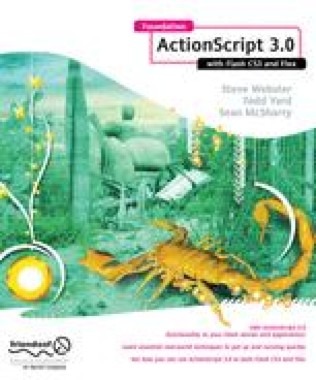
Foundation ActionScript 3.0 with Flash CS3 and Flex
If you want to create exciting dynamic web sites that will amaze your online audience, then the Flash platform is a great way to go, with it's many features, including powerful graphical and sound and video capabilities. To really harness the power of Flash though, you need to make use of ActionScript to provide dynamic effects, enable user interaction, and manipulate data. ActionScript 3.0, the Flash Platform's scripting language, offers a lot of new and powerful features. ActionScript is now a full-fledged programming language, with complete object-oriented capabilities, improved event handling, sound and video support, drawing capabilities, support for regular expressions, and much more. This book covers all the essential techniques from the ground up, allowing you to get up and running quickly and easily. Starting with the fundamentals, you'll learn about using ActionScript objects, manipulating sound and video, and harnessing the power of regular expressions and XML.
Formal Modeling and Analysis of Timed Systems ; Vol.4202 ; 4th International Conference, FORMATS 2006, Paris, France, September 25-27, 2006, Proceedings
The aim of FORMATS is to promote the study of fundamental and practical aspects of timed systems, and to bring together researchers from di?erent d- ciplines that share interests in modelling and analysis of timed systems. In this volume, there are articles on: – Foundations and Semantics: contributions to the theoretical foundations of timed systems and timed formal languages as well as comparison between di?erentmodelsusedbydi?erentcommunities(timedautomata,timedPetri nets, timed MSCs, hybrid automata, timed process algebra, timed temporal logics, timed abstract state machines, as well as probabilistic models). – Methods and Tools: techniques, algorithms, data structures, and software toolsforanalyzingtimedsystemsandresolvingtemporalconstraints(mod- checking, simulation, robustness analysis, scheduling, etc).

Food Materials Science : Principles and Practice
Food manufacture is about producing billions of units of standardized products which must be cheap, nutritious, safe and appealing to the consumer’s taste. Food products are complex multicomponent and structured edible materials that nevertheless must comply with the laws of physics and fundamentals of engineering sciences. In the last 20 years the design of food products with specific functionalities has advanced significantly by the application of scientific knowledge from disciplines such as polymer physics, colloidal and mesoscopic physics, materials science and new imaging and probing techniques borrowed from chemistry, biology and medicine. Our knowledge of the relationship between microstructure, processing, and macroscopic properties continues to increase as the science of food materials advances at a fast pace.

Food Engineering : Integrated Approaches
Food Engineering: Integrated Approaches presents an up-to-date review of important food engineering concepts, issues and recent advances in the field. Distinguished food engineers and food scientists from key institutions worldwide have contributed chapters that provide a deep analysis of their particular subjects. At the same time, each topic is framed within the context of a broader more integrated approach, demonstrating its relationship and interconnectedness to other areas. The premise of this work, therefore, is to offer both a comprehensive understanding of food engineering as a whole and a thorough knowledge of individual subjects. This approach appropriately conveys the basic fundamentals, state-of-the-art technology, and applications of the involved disciplines.

Fondamenti di ingegneria clinica ; Vol.2 : Ecotomografia = Fundamentals of clinical engineering ; Vol.2 : Ultrasound
With the second volume of Clinical Engineering, the Author intends to provide an updated scientific-didactic overview of the physical principles of ultrasound, of the technology and of the implementation aspects of the ecotomograph.

Fluorescence of supermolecules, polymers, and nanosystems
The field of fluorescence continues to steadily grow, both in its fundamental aspects and in applications in highly interdisciplinary areas including analytical, physical and organic chemistry, molecular sciences, biology, biomedicine and medical research. The 4th volume in the Springer Series on Fluorescence focuses on the fluorescence of nanosystems, polymers and supermolecules, and the development and application of fluorescent probes. Special emphasis is placed on the fluorescence of artificial and biological nanosystems, single molecule fluorescence and the luminescence of polymers, micro- and nanoparticles and nanotubes. Fluorescence microscopy and fluorescence correlation spectroscopy are covered as well. Historical aspects of this growing field and an overview of fluorescence applications are also provided.

Fluid Mechanics : With Problems and Solutions, and an Aerodynamics Laboratory
This textbook introduces the major branches of fluid mechanics of incompressible and compressible media, the basic laws governing their flow, and gasdynamics. "Fluid Mechanics" demonstrates how flows can be classified and how specific engineering problems can be identified, formulated and solved, using the methods of applied mathematics. The material is elaborated in special applications sections by more than 200 exercises and separately listed solutions. The final section comprises the Aerodynamics Laboratory, an introduction to experimental methods treating eleven flow experiments. This class-tested textbook offers a unique combination of introduction to the major fundamentals, many exercises, and a detailed description of experiments.
Fluid dynamics of cavitation and cavitating turbopumps
The book focuses on the fluid dynamics of cavitation with special reference to high power density turbopumps, where it represents the major source of performance and life degradation and often generates the conditions for the onset of dangerous fluid dynamic instabilities. To this purpose the first part of the book covers the more fundamental aspects of cavitation (nucleation, bubble dynamics, thermodynamic effects, cavitation erosion, stability of parallel bubbly flows) and the main kinds of cavitating flows (attached cavitation, cloud cavitation, supercavitation, ventilated supercavities, vortex cavitation, shear cavitation). The second part focuses on the hydrodynamics and instabilities of cavitating turbopumps (cavitation surge, rotating cavitation, higher order cavitation surge, rotordynamic whirl forces). Finally, the third part illustrates the alternative approaches for modeling and engineering simulation of cavitating flows.

Flowing Matter
This book presents an introduction to selected research topics in the broad field of flowing matter, including the dynamics of fluids with a complex internal structure -from nematic fluids to soft glasses- as well as active matter and turbulent phenomena. Flowing matter is a subject at the crossroads between physics, mathematics, chemistry, engineering, biology and earth sciences, and relies on a multidisciplinary approach to describe the emergence of the macroscopic behaviours in a system from the coordinated dynamics of its microscopic constituents. Depending on the microscopic interactions, an assembly of molecules or of mesoscopic particles can flow like a simple Newtonian fluid, deform elastically like a solid or behave in a complex manner. When the internal constituents are active, as for biological entities, one generally observes complex large-scale collective motions. Phenomenology is further complicated by the invariable tendency of fluids to display chaos at the large scales or when stirred strongly enough. This volume presents several research topics that address these phenomena encompassing the traditional micro-, meso-, and macro-scales descriptions, and contributes to our understanding of the fundamentals of flowing matter.

Fisica solare = Solar physics
An introduction to Solar Physics, intended to illustrate to those who intend to approach this discipline (students, PhDs, researchers) the physical mechanisms underlying the complex phenomena observed on our closest star. It does not claim to be exhaustive (suffice it to say that solar physics spans a wide range of disciplines, such as nuclear physics, thermodynamics, electrodynamics, atomic and molecular physics, spectroscopy across all bands of the electromagnetic spectrum, magnetohydrodynamics, plasma physics, the development of new instrumentation, optics, etc.). Rather, a number of topics of fundamental relevance to the current study of the Sun have been selected (especially with regard to ground-based observations with large telescopes), and an attempt has been made to provide a general overview of these topics, including their historical evolution, without going into excessive detail. Since Solar Physics can rightfully be considered the "Rosetta Stone" of all Astrophysics, the volume can also be considered a valid introduction to this subject.

Fire properties of polymer composite materials
This book is the first to deal comprehensively with the important topic of the fire behaviour of polymer composite materials. Composites are used in a diverse range of applications, including land and marine transport, aerospace, the chemical industry, and most branches of civil engineering infrastructure. It is our belief that fire behaviour is the single most important factor limiting the wider use of composites in many of these areas. Our aim in producing this volume is therefore to stimulate the work that is needed to overcome this fundamental problem. The first step in such a journey is, of course, to summarise what is presently known, which is what we have attempted here. The book covers all of the key issues on the behaviour of polymer composites in fire.

Finite Elements in Structural Analysis : Theoretical Concepts and Modeling Procedures in Statics and Dynamics of Structures
Introduces the basic concepts of the finite element method in the static and dynamic analysis of beam, plate, shell and solid structures, discussing how the method works, the characteristics of a finite element approximation and how to avoid the pitfalls of finite element modeling. Presenting the finite element theory as simply as possible, the book allows readers to gain the knowledge required when applying powerful FEA software tools. Further, it describes modeling procedures, especially for reinforced concrete structures, as well as structural dynamics methods, with a particular focus on the seismic analysis of buildings, and explores the modeling of dynamic systems. Featuring numerous illustrative examples, the book allows readers to easily grasp the fundamentals of the finite element theory and to apply the finite element method proficiently.

Finite element analysis for building assessment : Advanced use and practical recommendations
Existing structures represent a heterogeneous category in the global built environment as often characterized by the presence of archaic materials, damage and disconnections, uncommon construction techniques and subsequent interventions throughout the building history. In this scenario, the common linear elastic analysis approach adopted for new buildings is incapable of an accurate estimation of structural capacity, leading to overconservative results, invasive structural strengthening, added intervention costs, excessive interference to building users and possible losses in terms of aesthetics or heritage values. For a rational and sustainable use of the resources, this book deals with advanced numerical simulations, adopting a practical approach to introduce the fundamentals of Finite Element Method, nonlinear solution procedures and constitutive material models.

Finite Difference Computing with Exponential Decay Models
This text provides a very simple, initial introduction to the complete scientific computing pipeline: models, discretization, algorithms, programming, verification, and visualization. The pedagogical strategy is to use one case study – an ordinary differential equation describing exponential decay processes – to illustrate fundamental concepts in mathematics and computer science. The book is easy to read and only requires a command of one-variable calculus and some very basic knowledge about computer programming. Contrary to similar texts on numerical methods and programming, this text has a much stronger focus on implementation and teaches testing and software engineering in particular.

Financial Controlling
Provides an introduction to the fundamentals of operational and strategic controlling. It conveys the central tasks and functions that controlling has in the company and shows the challenges that this cross-sectional position entails. In addition, it addresses trends and developments in controlling that will have a significant impact on the work of controllers in the coming years.

Fieldwork for Design : Theory and Practice
Fieldwork for Design looks at why ethnographic approaches have been turned to in the design of computing devices for the workplace, for the home and elsewhere. It presents a history of ethnography, both as it was practiced before computer science picked it up and since, most especially in the CSCW and HCI domains. It examines, further, the various ethnographic or ‘fieldwork’ frameworks currently popular, explaining and examining what each claims and entails. The focus of the book throughout is on the practical relationship between theory and practice, a relationship that is often misunderstood yet fundamental to successful design.

Field Theory ; 2nd ed.
This book presents the basic theory of fields, starting more or less from the beginning. It is suitable for a graduate course in field theory, or independent study.There are new exercises, a new chapter on Galois theory from an historical perspective, and additional topics sprinkled throughout the text, including a proof of the Fundamental Theorem of Algebra, a discussion of casus irreducibilis, Berlekamp's algorithm for factoring polynomials over Zp and natural and accessory irrationalities.

Fecal Incontinence : Diagnosis and Treatment
Fecal incontinence is a frequent, distressing condition that has a devastating impact on patients’ lives. However, patients are typically embarrassed and reluctant to acknowledge this disability, so they relinquish the possibility of being cured and remain socially isolated. Since fecal incontinence may result from various pathophysiological situations, an accurate diagnostic work-up of each patient is fundamental. Today, a wide range of therapeutic options is available, but making the correct choice is pivotal to the successful management of this condition. This book is aimed at all physicians involved in the assessment and treatment of fecal incontinence. Its main purpose is to review the latest advances in the epidemiologic, socio-economic, psychologic, diagnostic, and therapeutic aspects of fecal incontinence, in order to establish guidelines for effective treatment.
