



الصفحة 2
الصفحة 2

From microphysics to macrophysics : Methods and applications of statistical physics; Vol.1
Volume 1 discusses in detail the probabilistic description of quantum or classical systems, the Boltzmann-Gibbs distributions, the conservation laws, and the interpretation of entropy as missing information. Thermodynamics and electromagnetism in matter are dealt with, as well as applications to gases, both dilute and condensed, and to phase transitions.

Ferrous Materials : Steel and Cast Iron
This book closes the gap in the treatment of steel and cast iron. Each chapter takes into account the gradual transitions between the two types of ferrous materials. The authors demonstrate that steel and cast iron are versatile and customisable materials which will continue to play a key role in the future.

Ester Boserup’s legacy on sustainability : Orientations for contemporary research
The contents are organized in three sections reflecting important focal points of Boserup’s own work: Long-Term Socio-Ecological Change; Agriculture, Land Use, and Development; and Gender, Population, and Economy. The first three chapters offer a comprehensive review of her political and scientific work. Section Two focuses on the applicability of Boserup’s reflections on land use, technology, and agriculture, incorporating case studies which illuminate and test Boserup’s hypotheses on land use intensification and soil degradation, the impact of population growth on land use, the agricultural transition, and the role of women in development. The case studies examine both long historical time series and present-day dynamics, and explore different levels of geographical scale, from the local to the regional and the global. Section Three emphasizes the key role of women and gender relations for agriculture and development.

Equilibrium statistical physics : Phases of matter and phase transitions
This is a textbook which gradually introduces the student to the statistical mechanical study of the different phases of matter and to the phase transitions between them. Throughout, only simple models of both ordinary and soft matter are used but these are studied in full detail. The subject is developed in a pedagogical manner, starting from the basics, going from the simple ideal systems to the interacting systems, and ending with the more modern topics. The latter include the renormalisation group approach to critical phenomena, the density functional theory of interfaces, the topological defects of nematic liquid crystals and the kinematic aspects of the phase transformation process. This textbook provides the student with a complete overview, intentionally at an introductory level, of the theory of phase transitions. References include suggestions for more detailed treatments and four appendices supply overviews of the mathematical tools employed in the text.

Energy Justice Across Borders
This book unites the fields of energy justice and comparative philosophy to provide an overarching global perspective and approach to applying energy ethics. We contribute to this purpose in four sections: setting the scene, practice, applying theory to practice, and theoretical approaches.

Energy Demand Challenges in Europe : Implications for policy, planning and practice
This book examines the role of citizens in sustainable energy transitions across Europe. It explores energy problem framing, policy approaches and practical responses to the challenge of securing clean, affordable and sustainable energy for all citizens, focusing on households as the main unit of analysis. The book revolves around ten contributions that each summarise national trends, socio-material characteristics, and policy responses to contemporary energy issues affecting householders in different countries, and provides good practice examples for designing and implementing sustainable energy initiatives. Prominent concerns include reducing carbon emissions, energy poverty, sustainable consumption, governance, practices, innovations and sustainable lifestyles.

Enabling Sustainable Energy Transitions : Practices of legitimation and accountable governance
This book reframes sustainable energy transitions as being a matter of resolving accountability crises. It demonstrates how the empirical study of several practices of legitimation can analytically deconstruct energy transitions, and presents a typology of these practices to help determine whether energy transitions contribute to sustainability.

Eigenvalues, Inequalities, and Ergodic Theory
A problem of broad interest – the estimation of the spectral gap for matrices or differential operators (Markov chains or diffusions) – is covered in this book. The area has a wide range of applications, and provides a tool to describe the phase transitions and the effectiveness of random algorithms. In particular, the book studies a subset of the general problem, taking some approaches that have, up till now, only appeared largely in the Chinese literature.Eigenvalues, Inequalities and Ergodic Theory serves as an introduction to this developing field, and provides an overview of the methods used, in an accessible and concise manner.

Education in the Era of Globalization
Education seems to have lost its orientation in Western culture and is in disarray all over the globe in time of global transitions. This book attempts to address the challenge of globalization to education in the broadest sense of the concept of education.

Crystallography and the World of Symmetry
Symmetry exists in realms from crystals to patterns, in external shapes of living or non-living objects, as well as in the fundamental particles and the physical laws that govern them. In fact, the search for this symmetry is the driving force for the discovery of many fundamental particles and the formulation of many physical laws. While one can not imagine a world which is absolutely symmetrical nor can one a world which is absolutely asymmetrical. These two aspects of nature are intermingled with each other inseparably. This is the basis of the existence of aperiodicity manifested in the liquid crystals and also quasi-crystals also discussed in Crystallography and the World of Symmetry.

Consciousness : A Mathematical Treatment of the Global Neuronal Workspace Model
This book brings together the fundamental ideas of information theory and the statistical mechanics of phase transitions within the context of the neurosciences, culture, immunology and socio-psychological studies. Outlined is a program pertaining to a dynamic and semantic extension of current models for the global neuronal workspace as were previously introduced by Baars, Dretske and others.

Computer simulations in condensed matter : From materials to chemical biology ; Vol.2
This extensive and comprehensive collection of lectures by world-leading experts in the field introduces and reviews all relevant computer simulation methods and their applications in condensed matter systems. Volume 1, published as LNP 703 (ISBN 3-540-35270-8) is an in-depth introduction to a vast spectrum of computational techniques for statistical mechanical systems of condensed matter. It will enable the graduate student and both the specialist and nonspecialist researcher to get acquainted with the tools necessary to carry out numerical simulations at an advanced level. The present volume is a state-of-the-art survey on numerical experiments carried out for a great number of systems, ranging from materials sciences to chemical biology, such as supercooled liquids, spin glasses, colloids, polymers, liquid crystals, biological membranes and folding proteins.

Computer simulation studies in condensed-matter physics XVIII ; Proceedings of the Eighteenth Workshop, Athens, GA, USA, March 7-11, 2005
This volume represents a "status report" emanating from presentations made during the 18th Annual Workshop on Computer Simulations Studies in Condensed Matter Physics at the Center for Simulational Physics at the University of Georgia in March 2005. It provides a broad overview of the most recent advances in the field, spanning the range from statistical physics to soft condensed matter and biological systems. Results on nanostructures and materials are included as are several descriptions of advances in quantum simulations and quantum computing as well as.methodological advances.

Computer simulation studies in condensed-matter physics XVI ; Proceedings of the Seventeenth Workshop, Athens, GA, USA, February 16-20, 2004
This status report features the most recent developments in the field, spanning a wide range of topical areas in the computer simulation of condensed matter/materials physics. Both established and new topics are included, ranging from the statistical mechanics of classical magnetic spin models to electronic structure calculations, quantum simulations, and simulations of soft condensed matter. The book presents new physical results as well as novel methods of simulation and data analysis. Highlights of this volume include various aspects of non-equilibrium statistical mechanics, studies of properties of real materials using both classical model simulations and electronic structure calculations, and the use of computer simulations in teaching.

Collective Dynamics of Nonlinear and Disordered Systems
Phase transitions in disordered systems and related dynamical phenomena are a topic of intrinsically high interest in theoretical and experimental physics. This book presents a unified view, adopting concepts from each of the disjoint fields of disordered systems and nonlinear dynamics. Special attention is paid to the glass transition, from both experimental and theoretical viewpoints, to modern concepts of pattern formation, and to the application of the concepts of dynamical systems for understanding equilibrium and nonequilibrium properties of fluids and solids. The content is accessible to graduate students, but will also be of benefit to specialists, since the presentation extends as far as the topics of ongoing research work.

Mathematical Modelling of Biosystems
This volume is an interdisciplinary book, which introduces, in a very readable way, state of the art research in the fundamental topics of mathematical modelling of Biosystems. These topics include: the study of Biological Growth and its mechanisms, the coupling of pattern to form via theorems of Differential Geometry, the human immunodeficiency virus dynamics, the inverse folding problem and the possibility of analysing true protein backbone flexibility, the Biclustering techniques for the organization of microarray data, the analytical approach to the modelling of biomolecular structure via Steiner trees, the action of biocides on resistance mechanisms of mutated and phenotypic bacteria strains, a description of the fundamental processes for the distribution and abundances of species towards a unified theory of Ecology, and a special introduction to Protein Physics aiming to explain the all-or-none first order phase transitions from native to denatured states.

Magnetism and Structure in Functional Materials
Magnetism and Structure in Functional Materials addresses three distinct but related topics: (i) magnetoelastic materials such as magnetic martensites and magnetic shape memory alloys, (ii) the magnetocaloric effect related to magnetostructural transitions, and (iii) colossal magnetoresistance (CMR) and related magnanites. The goal is to identify common underlying principles in these classes of materials that are relevant for optimizing various functionalities. The emergence of apparently different magnetic/structural phenomena in disparate classes of materials clearly points to a need for common concepts in order to achieve a broader understanding of the interplay between magnetism and structure in this general class of new functional materials exhibiting ever more complex microstructure and function. The topic is interdisciplinary in nature and the contributors correspondingly include physicists, materials scientists and engineers. Likewise the book will appeal to scientists from all these areas.
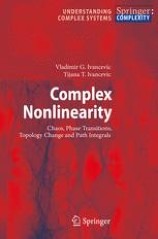
Complex Nonlinearity : Chaos, Phase Transitions, Topology Change and Path Integrals
The book starts with a textbook-like expose on nonlinear dynamics, attractors and chaos, both temporal and spatio-temporal, including modern techniques of chaos–control. Chapter 2 turns to the edge of chaos, in the form of phase transitions (equilibrium and non-equilibrium, oscillatory, fractal and noise-induced), as well as the related field of synergetics. While the natural stage for linear dynamics comprises of flat, Euclidean geometry (with the corresponding calculation tools from linear algebra and analysis), the natural stage for nonlinear dynamics is curved, Riemannian geometry (with the corresponding tools from nonlinear, tensor algebra and analysis). The extreme nonlinearity – chaos – corresponds to the topology change of this curved geometrical stage, usually called configuration manifold. Chapter 3 elaborates on geometry and topology change in relation with complex nonlinearity and chaos. Chapter 4 develops general nonlinear dynamics, continuous and discrete, deterministic and stochastic, in the unique form of path integrals and their action-amplitude formalism.

Classical Nucleation Theory in Multicomponent Systems
Nucleation is the initial step of every first-order phase transition, and most phase transitions encountered both in everyday life and industrial processes are of the first-order. Using an elegant classical theory based on thermodynamics and kinetics, this book provides a fully detailed picture of multi-component nucleation. As many of the issues concerning multi-component nucleation theory have been solved during the last 10-15 years, it also thoroughly integrates both fundamental theory with recent advances presented in the literature. It covered are: the basic relevant thermodynamics and statistical physics; modelling a molecular cluster as a spherical liquid droplet; predicting the size and composition of the nucleating critical clusters; kinetic models for cluster growth and decay; calculating nucleation rates; and a full derivation and application of nucleation theorems that can be used to extract microscopic cluster properties from nucleation rate measurements.

Changing Forests : Collective Action, Common Property, and Coffee in Honduras
It merges political ecology, collective-action theories, and institutional analysis to study how the people and forests have changed through socioeconomic and political transitions. It studies the complex, often contradictory relationships between the people and their natural resources to understand why forest cover endures."Changing Forests" therefore encompasses three broad phases: (1) the premodern period, which considers historic perturbations in western Honduras from the period of colonialism into the middle of the twentieth century; (2) the period of state-led logging and intervention in La Campa, which caused major degradation in forest cover; and (3) the recent period in which export coffee production transformed property rights, and people’s perceptions of the forest gained new conservationist and economic dimensions. Each phase entails perspectives and experiences that influenced human use of forests, and shaped subsequent transformations.
