



الصفحة 2
الصفحة 2

Human semen analysis : From the WHO manual to the clinical management of infertile men
Intended to bridge the gap between the laboratory manual and the clinician by explaining in detail the test indication, its clinical utility, interpretation of results, and presenting a decision algorithm based on the test results. Thebook has 19 chapters grouped under seven sections that follow the chapters of the sixth edition of the WHO manual. Each chapter is written and reviewed by a team of senior clinicians, thus bringing a perspective that is truly clinically relevant. This book will be of great value to all clinicians involved in the management of male infertility and will also be of interest to laboratory scientists involved in semen testing by providing them with clinical perspectives of the test they perform. Human Semen Analysis: From the WHO Manual to the Clinical Management of Infertile Men is a useful guide for utilizing the WHO manual, interpreting test results, and deciding what subsequent clinical actions to take.

Human origins and environmental backgrounds
Human Origins and Environmental Backgrounds is a benchmark compendium of research that presents itself at a major paradigm shift in paleoanthropology. The editors offer a variety of theoretical approaches to puzzles on the place of the Hominidae, particularly Homo sapiens, among the Primates, including our unique bipedal positional behavior and social structure and the selective factors that might have been involved in our evolution in the broad context of Miocene and later environments. The contributors represent several generations of pioneering laboratory and field researchers from Japan, France and the United States, who have worked together over the past 40 years and who have trained future leaders in evolutionary anthropology and experimental primatology. This volume, compiled by the leading experts in the field, explores the interface between hominid origins and palaeoenvironments.

Hierarchy in Natural and Social Sciences
This book reviews ancient and modern representations and explanations of hierarchies, and compares their relevance in a variety of fields, such as language, societies, cities, and living species. It throws light on concepts and models such as scaling laws, fractals and self-organisation that are fundamental in the dynamics and morphology of complex systems.This book addresses a wide audience of biologists and social scientists, as well as managers and executives in a variety of institutions.

Hepatology, principles and practice : History, morphology, biochemistry, diagnostics, clinic, therapy ; 2nd ed.
In this book detailed presentation of morphology and its integration in liver disease - precise recommendations for therapy and summarized descriptions of special forms of treatment (inlcuding a separate chapter on "Therapy"

Hepatology textbook and atlas : History, morphology, biochemistry, diagnostics, clinic, therapy ; 3rd ed.
The current edition contains up-to-date information, but also stands for tradition and progress in hepatology. The reader is carefully introduced into the subject matter and learns to experience and understand everything to the full extent.

Handbook of Word-Formation
This volume, intended both for advanced students and scholars of linguistics, traces the many strands of study in the field of word formation that have developed since the seminal work of Marchand and Lees in the 1960s. In mapping the state of the art in the field of word formation, it avoids a biased approach by presenting different, but mutually complementary frameworks within which research into word formation has taken place. It covers the historical development of theories of word formation within generative grammar, and affords a solid introduction to the treatment of word formation in cognitive grammar, natural morphology, optimality theory, Lexeme Morpheme Base Morphology, onomasiological theory, and other recent frameworks.

Handbook of Pathogens and Diseases in Cephalopods
The aim of this book is to facilitate the identification and description of the different organs as well as pathogens and diseases affecting the most representative species of cephalopods focussed on Sepia officinalis, Loligo vulgaris and Octopus vulgaris. These species are valuable ‘morphotype’ models and belong to the taxonomic groups Sepioidea, Myopsida and Octopoda, which include most of the species with a high market value and aquaculture potential. The study is based on photographs at macroscopic and histological level in order to illustrate the role of the most important pathogens and related diseases from the view of a pathological diagnosis. The reader is able to familiarize with functional anatomy, necropsy and general histology of adults and paralarvae, as well as with the identification of different pathogens and pathologies. This work is thus an invaluable guide for the diagnosis of cephalopod diseases. Besides including pathogens for non-European cephalopod species, it also provides a useful contribution encouraging marine pathologists, parasitologists, veterinarians and those involved in fishery sanitary assessments, aquarium maintenance and aquaculture practices aiming to increase their knowledge about the pathology of cephalopods.

Handbook of Mathematical Geosciences : Fifty Years of IAMG
Presents a compilation of invited path-breaking research contributions by award-winning geoscientists who have been instrumental in shaping the IAMG. It contains 45 chapters that are categorized broadly into five parts (i) theory, (ii) general applications, (iii) exploration and resource estimation, (iv) reviews, and (v) reminiscences covering related topics like mathematical geosciences, mathematical morphology, geostatistics, fractals and multifractals, spatial statistics, multipoint geostatistics, compositional data analysis, informatics, geocomputation, numerical methods, and chaos theory in the geosciences.

Grammar for Teachers : A Guide to American English for Native and Non-Native Speakers
The purpose of Grammar for Teachers is to encourage readers to develop a solid understanding of the use and function of grammatical structures in American English. It approaches grammar from a descriptive rather than a prescriptive approach; however, throughout Grammar for Teachers differences between formal and informal language, and spoken and written English are discussed. Grammar for Teachers avoids jargon or excessive use of technical terminology and reviews essential grammar structures clearly and concisely.

Geophysics of the Canary Islands : Results of Spain's Exclusive Economic Zone Program
This book contains the results of a 9 year (1995-2004) investigation of the Canary Islands Exclusive Economic Zone, using state of the art technology. The main result areas are: a multibeam survey demonstrating the magnitude of catastrophic failures of the Canary Islands; a comparison of the morphology of the Canary Islands with Hawaii; the significance of hydrothermal activity in the Canary Channel associated with Mesozoic salt diapirs; an analysis of the morphology and structure of the offshore extension of the Anaga massif in Tenerife island; a detailed description of the archipelago gravity field and magnetic field of the Canary Islands

Geodynamics of the Lithosphere : An Introduction
This second edition of the important introductory text for earth scientists has been thoroughly revised and extended. It contains chapters on heat flow, sedimentary basin modeling, the mechanics of continental deformation, PT path modeling, geomorphology, mass transfer and more.

Geodetic and geophysical observations in Antarctica : An overview in the IPY perspective
This book is a collection of papers on various aspects of the scientific investigation and observation techniques of the polar regions at both temporary and permanent observatories. Most papers focus on regional models based on data acquired in polar regions. Geodetic satellite positions systems (GNSS: GPS, GLONASS, GALILEO) will also be discussed as well as other space techniques (DORIS, VLBI). Gravimetry, absolute gravimetry, and tidal gravimetry are also discussed, as well as seismology and meteorology.

Genomics of Tropical Crop Plants
Genomics of Tropical Crop Plants summarizes recent progress on genomic research, including the development of molecular markers, genomic and cDNA libraries, expressed sequence tags (ESTs), genetic and physical maps, gene expression profiles, and whole genome sequences for 20 tropical crop plants. It offers background information about the evolutionary origin and environments of tropical crop species, international programs that are addressing the needs of tropical agriculture, and the potential for new technologies to increase the productivity and value of tropical crops. This book provides new dimensions to growing information concerning temperate crops and their morphology, physiology, and parallel evolution in diverse plant lineages.

Fuzzy Modeling with Spatial Information for Geographic Problems
This book focuses on research advances in approaches for incorporating explicit handling of uncertainty, especially by fuzzy sets, to address geographic problems. It has two aims: to stimulate research in the theory and application of fuzzy sets to spatial information management and geographic problem solving; and to highlight advances that have matured so much that geoscientists, computer scientists, geographers, et al. use fuzzy modeling. The book includes examples of the use of fuzzy sets in representational issues such as terrain features, landscape morphology, spatial extents and approaches for spatial interpolation, plus applications using fuzzy sets covering data mining, spatial decision making, ecological simulation, and reliability in GIS.

Fundamentals of Pharmacognosy and Phytotherapy
Pharmacognosy (the science of biogenic or nature-derived pharmaceuticals and poisons) has been an established basic pharmaceutical science taught in institutions of pharmacy education for over two centuries. Over the past 20 years though it has become increasingly important given the explosion of new drugs, phytomedicines (plant medicines), nutraceuticals and dietary supplements – all of which need to be fully understood, tested and regulated.

Fuel Cells II
The concept to utilize an ion-conducting polymer membrane as a solid po- mer electrolyte offers several advantages regarding the design and operation of an electrochemical cell, as outlined in Volume 215, Chapter 1 (L. Gubler, G.G. Scherer). Essentially, the solvent and/or transport medium, e.g., H O, 2 + for the mobile ionic species, e.g., H for a cation exchange membrane, is taken up by and con?ned into the nano-dimensional morphology of the i- containingdomainsofthepolymer.Asaconsequence, aphaseseparationinto a hydrophilic ion-containing solvent phase and a hydrophobic polymer ba- bone phase establishes. Because of the narrow solid electrolyte gap in these cells, low ohmic losses reducing the overall cell voltage can be achieved, even at highcurrent densities.

Fuel Cells I
The concept to utilize an ion-conducting polymer membrane as a solid po- mer electrolyte offers several advantages regarding the design and operation of an electrochemical cell, as outlined in Volume 215, Chapter 1 (L. Gubler, G.G. Scherer). Essentially, the solvent and/or transport medium, e.g., H O, 2 + for the mobile ionic species, e.g., H for a cation exchange membrane, is taken up by and con?ned into the nano-dimensional morphology of the i- containingdomainsofthepolymer.Asaconsequence, aphaseseparationinto a hydrophilic ion-containing solvent phase and a hydrophobic polymer ba- bone phase establishes. Because of the narrow solid electrolyte gap in these cells, low ohmic losses reducing the overall cell voltage can be achieved, even at highcurrent densities.

Fluorescence of supermolecules, polymers, and nanosystems
The field of fluorescence continues to steadily grow, both in its fundamental aspects and in applications in highly interdisciplinary areas including analytical, physical and organic chemistry, molecular sciences, biology, biomedicine and medical research. The 4th volume in the Springer Series on Fluorescence focuses on the fluorescence of nanosystems, polymers and supermolecules, and the development and application of fluorescent probes. Special emphasis is placed on the fluorescence of artificial and biological nanosystems, single molecule fluorescence and the luminescence of polymers, micro- and nanoparticles and nanotubes. Fluorescence microscopy and fluorescence correlation spectroscopy are covered as well. Historical aspects of this growing field and an overview of fluorescence applications are also provided.

Fish Histology : Female Reproductive Systems
This volume describes the myriad ways in which fish have approached problems of reproduction — it is an amply illustrated comparative study of the microscopic structure of the female genital systems of fish. The timing of its appearance is auspicious in that it coincides with the decline of the golden age of descriptive morphology. It is a compilation of thousands of micrographs — mostly electron micrographs — from classic works in the field and should prove valuable to investigators studying fish in areas such as ecology, physiology, and reproductive biology who may view histology as essential in their work but have little background in this area. It includes chapters on the origin of genital systems, the structure of ovarian follicles, mechanisms of ovulation, the cortical reaction, oviducts, oviparity, and amazing examples of viviparity.
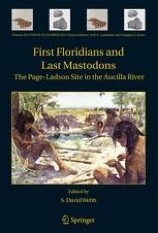
First floridians and last mastodons : The Page-Ladson Site in the Aucilla River
Over the last 20 years the Aucilla River Prehistory Project has been one of the most f- cinating stories unfolding in Florida. This project, uncovering the remains of plants and animals from the end of the last Ice Age and the beginning of Florida’s human oc- pation, is answering questions important to the entire western hemisphere. Questions such as when did people first arrive in the Americas? Were these newcomer scavengers or skillful hunters? Could they have contributed to the extinction of the great Ice Age beasts – animals such as elephants – that were creatures native to Florida for the pre- ous million or so years? And how did these first Florida people survive 12,000 years ago at a time when sea level was so low that this peninsula was double its present size, sprawling hugely into the warm waters of the Caribbean? Much of Florida at that time was almost desert.
