



الصفحة 2
الصفحة 2

Molecular Electronics Materials, Devices and Applications
another goal of Molecular Electronics Materials, Devices and Applications is also to promote a practical approach. As a starting point for future developments, a pragmatic methodology for VHDL-AMS device modelling and circuit design based on experimental data is then proposed. It includes an original fault tolerant memory architecture based on molecular electronics.

Molecular Building Blocks for Nanotechnology : From Diamondoids to Nanoscale Materials and Applications
This book contains a variety of subjects covering computational, dry and wet nanotechnology. The state-of-the-art subject matters presented here provide the reader with the latest developments on ongoing nanoscience and nanotechnology research from the bottom-up approach.

Modern treatments for chronic blood diseases
Blood is a body fluid in humans and other animals that delivers necessary substances such as nutrients and oxygen to the cells and transports metabolic waste products away from those same cells. In vertebrates, it is composed of blood cells suspended in blood plasma. Plasma, which constitutes 55% of blood fluid, is mostly water (92% by volume), and contains proteins, glucose, mineral ions, hormones, carbon dioxide (plasma being the main medium for excretory product transportation), and blood cells themselves. Albumin is the main protein in plasma, and it functions to regulate the colloida osmotic pressure of blood. The blood cells are mainly red blood cells (also called RBCs or erythrocytes), white blood cells (also called WBCs or leukocytes) and platelets (also called thrombocytes). Thalassemias are inherited blood disorders characterized by decreased hemoglobin production Symptoms depend on the type and can vary from none to severe. Often there is mild to severe anemia (low red blood cells or hemoglobin). Anemia can result in feeling tired and pale skin. There may also be bone problems, an enlarged spleen, yellowish skin, and dark urine. Slow growth may occur in children.

Modelling water and nutrient dynamics in soil-crop systems : Applications of different models to common data sets - Proceedings of a workshop held 2004 in Müncheberg, Germany
This book contains articles from a workshop on "Modelling water and nutrient dynamics in crop-soil systems". Data sets from lysimeters and experimental fields of multiyear crop rotations were provided for modellers. A unique data set is provided of a 100 year long term field experiment regarding crop yield and organic carbon development under different management systems. The book includes a detailed description of data sets which can be used by modellers and the papers describe the applications of 18 different modelling approaches describing soil-crop-atmosphere interactions for water, nitrogen and carbon dynamics.

Modelling our Changing World
This book focuses on the concepts, tools and techniques needed to successfully model ever-changing time-series data. It emphasizes the need for general models to account for the complexities of the modern world and how these can be applied to a range of issues facing Earth, from modelling volcanic eruptions, carbon dioxide emissions and global temperatures, to modelling unemployment rates, wage inflation and population growth.

Modeling Marvels : Computational Anticipation of Novel Molecules
The aim of this book is to survey a number of chemical compounds that chemists, both theoretical and experimental, find fascinating. Some of these compounds, like planar carbon species or oxirene, offer no obvious practical applications; nitrogen oligomers and polymers, in contrast, have been touted as possible high-energy-density materials. What unites this otherwise eclectic collection is that these substances are unknown and offer a challenge to theory and to synthesis.

Microscale Diagnostic Techniques
Microscale Diagnostic Techniques highlights the most innovative and powerful developments in microscale diagnostics. It provides a resource for scientists and researchers interested in learning about the techniques themselves, including their capabilities and limitations.

Microorganisms in soils : Roles in genesis and functions
The following key topics are covered: Microorganisms in bioerosion, humification, mineralization and soil aggregation; Microbial energetics and microbes in biogeochemical processes such as carbon and nitrogen cycles and phosphorus bio-availability; Interactions in the mycorrhizosphere, e.g. between mycorrhizal fungi and bacteria; Impact of microbes on plant nutrient cycling and the possible effects of transgenic rhizospheres on soil fungi; Functions of microbes in specific soil compartments such as soil surface or toxic metal polluted soils; Regulation of microbial activities in functional domains that are influenced by biotic or abiotic factors; Use of marker genes and isotopes as examples for modern techniques in soil microbiology.

Micro and Nano Mechanical Testing of Materials and Devices
Nanoscale and nanostructured materials have exhibited different physical properties from the corresponding macroscopic coarse-grained materials due to the size confinement. As a result, there is a need for new techniques to probe the mechanical behavior of advanced materials on the small scales. Micro and Nano Mechanical Testing of Materials and Devices presents the latest advances in the techniques of mechanical testing on the micro- and nanoscales, which are necessary for characterizing the mechanical properties of low-dimensional materials and structures.

Metallocenes in Regio- and Stereoselective Synthesis
Metallocene is a well known sandwich complex with two cyclopentadienyl ligands such as ferrocene. Recently, such metallocene compounds have been found to be very characteristic and they have become very important, not only in the area of organic synthesis, but also in polymerization in industry. Metal complexes with one cyclopentadienyl ligand have also become popular as half sandwich complexes. The number of researchers in the field of metallocenes has increased rapidly. However, the origin of the characteristic reactivity of metallocenes is not fully understood. In this volume, the chemistry of metal complexes with at least one cyclopentadienyl ligand is comprehensively covered by leading experts. Reactions discussed here are (i) natural product synthesis, (ii) catalytic asymmetric synthesis, (iii) cyclization reactions, (iv)catalytic reactions, (iv) polymerization reactions and (v) carbon-carbon bond cleavage reactions. The reader will have access to useful information about the current state of metallocene chemistry.

Metal-Catalysed Reactions of Hydrocarbons
This unique book, drawing on the author’s lifetime experience, critically evaluates the extensive literature on the field of Metal-Catalysed Reactions of Hydrocarbons. Emphasis is placed on reaction mechanisms involving hydrogenation, hydrogenolysis, skeletal and positional isomerisation, and exchange reactions. The motivation for fundamental research in heterogeneous catalysis is to identify the physicochemical characteristics of active centres for the reaction being studied, to learn how these may be modified or manipulated to improve the desired behavior of the catalyst, and to recognize and control those aspects of the catalyst's structure that limit its overall performance. By restricting the subject of the book to hydrocarbons, Bond has progressively developed the subject matter to include areas of importance both to researchers and to those working in the industry.

Metal Catalyzed Reductive C-C Bond Formation : A Departure from Preformed Organometallic Reagents
The prototypical catalytic reductive C–C bond formations, the Fischer-Tropsch reaction [1] and alkene hydroformylation [2], were discovered in 1922 and 1938, respectively [3,4]. These processes, which involve reductive coupling to carbon monoxide, have long been applied to the industrial manufacture of commodity chemicals [5]. Notably, alkene hydroformylation, also known as the oxo-synthesis, has emerged as the largest volume application of homogeneous metal catalysis, accounting for the production of over 7 million metrictons of aldehyde annually. Despite the impact of these prototypical reductive C–C bond formations, this field of research lay fallow for several decades.
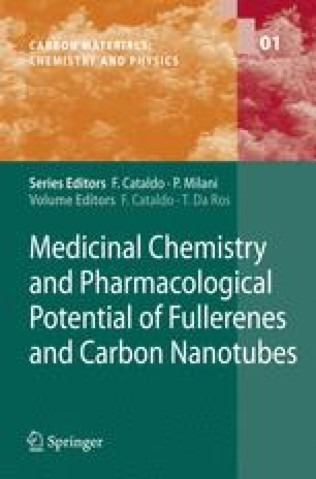
Medicinal Chemistry and Pharmacological Potential of Fullerenes and Carbon Nanotubes
Medicinal Chemistry and Pharmacological Potential of Fullerenes and Carbon Nanotubes features important insights into the applications of fullerenes and carbon nanotubes. It discusses the fullerene and nanotubes derivatives which are effective against viruses, cells, and bacteria and those which are able to interact and inhibit certain enzymes. Also covered in this book are the formation of complex structures between biologically active molecules and carbon materials. Furthermore, the application of fullerenes in certain medical therapies is explored, including the very recent discovery of new bio-compatible media which could be used as carriers in the delivery of fullerenes in vivo. An additional topic of this text is the formation of hybrids between nanotubes and biological molecules and their use as chemical sensors.

Introduction to Permanent Plug and Abandonment of Wells
This book offers a timely guide to challenges and current practices to permanently plug and abandon hydrocarbon wells. With a focus on offshore North Sea, it analyzes the process of plug and abandonment of hydrocarbon wells through the establishment of permanent well barriers.

Introducing Molecular Electronics
This volume presents a summary of our current understanding of molecular electronics combined with selected state-of-the-art results at a level accessible to the advanced undergraduate or novice postgraduate. This single book comprises the basic knowledge of both theory and experiment underpinning this rapidly growing field. Concepts and techniques such as density functional theory and charge transport, break junctions and scanning probe microscopy are introduced step-by-step and are subsequently used in specific examples. The text addresses a wide range of systems including molecular junctions made of single-molecules, self-assembled monolayers, carbon nanotubes and DNA.

Inherited inborn errors in amino acids metabolism
Proteins are the most abundant organic molecules in animals, playing important roles in all aspects of cell structure and function. Proteins are biopolymers of acids, so named because the amino group is bonded to the carbon atom, next to the carbonyl group.

In Vitro Culture of Mycorrhizas
biologists have made important progress in understanding better the functioning of AM fungi. An in vitro technique has been developed using mycorrhizal root organ cultures, which made it possible to investigate the genetics, cell biology and physiology of AM fungi. We can now be objective enough to critically evaluate the impacts the in vitro technique has had to improve our knowledge on mycorrhizal symbiosis.

Hydrogen materials science and chemistry of carbon nanomaterials ; Proceedings of the NATO Advanced Research Workshop on Hydrogen Materials Science an Chemistry of Carbon Nanomaterials, Sudak, Crimea, Ukraine, September 14-20, 2003
presentation and discussion of the most recent research on transition to hydrogen-based energy systems, technologies for hydrogen production, storage, utilization, materials, energy and environmental problems. The aim of the volume is to provide an overview of the latest scientific results on research and development in the different topics cited above.

Hydrogen Materials Science and Chemistry of Carbon Nanomaterials
The 2005 International Conference “Hydrogen Materials Science and Chemistry of Carbon Nanomaterials” (ICHMS’2005) was held in September 5-11, 2005 in the remarkable city Sevastopol (Crimea, Ukraine) known for its heroic and unusual th fate. In the tradition of the earlier ICHMS conferences, this 9 ICHMS’2005 meeting served as an multidisciplinary forum for the presentation and discussion of the most recent research on transition to hydrogen-based energy systems, technologies for hydrogen production, storage, utilization, materials processing and chemical behavior, energy and environmental problems. The aim of ICHMS’2005 was to provide the wide overview of the latest scientific results on basic research and technological applications of hydrogen interactions with metals and other materials.

High-Latitude Bioerosion : The Kosterfjord Experiment
Bioerosion is the major force driving the degradation of marine skeletal carbonates and limestone coasts. A wide spectrum of mechanical and/or chemical boring, scraping or crushing organisms break down calcereous substrates, comprising various grazers, macroborers and especially microborers. Their traces on and within hard substrates are known from fossil carbonates as old as the Precambrian and serve as valuable palaeoenvironmental indicators. Bioerosion processes have been extensively studied in tropical seas, while corrsponding investigations from cold-temperate to polar settings remain sparse. For the first time, an experimental study yields insight into the pace of carbonate degradation and the chronology of boring community development along a bathymetric gradient in a high-latitude setting.
