



الصفحة 2
الصفحة 2

Environmental and Health Risk Assessment and Management : Principles and Practices
The book covers the essential aspects of environmental and health law, environmental economics, applied statistical and probabilistic methods, fundamental notions of applied epidemiology and toxicology, as well as decision analysis, to provide an integrated overview of how risk assessment and management combine to produce sound societal outcomes. Risk-based methods play a pivotal role in identifying and ranking alternative, sustainable choices, while accounting for uncertainty and variability. Specifically, most reductions in risks require a balancing of the costs and benefits associated with the action to reduce exposure to a hazard and thus risk. This balancing necessarily involves linking exposure and response through causation. Fundamentally, in risk assessment and management, science and law intersect through legal and scientific causation to the point that the failure to provide a sound causal argument can make an otherwise beneficial law or regulation invalid.

Enhancing urban environment by environmental upgrading and restoration ; Proceedings of the NATO Advanced Research Workshop on enhancing urban environment : environmental upgrading of municipal pollution control facilities and restoration of urban waters, Rome, Italy from 6 - 9 November 2003.
As urban areas keep growing, water infrastructure ages, and the requirements on environmental protection become more rigorous, there is a continual need for upgrading water pollution control facilities and restoring degraded urban waters. Such issues are addressed in this book by focusing on five major topics: (a) Upgrading stormwater management facilities, (b) Retrofitting / upgrading combined sewer overflow (CSO) facilities, (c) Optimising/upgrading sewage treatment plant performance, (d) Urban stream restoration, and (e) Challenges in restoring urban environment. Each chapter contains some overview papers followed by research or case study papers. Besides presentations of new approaches and accomplishments in the field of upgrading and restoration, several papers provide analysis of vast needs in this field in several countries of Central and Eastern Europe, which either recently joined the European Union (EU) or are preparing for accession, and need to comply with the existing EU directives dealing with environmental protection. As such, this book will be of primary interest to researchers and university lecturers dealing with environmental upgrading and restoration, environmental planners from all levels of government, municipal engineers and politicians, and finally the private industry representatives (consultants, private utilities and environmental technology suppliers) searching for new business opportunities among the new or aspiring members of EU.

Emerging Organic Pollutants in Waste Waters and Sludge
Over the past fifteen years regulatory agencies have relied on their approaches to characterise and control the release of toxic substances into the aquatic environment: a GC/MS analysis for U.S. EPA designated 126 priority pollutants and 132 dangerous substances according to the European 76/464/CEE Directive and on the bioassays with aquatic bioorganisms. "Emerging Contaminants" correspond in most cases to irregulated contaminants, e.g. surfactants, pharmaceuticals and personal care products (PPCP), or gasoline additives. These two volumes, 5/I and 5/O, of this Handbook deal with the analytical, toxicological and environmental issues of these toxicants. Based on results of up-to-date research they give the reader a balanced view on this rapidly developing and complex subject.

Emerging Environmental Technologies
This book exclusively focuses on the technologies that would be in the forefront in near to far future. Each and every article in the book discusses the current environmental challenges, the novel innovation and future directions. The topics covered in the book include microbial fuel cells, hybrid solar lighting, bacterial swimming for environmental remediation, cleaner engines, nanoparticles for effluent treatment, surface catalysis and proteins as gas hydrates inhibitors.
Emerging Contaminants from Industrial and Municipal Waste : Removal Technologies
This book focuses on innovative treatment technologies for the elimination of emerging contaminants from wastewater and drinking water. The respective treatment processes, such as membrane bioreactors, photocatalysis, ozonation and advanced oxidation are dealt with in detail. The book also discusses sources and occurrence of emerging contaminants in municipal and industrial waste, giving a concise and critical overview of state-of-the-art analytical methods for their identification. Further important aspects covered by the book include the acute and chronic effects and overall impact of emerging contaminants on the environment.

Emerging Contaminants from Industrial and Municipal Waste : Occurrence, Analysis and Effects
This book focuses on innovative treatment technologies for the elimination of emerging contaminants from wastewater and drinking water. The respective treatment processes, such as membrane bioreactors, photocatalysis, ozonation and advanced oxidation are dealt with in detail. The book also discusses sources and occurrence of emerging contaminants in municipal and industrial waste, giving a concise and critical overview of state-of-the-art analytical methods for their identification. Further important aspects covered by the book include the acute and chronic effects and overall impact of emerging contaminants on the environment.
Efficient Management of Wastewater : Its Treatment and Reuse in Water-Scarce Countries
The book highlights non-conventional solutions within the field of wastewater treatment and reuse predominantly for professionals and decision makers. It focuses on technologies like anaerobic and extensive treatment of municipal, domestic wastewater and grey water which are reliable, sustainable, low cost and suitable for rural and sub urban areas. Additionally, particular innovative on site concepts are presented.

Ecology of Baltic Coastal Waters
The Baltic Sea is one of the most investigated water bodies in the world. For decades, the many highly industrialised nations around the Baltic have financed basic and applied investigations, as well as the building and development of research stations and vessels. After World War II, research in the Baltic Proper was intensified and investi- tions became much more international. The main goals of such investigations were analysis of the eutrophication and pollution of the Baltic Sea, and development of mitigating strategies (e.g. the HELCOM-Program). In contrast, research into the coastal zones was carried out mainly under national sovereignty by individual governments due to differing political regimes. Consequently, there was a lack of international collaboration and publications regarding these regions. This changed following the collapse of the former socialist governments. Nevertheless, research activities in the coastal regions still lag behind those in the Baltic Proper. A general description is further hampered by the great variety of coastal water ecosystems. The aim of this book is to overcome this lack by presenting the important Baltic coastal zones in the form of “ecological case studies”. In this way the book rep- sents an important supplement to literature concerning the Baltic Proper.

Earth Observation of Global Change : The Role of Satellite Remote Sensing in Monitoring the Global Environment
Global Change is increasingly considered a critical topic in environmental research. Remote sensing methods provide a relevant tool to monitor global variables, since they offer a systematic coverage of the Earth Surface, at different spatial, spectral and temporal resolutions. The data provided by Earth Observation Satellites are being operationally used for monitoring atmospheric conditions, ice sheets and glaciar movements, crop dynamism and land use changes, deforestation and desertification processes, as well as water conditions. The book includes an analysis of the leading missions in global Earth observation, and then reviews the main fields in which remote sensing methods are providing vital data for global change studies.

Demands of Expanding Populations and Development Planning : Clean Air, Safe Water, Fertile Soils
This book brings together three topics that interact to affect the quality of life on Earth. First, it examines expanding populations (and contracting ones) in regional and national contexts. Second, the book reviews the impacts of pollution on people, ecosystems and economic ventures.Third, the book asserts that well-planned development projects adhering to environmental laws and with best available technologies, will reduce ecosystem pollution yet yield strong profit margins.

Dangerous Pollutants (Xenobiotics) in Urban Water Cycle
The book focused on evaluation of impact of xenobiotics in the whole Urban Water Cycle are an interdisciplinary task which has a rising concern these days. Xenobiotics includes both inorganic elements like heavy metals, metalloids and man-made organic compounds such as pesticides, surfactants, solvents, fragrances, flavours, and pharmaceuticals as well as endocrine dis- pters.

Coping with Water Deficiency : From Research to Policymaking
In line with the Water Framework Directive, this book stresses the need for an Integrated Water Resources Management (IWRM) approach to balance the competing demands on water-domestic, agricultural, industrial, tourism and environmental/ecological- and promote economically efficient, socially equitable and environmentally sustainable water use in selected regions from Southern Europe, the Mediterranean and the developing world. Results from the research projects covered by this book, demonstrate that effective water management tools and decisions-making practices, are needed in order to complement integrated interventions for increasing the availability of supply and/or managing the growing demand for scarce water supplies. Further, the book attempts to bridge the gap between ideas and actions endorsed at the research-oriented environmental debate, and their translation into policy making structures and programs in developed and developing countries.
Management of Transboundary Rivers and Lakes
As it circulates in the atmosphere, in the rivers, lakes, soil, rock, and in the oceans, it is the major conveyer of va- ous chemical substances and of energy, and it can also be called as the blood of the ecosystems of this planet. But at the same time water is interwoven in the va- ous functions of the nature and the human society in countless ways which makes water one of the most complicated challenges of the mankind today.Human beings are exploiting and enjoying, but at the same time polluting and deteriorating, the waters in various ways and water is equally important to the - man socio-economic system as it is to the nature. It may sound a bit anecdotal to say that water obeys no borders, but that is true; the hydrologic cycle with its r- ers, river basins, lakes, aquifers, rainfalls, oceans, etc., cross administrational b- ders without any passport control. River and lake basins are in most cases very different from the administrational borders that the human beings have set up.
Management of Intentional and Accidental Water Pollution
The goals of the workshop included a discussion of the state of the science in identification of new research and approaches for water pollution events and communication of the management of water pollution and sustainability of water resources. Critical to management of accidental and intentional pollution events is the assessment of the risk, an understanding of the hazards and lessons learned from events which may lead to preventative management and control strategies. Public health protection will ultimately be improved by the ability to develop management frameworks which are flexible and adaptable to the specific region, country or watershed problems and concerns and allow for prioritization in the decision making. The integration of scientific information regarding the types of hazards the environmental fate of the chemical/biological, exposure pathways and human and ecosystem impacts may be implemented from both a qualitative or descriptive approach or using a more classical quantitative risk assessment paradigm. Thus the frameworks for assessing the risk and managing the risk may be seen as preventive, early warning and responsive.
Climate Change and Technological Options : Basic facts, Evaluation and Practical Solutions
climate change focussing on technical solutions for the most important and climate relevant economic sectors is presented. It is intended for key decision makers, and administrators within industry, agricultural and energy sectors, as well as masters students and post graduates. The first of three sections covers the scientific basis of climate change and the instruments to prevent or reduce negative climate effects. It includes a survey covering current practices at different levels.It discusses evaluation methods for climate impacts from industrial processes. Climate relevant processes and measures to reduce their impact such as sequestration are defined in the final section, with the main focus being on renewable resources. Details are given on climate impacts of waste prevention, recycling and waste management as well as are proposals for every day solutions.
Chernobyl - What Have We Learned? : The Successes and Failures to Mitigate Water Contamination Over 20 Years
Twenty million people have been exposed to Chernobyl radionuclides through the Dnieper River aquatic pathways. This book presents a 20-year historical overview and comprehensive study results of the aquatic environment affected by the 1986 Chernobyl nuclear accident. During this time, many water quality management practices and countermeasures were enacted. The book presents in-depth analyses of these water remediation actions, using current science and mathematical modeling, and discusses why some were successful, but many others failed. The chapter entitled Where Do We Go From Here? incorporates a comprehensive discussion of the planned New Safe Confinement (NSC) structure to cover the Chernobyl plant. The book closes with a summary and conclusions drawn from these analyses, making it a valuable reference tool for the future. This book will be of interest to engineers, scientists, decision-makers, and those involved in radiation protection and radioecology, environmental protection and risk assessment, water remediation and mitigation measures, and radioactive waste disposal. In addition, the detailed, almost day-to-day, emergency responses to the Chernobyl accident described in this book will also be useful to people developing emergency and long-term responses to accidental or intentional (by terrorists) releases of radionuclides, toxic chemicals and biological agents.
Biosolids engineering and management
Biosolids Engineering and Management, is a collection of methods of practical design, calculation and numerical examples that illustrate how organized, analytical reasoning can lead to the discovery of clear, direct solutions, especially in the areas of biosolids management, treatment, disposal and beneficial use. The book’s including sludge and biosolids transport, pumping and storage, sludge conversion to biosolids, chlorination, stabilization, regulatory requirements, costs, agricultural land application, landfill, ocean disposal, combustion, incineration and sludge treatment process selection.
Biofuels and sustainability : Holistic perspectives for policy-making
This open access book presents a comprehensive analysis of biofuel use strategies from an interdisciplinary perspective using sustainability science. This interdisciplinary perspective (social science-natural science) means that the strategies and policy options proposed will have significant impacts on the economy and society alike. Biofuels are expected to contribute to reducing greenhouse gas emissions, revitalizing economies in agricultural communities and alleviating poverty. However, despite these anticipated benefits, international organizations such as the FAO, OECD and UN have published reports expressing concerns that biofuel promotion may lead to deforestation, water pollution and water shortages. The impacts of biofuel use are extensive, cross-sectoral and complex, and as such, comprehensive analyses are required in order to assess the extent to which biofuels can contribute to sustainable societies.
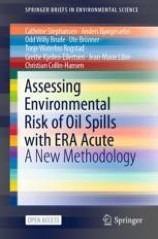
Assessing Environmental Risk of Oil Spills with ERA Acute : A New Methodology
This book introduces readers to a new methodology for assessing the risks to the marine environment following accidental oil spills. The methodology will soon be implemented on the Norwegian Continental Shelf and will be complemented by guidelines for its use in a regulatory framework.

Antifouling Paint Biocides
This volume describes the state-of-the-art advances regarding antifouling paint biocides and provides thorough evaluation of research and information on major topics such as occurrence and levels, environmental fate, analytical techniques and methods for the monitoring and control, environmental modeling, ecotoxicological effects and risk assessment placing emphasis on the knowledge acquired over the last 10 years. The contamination of the aquatic environment by antifouling compounds has been a topic of increasing importance during the last few years. The major classes of antifouling active biocides are discussed including the old-fashioned organotin compounds, the modern organic booster biocides and the promising naturally occurring antifoulant products. Therefore, the reader will get a balanced view of this developing field. Chapters were written by leading experts in their field who critically surveyed all the major areas of progress. This volume is an important resource and can constitute a good grounding in the field of antifouling paint biocides.
