



الصفحة 2
الصفحة 2
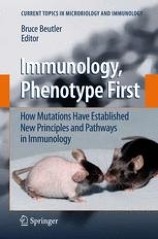
Immunology, phenotype first : How mutations have established new principles and pathways in immunology
This monograph deals with the impact of classical genetics in immunology, prov- ing examples of how large immunological questions were solved, and new fields opened to analysis through the study of phenotypes, either spontaneous or induced. As broad as biology has become, there are those who do not fully understand what the genetic approach is, and how it differs fundamentally from most of the methods available to natural scientists.

Immunobiology of natural killer cell receptors
Natural Killer (NK) cells are large granular lymphocytes of the innate immune system. They are widespread throughout the body, being present in both lymphoid organs and non-lymphoid peripheral tissues. NK cells are involved in direct innate immune reactions against viruses, bacteria, parasites and other triggers of pathology, such as malignant transformation, all of which cause stress in affected cells. Importantly, NK cells also link the innate and adaptive immune responses, contributing to the initiation of adaptive immune responses and executing adaptive responses using the CD16 FcgRIIIA immunoglobulin Fc receptor. Such responses are mediated through two major effector functions, the direct cytolysis of target cells and the production of cytokines and chemokines. The authors focus here on the nature of recognition events by NK cells and address how these events are integrated to trigger these distinct and graded effector functions.

How the immune system recognizes self and nonself : Immunoreceptors and their signaling
This brain function must have been particularly important for most animals to protect their lives from enemies and for species to survive through evolution. Similarly, higher organisms have also acquired their immune system through evolution that discriminates nonself pathogens and self-body to protect their lives from pathogens such as bacteria or viruses. The brain system may distinguish integrated images of self and nonself created from many inputs, such as vision, sound, smell, and others. The immune system recognizes and distinguishes a variety of structural features of self and nonself components. The latter actually include almost everything but self.

Herbal antivirals : Natural remedies for emerging & resistant viral infections ; 2nd ed.
Viruses are smart, mutating, and becoming resistant to antiviral pharmaceuticals. Global crises such as COVID-19, SARS, and dengue feaver spread more quickly than we can develop medicines to fight them. Herbalist and best-selling author Stephen Harrod Buhner has studied the antiviral properties of plants for many years. In this comprehensive guide, he profiles the plants that have proven most effective in fighting viral infections and provides in-depth instructions for preparing and using formulations to address the most common infections and strengthen immunity, safely and naturally. The updated 2nd edition includes an expanded guide to COVID-19, including a review of the most up-to-date medical research and the plant medicines that have been found to be most potent in preventing infection, lessening the impact of the virus on the body, and addressing longer-term effects and co-infections.

Hepatitis Delta Virus ; Vol. 307
Since its discovery nearly 30 years ago, hepatitis delta virus (HDV) has continued to surprise and fascinate. At 1,680 nucleotides the HDV genome is the smallest known to infect man. It is unique among animal viruses, the closest known relatives being plant viroids. To compensate for its limited protein coding capacity, HDV relies heavily on host functions and on structural features of its circular RNA genome. HDV infection depends on hepatitis B virus as a helper, and increases the severity of liver disease caused by HBV alone. There is currently neither an effective HDV vaccine nor a generally accepted useful therapy for HDV infection. This volume encompasses recent developments in HDV research, from molecular virology to genetics to experimental investigation of new therapeutic and vaccine candidates.

Hepatitis C virus-host interactions and therapeutics : Current insights and future perspectives
The burden of hepatitis C virus (HCV) infection on the public health care system continues to remain significant despite the remarkable progress made in HCV therapeutics in the recent past. There are now almost a dozen oral interferon-free direct-acting antivirals available for the treatment of hepatitis C virus infection. Despite advances in the treatment of HCV, therapeutic gaps remain that are yet to be fully explored. Researchers and scientists still strive to understand virus-host interactions to map the disease’s progression along with extrahepatic manifestations and virus invasion strategies impacting the host’s immune system. This book briefly discusses the biology of HCV infection, virus-host interactions, molecular epidemiology of the infection, and the full spectrum of immune responses to hepatitis C. It also provides in-depth information about HCV, clinical diagnostics, and therapeutic knowledge to all stakeholders involved in HCV screening, diagnosis, treatment, and management.

Group B Coxsackieviruses
This monograph reviews information published since 1997 on the group B coxsackieviruses (CVB), a large and important group of human enteroviruses. The CVB were discovered in the mid-20th century, during the search for other poliovirus types, and within a very few years of this discovery, the CVB had been implicated as causes of human myocarditis and pancreatitis. The study of the CVB is still inextricably linked with the fate of their well-known relatives, the polioviruses, for as poliovirus eradication proceeds around the world, the CVB emerge more prominently as the enteroviruses best suited for continuing studies in enteroviral molecular biology as well as understanding the mechanisms underlying enteroviral pathogenesis. This volume reviews and presents modern views on the spectrum of CVB biologies, from interaction of the virus with its receptor through replication, speciation, and induction of disease.

Genomic Disorders : The Genomic Basis of Disease
In Genomic Disorders: The Genomic Basis of Disease, distinguished experts and pioneers in the field of genomics and genome rearrangements summarize and synthesize the tremendous amount of data now available in the postgenomic era on the structural features, architecture, and evolution of the human genome.

Genome integrity : Facets and perspectives
The volume begins with DNA replication and continues with replicative DNA repair and pleiotropic protein interactions. Examples of human diseases are included and the cellular responses to radiation and genotoxic stress affecting whole genomes are reviewed.

Genome instability in cancer development
Research over the past decades has firmly established the genetic basis of cancer. In particular, studies on animal tumour viruses and chromosome rearrangements in human tumours have concurred to identify so-called ‘proto-oncogenes’ and ‘tumour suppressor genes’, whose deregulation promotes carcinogenesis. These important findings not only explain the occurrence of certain hereditary tumours, but they also set the stage for the development of anti-cancer drugs that specifically target activated oncogenes.

Genome Editing : Gene Therapy or Gene Optimization?
Genome editing technology is considered one of the most revolutionary techniques lately. The ability of modifying the human genome has been one of the biggest dreams for therapist for the reason that the genetic modification with exogenous DNA can be considered a problem solver for many diseases and disorders (genetic disorders), especially those with high risks and low survival rates, on this case, gene therapy appears as the tool to be used, with its many protocols and approaches. Gene therapy is based on delivering a therapeutic gene throw suitable vectors, which is most of the time-modified viruses to carry the therapeutic genes to the target cells and so on providing the functional copy of the defective gene.

General Concepts in Integrated Pest and Disease Management
The first volume of the Integrated Management of Plant Pests and Diseases book series presents general concepts on integrated pest and disease management, organized in three sections. Section one (modeling, management, environment) includes chapters on infection models, resurgence and replacement. The second section (emerging technologies) includes remote sensing and information technology. In the third section (molecular aspects) the management of insect-borne viruses with transmission interference.

Foundations of Computer Security
Foundations of Computer Security provides a succinct, yet authoritative introduction to the underlying theory, history, vocabulary, and concepts that drive this pivotal area of computer science. With its user-friendly approach and clarity of style, the text conveys—in simple terms—the core principles and developments underlying computer security in its many ramifications in the rapidly evolving computing arena. Following its opening framework laid out in a broad preface and introductory chapter, the book features chapters dedicated to a wide array of security-related subtopics: physical security, viruses and worms, malware and spyware, privacy and trust, and cryptography.

Foodborne Diseases
In Foodborne Diseases, leading authorities present a broad overview of the microbial pathogens and toxins associated with foodborne illness while discussing pathogenicity, clinical epidemiology, diagnosis, and treatment. The chapters of this volume cover a wide variety of bacterial pathogens, viruses, protozoans, and parasites, as well as microbial toxins, and also address alternatives to antibiotics, risk assessment, irradiation and other sanitation procedures, and molecular techniques for detecting foodborne pathogens. Additionally, the acclaimed authors discuss pathogen control strategies and look toward future innovations in food safety technology. Covering essential foodborne pathogens, assessment and treatment, Foodborne Diseases is an essential reference for infectious disease specialists, microbiologists, and industrial and research-based scientists in food safety.

Filoviruses : A Compendium of 40 Years of Epidemiological, Clinical, and Laboratory Studies
This book summarizes in detail the contemporary knowledge of filoviruses and diseases they cause. Almost the entirety of the open literature on filoviruses, covering all major scientific and clinical fields, is referenced and summarized in this text, including most of the conference abstracts, book chapters, dissertations, government reports, patents, theses, and journal publications in many languages.

Double-stranded RNA : Methods and protocols
Examines classical and cutting-edge methods involving double-stranded RNA (dsRNA), specifically regarding isolation, visualization, characterization, production, and application. Many protocols, such as co-immunoprecipitation-based isolation of double-stranded RNA-associated protein complexes, identification of mycoviruses by dsRNA extraction, application of dsRNA for fungi disease management (Sclerotinia sclerotiorum and Botrytis cin), and production of double-stranded RNA in plants by plant viral vectors for gene silencing, can also be easily adapted for identification of viruses from other organisms, control of other pathogens, and fundamental research. Written for the highly successful Methods in Molecular Biology series, chapters include introductions to their respective topics, lists of the necessary materials and reagents, step-by-step and readily reproducible laboratory protocols, as well as tips for troubleshooting and avoiding known pitfalls.

Dislocation and Degradation of Proteins from the Endoplasmic Reticulum
The present volume of Current Topics in Microbiology and Immunology c- tains seven chapters that illuminate various aspects of a protein’s genesis and terminal fate in the endoplasmic reticulum (ER). Increased knowledge of the biosynthetic pathways of glycoproteins allowed the identi?cation of the ER as an important site where such quality control decisions were made.

Diagnosis of pathogenic microorganisms : Causing infectious diseases
Infectious diseases are caused by the pathogenic microbial organisms. These microbes can multiply and can cause an infection, once they enter the body. Infectious diseases are transmissible, and may cause mild to life-threatening illnesses. It can be airborne, waterborne, foodborne, and soilborne. It can be spread through direct contact (human to human, animal to human). It has also been one of the leading causes of human deaths. Therefore, there is a need to have rapid diagnostic methods to prevent and control these diseases. This book titled “Diagnosis of Pathogenic Microorganisms Causing Infectious Diseases” will help the scientific community to understand the transmission dynamics of some infectious diseases of public health importance.

Detection and analysis of SARS Coronavirus : Advanced biosensors for pandemic viruses and related pathogens
The highly contagious SARS CoV-2 pathogen has challenged health systems around the world as they struggle to detect and monitor the spread of the pathogen. In Detection and Analysis of SARS Coronavirus: Advanced Biosensors for Pandemic Viruses and Related Pathogens expert chemists Chaudhery Mustansar Hussain and Sudheesh K. Shukla deliver a practical analysis of how contactless coronavirus detectors may be developed using existing biosensor technology.

Data Warehousing and Data Mining Techniques for Cyber Security
It provide techniques for collecting information from distributed databases and for performing data analysis. The ever expanding, tremendous amount of data collected and stored in large databases has far exceeded our human ability to comprehend--without the proper tools. There is a critical need for data analysis that can automatically analyze data, summarize it and predict future trends. In the modern age of Internet connectivity, concerns about denial of service attacks, computer viruses and worms are extremely important. Data Warehousing and Data Mining Techniques for Cyber Security contributes to the discipline of security informatics. The author discusses topics that intersect cyber security and data mining, while providing techniques for improving cyber security. Since the cost of information processing and internet accessibility is dropping, an increasing number of organizations are becoming vulnerable to cyber attacks. This volume introduces techniques for applications in the area of retail, finance, and bioinformatics, to name a few.
