



الصفحة 2
الصفحة 2

Frontiers of Geographic Information Technology
Although designed primarily for desktop mapping and analysis, Geographic Information Systems have, for some years, been ‘coupled’ to other ‘allied’ technologies. This coupling or integration has occurred for some time due to the limitations in commercially available systems. It has occurred in several areas including visualisation (virtual reality), simulation (pedestrian, urban modelling), data storage and management (distributed or Internet GIS) and decision support. The chapters of the book, written by an international group of experts examine several of these discrete areas, focussing on the use of GIS and the technology it has been allied to.

Eye Tracking Methodology : Theory and Practice
Despite the availability of cheap, fast, accurate and usable eye trackers, there is still little information available on how to develop, implement and use these systems. This second edition of Andrew Duchowski’s successful guide to these systems contains significant additional material on the topic and fills this gap in the market with this accessible and comprehensive introduction. Opening with useful background information, including an introduction to the human visual system and key issues in visual perception and eye movement, the second part surveys eye-tracking devices and provides a detailed introduction to the technical requirements necessary for installing a system and developing an application program. The book focuses on video-based, corneal-reflection eye trackers – the most widely available and affordable type of system, before closing with a look at a number of interesting and challenging applications in human factors, collaborative systems, virtual reality, marketing and advertising.

Explainable artificial intelligence in troke from the clinical, rehabilitation and nursing perspectives
As we know, strokes are one of the world's leading causes of death, and the cruel aspect of a stroke is that it leaves people with severe functional disability and/or cognitive impairment. Strokes have a significant impact on economies worldwide, as it is estimated that about 10% of the male population and 8% of the female population are affected by them. Such people need personal help in their everyday life and must be materially supported by social services. With the advancement of medicine, artificial intelligence, and new technologies have been developing rapidly and are gradually applied in diseases of the nervous system, increasingly helping diagnosis, treatment, rehabilitation, and prognosis of disease.
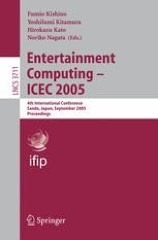
Entertainment Computing - ICEC 2005 ; 4th International Conference, Sanda, Japan, September 19-21, 2005, Proceedings
First of all, we appreciate the hard work of all the authors who contributed to ICEC 2005 by submitting their papers. ICEC 2005 attracted 95 technical paper submissions, 8 poster submissions and 7 demo submissions, in total 110. This number is nearly equal to ICEC 2004. Based on a thorough review and selection process carried out by 76 international experts from academia and industry as members of the senior and international program committees, a high-quality program was compiled. The program committee consisted of experts from all over the world: 1 from Austria, 3 from Bulgaria, 2 from Canada, 4 from China, 1 from Finland, 4 from France, 10 from Germany, 1 from Greece, 1 from Ireland, 1 from Israel, 1 from Italy, 26 from Japan, 1 from Korea, 4 from The Netherlands, 1 from New Zealand, 1 from Norway, 1 from Singapore, 1 from Thailand, 4 from the UK, and 8 from the USA. In this number, reviewers are included. The final decision was made at the senior program committee meeting based on three reviewers' feedback, available online via the conference management tool. Through earnest and fair discussion at the meeting, 25 technical papers were accepted as long papers and 32 technical papers were accepted as short papers from 95 submitted technical papers. Moreover, 3 poster papers and 5 demo papers were accepted.

Enhanced Living Environments : Algorithms, Architectures, Platforms, and Systems
Ambient Assisted Living (AAL) is an area of research based on Information and Communication Technologies (ICT), medical research, and sociological research. AAL is based on the notion that technology and science can provide improvements in the quality of life for people in their homes, and that it can reduce the financial burden on the budgets of the healthcare providers. The concept of Enhanced Living Environments (ELE) refers to the AAL area that is more related with ICT. Effective ELE solutions require appropriate ICT algorithms, architectures, platforms, and systems, having in view the advance of science in this area and the development of new and innovative solutions. The aim of this book is to become a state-of-the-art reference, discussing progress made, as well as prompting future directions on theories, practices, standards, and strategies related to the ELE area.

EEG signal processing for biomedical applications
Focuses on electroencephalography (EEG) signal processing in biomedical engineering applications. EEG signals are used widely in clinical and research settings to provide cognitive and emotional state information. In addition to capturing complex neural patterns at high speeds, EEG signals are a reliable and non-invasive way of measuring the electrical activity in the brain. By examining various novel analysis and signal processing methods, this collection of papers provides a better understanding of cognitive states and brain activity.

Dynamics of Long-Life Assets : From Technology Adaptation to Upgrading the Business Model
The book provides readers with a better understanding of the factors that influence decisions, and put forward solutions to facilitate the rapid adaptation to changes in the business environment and customer needs through intelligent upgrade interventions. Further, it examines a number of sample cases from various contexts including car manufacturing, utilities, shipping and the furniture industry. The book offers a valuable resource for both academics and practitioners interested in the upgrading of capital-intensive products and services.

Digital Entrepreneurship : Impact on Business and Society
Explores the global challenges and experiences related to digital entrepreneurial activities, using carefully selected examples from leading companies and economies that shape world business today and tomorrow. Digital entrepreneurship and the companies steering it have an enormous global impact; they promise to transform the business world and change the way we communicate with each other. These companies use digitalization and artificial intelligence to enhance the quality of decisions and augment their business and customer operations. This book demonstrates how cloud services are continuing to evolve; how cryptocurrencies are traded in the banking industry; how platforms are created to commercialize business, and how, taken together, these developments provide new opportunities in the digitalized era. Further, it discusses a wide range of digital factors changing the way businesses operate, including artificial intelligence, chatbots, voice search, augmented and virtual reality, as well as cyber threats and data privacy management.

Digital Design of Nature : Computer Generated Plants and Organics
The reproduction of nature via computer has fascinated scientists in computer graphics and artists ever since synthetic imaging was thought possible. This book illustrates and exemplifies methods for the creation of artificial plant models, and the application of these methods within areas such as simulation, virtual reality, botany, landscaping, and architecture.The models are combined to create gardens, parks, and even entire landscapes.The range of creating representational forms reaches from deceptively authentic looking pictures to abstract presentations. In addition, with similar methods organic objects can be produced, changed, and animated.

Developing metaverse for AIU
Metaverse is the virtual world in which humans can see each other in the form of 3D and communicate with each other in a virtual place that looks exactly like the real world, but the developers of metaverse so far used these virtual worlds for profit purposes only, this is what prompted us to build a virtual world that basicly contain the university, which can help students communicate with each other, see teachers and obtain the information they need from university employees without having to travel long distances, this project provides a distance education service without dispensing the idea of interacting with teachers directly and seeing others. Our virtual world has the ability to connect with any virtual world because of it’s base structure, It’s scalable as much as we need because it’s connected to the blockchain.

Designing virtual reality systems : The structured approach
Virtual Reality (VR) is a field of study that aims to create a system that provides a synthetic experience for its users. Developing and maintaining a VR system is a very difficult task, requiring in-depth knowledge in many different disciplines, such as sensing and tracking technologies, stereoscopic displays, multimodal interaction and processing, computer graphics and geometric modeling, dynamics and physical simulation, performance tuning, etc. The difficulty lies in the complexity of having to simultaneously consider many system goals, some of which are conflicting.

Computer-Aided Architectural Design Futures (CAADFutures) 2007 ; Proceedings of the 12th International CAADFutures Conference
This volume is the proceedings of the 12th International Conference of CAAD Futures, which took place in Sydney, Australia. The internationally refereed papers in this book present the state of the art in computer-aided architectural design research. The papers in this year's conference theme, Integrating Technologies for Computer-Aided Design, provide the technological foundation for new ways of thinking about using computers in designing and the use of computers in design itself as well as in the education of designers.

Computer vision and machine learning for intelligent sensing systems
Offers a selection of high-quality research articles that tackle the major difficulties in computer vision and machine learning for intelligent sensing systems from both theoretical and practical standpoints. This publication includes intelligent sensing techniques, twelve foundational investigations into sense-making methods, and discusses particular uses of intelligent sensing systems in autonomous driving and virtual reality.
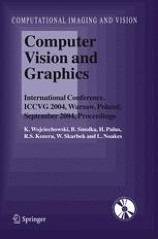
Computer vision and graphics ; International Conference, ICCVG 2004, Warsaw, Poland, September 2004, Proceedings
The objectives of the ICCVG are: presentation of current research topics and d- cussions leading to the integration of the community engaged in machine vision and computer graphics, carrying out and supporting research in the ?eld and ?nally pro- tion of new applications. The ICCVG is a continuation of the former International Conference on Computer Graphics and Image Processing called GKPO, held in Poland every second year in May since 1990, organized by the Institute of Computer Science of the Polish Academy of Sciences, Warsaw.

Computer aided architectural design futures 2005 ; Proceedings of the 11th International CAAD futures Conference held at the Vienna University of Technology, Vienna, Austria, on June 20-22, 2005
MARTENS Bob and BROWN Andre Co-conference Chairs, CAAD Futures 2005 Computer Aided Architectural Design is a particularly dynamic field that is developing through the actions of architects, software developers, researchers, technologists, users, and society alike. CAAD tools in the architectural office are no longer prominent outsiders, but have become ubiquitous tools for all professionals in the design disciplines. At the same time, techniques and tools from other fields and uses, are entering the field of architectural design. This is exemplified by the tendency to speak of Information and Communication Technology as a field in which CAAD is embedded. Exciting new combinations are possible for those, who are firmly grounded in an understanding of architectural design and who have a clear vision of the potential use of ICT. CAAD Futures 2005 called for innovative and original papers in the field of Computer Aided Architectural Design, that present rigorous, high-quality research and development work. Papers should point towards the future, but be based on a thorough understanding of the past and present.

Computational science and its applications - ICCSA 2008 ; International Conference, Perugia, Italy, June 30 – July 3, 2008, Proceedings, Part I
The two-volume set LNCS 5072 and 5073 constitutes the refereed proceedings of the International Conference on Computational Science and Its Applications, ICCSA 2008, held in Perugia, Italy, in June/July, 2008.

Manufacturing Systems : Theory and Practice
The book has six chapters that have been arranged according to the sequence used when creating and operating a manufacturing system. Thus, the subjects emphasised are: the decision framework for manufacturing, the manufacturing processes, the manufacturing equipment and machine tools, the design for manufacturing and the operation of manufacturing systems. The book attempts a compromise between theory and practice in all addressed manufacturing systems issues, covering a long spectrum of issues from traditional manufacturing processes to innovative technologies such as Virtual Reality, Nanotechnology and Rapid Prototyping.

Knowledge-Based Intelligent Information and Engineering Systems ; 12th International Conference, KES 2008, Zagreb, Croatia, September 3-5, 2008, Proceedings, Part III
Constitutes the refereed proceedings of the 12th International Conference on Knowledge-Based Intelligent Information and Engineering Systems, KES 2008, held in Zagreb, Croatia, in September 2008.The 316 revised papers presented were carefully reviewed and selected. The papers present a wealth of original research results from the field of intelligent information processing in the broadest sense; topics covered in the third volume are intelligent data processing in process systems and plants; neural information processing for data mining; soft computing approach to management engineering; advanced groupware; agent and multi-agent systems.
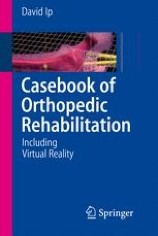
Casebook of orthopedic rehabilitation : Including virtual reality
This book is a companion text to Orthopedic Rehabilitation, Assessment, and Enablement by the same author, but can be used independently.
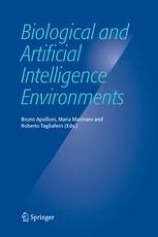
Biological and artificial intelligence environments
The book reports the proceedings of the 15th Italian workshop on neural networks issued by the Italian Society on Neural Networks SIREN. The longevity recipe of this conference stands in three main points that normally renders the reading of these proceedings so interesting as appealing. 1. The topics of the neural networks is considered an attraction pole for a set of researches centered on the inherent paradigm of the neural networks, rather than on a specific tool exclusively. Thus, the subsymbolic management of the data information content constitutes the key feature of papers in various fields such as Pattern Recognition, Stochastic Optimization, Learning, Granular Computing, and so on, with a special bias toward bioinformatics operational applications. An excerpt of all these matters may be found in the book. 2. Though managed at domestic level, the conference attracts contributions from foreign researchers as well, so that in the book the reader may capture the flavor of the state of the art in the international community. 3. The conference is a meeting of friends as well. Thus the papers generally reflect a relaxed atmosphere where researchers meet to generously exchange their thought and explain their actual results in view of a common cultural growing of the community.
