



الصفحة 2
الصفحة 2
Medical Image Computing and Computer-Assisted Intervention – MICCAI 2005 ; 8th International Conference, Palm Springs, CA, USA, October 26-29, 2005, Proceedings, Part I
This paper presents a method for classification of medical images, using machine learning and deformation-based morphometry. A morphological representation of the anatomy of interest is first obtained using highdimensional template warping, from which regions that display strong correlations between morphological measurements and the classification (clinical) variable are extracted using a watershed segmentation, taking into account the regional smoothness of the correlation map which is estimated by a crossvalidation strategy in order to achieve robustness to outliers. A Support Vector Machine-Recursive Feature Elimination (SVM-RFE) technique is then used to rank computed features from the extracted regions, according to their effect on the leave-one-out error bound. Finally, SVM classification is applied using the best set of features, and it is tested using leave-one-out. The results from a group of 61 brain images of female normal controls and schizophrenia patients demonstrate not only high classification accuracy (91.8%) and steep ROC curves, but also exceptional stability with respect to the number of selected features and the SVM kernel size

Measuring Precipitation from Space : EURAINSAT and the Future
More than 20 years after the last book on the subject the worldwide precipitation community has produced a comprehensive overview of its activities, achievements, ongoing research and future plans. Measuring Precipitation from Space presents state-of-the-art rainfall estimation algorithms, validation strategies, precipitation modelling, and assimilation in numerical weather prediction models. Clouds and precipitation observations and modelling are addressed for the improvement of the rainfall product quality. Special attention is given to the applications to monitoring and forecasting weather events and to climate monitoring in a frame of growing public interest.

Iron metabolism : Methods and protocols
Explores classical and cutting-edge methods optimized and validated to analyze various aspects of iron metabolism, from in vitro to multi-organ level. Opening with a section on basic iron metabolism methods, the book continues with methods applicable to a variety of systems, ranging from bacteria to cultured mammalian cells and tissues, with a focus on cellular heme and iron-sulfur cluster species, as well as mitochondrial iron and its derivatives. Written for the highly successful Methods in Molecular Biology series, chapters include introductions to their respective topics, lists of the necessary materials and reagents, step-by-step and readily reproducible laboratory protocols, and tips on troubleshooting and avoiding known pitfalls.

Introduction to Mathematical Systems Theory : Linear Systems, Identification and Control
This book provides an introduction to the theory of linear systems and control for students in business mathematics, econometrics, computer science, and engineering. The focus is on discrete time systems, which are the most relevant in business applications, as opposed to continuous time systems, requiring less mathematical preliminaries. The subjects treated are among the central topics of deterministic linear system theory: controllability, observability, realization theory, stability and stabilization by feedback, LQ-optimal control theory. Kalman filtering and LQC-control of stochastic systems are also discussed, as are modeling, time series analysis and model specification, along with model validation.

International Symposium on Fundamentals of Software Engineering ; International Symposium, FSEN 2007, Tehran, Iran, April 17-19, 2007, Proceedings
The present volume contains the post-proceedings of the second IPM Inter- tional Symposium on Fundamentals of Software Engineering (FSEN), Tehran, Iran, April 17–19, 2007. Thissymposium brought together researchers and practitioners working on di?erent aspects of formal methods in software engineering.

Intelligent Computing in Engineering and Architecture ; 13th EG-ICE Workshop 2006, Ascona, Switzerland, June 25-30, 2006, Revised Selected Papers
Providing computer support for tasks in civil engineering and architecture is hard. Projects can be complex, long and costly. Firms that contribute to design, construction and maintenance are often worth less than the value of their projects. Everyone in the field is justifiably risk adverse. Contextual variables have a strong influence making generalization difficult. The product life cycle may exceed one hundred years and functional requirements may evolve during the service life. It is therefore no wonder that practitioners in this area have been so reluctant to adopt advanced computing systems. After decades of research and industrial pilot projects, advanced computing s- tems are now being recognized by many leading practitioners to be strategically - portant for the future profitability of firms involved in engineering and architecture. Engineers and architects with advanced computing knowledge are hired quickly in the market place. Closer collaboration between research and practice is leading to more comprehensive validation processes for new research ideas. This is feeding devel- ment of more useful systems, thus accelerating progress. These are exciting times. th This volume contains papers that were presented at the 13 Workshop of the Eu- pean Group for Intelligent Computing in Engineering. Over five days, 70 participants from around the world listened to 59 paper presentations in a single session format.

Integrated Reaction and Separation Operations : Modelling and experimental validation
The book presents the latest developments in simulation of integrated processes as well as new methods of process synthesis and process control. It shows details of experimental approaches for model validation, determining of model parameters and measurement techniques. The combination of sophisticated modelling, optimisation methods and experimental results has not ben published up to now. The book gives deep insights into the overall evaluation of integrated processes as well as development of methods for a systematic design and optimisation of integrated reaction and separation processes. Potentials for process integration and the technical as well as economic limitations have been identified. The book covers several case studies of reactive distillation, reactive extraction, reactive gas-adsorption and chromatographic reactors which have been investigated from the modelling and experimental point of view. Based on validated models process simulation was used to optimize these processes. Following the concept of integrated process design approaches have been developed for model predictive control and process optimisation during production. Another new and very important focus of the book is systematic synthesis of integrated processes.
Integrated formal methods ; 6th International Conference, IFM 2007, Oxford, UK, July 2-5, 2007, Proceedings
It addresses all aspects of formal methods integration, including of a process of analysis or design application of formal methods to analysis or design, extension of one method based upon the inclusion of ideas or concepts from others, and semantic integration or practical application.

Integrated formal methods ; 5th International conference, IFM 2005, Eindhoven, The Netherlands, November 29 - December 2, 2005. Proceedings
This book constitutes the refereed proceedings of the 5th International Conference on Integrated Formal Methods, IFM 2005, held in Eindhoven, The Netherlands, in November/December 2005. The 19 revised full papers presented together with 3 invited papers were carefully reviewed and selected from 40 submissions. The papers are organized in topical sections on components, state/event-based verification, system development, applications of B, tool support, non-software domains, semantics, as well as UML and statecharts.

Innovative Tools and methods using BIM for an efficient renovation in buildings
This book describes a BIM-based toolkit that has been developed according to the latest research activities on building information modelling and semantic interoperability to optimize the building process. It highlights the impacts of using such new tools to fast renovation activities starting from the decision-making and design stages to the construction site management with the possibility to monitor occupants' and owners’ feedback during the realization process. In this process, a framework has been developed and implemented to allow stakeholders involved in a renovation project to efficiently compile, maintain, and add data about (i) building elements, (ii) building services systems, (iii) tenants, operators, and owners of the building, and (iv) current and predicted performance of the building from the various data sources available. The framework applies and specializes the existing practices in the Semantic Web, Linked Data, and ontology domain to the management of renovation projects. It has been designed to be open so that any system which implements the required functions and uses the specified conventions will be able to achieve semantic interoperability with other framework-compliant systems in the renovation domain. Finally, this book represents the validation process of the toolkit that has been held in three demo sites: a social housing building in Italy and two private residential buildings in Poland and Finland. The outcome shows that the toolkit facilitates the renovation process with relevant reductions of time, costs, and energy consumption and that the inhabitants can take advantage of the increase in building performances, quality, and comfort.

Improving Inclusive Education through Universal Design for Learning
Provides an analysis of how the educational strategy of Universal Design for Learning can stimulate the process of inclusive education in different educational-cultural contexts and different areas of the educational system. The findings of the research deepen the conception of inclusive education and present an analysis of factors that are significant for developing the educational system as well as providing evidence-based recommendations for educational practice. The research for this work was done in four European countries with various historical-cultural contexts: Lithuania and Poland underwent a transformation of the educational systems at the turning point in their political system, shifting from a strictly centralized Soviet policy to a liberal and democratic education system; Austria has experienced changes in social stratification and a need for cultural harmonisation arising from active national migration processes, whereas Finland has been gradually developing a socio-democratic model of national welfare.

IMPROVE - Innovative modelling approaches for production systems to raise validatable efficiency : Intelligent methods for the factory of the future
This open access work presents selected results from the European research and innovation project IMPROVE which yielded novel data-based solutions to enhance machine reliability and efficiency in the fields of simulation and optimization, condition monitoring, alarm management, and quality prediction.

Imaging in Drug Discovery and Early Clinical Trials
Efficient tools for the selection and validation of drug targets both at the preclinical and clinical level are required. Non-invasive imaging and in particular molecular imaging methods are becoming essential technologies to support drug discovery and dvelopment. Imaging provides structural, functional, metabolic and molecular readouts that are being applied to characterize a disease phenotype (diagnosis), to elucidate molecular mechanisms involved, to evaluate drug efficacy and safety, and to identify potential biomarkers of the drug's mechanism-of-action, efficacy and safety. Non-invasive imaging techniques constitute a bridge between preclinical and clinical drug evaluation. In this monograph the contribution of imaging modalities to the various stages of drug discovery and development, from early target validation to their use in clinical development programs, is described. Chapters are devoted to the description of the drug discovery process as such, to the various imaging modalities being used both preclinically and clinically, to applications of imaging during the optimization of a lead compound (addressing issues such as bioavailability and efficacy) and during the drug safety evaluation.
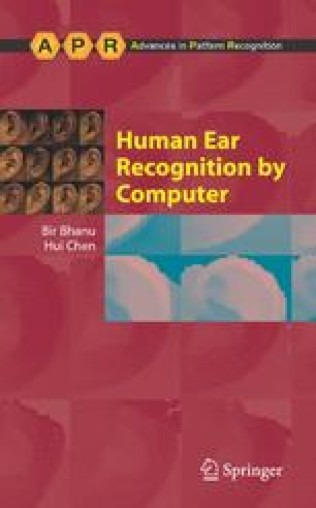
Human Ear Recognition by Computer
Human Ear Recognition by Computer is the first book on the automatic recognition of human ears. It presents an entire range of computational algorithms for recognition of humans by their ears. These algorithms have been tested and validated on the largest databases that are available today,This state-of-the-art research reference explores all aspects of 3D ear recognition, including representation, detection, recognition, indexing and performance prediction. It has been written for a professional audience of both researchers and practitioners within industry, and is also ideal as an informative text for graduate students in computer science and engineering.
Heterogeneity, high performance computing, self-organization and the cloud
Addresses the most recent developments in cloud computing such as HPC in the Cloud, heterogeneous cloud, self-organising and self-management, and discusses the business implications of cloud computing adoption. Establishing the need for a new architecture for cloud computing, it discusses a novel cloud management and delivery architecture based on the principles of self-organisation and self-management. This focus shifts the deployment and optimisation effort from the consumer to the software stack running on the cloud infrastructure. It also outlines validation challenges and introduces a novel generalised extensible simulation framework to illustrate the effectiveness, performance and scalability of self-organising and self-managing delivery models on hyperscale cloud infrastructures. It concludes with a number of potential use cases for self-organising, self-managing clouds and the impact on those businesses.

Herbal medicine in India : Indigenous knowledge, practice, innovation and its value
Covers Indian herbal medicines, health products, pharmaceuticals, nutraceuticals, and cosmetics. Highlights the status quo and future prospects of traditional medicine in India / Provides information on drug discovery, ethnobotany, isolation of phytochemicals, importance of herbal nutraceuticals, etc. / Covers innovation, validation and IPR issues related to Indian traditional medicine

Hardware and software : Verification and testing ; 1st International Haifa Verification Conference, Haifa, Israel, November 13-16, 2005, Revised Selected Papers
The First Haifa Verification Conference was held at the IBM Haifa Research Lab and at the Haifa University in Israel from November 13 to16, 2005. The conference incorporated three different workshops that took place separately in previous years. The IBM Verification Workshop is now its sixth year, the IBM Software Testing Workshop is now in its fourth year, and the PADTAD Workshop on testing and debugging multi-threaded and parallel software was held for the third time. The Verification Conference was a three-day, single-track conference followed by a one-day tutorial on the testing and review of multi-threaded code. The conference presented a unique combination of fields that brought together the hardware and software testing communities. Merging the different communities under a single roof gave the conference a distinctive flavor and provided the participants with added benefits. While the applications in these separate fields are different, the techniques used are often very similar. By offering lectures in these disparate but related disciplines, the conference engendered an environment of collaboration and discovery.

Guide to web development with Java : Understanding website creation
This comprehensive Guide to Web Development with Java introduces the readers to the three-tiered, Model-View-Controller architecture by using Spring JPA, JSPs, and Spring MVC controllers. These three technologies use Java, so that a student with a background in programming will be able to master them with ease, with the end result of being able to create web applications that use MVC, validate user input,and save data to a database.
Graph Transformations ; 4th International Conference, ICGT 2008, Leicester, United Kingdom, September 7-13, 2008. Proceedings
This book constitutes the refereed proceedings of the 4th International Conference on Graph Transformations, ICGT 2008, held in Leicester, UK, in September 2008.The 27 revised full papers presented together with 5 tutorial and workshop papers and 3 invited lectures were carefully selected from 57 submissions. All current aspects in graph drawing are addressed including hypergraphs and termgraph rewriting, applications of graph transformation, execution of graph transformations, compositional systems, validation and verification, graph languages and special transformation concepts, as well as patterns and model transformations.

Global Specification and Validation of Embedded Systems : Integrating Heterogeneous Components
Global modelling and validation is required to master the design of systems made of heterogeneous components. These systems are now omnipresent in our life, and they may be found in several domains such as communications (ex. mobile terminals, optical switches), health (e.g. cardiac stimulators, cochlear implants), transportation (ex. automotive and aeronautical), etc. The main difficulties for their design are modelling and validation of the interactions between different components (hardware, software, analogue, RF, optical and micro-mechanical).
