



الصفحة 2
الصفحة 2

Multidisciplinary Methods for Analysis, Optimization and Control of Complex Systems
Consists of lecture notes of a summer school named after the late Jacques Louis Lions. The summer school was designed to alert both Academia and Industry to the increasing role of multidisciplinary methods and tools for the design of complex products in various areas of socio-economic interest.

MSCs and Innovative Biomaterials in Dentistry
Presents the modern concepts of mesenchymal stem cells (MSCs) and biomaterials as they pertain to the dental field. The book is organized around three main topics: MSCs biology, advanced biomaterials, and clinical applications. The chapters present basic information on stem cell biology and physiology, modern biomaterials that improve bone tissue regeneration, the biomatrices like platelet-rich fibrin (PRF) used to functionalize the biomaterials surface, the strategic and safe intraoral seats of harvesting, the new sources for MSCs, as well as the future perspectives and new challenges in these exciting fields.

Molecular microbiology of heavy metals
Molecular Microbiology of Heavy Metals includes chapters on allocation of metals in cells, metal transporter, storage and metalloregulatory proteins, cellular responses to metal ion stress, transcription of genes involved in metal ion homeostasis, uptake of essential metals, metal efflux and other detoxification mechanisms. Also discussed are metal bioreporters for the nanomolar range of concentration and tools to address the metallome. Chapters in the second part cover specific metals such as Fe, Mn, Cu, Ni, Co, Zn and Mo as key nutrient elements and Ag, As, Cd, Hg and Cr as toxic elements.

Modern front-end architecture : Optimize your front-end development with components, storybook, and mise en place philosophy
Learn how to build front-end applications that can help you ship applications faster with fewer defects. Many software projects fail because they are not planned well, or lack organization. Applying strategies from other industries can help you create better software. Explores the “mise en place” technique from cooking and reveals how you can apply it to the art of creating software. Describes to how to structure your code base for reuse, and how to communicate the code’s intent to other developers. You’ll develop your components in isolation and test these building blocks for quality at a granular level. Then compose these components as building blocks in increasingly complicated features. Finally, you’ll apply some strategies not directly related to code to ensure maximum quality and efficiency. You will : Structure an application as a series of components / Build a component library that others in an organization can leverage / Ensure quality and accessibility at a component level rather than a page or app level / Test code in a way that gives the maximum amount of confidence while providing an excellent developer experience / Automate repeatable tasks

Modern clinic design : strategies for an era of change
A comprehensive guide to optimizing patient experience through the design of the built environment. Written by a team of veteran healthcare interior designers, architects, and engineers, this book addresses the impacts of evolving legislation, changing technologies, and emerging nontraditional clinic models on clinic design, and illustrates effective design strategies for any type of clinic. Readers will find innovative ideas about lean design, design for flexibility Understand how recent industry developments impact facility design Learn how design strategies can help create a positive patient experience Examine emerging clinic models that are becoming increasingly prevalent Analyze the impact of technology on clinic design

Modelling, Computation and Optimization in Information Systems and Management Sciences ; 2nd International Conference MCO 2008, Metz, France - Luxembourg, September 8-10, 2008. Proceedings
This book constitutes the refereed proceedings of the Second International Conference MCO 2008, Metz, France, September 2008.The 65 revised full papers presented were carefully reviewed and selected from 160 submissions. The papers are organized in topical sections on optimization and decision making; data mining theory, systems and applications; computer vision and image processing; computer communications and networks; optimization and search techniques for security, reliability, trust.

Modèles aléatoires : Applications aux sciences de l'ingénieur et du vivant = Random models : Applications to engineering and life sciences
The aim is to show how random models are used to analyse and solve a great variety of engineering issues. It is written in language accessible to practitioners and students in engineering, the physical sciences, the life sciences or management.

Mobile Phone Programming and its Application to Wireless Networking
This book provides a solid overview of mobile phone programming targeting both academia and industry. Mobile Phone Programming covers all commercial realizations of Symbian, Windows Mobile and Linux platforms. Each programming language (JAVA, Python, C/C++) and a set of development environments are introduced “step by step” making developers familiar with current limitations, pitfalls, and challenges. Each chapter contains examples and source code to rapidly make developers familiar with the most important concepts. Examples cover peer to peer networks, cooperative networking, cross layer protocol design, key challenges such as power consumption, and sensor networks for which a full hardware and software implementation is provided. Whether you are an experienced developer or an advanced student Mobile Phone Programming will be your key reference for successfully entering the world of software development for mobile devices.

Minimally Invasive Bariatric Surgery
This book covers the full spectrum of laparoscopic weight loss surgery and the pathophysiology of obesity. The chapter authors, all currently operating experts in the field, cover the essentials of establishing a bariatric surgery program, including equipment needs, guidelines for training, and patient selection. The operative chapters discuss in full detail the surgical techniques and outcomes, including laparoscopic VGB, laparoscopic adjustable gastric banding, laparoscopic Roux-en-Y, and laparoscopic malabsorption procedures. The text also tackles post-operative issues, such as complications, reoperation, plastic surgery after weight loss, nutritional issues, and pregnancy following obesity surgery.

Metric Handbook : Planning and Design Data
A major handbook of planning and design data for architects and architecture students. Covering basic design data for all the major building types, it is the ideal starting point for any project. For each building type, the book gives the basic design requirements and all the principal dimensional data, and succinct guidance on how to use the information and what regulations the designer needs to be aware of.

Metals in Society and in the Environment : A Critical Review of Current Knowledge on Fluxes, Speciation, Bioavailability and Risk for Adverse Effects of Copper, Chromium, Nickel and Zinc
In 2002, the Swedish Metal Information Task Force (MITF) engaged the Environmental Research Group (MFG) to update previous monographs on copper, zinc and major alloying metals (such as chromium, nickel and molybdenum) in society and in the environment. This book presents new results on metal fluxes from society to the environment, on metal speciation in water, soil and sediment, and its interpretation in terms of mobility, biological uptake and toxicity. The scientific fundamentals of new approaches, like the Acid Volatile Sulphide (AVS) concept to predict metal bioavailability in sediments, and the Biotic Ligand Model (BLM) to calculate the toxicity of metals to aquatic organisms, are critically evaluated, with a focus on copper, nickel, zinc, and, in part, chromium.

Metabolomics : A powerful tool in systems biology
This book brings together the latest results in the field of metabolomics. It comprehensively presents the current state of the metabolomics field by underscoring experimental methods, analysis techniques, standardization practices, and advances in specific model systems. As a result, it significantly broadens our perspective on the principles and strategies underpinning this emerging field.

Men’s care center
"سين" مركزٌ للعافية والاسترخاء، مصمم بمزيج فريد من العناصر الطبيعية والهندسة المعمارية الحديثة ليمنح الزوار تجربة حسية متكاملة. يدمج المشروع المساحات الخضراء الداخلية والإضاءة الهادئة وخطوط التصميم المعاصرة لخلق بيئة فاخرة وهادئة. تشمل المساحات الرئيسية الحديقة الداخلية، والحمام التركي التقليدي، وغرف كبار الشخصيات، ومنطقة الاستقبال - جميعها مُرتبة بعناية لتعزيز الهدوء والتوازن. يركز التصميم على التفاصيل المعمارية والوظيفية، موفرًا للضيوف ملاذًا من ضغوط الحياة اليومية. خضعت التصاميم الداخلية والخارجية لدراسة دقيقة لضمان تجربة راقية وشاملة. “Sén” is a wellness and re laxation center designed with a unique blend of natural elements and modern architecture to provide visitors with a complete sensor experience. The project integrates indoor greenery, calming lighting, and con temporary design lines to create a luxurious and peaceful environment. Key spaces include the indoor garden, traditional hammam, VI P rooms, and reception area — all carefully arranged to promote tranquility and balance. The design focuses on architectural and functional details, offering guests a retreat from the stresses of everyday life. Both interior and exterior designs were carefully studied to ensure a refined and holistic experience.

Mechanics of Materials
Provides a precise presentation of subjects illustrated with numerous engineering examples that students both understand and relate to theory and application. The tried and true methodology for presenting material gives students the best opportunity to succeed in this course. From the detailed examples, to the homework problems, instructors and students can be confident the material is clearly explained and accurately represented.

Mechanics and natural philosophy before the scientific revolution
This volume deals with a variety of moments in the history of mechanics when conflicts arose within one textual tradition, between different traditions, or between textual traditions and the wider world of practice. Its purpose is to show how the accommodations sometimes made in the course of these conflicts ultimately contributed to the emergence of modern mechanics.

Mécanique céleste et contrôle des véhicules spatiaux = Celestial mechanics and spacecraft control
The textbook contains two parts: Part 1 is an introduction to celestial mechanics, and part II is devoted to the control of cosmic vehicles motion.The book is written in a clear mathematical style-Definition-Proposition-Lemma-Theorem-Corollary-and is almost self contained.
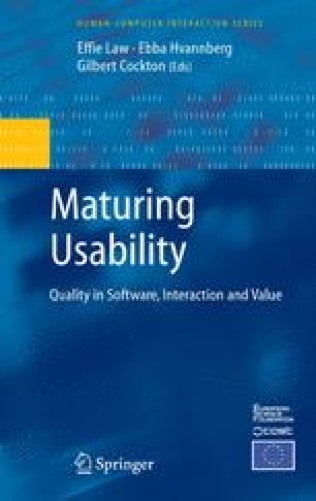
Maturing Usability : Quality in Software, Interaction and Value
Divided into three parts, ‘Quality in Software’ looks at how using development tools can enhance usability of a system, and how methods and models can be integrated into the development process to produce effective user interfaces. ‘Quality in Interaction’ addresses theoretical frameworks on the nature of interactions; techniques and metrics for evaluation interaction quality; and the transfer of concepts and methods from research to practice. Finally, ‘Quality in Value’ assesses the impact that a system has in the real world, focusing on increasing the value of usability practice for software development and on increasing value for the users.

Introduction to Assembly Language Programming : For Pentium and RISC Processors
Assembly language continues to hold a core position in the programming world because of its similar structure to machine language and its very close links to underlying computer-processor architecture and design. These features allow for high processing speed, low memory demands, and the capacity to act directly on the system’s hardware. This completely revised second edition of the highly successful Introduction to Assembly Language Programming introduces readers to assembly language programming and its role in computer programming and design. It focuses on providing a firm grasp of the main features of assembly programming, and how it can be used to improve a computer's performance. The revised edition covers a broad scope of subjects and adds valuable material on protected-mode Pentium programming, MIPS assembly language programming, and use of the NASM and SPIM assemblers for a Linux orientation. All of the language's main features are covered in depth. The book requires only some basic experience with a structured, high-level language.

Introduction pratique aux bases de données relationnelles = A practical introduction to relational databases
Cet ouvrage introduit le lecteur dans le domaine des bases de données relationnelles en présentant une vaste sélection de sujets portant sur la modélisation des données, les langages de base de données, l'architecture des systèmes et l'évolution post-relationnelle. - Notions fondamentales: le modèle relationnel, les composants d’un système de gestion de bases de données, l’organisation de la mise en œuvre d’une base de données, les tâches de gestion des données. - De l'analyse à la base de données : le modèle entité association, la généralisation et l’agrégation, les dépendances et les formes normales,les contraintes d’intégrité. - Aperçu des langages de requête et de manipulation des données: l’algèbre relationnelle, le calcul des prédicats, SQL, QUEL, QBE, le traitement des valeurs nulles, la protection des données. - Les composants de l'architecture d'un système de bases de données : la compilation, l’interprétation et l’optimisation des requêtes, l’environnement multiutilisateur, le concept de transaction et la sérialisation, les méthodes optimiste et pessimiste, les structures de stockage et les méthodes d’accès. L’intégration et la migration des bases de données: l’exploitation des bases de données hétérogènes, les bases de données sur le Web, les règles de conversion pour effectuer l’intégration et la migration, les variantes de migration des bases de données hétérogènes, la planification de l’intégration et de la migration.

Introduction aux méthodes numériques
Au cours de l’histoire, les méthodes de calcul ont été l’expression de pratiques sans cesse renouvelées. Le développement de l’informatique a largement contribué à une rapide progression de l’ensemble des techniques numériques. En moins de cinquante ans, le paysage algorithmique a été complètement transformé. Aujourd’hui, la plupart des logiciels que nous employons font appel à des méthodes de plus en plus efficaces. Dans les simulations, comme dans les modélisations, l’analyse numérique occupe une place centrale. Composants essentiels de la vie scientifique, les méthodes et algorithmes qui sont présentés ici, illustrés par de nombreux exemples, sont mis à la portée de tous. De l’approximation polynomiale à la résolution d’équations aux dérivées partielles par des méthodes de différences, de volumes et d’éléments finis, ce livre offre un large panorama des méthodes numériques actuelles.
