



الصفحة 2
الصفحة 2

Emissions Trading and Business
Emissions trading challenges the management of companies in an entirely new manner. It does not only allow for a bigger flexibility in management decisions concerning emission issues like other marked based environmental policy instruments. Furthermore it changes the code by which environmental policy steers management decisions from hierarchical to monetary information.

Emissions Trading : Institutional Design, Decision Making and Corporate Strategies
Emissions trading challenges the management of companies in an entirely new manner: Not only does it, like other market-based environmental policy instruments, allow for a bigger flexibility in management decisions concerning emission issues. More importantly, it shifts the mode of governance of environmental policy from hierarchy to market. But how is this change reflected in management processes, decisions and organizational structures? The contributions in this book discuss the theoretical implications of different institutional designs of emissions trading schemes, review schemes that have been implemented in the US and Europe, and evaluate the range of investment decisions and corporate strategies which have resulted from the new policy framework.

Electronic vs. Floor Based Trading
Historically, specialists and other floor brokers, in direct contact on the trading floor, have been at the heart of operations at the national U.S. equity exchanges. At the other end of the spectrum, electronic trading platforms have characterized most other equity markets globally for many years. Recent developments at the NYSE have moved in this direction, but fundamental questions effecting market quality remain. Can the unique services offered by the floor be provided as effectively in an electronic environment? Which environment would institutional and retail traders each find most suitable to their special needs? Which environment offers better price and quantity discovery? These are some of the questions that are addressed in this book, while providing perspective on the future direction that exchange market structure is likely to follow in the coming years.

Economics and Management of Climate Change : Risks, Mitigation and Adaptation
Climate change is one of the biggest challenges for mankind. Although there is increasing evidence that climate change is already occurring, there is neither sufficient knowledge as to what extent climate change poses risks to societies and companies, nor about adequate strategies to cope with these risks. Bringing together an international group of scholars from environmental economics, political science and business, this book describes, analyses and evaluates climate change risks and responses of societies and companies. The book contributes to the question of how climate change can be mitigated by discussing efficient and effective design of mitigation measures, in particular emissions trading and clean development mechanism (CDM). Placing special emphasis on the impact of climate change risks on business, the book investigates in which way selected sectors of the economy are affected and what measures they can undertake to adapt to climate change risks.

Developing Services for the Wireless Internet
This book is for developers of wireless Internet services. It addresses the technical issues that can get in the way of the production of a successful service: variability of terminals, unstable technology, incomplete testing environment, variable bandwidth and quality of service. Useful techniques and methods when handing these issues are proposed using two case studies: a mobile game and a mobile trading service.

Cross Regional Trade Agreements : Understanding Permeated Regionalism in East Asia
An unacknowledged key feature of East Asian FTA diplomacy is the region's active cross-regional preferential trading relations. In sharp contrast to the Americas and Europe, where cross-regional initiatives gained strength after the consolidation of regional trade integration, East Asian governments negotiate trade deals with partners outside of their region at an early stage in their FTA policies. The book asks three main questions: Are there regional factors in East Asia encouraging countries to explore cross-regionalism early on? What are the most important criteria behind the cross-regional partner selection? How do cross-regional FTSs (CRTAs) influence their intra-regional trade initiatives? Through detailed country case studies from China, Japan, South Korea, Singapore, Thailand and Malaysia, we show the ways in which these governments seek to leverage their CRTAs in the pursuit of intra-regional trade integration objectives, a process that yields a much more permeated regionalism.

Corporate finance workbook : Economic foundations and financial modeling
Corporate Finance: Economic Foundations and Financial Modeling Workbook, will help you: Synthesize essential material from the main Corporate Finance text using real-world applications. Understand the key fundamentals of the corporate finance discipline. Work toward specific chapter objectives to internalize important information.

Corporate and Investment Banking : Preparing for a Career in Sales, Trading, and Research in Global Markets
Provides unique information to prepare graduates and newly hired corporate and investment banking professionals for a career in the global markets environment of large universal and international investment banks. It shows the interrelationship between the three specific business functions of sales, trading, and research, as well as the interaction with corporate and institutional clients. The book fills a gap in the available literature by linking financial market theory to the practical aspects of day-to-day operations on a trading floor and offers a taxonomy of the current banking business, providing an in-depth analysis of the main market participants in the global markets ecosystem. Engaging the reader with case studies, anecdotes, and industry color, the book addresses the risks and opportunities of the global markets business in today’s global financial markets both from a theoretical and from a practitioner’s perspective and focuses on the most important fixed-income financial instruments from a pricing, risk-management, and client-marketing perspective.

Coping With Institutional Order Flow
Handling the large orders of institutional participants presents some of the most complex problems for system design. How well are our current systems operating, and how effective are new facilities on the scene? To what extent is market quality impaired for all participants when institutional trading costs are not properly contained? Can institutional order flow be efficiently integrated with the orders of retail customers, or are separate facilities needed? What are the impediments to market structure change, and how might they best be overcome?
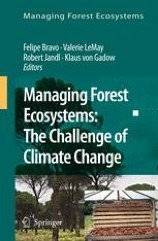
Managing Forest Ecosystems : The Challenge of Climate Change
With climate change now charging up the political agenda, there are three issues commonly making the headlines: carbon budgets, renewable energy, and the anticipated impacts of climate change. Equally important, though currently less well covered, is the issue how these effects might be mitigated. Given the significant role that forests play in the climate system – as sources, sinks, and through carbon trading – this book discusses the current scientific evidence on the relationships between climate, forest resources and forest management practices around the world. Drawing on expertise from forest scientists from several continents, the book presents both in depth analysis of the current knowledge, and a series of case studies which assess the biological and the economic impacts of climate change. It includes sections on forest responses to climate change, monitoring and modeling changes, economic and management implications, and carbon sequestration under specific management systems.

Malliavin Calculus for Lévy Processes with Applications to Finance
While the original works on Malliavin calculus aimed to study the smoothness of densities of solutions to stochastic differential equations, this book has another goal. It portrays the most important and innovative applications in stochastic control and finance, such as hedging in complete and incomplete markets, optimisation in the presence of asymmetric information and also pricing and sensitivity analysis. In a self-contained fashion, both the Malliavin calculus with respect to Brownian motion and general Lévy type of noise are treated. Besides, forward integration is included and indeed extended to general Lévy processes. The forward integration is a recent development within anticipative stochastic calculus that, together with the Malliavin calculus, provides new methods for the study of insider trading problems.

Liquidity, markets and trading in action : An interdisciplinary perspective
This book addresses four standard business school subjects: microeconomics, macroeconomics, finance and information systems as they relate to trading, liquidity, and market structure. It provides a detailed examination of the impact of trading costs and other impediments of trading that the authors call “frictions”. It also presents an interactive simulation model of equity market trading, TraderEx, that enables students to implement trading decisions in different market scenarios and structures. Addressing these topics shines a bright light on how a real-world financial market operates, and the simulation provides students with an experiential learning opportunity that is informative and fun.

Carbon Pricing in Japan
This book evaluates, from an economic perspective, various measures introduced in Japan to prevent climate change. Although various countries have implemented such policies in response to the pressing issue of climate change, the effectiveness of those programs has not been sufficiently compared.
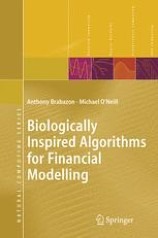
Biologically Inspired Algorithms for Financial Modelling
Then Part I provides a thorough guide to the various bioinspired methodologies – neural networks, evolutionary computing (particularly genetic algorithms and grammatical evolution), particle swarm and ant colony optimization, and immune systems. Part II brings the reader through the development of market trading systems. Finally, Part III examines real-world case studies where BIA methodologies are employed to construct trading systems in equity and foreign exchange markets, and for the prediction of corporate bond ratings and corporate failures.

Basic Python for Data Management, Finance, and Marketing : Advance Your Career by Learning the Most Powerful Analytical Tool
Learn how to gather, manipulate, and analyze data with Python. This book is a practical guide to help you get started with Python from ground zero and to the point where you can use coding for everyday tasks. Python is used in all aspects of financial industry, from algo trading, reporting and risk management to building valuations models and predictive machine learning programs. You will: Get started with Python from square one / Extend what's possible on excel with Python / Automate tasks with Python / Analyze data more precisely

B2B eCommerce : Basics, Business Models and Best Practices in Business-to-Business Online Trade
Covers the basics of business-to-business (B2B) eCommerce, where similar principles of customer targeting can be observed as in B2C eCommerce. Gerrit Heinemann highlights the specifics and business models of B2B eCommerce, analyzes the digital challenges and shows the consequences and opportunities for online sales in B2B. Recognised best-practice examples illustrate how successful B2B eCommerce can work and which risks have to be considered.

At the crossroads : The world trading system and the Doha Round
Since its foundation in 1995 the legitimacy of the WTO – and herewith the notion of organising global trade on the basis of herewith the notion of organising global trade on the basis of concepts like trade-liberalisation, treaty-based rule of law and concepts like trade-liberalisation, treaty-based rule of law and enforceability – is challenged for very different reasons this volume not only documents the proceedings of this conference but, against the backdrop of the ongoing efforts to revive the Doha Round wants to be understood as some sort of stocktaking: What did really go wrong in Cancún? Where does the WTO stand today? Has there been any progress made since? And, finally: Is there any chance left to reach the ambitions goals postulated by the Doha Development Agenda? These and other, related questions are being discussed in the volume at hand.
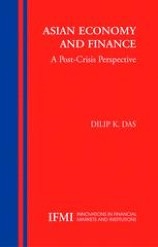
Asian economy and finance : A post-crisis perspective
Topicality of Asian economy has refused to fade for almost four decades; if anything it has been levitating. The Asian economy has changed markedly since the economic and financial crisis of 1997-1998 and is continuing to evolve. As a scholarly subject matter, Asian economy has not stopped attracting academicians, policy mandarins, decision makers in the arena of business and students of Asian economy. The Asian crisis was a cataclysmic event for the region and brought to the surface several systemic limitations, like those in the financial sector, corporate governance, regulatory oversight, legal framework, and exchange rate management. Managers of Asian economy need to get to the bottom of these acutely problematical systemic issues. Additionally, Asian economies need to change with the demands of time and devise their post-crisis development strategy. Asia’s growth model, that served it so well for four decades, is overdue for renewal so that it can re-strengthen its bonds with the ever-evolving regional and global economic reality. The old growth model is likely to be less relevant and effective in the post-crisis future of the Asian economies. It is sure to run into the wall of diminishing returns.
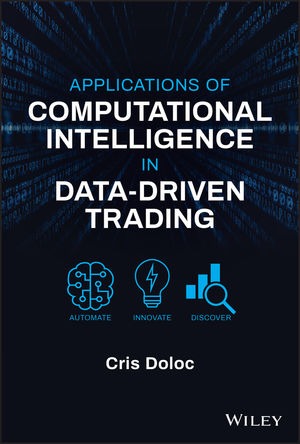
Applications of computational intelligence in data-driven trading
The main purpose of this book is pedagogical in nature, and it is specifically aimed at defining an adequate level of engineering and scientific clarity when it comes to the usage of the term “Artificial Intelligence,” especially as it relates to the financial industry.
Agent-mediated electronic commerce VI ; Theories for and engineering of distributed mechanisms and systems, AAMAS 2004 Workshop, Amec 2004, New York, NY, USA, July 19, 2004, revised selected papers
The design of intelligent trading agents, mechanisms, and systems has receivedgrowing atttention in the agents and multiagent systems communities in aneffort to address the increasing costs of search, transaction, and coordinationwhich follows from the increasing number of Internet-enabled distibuted elec-tronic markets. Furthermore, new technologies and supporting business modelsare resulting in a growing volume of open and horizontally integrated markets fortrading of an increasingly diverse set of goods and services. However, growth oftechnologies for such markets requires innovative solutions to a diverse set of ex-isting and novel technical problems which we are only beginning to understand.Specifically, distributed markets present not only traditional
