



الصفحة 2
الصفحة 2

Fighting Terror Online : The Convergence of Security, Technology, and the Law
This book presents the position that the online environment is a significant and relevant theater of activity in the fight against terror, and will identify the threats, the security needs, and the issues that are unique to this environment. We examine whether the unique characteristics of this environment require new legal solutions, or whether existing solutions are sufficient. Three areas of online activity are identified that require reexamination: security, monitoring, and propaganda. For each of these, we will indicate the issues, examine existing legal arrangements, and offer guidelines for formulating legal policy. There is a demonstrated need to relate to the digital environment as a battlefront, map the new security threats.

Ethical and Philosophical Consideration of the Dual-Use Dilemma in the Biological Sciences
This book examines the kinds of life-science experiments that give rise to the dual-use dilemma and provides philosophical analysis of the ethical issues and policy options surrounding dual-use research. this is the first book-length treatment of the topic by professional ethicists. It also challenges, and offers an alternative perspective to, the hugely influential U.S. National Research Council position on the dual-use dilemma.

Emerging Threats to Energy Security and Stability; Proceedings of the NATO Advanced Research Workshop on Emerging Threats to Energy Security and Stability, London, United Kingdom, from 23 to 25 January 2004
In particular, it sought to assess emerging threats to energy security and stability and discuss new security strategies to protect global energy supplies from regional instability and terrorism. The format involved a wide-ranging international group of poli- formers and advisers from NATO, Partner and other countries, in a unique forum for intensive expert discussion. Background The international community is increasingly conscious of the need to develop new energy security strategies in order to protect global energy supplies from regional instability and terrorism. Energy security is a vital element in international stability. However, a variety of energy-related economic, technical, and military/political factors pose serious challenges to the international community’s pursuit of energy security and stability: The global economy is expected to continue to be largely dependent on oil and gas for the next twenty to thirty years.

Detection of Liquid Explosives and Flammable Agents in Connection with Terrorism
The organization of an Advanced Research Workshop with the title “Detection and Disposal of Liquid Explosives and Flammable Agents in Connection with Terrorism” was motivated by international findings about activities in this field of application. This ARW followed a meeting about the “Detection of Disposal Improvised Explosives” (St. Petersburg, 2005). Both items show the logistic problems as one of the lessons, terrorists have to overcome. These problems are connected with the illegal supply and transport of explosives and fuels and as counter-measure the detection of these materials. The invention of liquid explosives goes back to the middle of the 19th century and was used for special purposes in the commercial field of application. Because of the high sensitivity of liquid explosives against mechanical shock, caused by adiabatic compression of air-bobbles producing “hot spots” as origin of initiation the commercial application was not very successful. Because of this high risk, liquid explosives are not used in military or commercial application with some exceptions. In the commercial field explosives as slurries or emulsions consisting of suitable salts (Ammoniumnitrate etc.) and water are used to a large extend because of their high insensitivity. In many cases these slurries or emulsions were unfit for terrorist actions, because of their low sensitivity, large critical diameter and using in confinement. In the military field liquid explosives are used in World War I and II as bomb-fillings.

Death Threats and Violence : New Research and Clinical Perspectives
Threats of violence—and especially of homicide—are a too-familiar part of modern life, paralleling stressful conditions at home, on the job, on campus, and in relationships. Death Threats and Violence analyzes the meaning and impact of homicidal threats, the means by which they are communicated, and their development from infrequent private occurrence to ongoing social problem.

Cybersecurity in Poland : Legal Aspects
This book explores the legal aspects of cybersecurity in Poland. The authors are not limited to the framework created by the NCSA (National Cybersecurity System Act – this act was the first attempt to create a legal regulation of cybersecurity and, in addition, has implemented the provisions of the NIS Directive) but may discuss a number of other issues. The book presents international and EU regulations in the field of cybersecurity and issues pertinent to combating cybercrime and cyberterrorism. Moreover, regulations concerning cybercrime in a few select European countries are presented in addition to the problem of collision of state actions in ensuring cybersecurity and human rights.

Crop Biosecurity : Assuring our Global Food Supply
Prevention and preparedness are the two basic approaches to maximize food security against any sort of tampering, whether natural, inadvertent or intentional. The NATO funded project “Tools for crop biosecurity” was designed to strengthen the cooperation among U.S., Europe and Israel in the field of crop biosecurity and to generate awareness on how the psychological, economic and cultural consequences of crop bioterrorism, especially attacks on soft targets such as crop seeds, could have a disproportionate adverse effect on Mediterranean agriculture and, more generally, on society.This book illustrates the achievements of the project originated from the workshops organized during the project itself taking in consideration main microbiological threads posed to crops, the tools to recognize and to control them, the needs for international cooperation and research funds to create networks which can face emerging risks for agriculture.

Counter-Terrorism Policing : Community, Cohesion and Security
This book charts these opportunities and challenges through unprecedented access to the police and diverse communities in Australian regional and metropolitan contexts. It locates these developments in an international comparison with like jurisdictions in the US, UK, and Canada and in light of former conflicts in Northern Ireland and South Africa. It examines the nature and impact of counter-terrorism on policing, diverse communities, legislation and policy and on the media. The book concludes by posing questions for the future of counter-terrorism policing in liberal democracies.

Countering Nuclear and Radiological Terrorism
One key outcome of this book is a better understanding of the independent contributions from across the international community of the scientific and technological components and the legal, policy and institutional components to combating nuclear/radiological terrorism. The book can serve as a tool for communicating the outcomes of the workshop to the multi-national scientific communities engaged in combating nuclear/radiological terrorism, and to those working at governmental and policy levels.

Computational conflict research
This book brings together a set of original studies that use cutting-edge computational methods to investigate conflict at various geographic scales and degrees of intensity and violence.

Cold War Civil Defence in Western Europe : Sociotechnical Imaginaries of Survival and Preparedness
This edited collection brings together established and new perspectives on Cold War civil defence in Western Europe within a common analytical framework that also facilitates comparative and transnational dimensions. The current interest in creating disaster-resilient societies demands new histories of civil defence. Historical contextualization is essential in order to understand what is at stake in preparing, devising, and implementing forms of preparedness, protection, and security that are specifically targeted at societies and citizens. Applying the concept of sociotechnical imaginaries to civil defence history, the chapters of this volume cover a range of new themes, from technology and materiality to media, memory, and everyday experience.

Clinical Guide to Bioweapons and Chemical Agents
Clinical Guide to Bioweapons and Chemical Agents is a quick reference for the busy clinician, to assist in the new public health response to the threats from bioterrorism and other public health disease.
Catastrophe modeling : A new approach to managing risk
Catastrophe Modeling: A New Approach to Managing Risk is the first book that systematically analyzes how catastrophe models can be used for assessing and managing risks of extreme events. It focuses on natural disaster risk, but also discusses the management of terrorism risk. A unique feature of this book is the involvement of three leading catastrophe modeling firms, AIR Worldwide, EQECAT, and Risk Management Solutions, who examine the role of catastrophe modeling in rate setting, portfolio management and risk financing. Given the uncertainties associated with terrorism the book points out the opportunities for utilizing catastrophe models to set insurance rates and to examine public-private partnerships for providing financial assistance in the event of a terrorist attack. This book is strongly recommended for individuals who must make decisions regarding the management of impacts of catastrophe risks including those in both the public and private sector.
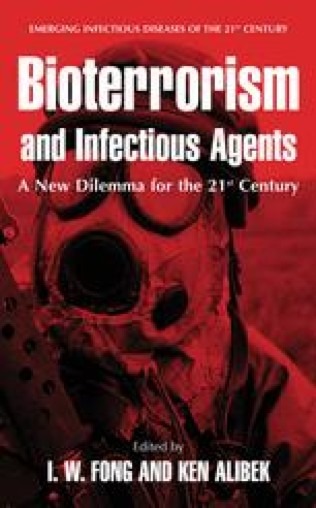
Bioterrorism and Infectious Agents : A New Dilemma for the 21st Century
Since the terrorist attack on the United States on September 11, 2001 and subsequent cases of anthrax in Florida and New York City, attention has been focused on the threat of b- logical warfare and bioterrorism. Biological warfare agents are de?ned as “living org- isms, whatever their nature, or infected material derived from them, which are used for h- tile purposes and intended to cause disease or death in man, animals and plants, and depend for their efforts on the ability to multiply in person, animal or plant attacked.” Biological warfare agents may be well suited for bioterrorism to create havoc and terror in a civilian population, because they are cheap and easy to obtain and dispense. Infectious or contagious diseases have played a major part in the history of warfare – deliberately or inadvertently – in restricting or assisting invading armies over the centuries. In 1346, the Tartars catapulted plaque-infected bodies into Kaffa in the Crimea to end a 3-year siege. Blankets contaminated with smallpox to infect North American Indians were used by British forces in the 18th century. More recently, the Japanese released ?eas infected with plaque in Chinese cities in the 1930s and 1940s. Biological research programs for both offensive and defensive strategies have been developed by the United States, Britain, the former Soviet Union, and Canada; several other nations are thought to have such programs.
Biometric systems : Technology, design and performance evaluation
The use of computers to recognize humans from physical and behavioral traits dates back to the digital computer evolution of the 1960s. But even after decades of research and hundreds of major deployments, the field of biometrics remains fresh and exciting as new technologies are developed andoldtechnologiesareimprovedandfieldedinnewapplications.Wor- wide over the past few years,there has been a marked increase in both g- ernment and private sector interest in large-scale biometric deployments for accelerating human–machine processes, efficiently delivering human services, fighting identity fraud and even combating terrorism. The p- pose of this book is to explore the current state of the art in biometrics- tems and it is the system aspect that we have wished to emphasize. By their nature, biometric technologies sit at the exact boundary of the human–machineinterface.Butlikealltechnologies,bythemselvestheycan provide no value until deployed in a system with support hardware, n- work connections, computers, policies and procedures, all tuned together to work withpeople to improve some real business process within a social structure.
BioMEMS and Biomedical Nanotechnology : Vol. I: Biological and Biomedical Nanotechnology
Abe Lee has been working on micro/ and nanotechnology for biomedical and biotech applications since 1992. His recent research focuses on the development of integrated micro and nano fluidic chip processors for the following applications: point-of-care diagnostics, "smart" nanomedicine for early detection and treatment, stem cell biology and therapeutics, the synthesis of novel and pure materials, and biosensors to detect environmental and terrorism threats. Jim Lee's research interest includes BioMEMS/NEMS, and polymer micro/nanotechnology. In the last 4 years, he has over 20 refereed journal publications, 2 book chapters, and 5 patents in these areas. He is now leading an NSF Nanoscale Science and Engineering Center for Affordable Nanoengineering of Polymer Biomedical Devices at OSU.
Biological, chemical, and radiological Terrorism : Emergency preparedness and response for the primary care physician
This book provides sought-after guidance to primary care physicians on preparing for and responding to terrorist events. Chapters offer a fundamental understanding of the epidemiology and relevant clinical aspects of diseases caused by biological agents (anthrax, plague, smallpox, botulism, tularemia, and hemorrhagic viruses), chemical agents (nerve and blister), and radiological agents. The text details how to detect terrorist-caused illness as early as possible, how to provide defensive or preventive therapy, and how to triage and treat ill patients. Emphasis is placed on addressing both the physical and psychological impact on patients and providers.
