



الصفحة 2
الصفحة 2
Explainable AI with Python
This book provides a full presentation of the current concepts and available techniques to make “machine learning” systems more explainable. The approaches presented can be applied to almost all the current “machine learning” models: linear and logistic regression, deep learning neural networks, natural language processing and image recognition, among the others.

Essential practical prescribing
Designed to support lecture series or themes on core topics within the health sciences. See www.wileyessential.com for further details. Contains a range of learning methods within each chapter including: key topics, learning objectives, case studies, DRUGS checklists, ‘Top-Tips’, advice on guidelines and evidence, and key learning points Uses patient histories to set the scene and enhance the clinical emphasis Offers examples of correctly completed drug charts throughout Is an ideal companion for Prescribing Safety Assessment (PSA) preparation

Enabling the City : Interdisciplinary and Transdisciplinary Encounters in Research and Practice
Focuses on how interdisciplinary and transdisciplinary processes of knowledge production may contribute to urban transformation at a local level in the 21st century, striking a balance between enthusiastic support for such transformational potential and a cautious note regarding the persistent challenges to the ethos as well as the practice of inter and transdisciplinarity. The rich stories reflect different research and local practice cultures, exploring issues such as ageing, community, health and dementia, public space, energy, mobility cultures, heritage, housing, re-use, and renewal, as well as more universal questions about urban sustainability and climate change, and perhaps most importantly, education.

Empire under the microscope : Parasitology and the British literary imagination, 1885–1935
This book considers science and empire, and the stories we tell ourselves about them. Emilie Taylor-Pirie examines a wealth of archival material including medical lectures, scientific publications, popular biography, and personal and professional correspondence, alongside novels, poems, newspaper articles, and political speeches, to excavate the shared vocabularies of literature and medicine. She demonstrates how forms such as poetry and biography; genres such as imperial romance and detective fiction; and modes such as adventure and the Gothic, together informed how tropical diseases, their parasites, and their vectors, were understood in relation to race, gender, and nation.

Drawing Architecture : The beginner's guide to drawing and painting buildings
A comprehensive and practical guide full of advice and inspiration for anyone wishing to capture the beauty of the urban landscape. The wonderful thing about drawing buildings is that, wherever you travel around the globe, you will never be short of subjects to inspire you. From the most elaborate of Renaissance cathedrals, through to the humble garden shed, you will always be able to practise your skills and learn a few techniques in the process. This hands-on and inspirational book will encourage you to meet the exciting challenges of drawing and painting buildings using a variety of media and a wide range of techniques, including pencil, pen, graphite powder, watercolour, water-soluble pencils and Indian ink. As you work through this book, you will look at materials and their qualities then move on to explore how to put these materials to best use when drawing specific types of building. You will be led gently through levels of learning, with easy and more challenging exercises progressing your knowledge and developing your skills. As the book is divided into discrete sections, you can dip in to a particular type of building that you wish to draw, and use the information and illustration provided, while extended teaching exercises take you through the way the author approaches composing and completing a drawing.

Distributed artificial intelligence ; 2nd International conference, DAI 2020, Nanjing, China, October 24–27, 2020, Proceedings
This book constitutes the refereed proceedings of the Second International Conference on Distributed Artificial Intelligence, DAI 2020, held in Nanjing, China, in October 2020. The 9 full papers presented in this book were carefully reviewed and selected from 22 submissions. DAI aims at bringing together international researchers and practitioners in related areas including general AI, multiagent systems, distributed learning, computational game theory, etc., to provide a single, high-profile, internationally renowned forum for research in the theory and practice of distributed AI.

DevOps for Digital Leaders : Reignite Business with a Modern DevOps-Enabled Software Factory
In DevOps for Digital Leaders, deep collective experience on both sides of the dev–ops divide informs the global thought leadership and penetrating insights of the authors, all three of whom are cross-portfolio DevOps leaders at CA Technologies. Aruna Ravichandran, Kieran Taylor, and Peter Waterhouse analyze the organizational benefits, costs, freedoms, and constraints of DevOps. They chart the coordinated strategy of organizational change, metrics, lean thinking, and investment that an enterprise must undertake to realize the full potential of DevOps and reach the sweet spot where accelerating code deployments drive increasing customer satisfaction, revenue, and profitability.

Designing landscape architectural education : Studio ecologies for unpredictable futures
Asks designers and academic practitioners to describe their own work through an ecological lens, and then to articulate design approaches for developing new practices in landscape architecture teaching. Designing Landscape Architectural Education: Studio Ecologies for Unpredictable Futures, the Landscape Architecture Design Studio Companion serves as a resource for academic practitioners in the preparation and delivery of 'design-research studios' and students seeking guidance for design methodologies as a part of their landscape architectural education. It draws on the manifold issues of the climate crisis as a set of drivers to examine the utilisation of a range of innovative design approaches to address the current and future priorities of the discipline.
Designing healthy and liveable cities : Creating sustainable urban regeneration
Aim of this book is, after the definition of the field of investigation concerning sustainable regeneration trough topics such as resilience, adaptation, health and mixed connections, to illustrate the present-day approaches to the analysis and design of healthy places, and in particular the original Healthy Pl@ce Design method, flexible and repeatable in different contexts. The method aims at: identifying sustainable urban liveability and healthy and the factors which make places liveable and healthy from the user's point of view and identifying design interventions to enhance or create both urban liveability and health. Emblematic case studies carried out in Europe, USA and China - Bordeaux, Copenhagen, Hamburg, Madrid, Newcastle, Nice, Dublin, Vancouver and Wuhan - constitute the empirical part of the Book detailed with surveys, questionnaires, images and maps.

Continuous-Time Systems
The book systematically covers major foundations of the systems theory. First, the quantitative and qualitative methods of systems description are presented along with the stability analysis. The representation of linear time-invariant systems in the time domain is provided using the convolution, ordinarily differential equations (ODEs), and state space. In the frequency domain, these systems are analyzed using the Fourier and Laplace transforms. The linear time-varying systems are represented using the general convolution, ODEs, and state space. The nonlinear time-invariant systems are described employing the Taylor and Volterra series expansions, ODEs, state space, and approximate methods such as averaging, equivalent linearization, and describing function. Finally, the representation of nonlinear time-varying systems is given using the Taylor and Volterra series, ODEs, modulation functions method, and state space modelling.

Contemporary Qualitative Research : Exemplars for Science and Mathematics Educators
This volume offers a unique set of research exemplars for science, mathematics and technology educators. The volume explores the important challenge of how to translate leading-edge methodologies into practical research strategies and techniques. The book is divided into three major sections, The Golden Age of Research, Meeting the Research Crises and A New Era of Research, with chapters exploring a variety of methodologies and representational forms and texts. These include historical, narrative, literary, phenomenological, autobiographical, virtual and performance texts, among others. Qualitative Research in Postmodern Times is an exciting and accessible book that will be essential reading for science, mathematics and technology educators interested in new forms of educational research. Beginning researchers will find it practically helpful in planning and conducting their research studies, while experienced researchers will welcome new theoretical insights into postmodern methodologies.

Cognitive Behavioral Therapy for Chronic Illness and Disability
Severe pain, debilitating fatigue, sleep disruption, severe gastrointestinal distress – these hallmarks of chronic illness complicate treatment as surely as they disrupt patients’ lives, in no small part because of the overlap between biological pathology and resulting psychological distress. Cognitive Behavioral Therapy for Chronic Illness and Disability cuts across formal diagnostic categories to apply proven therapeutic techniques to potentially devastating conditions, from first assessment to end of treatment. Four extended clinical case examples of patients with chronic fatigue, rheumatoid arthritis, inoperable cancer, and Crohn’s disease are used throughout the book to demonstrate how cognitive-behavioral interventions can be used to effectively address ongoing medical stressors and their attendant depression, anxiety, and quality-of-life concerns. At the same time, they highlight specific patient and therapist challenges commonly associated with chronic conditions.

Clinicians guide to medical writing
Teaches what clinicians need to know about medical writing and publishing. It is for the physician, physician assistant, or nurse practitioner who sees patients and also wants to contribute to the medical literature, as well as for the assistant professor aspiring to promotion. It is written from the viewpoint of the clinician seeking the personal enrichment that writing can bring. Readers learn how to translate observations and ideas from practice into written form and eventually into print.

Clinical toxicology : Principles and mechanisms ; 2nd ed.
Addresses the current principles and mechanisms of clinical toxicology. It examines the complex interactions associated with clinical toxicological events and chemical exposure and drug administration. The author places special emphasis on signs and symptoms of diseases and pathology caused by toxins and clinical drugs. He covers contemporary issues in clinical toxicology, such as biological and chemical toxins, changes in protocols for managing toxic ingestions, new antidotes, and changes in particular treatments. The chapters contain numerous drawings, figures, and tables to aid in comprehension.
Lectures on Probability Theory and Statistics : Ecole d'Eté de Probabilités de Saint-Flour XXXIII - 2003
Contains two of the three lectures that were given at the 33rd Probability Summer School in Saint-Flour (July 6-23, 2003). Amir Dembo’s course is devoted to recent studies of the fractal nature of random sets, focusing on some fine properties of the sample path of random walk and Brownian motion. In particular, the cover time for Markov chains, the dimension of discrete limsup random fractals, the multi-scale truncated second moment and the Ciesielski-Taylor identities are explored. Tadahisa Funaki’s course reviews recent developments of the mathematical theory on stochastic interface models, mostly on the so-called nabla varphi interface model. The results are formulated as classical limit theorems in probability theory, and the text serves with good applications of basic probability techniques.
Law and Justice in a globalized world
Consists of a selection of papers presented at the Asia-Pacific Research Conference on Social Sciences and Humanities. It contains essays on current legal issues in law and justice, and their role and transformation in a globalizing world. Topics covered include human rights, criminal law, law of the sea, good governance, democracy, foreign investment, and regional integration. The conference focused on Asia and the Pacific, two regions where law has taken an important position in creating and shaping the regional integrations, new legal institutions, and norms.
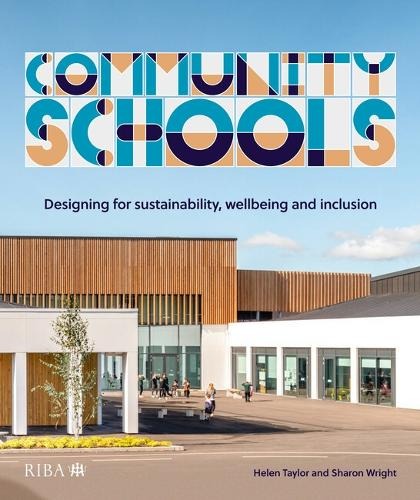
Community schools : Designing for sustainability, wellbeing and inclusion
Reconsiders what is required from physical school environments, building on the learning gathered from the sector over the past two decades. To meet the new social, environmental and economic challenges it advocates designing differently, both in terms of the form that buildings take and the evaluation of their impact and performance. By calling for a reframing of the way that schools are regarded as community-wide amenities, this book explores the potential for architects to deliver design in a manner that supports healthy lifestyles and promotes wellbeing. Through encouraging social connections, new possibilities open up for educational facilities to become open, welcoming and inclusive. Featuring: Over 12 international case studies from practices including: Architype, Argyll + Bute, Bogle Architects, DRMM, Revaerk, Scott Brownrigg and XDGA. Key themes of wellbeing, connectivity, inclusion, indicators and evaluation. Practical guidance and learning points throughout. A new design brief for community schools

Clinical Cardiac MRI
MRI has become the preferred noninvasive imaging modality for the heart and great vessels. The substantial technological progress achieved in recent years has provided the user with state of the art MRI systems, but their optimal use can be limited by restricted awareness of the potential patient benefit and the necessity for teaching. This extensively illustrated volume, has been specifically compiled to meet these needs. Essential theoretical background information is provided, and imaging acquisition and potential pitfalls are considered in detail. Most importantly, structured guidelines are provided on the interpretation of clinical data in the wide range of cardiac pathology that can be encountered. Throughout, the emphasis is on the implementation of cardiac MRI in clinical practice.
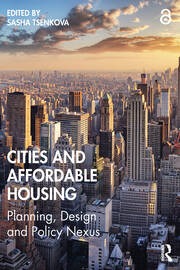
Cities and Affordable Housing : Planning, Design and Policy Nexus
Provides a comparative perspective on housing and planning policies affecting the future of cities, focusing on people- and place-based outcomes using the nexus of planning, design and policy. A rich mosaic of case studies features good practices of city-led strategies for affordable housing provision, as well as individual projects capitalising on partnerships to build mixed-income housing and revitalise neighbourhoods. Twenty chapters provide unique perspectives on diversity of approaches in eight countries and 12 cities in Europe, Canada and the USA.
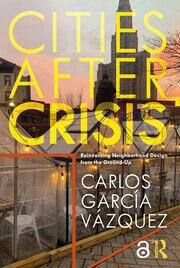
Cities After Crisis : Reinventing Neighborhood Design from the Ground-Up
The book details how these crises have led to a new urban vision—from avantgarde modern design to an artisan aesthetic that calls for simplicity and the everyday, from the sustainable development paradigm to a resilient vision that defends de-growth and the re-wilding of cities, from a homogenizing globalism to a new localism that values what is distinctive and nearby, from the privatization of the public realm to the commoning and self-governance of urban resources, and from top-down to bottom-up processes based on the engagement and empowerment of communities.
