



الصفحة 2
الصفحة 2

Designers' guide to EN 1993-2 Eurocode 3: Design of Steel Structures: Part 2: Steel Bridges
Describes the principles and requirements for safety, serviceability and durability of concrete bridges. This Designers' Guide provides the user with guidance on the interpretation and use of EN 1993-2 and also the relevant provisions in EN 1993-1-1, EN 1993-1-5, EN 1993-1-8, EN 1993-1-9, EN 1993-1-10 and EN 1993-1-11. Worked examples are provided to illustrate the use of the rules. It also explains the relationship with other Eurocode parts to which it refers (ENs 1990, 1991).

Designers' guide to EN 1993-1-1 Eurocode 3 : Design of Steel Structures: General Rules and Rules for Buildings
After some 25 years in preparation, the key parts of EN 1993 Eurocode 3: Design of steel structures have now been finalised.? Designers Guide to EN 1993-1-1 covers many forms of steel construction and provides the most comprehensive and up-to-date set of design guidance currently available.

Design of structural elements : Concrete, steelwork, masonry and timber designs to Eurocodes
Topics include the philosophy of design, sustainable development, basic structural concepts, and material properties. After an overview of structural design, the book contains self-contained chapters with numerous diagrams and worked examples on design in reinforced concrete, structural steelwork and steel/concrete composites, masonry and timber based on EN 1990-1997. Elements considered cover reinforced concrete and composite floors, isolated foundation, cantilever retaining wall, load-bearing and panel walls, stud wall and connections.

Design of steel-concrete composite structures using high-strength materials
Design of Steel-Concrete Composite Structures Using High Strength Materials provides guidance on the design of composite steel-concrete structures using combined high-strength concretes and steels. The book includes a database of over 2,500 test results on composite columns to evaluate design methods, and presents calculations to determine critical parameters affecting the strength and ductility of high-strength composite columns. Finally, the book proposes design methods for axial-moment interaction curves in composite columns. This allows a unified approach to the design of columns with normal- and high-strength steel concrete materials.

Design of industrial structures : Reinforced cement concrete and steel
Bridges the gap between academic and professional field pertaining to design of industrial reinforced cement concrete and steel structures. It covers pertinent topics on contracts, specifications, soil survey and design criteria to clarify objectives of the design work. Further, it gives out guiding procedures on how to proceed with the construction in phases at site, negotiating changes in equipment and design development. Safety, quality and economic requirements of design are explained with reference to global codes. Latest methods of analysis, design and use of advanced construction materials have been illustrated along with a brief on analysis software and drafting tool.

Design of Hybrid Structures : Where Steel Profiles Meet Concrete
Focuses on design approaches for concrete structures reinforced in an unconventional way by steel profiles. It explains force transfer mechanisms of steel profiles and oncrete interfaces, and an analysis of the characteristics of hybrid structures, including slendercomponents. Several types of hybrid designs are addressed: walls and columns with several embedded steel profiles, connections strengthened by steel profiles between steel and composite or reinforced concrete components, including the specific case of shear keys connecting deep beams or flat slabs to columns. The transition zones in partly reinforced concrete and partly composite columns are also covered.

Design examples for high strength steel reinforced concrete columns : A Eurocode 4 approach
SRC column subjected to axial compression -- SRC column with normal strength material -- SRC column with high strength concrete -- SRC column with high strength steel -- SRC column with high strength concrete and steel -- SRC column subjected to combined compression and bending -- SRC column with normal strength material -- SRC column with high strength concrete -- SRC column with high strength steel -- SRC column

Corrosion of Steel in Concrete : Understanding, Investigation and Repair
A guide for designing, constructing and maintaining reinforced concrete structures, such as buildings and bridges which are subject to reinforcement corrosion. It presents the basics of theory and practice in steel corrosion in concrete and reviews the latest research and developments, such as progress on measuring the corrosion threshold for chloride-induced corrosion.

Corrosion and protection of reinforced concrete
This book surveys deterioration of concrete, particularly corrosion of the steel reinforcement, and the various chemical, biological, physical and mechanical causes of deterioration. It outlines condition survey and diagnosis techniques by on-site and laboratory measurements. It sets out mechanical methods of protection and repair, such as patching, inhibitors, coatings, penetrants and structural strengthening as well as cathodic protection and other electrochemical methods.
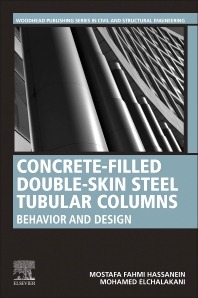
Concrete-Filled Double-Skin Steel Tubular Columns: Behavior and Design
Concrete-Filled Double-Skin Steel Tubular Columns: Behavior and Design provides a thorough review of the recent advances on the behaviour and design of concrete-filled double-skin steel tubular (CFDST) columns. Drawing on their extensive knowledge and research, the authors cover topics such as different CFDST columns under axial compression, innovative techniques including the use of rubberised concrete, columns with different cross-sections, and steel material envelops and failure modes.

Concrete Structures : Design and Residual Capacity Assessment
Based primarily on Eurocode 2, this book offers a comprehensive exploration of theory alongside a substantial collection of solved examples. Intended for students and professionals specializing in structural engineering, the content delves into the fundamental aspects of designing and evaluating concrete structures. Discover a unique focus on both theoretical and practical aspects, empowering engineers to unearth solutions that minimize steel usage.

Concrete - filled steel tubular arch bridges
Discusses the features of composite materials and arch structures. Providing an in-depth fundamental and practical guide to the field, it systemically addresses all aspects of concrete-filled steel tubular (CFST) arch bridges, including a comprehensive overview on technical developments, structural systems, structural detailing, design and analysis, construction technology, and maintenance.

Concrete - filled double skin steel tubular column with hybrid fibre reinforced polymer : post fire repair
Highlights the residual strength of the CFDST column, that can be used to determine the most suitable repair method in order to retrofit the column. The book elaborates on the behavior of CFDST column after being exposed to fire. This book also discusses the effectiveness of repair method using single and Hybrid Fibre Reinforced Polymer (FRP) of fire-damaged CFDST columns.

Computational Quantum Mechanics for Materials Engineers : The EMTO Method and Applications
Computational Quantum Mechanics for Materials Engineers describes new approaches to the modelling of disordered alloys that combine the most efficient quantum-level theories of random alloys with the most sophisticated numerical techniques to establish a theoretical insight into the electronic structure of complex materials such as stainless steels, Hume-Rothery alloys and silicates. The practical success of these approaches to applications in all of these areas are covered in detail. The new EMTO-CPA method is detailed, including its application in alloys to model structural stability and elastic properties of random alloys of arbitrary composition and the effect of alloying elements on elastic stiffnesses stacking fault energies and structural parameters. The EMTO-CPA method makes new approaches to computational alloy design feasible. Computational Quantum Mechanics for Materials Engineers shows how the technique will soon allow materials engineers to become "quantum blacksmiths

Computational Plasticity
The different chapters of this book present recent progress and future research directions in the field of computational plasticity. A common line of many contributions is that a stronger interaction between the phenomenological and micromechanical modelling of plasticity behaviour is apparent and the use of inverse identification techniques is also more prominent. The development of adaptive strategies for plasticity problems continues to be a challenging goal, while it is interesting to note the permanence of element modelling as a research issue. Industrial forming processes, geomechanics, steel and concrete structures form the core of the applications of the different numerical methods presented in the book.

Cold-Formed Steel Design ; 5th ed.
Provides the latest AISI specifications for cold-formed steel design. Updated to the 2016 North American (AISI S100) design specification and 2015 North American (AISI S240) design standard. Offers thorough coverage of ASD, LRFD, LSD, and DSM design methods. Integrates DSM in the main body of design provisions. Features a new section on Power-Actuated Fastener (PAF) Connections. Provides new examples and explanations of design provisions

Manhattan Skyscrapers
This book, stories. The Destruction of Lower Manhattan York skyscraper, steel frames were clad in stone album by photographer Danny brick, or terra cotta and offered the illusion of Sedition, if only to place the entry on Lyons, captured the last remnants of down- monumental mass.

Maintenance, safety, risk, management and life-cycle performance of bridges ; Proceedings of the ninth international conference on bridge maintenance, safety and management (IABMAS 2018), 9-13 July 2018, Melbourne, Australia
Provides both an up-to-date overview of the field of bridge engineering and significant contributions to the process of more rational decision-making on bridge maintenance, safety, risk, management and life-cycle performance of bridges for the purpose of enhancing the welfare of society. The Editors hope that these Proceedings will serve as a valuable reference to all concerned with bridge structure and infrastructure systems, including students, researchers and engineers from all areas of bridge engineering.
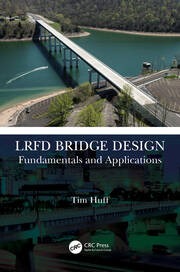
LRFD Bridge Design : Fundamentals and Applications
Examines and explains material from the 9th edition of the AASHTO LRFD Bridge Design Specifications, including deck and parapet design, load calculations, limit states and load combinations, concrete and steel I-girder design, bearing design, and more. With increased focus on earthquake resiliency, two separate chapters– one on conventional seismic design and the other on seismic isolation applied to bridges– will fully address this vital topic. The primary focus is on steel and concrete I-girder bridges, with regard to both superstructure and substructure design. / Includes several worked examples for a project bridge as well as actual bridges designed by the author / Examines seismic design concepts and design details for bridges / Presents the latest material based on the 9th edition of the LRFD Bridge Design Specifications / Covers fatigue, strength, service, and extreme event limit states / Includes numerous solved problems and exercises at the end of each chapter to illustrate the concepts presented
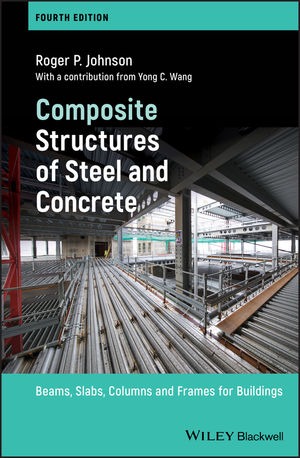
Composite structures of steel and concrete : Beams, slabs, columns and frames for buildings
Provides an introduction to the theory and design of composite structures of steel and concrete. Material applicable to both buildings and bridges is included, with more detailed information relating to structures for buildings. Throughout, the design methods are illustrated by calculations in accordance with the Eurocode for composite structures, EN 1994, Part 1-1, 'General rules and rules for buildings' and Part 1-2, 'Structural fire design', and their cross-references to ENs 1990 to 1993.
