



الصفحة 2
الصفحة 2

Extrasolar Planets : Saas Fee Advanced Course 31
Research on extrasolar planets is one of the exciting fields of activity in astrophysics, from early speculations on the existence of planets orbiting other stars to the first discoveries and characterization of extrasolar planets. This book talks about this breakthrough as the result of a growing interest of a large community of researchers.

Elementary physics of complex plasmas
Complex plasmas are dusty plasmas in which the density and electric charges of the dust grains are sufficiently high to induce long-range grain-grain interactions, as well as strong absorption of charged-plasma components. Together with the sources replenishing the plasma such systems form a highly dissipative thermodynamically open system that exhibits many features of collective behaviour generally found in complex systems. Most notably among them are self-organized patterns such as plasma crystals, plasma clusters, dust stars and further spectacular new structures. Beyond their intrinsic scientific interest, the study of complex plasmas grows in importance in a great variety of fields, ranging from space-plasma sciences to applied fields such as plasma processing, thin-film deposition and even the production of computer chips by plasma etching, in which strongly interacting clouds of complex plasmas can cause major contamination of the final product.

Echinodermata
Members of the phylum Echinodermata are among the most familiar marine invertebrates. Forms such as the sea star have become virtually a symbol of sea life. Used in ancient oriental medicine as a source of bioactive compounds, sea cucumbers, sea stars and sea urchins are now used for the extraction and purification of cytotoxic, haemolytic, antiviral, antifungal, antifouling, antimicrobial and even anti-tumoural activities.

Double & Multiple Stars, and How to Observe Them
The first part of Jim Mullaney’s book provides a comprehensive review of the different classes of double and multiple systems, along with a look at the astrophysics of these objects. This is followed by a detailed guide for amateur astronomers, describing how to observe them – using a variety of different techniques – and outlining how to record the observations.In one book, here is all you need to observe double and multiple stars, and to understand the systems you are looking at.

Diffuse matter from star forming regions to active galaxies : A volume honouring John Dyson
In this volume dedicated to him, introductory reviews to a number of the key processes and to the sources themselves are given by leading experts. The mechanisms in which the multi-component natures of media affect their dynamics receive particular attention, but the roles of hydromagnetic effects are also highlighted.

Dense Molecular Gas around Protostars and in Galactic Nuclei : European Workshop on Astronomical Molecules 2004
The European Workshop on Astronomical Molecules was held at ‘The Conference Building’ in Zwolle, the Netherlands, on 18–20 February 2004. The idea behind the workshop was to bring together astronomers studying similar processes in different astrophysical environments; masers and dense molecular gas around young stars and galactic nuclei. There is considerable overlap in physical and chemical phenomena between these environments, with scales ranging from circumstellar to central regions of galaxies. This issue includes 12 reviews and 27 contributed papers presented in this Wo- shop, all of them were refereed by invited speakers or the editors. The quality of the papers is outstanding. The projects discussed here are often in an early stage and undoubtedly their progress has bene?ted greatly from the opportunity to discuss results with the experts in a wide range of areas. Similarly,

Deep space probes : To the outer solar system and beyond
This second edition includes an entirely new chapter on holographic message plaques for future interstellar probes – a NASA-funded project.

Comets and the Origin and Evolution of Life
Nine years after the publication of Comets and the Origin and Evolution of Life, one of the pioneering books in Astrobiology, this second edition revisits the role comets may have played in the origins and evolution of life. Recent analyses of Antarctic micrometeorites and ancient rocks in Australia and South Africa, the continuing progress in discovering complex organic macromolecules in comets, protostars and interstellar clouds, new insights into organic synthesis in comets, and numerical simulations of comet impacts on the Earth and other members of the solar system yield a spectacular wealth of new results.

Close Binaries in the 21st Century : New Opportunities and Challenges
This book is the proceedings of an international conference entitled "Close Binaries in the 21st Century: New Opportunities and Challenges", held in Syros island, Greece, June 27-30, 2005. Contributions to this conference covered the latest achievements in the field and reflected the state of the art of the dynamically evolving area of binary star research.

Clocks in the Sky : The Story of Pulsars
In this book, Geoff McNamara explores the history, subsequent discovery and contemporary research into pulsar astronomy. The story of pulsars is brought right up to date with the announcement in 2006 of a new breed of pulsar, Rotating Radio Transients (RRATs), which emit short bursts of radio signals separated by long pauses. These may outnumber conventional radio pulsars by a ratio of four to one. Geoff McNamara ends by pointing out that, despite the enormous success of pulsar research in the second half of the twentieth century, the real discoveries are yet to be made including, perhaps, the detection of the hypothetical pulsar black hole binary system by the proposed Square Kilometre Array - the largest single radio telescope in the world.
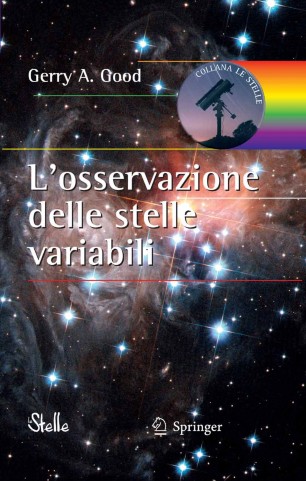
L’osservazione delle stelle variabili = The observation of variable stars
The observation of variable stars is one of the main contributions that amateur astronomers can offer to science and this book provides all the information necessary to pursue it profitably. In the first part the different classes of variables are presented in detail, with examples, light curves and physical descriptions. The second section, on the other hand, covers all the practical aspects of observation: from preparation and planning, to observation techniques, up to the management and processing of data.
Jets From Young Stars III : Numerical MHD and Instabilities
This volume contains the lecture notes of the Third JETSET School on Jets from Young Stars focussing on Numerical MHD and Instabilities. The introductory lectures presented here cover the basic concepts of the numerical methods for the integration of hydrodynamic and magnetohydrodynamic equations and of the applications of these methods to the treatment of the instabilities relevant for the physics of stellar jets. The first part of the book contains an introduction to the finite difference and finite volume methods for computing the solutions of hyperbolic partial differential equations and a discussion of approximate Riemann solvers for both hydrodynamic and magnetohydrodynamic problems. The second part is devoted to the discussion of some of the main instability processes that may take place in stellar jets, namely: the Kelvin-Helmholtz, the radiative shock, the pressure driven and the thermal instabilities.
Jets from Young Stars II : Clues from High Angular Resolution Observations
This volume contains the edited lecture notes of the Second JETSET School on Jets from Young Stars: Clues from High Angular Resolution Observations organised by the Marie Curie Research Training Network JETSET: Jet Simulations, Experiments and Theory. After the opening two chapters on jet emission, readers can learn the fundamental background of modern high-spatial-resolution techniques, and how such methods have impacted on our understanding of young stars.
Jets from Young Stars : Models and Constraints
This volume contains the edited lecture notes of the First JETSET School on Jets from Young Stars: Models and Constraints, held by the Marie Curie Research and Training Network on JET Simulations, Experiments and Theory. At this school the lecturers gave an introduction to observational properties and basic models describing the launching and collimation mechanisms of jets.
Compact objects in astrophysics : White dwarfs, neutron stars and Black Holes
Camenzind's Compact Objects in Astrophysics gives a comprehensive introduction and up-to-date overview about the physical processes behind these objects, covering the field from the beginning to most recent results, including all relevant observations.

Chemical abundances and mixing in stars in the milky way and its satellites ; Proceedings of the ESO-Arcetrie Workshop held in Castiglione della Pescaia, Italy, 13-17 September, 2004
The proceedings of this book cover topics from chemical abundances in the different components of the Milky Way and in local group galaxies, via observational and theoretical papers on mixing in stars to big bang nucleosynthesis and galaxy formation and evolution. As all volumes in this series of ESO Astrophysics Symposia this one gives a comprehensive state-of-the-art overview of the forefront of research in its area. It is thus a valuable reference for both students specializing in the field and researchers alike.
Calibrating the Cosmos : How Cosmology Explains Our Big Bang Universe
Calibrating the Cosmos describes hard science, but is gently written. It explains in clear, non-mathematical language the measurements and the interpretation of the resulting data that have led to the current understanding of the origin, evolution and properties of our expanding Big Bang universe. Many people have a sketchy idea of the work of cosmologists, but Professor Levin’s experience in teaching both scientific and liberal arts students has enabled him to impart much of our current thinking without resorting to difficult mathematics. Theoretical concepts are emphasized, in particular the symmetries of homogeneity and isotropy enjoyed by our universe on the largest scales, how these symmetries lead to only one quantity being needed to describe the growth of the universe from its infancy to the present time, and how the so-called parameters of the universe are the ingredients used to construct the model universes to which ours – the real thing – is compared.
Astrophysics is easy! : An introduction for the amateur astronomer
With some justification, many amateur astronomers believe astrophysics is a very difficult subject, requiring at least degree-level mathematics to understand it properly. This isn’t necessarily the case. Mike Inglis' quantitative approach to the subject explains all aspects of astrophysics in simple terms and cuts through the incomprehensible mathematics with which this fascinating subject is all too often associated. Astrophysics is Easy! begins by looking at the H-R diagram and other basic tools of astrophysics, then ranges across the universe, from a first look at the interstellar medium and nebulae, through the birth, evolution and death of stars, to the physics of galaxies and clusters of galaxies.
Astrophysical concepts
This classic text, aimed at senior undergraduates and beginning graduate students in physics and astronomy, presents a wide range of astrophysical concepts in sufficient depth to give the reader a quantitative understanding of the subject. Emphasizing physical concepts, the book outlines cosmic events but does not portray them in detail: it provides a series of astrophysical sketches. For this fourth edition, nearly every part of the text has been reconsidered and rewritten, new sections have been added to cover recent developments, and others have been extensively revised and brought up to date. The book begins with an outline of the scope of modern astrophysics and enumerates some of the outstanding problems faced in the field today. The basic physics needed to tackle these questions are developed in the next few chapters using specific astronomical processes as examples. The second half of the book enlarges on these topics and shows how we can obtain quantitative insight into the structure and evolution of stars, the dynamics of cosmic gases, the large-scale behavior of the Universe, and the origins of life.
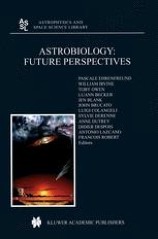
Astrobiology : Future perspectives
Astrobiology, a new exciting interdisciplinary research field, seeks to unravel the origin and evolution of life wherever it might exist in the Universe. The current view of the origin of life on Earth is that it is strongly connected to the origin and evolution of our planet and, indeed, of the Universe as a whole. We are fortunate to be living in an era where centuries of speculation about the two ancient and fundamental problems: the origin of life and its prevalence in the Universe are being replaced by experimental science. The subject of Astrobiology can be approached from many different perspectives. This book is focused on abiogenic organic matter from the viewpoint of astronomy and planetary science and considers its potential relevance to the origins of life on Earth and elsewhere. Guided by the review papers in this book, the concluding chapter aims to identify key questions to motivate future research and stimulate astrobiological applications of current and future research facilities and space missions. Today’s rich array of new spacecraft, telescopes and dedicated scientists promises a steady flow of discoveries and insights that will ultimately lead us to the answers we seek.
