



الصفحة 2
الصفحة 2
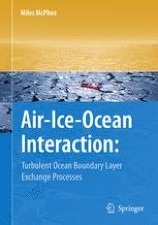
Air-Ice-Ocean Interaction : Turbulent Ocean Boundary Layer Exchange Processes
At a time when the polar regions are undergoing rapid and unprecedented change, understanding exchanges of momentum, heat and salt at the ice-ocean interface is critical for realistically predicting the future state of sea ice. By offering a measurement platform largely unaffected by surface waves, drifting sea ice provides a unique laboratory for studying aspects of geophysical boundary layer flows that are extremely difficult to measure elsewhere. This book draws on both extensive observations and theoretical principles to develop a concise description of the impact of stress, rotation, and buoyancy on the turbulence scales that control exchanges between the atmosphere and underlying ocean when sea ice is present. Several interesting and unique observational data sets are used to illustrate different aspects of ice-ocean interaction ranging from the impact of salt on melting in the Greenland Sea marginal ice zone, to how nonlinearities in the equation of state for seawater affect mixing in the Weddell Sea.
Advances in Molecular Breeding Toward Drought and Salt Tolerant Crops
Advances in Molecular Breeding toward Drought and Salt Tolerant Crops seeks to integrate the most recent findings about key biological determinants of plant stress tolerance with modern crop improvement strategies. This volume is unique because is provides exceptionally wide coverage of current knowledge and expertise being applied in drought and salt tolerance research, spanning the scientific hierarchy from physiology, biochemistry, development, and genetics, to the newest technologies being used to manipulate drought and salinity associated traits for germplasm improvement. This book will be an invaluable reference for educators and researchers in agronomy and horticulture, crop breeding, molecular genetics, and biotechnology.
Adaptation to Life at High Salt Concentrations in Archaea, Bacteria, and Eukarya
This book complements “Halophilic Microorganisms”, edited by A. Ventosa and published by Springer-Verlag (2004), “Halophilic Microorganism and their Environments” by A. Oren (2002), published by Kluwer Academic Publishers as volume 5 of “Cellular Origins, Life in Extreme Habitats and Astrobiology” (COLE), and “Microbiology and Biogeochemistry of Hypersaline Environments” edited by A. Oren, and published by CRC Press, Boca Raton (1999).
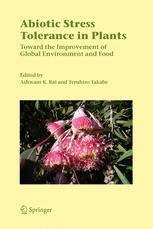
Abiotic Stress Tolerance in Plants : Toward the Improvement of Global Environment and Food
Stresses in plants caused by salt, drought, temperature, oxygen, and toxic compounds are the principal reason for reduction in crop yield. For example, high salinity in soils accounts for large decline in the yield of a wide variety of crops world over; ~1000 million ha of land is affected by soil salinity. Increased sunlight leads to the generation of reactive oxygen species, which damage the plant cells. The threat of global environment change makes it increasingly demanding to generate crop plants that could withstand such harsh conditions. Much progress has been made in the identification and characterization of the mechanisms that allow plants to tolerate abiotic stresses.
