



الصفحة 2
الصفحة 2
Land Use and Soil Resources
Land-use change is one of the main drivers of many environmental change processes. It influences the basic resources of land use, including the soil. Its impact on soil often occurs so creepingly that land managers hardly contemplate initiating ameliorative or counterbalance measures. Poor land management has degraded vast amounts of land, reduced our ability to produce enough food, and is a major threat to rural livelihoods in many developing countries. To date, there has been no single unifying volume that addresses the multifaceted impacts of land use on soils. This book has responded to this challenge by bringing together renowned academics and policy experts to analyze the patterns, driving factors and proximate causes, and the socioeconomic impacts of soil degradation. Policy measures to prevent irreversible degradation and rehabilitate degraded soils are also identified.
Chasing the Chinese dream : Four decades of following China’s war on poverty
This book explores the historical, cultural and philosophical contexts that have made anti-poverty the core of Chinese society since Liberation in 1949, and why poverty alleviation measures evolved from the simplistic aid of the 1950s to Xi Jinping’s precision poverty alleviation and its goal of eliminating absolute poverty by 2020. The book also addresses the implications of China’s experience for other developing nations tackling not only poverty but such issues as pandemics, rampant urbanization and desertification exacerbated by global warming. The first of three parts draws upon interviews of rural and urban Chinese from diverse backgrounds and local and national leaders. These interviews, conducted in even the remotest areas of the country, offer candid insights into the challenges that have forced China to continually evolve its programs to resolve even the most intractable cases of poverty.

Bosnian Refugees in America : New Communities, New Cultures
The book considers the diverse experiences of urban and rural families before the war and the effects of the timing of their departure from Bosnia upon their experience of resettlement.
Architecture and agriculture : A rural design guide
Presents architectural guidelines for buildings designed and constructed in rural landscapes by emphasizing their connections with function, culture, climate, and place. Following on from the author’s first book Rural Design, the book discusses in detail the buildings that humans construct in support of agriculture. By examining case studies from around the world including Australia, China, Japan, Norway, Poland, Japan, Portugal, North America, Africa and the Southeast Asia it informs readers about the potentials, opportunities, and values of rural architecture, and how they have been developed to create sustainable landscapes and sustainable buildings for rapidly changing rural futures.

An architecture of the Ozarks
Marlon Blackwell is a passionate polemicist. He's also a very gifted architect. The projects in this first monograph on the "radical ruralist," as touted by the Royal Institute of British Architects, offer a new architectural language that at once celebrate the vernacular and transgress the boundaries of the conventional
Agroforestry in Europe : Current Status and Future Prospects
Brings together some of the most important current research in European agroforestry, and evaluates the current scope and future potential of agroforestry across the EU.While the majority of Europe’s agroforestry practices are currently focused in the Mediterranean, this volume draws together examples from a wide range of countries – including Greece, Spain, the UK, Hungary, Germany, Italy, the Netherlands, Switzerland, France and Slovenia. The book also covers a range of agroforestry types, including silvopastoralism – Europe’s predominant form of agroforestry – as well as alley cropping, forest farming, silvoarable systems and the use of trees for shelter. Through these examples the book also discusses the potential roles for these traditional land management systems in addressing both environmental issues such as water quality, biodiversity conservation, desertification, ecosystem services and socioeconomic issues such as rural population stabilization.

Agricultural Medicine : A Practical Guide
Covering both injury prevention and environmental h- ards, this innovative work is a practical guide for the family physician wo- ing in a rural area. The contents demonstrate the vitality of agromedicine and the vision and insight of the authors. The chapters on farm chemicals provide thorough information about the many types of chemicals commonly used in the farm environment, how they are applied, and the principles of diagnosis and management for family physicians treating patients for toxic chemical exposure.
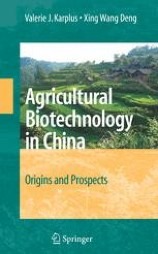
Agricultural Biotechnology in China : Origins and Prospects
Building on a long tradition of agricultural advances, Chinese scientists have applied biotechnology techniques to develop hundreds of novel crop varieties suited to local farming conditions and challenges.Agricultural Biotechnology in China: Origins and Prospects is a comprehensive examination of how the origins of biotechnology research agendas, along with the effectiveness of the seed delivery system and biosafety oversight, help to explain current patterns of crop development and adoption in China. Based on firsthand insights from China’s laboratories and farms, Valerie Karplus and Dr. Xing Wang Deng explore the implications of China’s investment for the nation’s rural development, environmental footprint, as well as its global scientific and economic competitiveness.
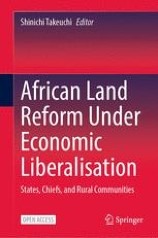
African Land Reform Under Economic Liberalisation: States, Chiefs, and Rural Communities
This book offers unique in-depth, comprehensive, and comparative analyses of the motivations, context, and outcomes of recent land reforms in Africa. Whereas a considerable number of land reforms have been carried out by African governments since the 1990s, no systematic analysis on their meaning has so far been conducted. In the age of land reform, Africa has seen drastic rural changes. Analysing the relationship between those reforms and change, the chapters in this book reveal not only their socio-economic outcomes, such as accelerated marketisation of land, but also their political outcomes, which have often been contrasting.

Affordable housing for smart villages
Initiates a fresh discussion of affordability in rural housing set in the context of the rapidly shifting balance between rural and urban populations. It conceptualises affordability in rural housing along a spectrum that is interlaced with cultural and social values integral to rural livelihoods at both personal and community level. Developed around four intersecting themes: explaining houses and housing in rural settings; exploring affordability in the context of aspirations and vulnerability; rural development agendas involving housing and communities; and construction for resilience in rural communities, the book provides an overview of some of the little understood and sometimes counter-intuitive best practices on rural affordability and affordable housing that have emerged in developing economies over the last thirty years.
