



الصفحة 2
الصفحة 2

Entertainment computing - ICEC 2006 ; 5th International Conference, Cambridge, UK, September 20-22, 2006, Proceeding
ICEC 2006 attracted 47 full paper submissions, 48 short paper submissions in total 95 technical papers. Based on a thorough review and selection process by 85 international experts from academia and industry as members of the Program Committee, a high-quality program was compiled. The International Program Committee consisted of experts from all over the world As a result, 17 full papers and 17 short papers were accepted as submitted or with minor revisions. For the remaining submissions, 28 were recommended to change according to the reviews and were submitted as posters. This proceedings volume presents 62 technical contributions which are from many different countries.

Endodontology at a Glance
Covers all the essential topics (diagnosis, endodontic therapy, pain management and outcome of treatment) as well as the recent developments that comprise the field of endodontology. Written by experts in the field, the book explores the causes and sequelae of endodontic disease and offers suggestions for taking an effective patient history. New addition to the At a Glance series covering a core area of dentistry Review style makes for the ideal revision companion Includes access to a companion website with MCQs for self-assessment and downloadable images for use in teaching

Endodontics review : A study guide
The field of endodontics has seen significant developments since the first edition of this book was published in 2016. Evidence-based standards evolve as the literature changes, and practitioners must adapt their clinical practice accordingly. The second edition of this study guide, known in some circles as "The Orange Book", has been updated based on new peer-reviewed journal articles, position statements, and guidelines, and revisions are reflected in the current treatment protocols for pulpal and periapical diseases as well as traumatic dental injuries, cracked and fractured teeth, and resorptive dental injuries. Each chapter concludes with an extensive bibliography of the scientific literature for further reference. Whether this book is supplementing your predoctoral or postdoctoral endodontics curriculum or guiding your self-study in general dental or specialty practice, know you will be on the forefront of the field.

Endodontic Microbiology ; 2nd ed.
Presents a comprehensive reference to the microbiology, pathogenesis, management, and healing of endodontic pathosis, emphasizing the importance of biological sciences in understanding and managing endodontic disease and its interaction with systemic health. Provides a major revision to the first book to focus on the problems related to microbes in the root canal and periapical tissues. Updates current knowledge in endodontic pathosis, especially regarding next generation sequencing and microbial virulence. Presents useful diagrams, images, radiographs, and annotated histological images to illustrate the concepts. Emphasizes the importance of biological science in understanding and managing endodontic disease. Includes contributions from the leading researchers and educators in the field

Dynamic Epistemic Logic
Dynamic Epistemic Logic is the logic of knowledge change. This is not about one logical system, but about a whole family of logics that allows us to specify static and dynamic aspects of multi-agent systems. This book provides various logics to support such formal specifications, including proof systems. Concrete examples and epistemic puzzles enliven the exposition. The book also contains exercises including answers and is eminently suitable for graduate courses in logic.

Database Programming Languages ; 10th international symposium, DBPL 2005, Trondheim, Norway, August 28-29, 2005, revised selected papers
Constitutes the refereed post-proceedings of the 10th International Workshop on Database Programming Languages, DBPL 2005. This book presents papers organized in topical sections on XML languages, XML and P2P data integration, XML query languages, types and XML, grammars, automata, and tree, as well as dependencies and constraints.

Current trends in database technology - EDBT 2006 ; EDBT 2006 Workshop PhD, DataX, IIDB, IIHA, ICSNW, QLQP, PIM, PaRMa, and Reactivity on the Web, Munich, Germany, March 26-31, 2006, Revised Selected Papers
This book constitutes the thoroughly refereed joint post-proceedings of nine workshops held as part of the 10th International Conference on Extending Database Technology, EDBT 2006, held in Munich, Germany in March 2006. The 70 revised full papers presented were selected from numerous submissions during two rounds of reviewing and revision.
Conditionals, Information, and Inference
Conditionals are fascinating and versatile objects of knowledge representation. On the one hand, they may express rules in a very general sense, representing, for example, plausible relationships, physical laws, and social norms. On the other hand, as default rules or general implications, they constitute a basic tool for reasoning, even in the presence of uncertainty. In this sense, conditionals are intimately connected both to information and inference. Due to their non-Boolean nature, however, conditionals are not easily dealt with. They are not simply true or false — rather, a conditional “if A then B” provides a context, A, for B to be plausible (or true) and must not be confused with “A entails B” or with the material implication “not A or B.” This ill- trates how conditionals represent information, understood in its strict sense as reduction of uncertainty. To learn that, in the context A, the proposition B is plausible, may reduce uncertainty about B and hence is information. The ab- ity to predict such conditioned propositions is knowledge and as such (earlier) acquired information. The ?rst work on conditional objects dates back to Boole in the 19th c- tury, and the interest in conditionals was revived in the second half of the 20th century, when the emerging Arti?cial Intelligence made claims for appropriate formaltoolstohandle“generalizedrules.”Sincethen,conditionalshavebeenthe topic of countless publications, each emphasizing their relevance for knowledge representation, plausible reasoning, nonmonotonic inference, and belief revision.

Conceptual Modeling for New Information Systems Technologies ; ER 2001 Workshops, HUMACS, DASWIS, ECOMO, and DAMA, Yokohama Japan, November 27-30, 2001. Revised Papers
The objective of the workshops associated with ER 2001, the 20th International Con- rence on Conceptual Modeling, was to give participants the opportunity to present and discuss emerging hot topics, thus adding new perspectives to conceptual modeling.

Computer-Aided Highway Engineering
Aimed at developing professional knowledge in the field of highway engineering with adequate skills in planning, designing and implementation of the highway project with an exposure of hands on training of computer software in designing the worldwide road infrastructures. It discusses Digital Terrain Model (DTM) using satellite data including highway geometric, pavement and tunnel design, supported by relevant tutorials. Quantity estimation, cost estimation and production of various types of construction drawings are described in detail with theory and tutorials backed by real project data. Recognizes the role of information and computer technology in various aspects of highway design. Reviews different tasks for feasibility studies and DPR with software applications. Explores topographic survey, Digital Terrain Model (DTM) and highway geometrics and, pavement and drainage design. Discusses project estimations for various revisions of the engineering work. Includes HEADS Pro along with chapter wise tutorials containing design and field data, tutorial guides and various tutorial videos.

Cognitive Economics
As a manifestation of a 'cognitive turn' observable in all social sciences, Cognitive Economics is concerned with the beliefs and mental operations held by actors placed within a dynamical and strategic environment. It appears as a synthesis of an educative research program, dealing with crossed expectations of actors, and an evolutionist research program on collective learning processes. The book mainly aims at extending the framework of game theory in order to better fit the results of rapidly increasing laboratory experiments concerned with individual choices and collective interactions. It also seeks to better explain some original economic phenomena involving boundedly rational agents in an institutional setting such as financial bubbles, job search or technological innovation.
Mastering Revision Rhinoplasty
designed to be read section by section in the order in which it is presented. I would then recommend a re-reading of the first section so that the tenets laid down in this area are more readily understood after having experienced the tech nical presentations. The serious student will then utilize the book as an atlas of techniques that can be conveniently referenced when needed in any particular situation. All surgeons should then use any new information as a beginning plat form of information from which to develop and refine their own experience, col lecting and analyzing their own personal library of techniques, as they advance though this most wonderful and satisfying Discipline.

Logics in Artificial Intelligence ; 11th European Conference, JELIA 2008, Dresden, Germany, September 28-October 1, 2008. Proceedings
Constitutes the refereed proceedings of the 11th European Conference on Logics in Artificial Intelligence, JELIA 2008, held in Dresden, Germany, Liverpool, in September/October 2008.The 32 revised full papers presented together with 2 invited talks were carefully reviewed and selected from 98 submissions. The papers cover a broad range of topics including belief revision, description logics, non-monotonic reasoning, multi-agent systems, probabilistic logic, and temporal logic.

Logic, language, information and computation ; 15th International Workshop, WoLLIC 2008 Edinburgh, UK, July 1-4, 2008 Proceedings
The papers cover all pertinent subjects in computer science with particular interest in cross-disciplinary topics. Typical areas of interest are: foundations of computing and programming; novel computation models and paradigms; broad notions of proof and belief; formal methods in software and hardware development; logical approach to natural language and reasoning; logics of programs, actions and resources; foundational aspects of information organization, search, flow, sharing, and protection.
Les prothèses tricompartimentaires du genou de première intention : Techniques opératoires. Problèmes et solutions = Primary tricompartmental knee replacement : Surgical techniques, problems, and solutions
It seems difficult and presumptuous to want to write a book on total knee replacement. There are many quality works dealing with this subject. The knee prosthesis has, from its origin, particularly in the United States, given rise to considerable studies in all directions: biomechanical, physiological, biological and industrial. Our goal is to offer the youngest a book of simple knowledge without pretension of completeness or prejudice as to long debated subjects (conservation or not of the posterior cruciate ligament, cement or without cement, resurfacing or not of the patella, fixed plate or mobile platform, etc.), and to give practical advice based on our experience. Why limit yourself to first-line tricompartmentals? Because it is the most common solution to the usual degenerative knee problems. In addition, unicompartment and revision prostheses will be the subject of further literature. Everyone knows that to put a knee prosthesis model, and therefore to a system. However, it is important to be able to keep your freedom of analysis in order to maintain your freedom of choice. You have to know how to put on a knee prosthesis without compromise or fanaticism. Convictions are more dangerous enemies of truth than lies. Nietzsche

Kumar and Clarks cases in clinical medicine
Provides a comprehensive collection of over 200 real-life clinical cases designed to support clinical reasoning and enhance diagnostic and management skills through case-based learning. The cases cover a wide range of acute symptoms and conditions encountered in medicine, with clear and concise advice on diagnosis and management. The level of detail is ideal for exam revision as well as to support junior doctors and other healthcare professionals on the wards.

Knee Arthroplasty Handbook : Techniques in Total Knee and Revision Arthroplasty
This text is designed to be a concise guide to the essentials of total knee arthroplasty and revision total knee arthroplasty. World-renowned experts cover basic principles and instrumentation, ligament releases, and bone defects.
Comprehensive applied basic sciences : For MDS students
All the questions are answered as per the type of question (long | short) and with “to the point” answers to make it more interesting. Answers are selected authentically from standard textbooks commonly referred to by the students to avoid confusion during examinations. Each answer is explained in heading and subheadings to break the continuous text. Written in a simple, well structured and point-wise format with a comprehensive examination-oriented description along with the diagrammatic representation. An indispensable book for the ‘last minute’ revision while preparing for the examinations and for quick reference throughout the course duration.

Clinical Chemistry
Clinical Chemistry considers what happens to the body’s chemistry when affected by disease. It provides introductory coverage of the scientific basis for biochemistry tests routinely used in medicine - including tests for the assessment of organ function, diagnosis and monitoring disease activity and therapy efficacy. Each topic area begins with a concise description of the underlying physiological and biochemical principles and then applies them to patient investigation and management. The regular use of case histories helps further emphasise clinical relevance and chapter key points, as well as provide a useful starting point for examination revision.
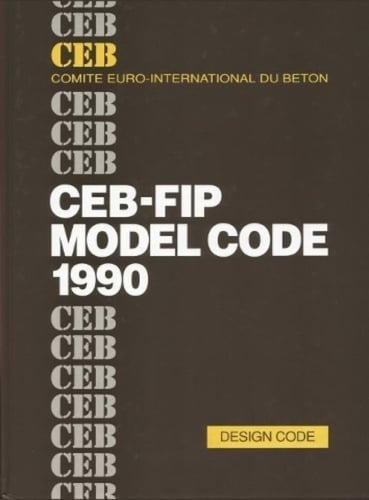
CEB-FIP Model code 1990 : Design code
This document is a comprehensive design code for concrete. It is the result of a comprehensive revision to the original model code of 1978, which was produced jointly by the Comite Euro-International du Beton (CEB) and the Federation Internationale de la Precontrainte (FIP). Model Code 1990 has more detailed guidelines and explanations than national codes and can be used as a basis for them. It has already influenced the codification work that is being carried out both nationally and internationally and will continue to do so. With the publication of Eurocode 2: Part 1 as a draft pre-standard, this document is a useful reference during the consultative period before Eurocode 2 becomes a European standard. It may be of use to anyone involved in codification work on concrete.
