



الصفحة 2
الصفحة 2
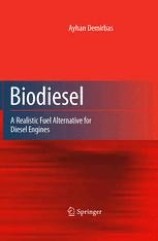
Biodiesel : A realistic fuel alternative for diesel engines
Environmental and political concerns are generating a growing interest in alternative engine fuels such as biodiesel. Biodiesel is a renewable energy source produced from natural oils and fats, which can be used as a substitute for petroleum diesel without the need for diesel engine modification. In addition to being biodegradable and non-toxic, biodiesel is also essentially free of sulfur and aromatics, producing lower exhaust emissions than conventional gasoline whilst providing similar properties in terms of fuel efficiency.
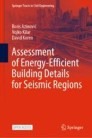
Assessment of Energy-Efficient Building Details for Seismic Regions
Presents a methodology for the assessment of structural building details, taking into account the contemporary guidelines for earthquake-resistant and energy-efficient buildings. A review of structural details for energy-efficient buildings revealed that in some cases the structural system is interrupted, leading to solutions which are not suitable for earthquake-prone regions. Such typical examples would be the use of thermal insulation under the building foundation and reduction of the load-bearing elements’ dimensions – also at the potential locations of plastic hinges which are crucial for the dissipation of seismic energy.

Application of power electronics converters in smart grids and renewable energy systems
Focuses on the applications of Power Electronics Converters in smart grids and renewable energy systems. The topics covered include methods to CO2 emission control, schemes for electric vehicle charging, reliable renewable energy forecasting methods, and various power electronics converters. The converters include the quasi neutral point clamped inverter, MPPT algorithms, the bidirectional DC-DC converter, and the push–pull converter with a fuzzy logic controller.

Alqadam Train Station
Aims to focuses on the redesign of the Southern Train Station of Damascus, located in the Al-Qadam area. The proposal aims to preserve the historical identity of the existing station while expanding it to meet the needs of modern urban mobility. The design balances heritage conservation with contemporary architectural expression, creating a space that respects the cultural fabric of Damascus while addressing future growth.Key elements include increasing station capacity, integrating sustainable design strategies, and enhancing passenger flow. Renewable energy use, passive ventilation, and green spaces are central to reducing environmental impact and improving user comfort. يركّز مشروع التخرج هذا على إعادة تصميم المحطة الجنوبية للقطارات في دمشق، الواقعة في منطقة القديهدف المشروع إلى الحفاظ على الهوية التاريخية للمحطة القديمة مع تطويرها وتوسيعها لتلبية احتياجات النقل الحضري المعاصر. يجمع التصميم بين صون التراث والتعبير المعماري الحديث، ليخلق فضاءً يحترم النسيج الثقافي لدمشق ويستجيب في الوقت نفسه لمتطلبات النمو المستقبلي. تشمل العناصر الأساسية زيادة القدرة الاستيعابية للمحطة، ودمج استراتيجيات التصميم المستدام، وتحسين حركة المسافرين. كما يعتمد المشروع على استخدام الطاقة المتجددة، والتهوية الطبيعية، وإضافة المساحات الخضراء لتقليل الأثر البيئي وتعزيز راحة المستخدمين.

Africa-EU Renewable Energy Research and Innovation Symposium 2018 (RERIS 2018) ; 23–26 January 2018, National University of Lesotho On occasion of NULISTICE 2018
This open access book presents the proceedings of the 2nd Africa-EU Renewable Energy Research and Innovation Symposium (RERIS 18), held in Maseru, Lesotho in January 2018. The symposium aimed to foster research cooperation on renewable energy between Africa and Europe – in academia, as well as the private and public sectors. Addressing thematic areas such as • Grid-connected renewable energy; • Decentralised renewable and household energy solutions; • Energy ocioeconomics; and • Promotion of energy research, innovation, education and entrepreneurship.

Advances in Renewable Energy and Sustainable Environment : Select Proceedings of NCRESE 2019
comprises the select peer-reviewed proceedings of the National Conference on Renewable Energy and Sustainable Environment (NCRESE) 2019. brings together the latest developments in harvesting, storing and optimizing alternate and renewable energy resources. It covers latest developments in green energy technologies as well as smart grids, and their applications towards a sustainable environment. can be useful for beginners, academicians, entrepreneurs, and professionals interested in renewable energy technologies and sustainable environment practices.

Achieving the Paris Climate Agreement goals ; Part 2 : Science-based target setting for the finance industry — Net-Zero Sectoral 1.5˚C pathways for real economy sectors
Provides an in-depth analysis of industry sectors globally, and its purpose is to present emission reduction targets in 5-year steps (2025 to 2050) for the main twelve finance sectors per the Global Industry Classification System. This scientific analysis aims to support the United Nations Principles for Responsible Investment initiative to give sustainability guidance for the global finance industry. The industry sector pathways presented here are based on the latest global and regional 100% renewable energy and non-energy greenhouse gas Representative Concentration Pathways in order to keep climate change significantly under +1.5 C and thereby achieve the Paris Climate Agreement goals. The heart of this book is three chapters presenting the results of industry scenario modelling. These chapters cover twelve industry and service sectors as well as transportation and buildings. The specific energy demand and specific emissions are presented based on the emission accounting concept of “Scope 1, Scope 2 and Scope 3” emission pathways. This methodology has been developed to measure the climate and sustainability index for companies, and this research project expands the methodology to apply it to entire industry sectors ...

Achieving the Paris climate agreement goals : Global and regional 100% renewable energy scenarios with non-energy GHG Pathways for +1.5°C and +2°C
Presents detailed pathways to achieve 100% renewable energy by 2050, globally and across ten geographical regions. Based on state-of-the-art scenario modelling, it provides the vital missing link between renewable energy targets and the measures needed to achieve them. Bringing together the latest research in climate science, renewable energy technology, employment and resource impacts, the book breaks new ground by covering all the elements essential to achieving the ambitious climate mitigation targets set out in the Paris Climate Agreement. For example, sectoral implementation pathways, with special emphasis on differences between developed and developing countries and regional conditions, provide tools to implement the scenarios globally and domestically. Non-energy greenhouse gas mitigation scenarios define a sustainable pathway for land-use change and the agricultural sector. Furthermore, results of the impact of the scenarios on employment and mineral and resource requirements provide vital insight on economic and resource management implications.
