



الصفحة 2
الصفحة 2

Environmental Chemistry : Green Chemistry and Pollutants in Ecosystems
Environmental chemistry is a new, fast developing science aimed at deciphering fundamental mechanisms ruling the behaviour of pollutants in ecosystems. Applying this knowledge to current environmental issues leads to the remediation of environmental media, and to new, low energy, low emission, sustainable processes. This book describes the state-of-the-art advances regarding the pollution of water, soils, atmosphere, food and living organisms by toxic metals, fossil fuels, pesticides and other organic pollutants. Furthermore, the eco-toxicology section presents novel bio-assays to assess the toxicity of various pollutants such as dioxins and endocrine disrupters within complex media. The green chemistry section highlights novel chemical reactions based upon environmentally friendly conditions. The analytical chemistry section describes very sensitive methods which trace the fate of pollutants in complex ecosystems.

Environmental Bioremediation Technologies
Environmental contamination from both natural and anthropogenic sources is, today, a major environmental concern due to pervasiveness and persistence of many toxicants. It is considered as an inevitable evil of our progress and modernization. To decontaminate the soils, sediments and waters, polluted by anthropogenic activities, the scientists and technologists have evolved different technologies over the years. Although we have to pay high cost for physical and chemical environmental technologies, but they are not eco-friendly and safe. Hence, it was deeply realized to develop viable technologies employing microbes and plants to remediate not only metallic residues and radionuclides, but also the xenobiotic compounds like PCBs, PAHs, PCPs, petroleum sludge and the military wastes. No doubt, the scientists have also got some success in this endeavour and as the result, many companies are in place today to promote the sale of plant or microbe-based technologies to deal with specific environmental contamination challenges. Besides, these technologies are se- driven and do not disturb the sites in cleaning process.

Emerging Environmental Technologies
This book exclusively focuses on the technologies that would be in the forefront in near to far future. Each and every article in the book discusses the current environmental challenges, the novel innovation and future directions. The topics covered in the book include microbial fuel cells, hybrid solar lighting, bacterial swimming for environmental remediation, cleaner engines, nanoparticles for effluent treatment, surface catalysis and proteins as gas hydrates inhibitors.

Ecotoxicology, Ecological Risk Assessment and Multiple Stressors
The science of ecotoxicology and the practice of ecological risk assessment are evolving rapidly. Ecotoxicology as a subject area came into prominence in the 1960s after the publication of Rachel Carson's book on the impact of pesticides on the environment. The rise of public and scientific concern for the effects of chemical pollutants on the environment in the 1960s and 1970s led to the development of the discipline of ecotoxicology, a science that takes into account the effects of chemicals in the context of ecology. Until the early 1980s, in spite of public concern and interest among scientists, the assessment of ecological risks associated with natural or synthetic pollutants was not considered a priority issue by most government. However, as the years passed, a better understanding of the importance of ecotoxicology emerged and with it, in some countries, the progressive formalization of an ecological risk assessment process.

Earthquake Geotechnical Engineering ; 4th International Conference on Earthquake Geotechnical Engineering-Invited Lectures
This book contains the full papers on which the invited lectures of the 4th International Conference on Geotechnical Earthquake Engineering (4ICEGE) were based. It provides a comprehensive overview of the progress achieved to date in soil dynamics and geotechnical earthquake engineering, as well as in engineering seismology and seismic risk assessment and management. In situ and laboratory testing, theoretical issues and numerical modeling of soil dynamics, seismic hazard with emphasis on the long-period ground motion displacements, site effects and microzonation, liquefaction assessment and mitigation, soil-structure interaction, performance based design of geotechnical structures, earthquake resistant design and performance of shallow and deep foundations, retaining structures, embankments and dams, underground structures and lifelines, are all among the different topics covered in this book. Interdisciplinary subjects such as vulnerability assessment of, transportation networks and lifelines as well as of geotechnical structures are also discussed. Finally, the book provides a thorough presentation of the existing worldwide important large-scale testing facilities and geotechnical strong ground motion arrays.

Demands of Expanding Populations and Development Planning : Clean Air, Safe Water, Fertile Soils
This book brings together three topics that interact to affect the quality of life on Earth. First, it examines expanding populations (and contracting ones) in regional and national contexts. Second, the book reviews the impacts of pollution on people, ecosystems and economic ventures.Third, the book asserts that well-planned development projects adhering to environmental laws and with best available technologies, will reduce ecosystem pollution yet yield strong profit margins.

Contaminated soils, sediments and water ; Vol.10 : Successes and challenges
Contaminated Soils, Sediments and Water: Successes and Challenges, Volume 10 contains a valuable collection of success stories (and challenges) in the areas of environmental fate, heavy metals, modeling, MTBE and oxygenates, regulatory, remediation, risk assessment, site assessment and sampling methodology. It demonstrates the progress that has been made in working together toward the optimization of established approaches, as well as embracing departures from traditional regulatory models in order to address the threats to our natural resources. The book is divided into eight sections: Part I: Environmental Fate; Part II: Heavy Metals; Part III: Modeling; Part IV: MTBE and Oxygenates; Part V: Radionuclides; Part VI: Regulatory; Part VII: Remediation; Part VIII: Risk Assessment and Remedial Approaches Towards Restoration and Management of Contaminated Rivers.

Contaminated Soils, Sediments and Water : Science in the Real World
Contaminated Soils Volume 9 contains 38 technical papers, covering a wide range of environmental issues. Volume discussion includes: Part I Bioremediation; Part II Chemical Oxidation; Part III Heavy Metals; Part IV MTBE; Part V Phytoremediation; Part VI Radiation; Part VII Regulatory and Legal issues; Part VIII Remediation; Part IX Risk Based Cleanup; and Part X Site Assessment. Contributing authors to this volume are from government agencies, academic institutions, the consulting community and industrial companies. This important volume documents the state of environmental science and provides perspective on where we as an industry have come from. Increased scientific, engineering and consulting alliances and collaboration should drive our efforts going forward.

Contaminated rivers : A geomorphological-geochemical approach to site assessment and remediation
The geomorphological, surficial and geochemical processes and conditions of rivers require a tailored set of strategies and programs to successfully clean up contaminated river reaches. The primary purpose of this book is not only to provide students and professionals with an introductory understanding of fluvial geomorphic principles but also to explain using a process oriented approach how these geomorphic principles can be integrated with geochemical data to cost-effectively characterize, assess and remediate contaminated river systems. Numerous case studies from North America and many other parts of the world are included.

Contaminated land : Investigation, assessment and remediation
The first edition of this ICE design and practice guide became one of the most popular ICE publications after it was published in 1994. Since the first edition, there has been a multitude of legislation on the environment and the adoption of many of the principles of the European Landfill Directive. This has meant specialists, regulators and engineers are grappling with interpretation of guidance frameworks, new levels of testing accuracy and increased public perception of environmental damage.
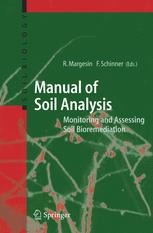
Manual for Soil Analysis - Monitoring and Assessing Soil Bioremediation
Reliable methods for monitoring and assessing soil quality are a prerequisite for successful soil bioremediation projects. The fifth volume of Soil Biology presents detailed descriptions of selected methods for evaluating, monitoring and assessing bioremediation treatments of soils contaminated with organic pollutants or heavy metals.
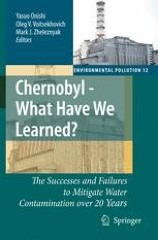
Chernobyl - What Have We Learned? : The Successes and Failures to Mitigate Water Contamination Over 20 Years
Twenty million people have been exposed to Chernobyl radionuclides through the Dnieper River aquatic pathways. This book presents a 20-year historical overview and comprehensive study results of the aquatic environment affected by the 1986 Chernobyl nuclear accident. During this time, many water quality management practices and countermeasures were enacted. The book presents in-depth analyses of these water remediation actions, using current science and mathematical modeling, and discusses why some were successful, but many others failed. The chapter entitled Where Do We Go From Here? incorporates a comprehensive discussion of the planned New Safe Confinement (NSC) structure to cover the Chernobyl plant. The book closes with a summary and conclusions drawn from these analyses, making it a valuable reference tool for the future. This book will be of interest to engineers, scientists, decision-makers, and those involved in radiation protection and radioecology, environmental protection and risk assessment, water remediation and mitigation measures, and radioactive waste disposal. In addition, the detailed, almost day-to-day, emergency responses to the Chernobyl accident described in this book will also be useful to people developing emergency and long-term responses to accidental or intentional (by terrorists) releases of radionuclides, toxic chemicals and biological agents.
Chemicals as Intentional and Accidental Global Environmental Threats
The book contains fields of ecology, chemistry, medicine, epidemiology, public health, toxicology, risk assessment, environmental protection and management, modelling, environmental remediation technologies came together to discuss the chemicals threats for the global environment. The intentional or accidental release of chemicals into environment poses a global threat to public health and security.
Challenges in Radiation Protection and Nuclear Safety Regulation of the Nuclear Legacy
The book covers radiation protection and nuclear safety supervision of installations built during the cold war, particularly in relation to regulatory strategies for safe decommissioning of unique or unusual nuclear facilities and remediation

Case Studies in Building Rehabilitation
Presents recent research and practical insights relating to building pathology. As such it contributes toward the systematization and dissemination of knowledge regarding structural and hygrothermal pathologies, durability and diagnostic techniques, while at the same time, demonstrating the latest advances in this domain. It includes new developments in the field of building pathology and rehabilitation, bridging the gap between current approaches to the surveying of buildings and the detailed study of defect diagnosis, prognosis and remediation. It also features a number of case studies and a detailed list of references and suggestions for further reading. Providing an overview of the current state of the art in the field, the book will appeal to scientists, students, practitioners and lecturers. Furthermore, the topics covered are relevant to a variety of scientific and engineering disciplines, including civil, materials and mechanical engineering.
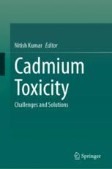
Cadmium toxicity : challenges and solutions
Offers a comprehensive collection of review and case chapters that cover cadmium toxicity and remediation. It covers sources of cadmium contamination, its impact on human health, and prospective remediation strategies, taking a multi-disciplinary approach a focus on application of recent advanced biological technology. The chapters here bring together a diverse group of environmental science, sustainability and health researchers to address the challenges caused by cadmium contamination, explaining the routes of exposure to environmental cadmium, how cadmium is transported in ecosystems, and the health risks linked to cadmium exposure in food and the environment.
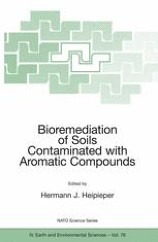
Bioremediation of Soils Contaminated with Aromatic Compounds
Environmental biotechnology, which was in its infancy in the early 80's, has evolved thanks to the revolution brought about by molecular biology. Multiple successes in the biological cleanup of civil and industrial wastewater and of hydrocarbon soil pollution, demonstrate the vast power of clean technologies. In addition, the buildup of information on the activities of microorganisms as catalysts in all sorts of natural, industrial and animal environments has flourished. There is a continuing realization of the critical role of microbial processes in biological, industrial and geological systems. Since environmental biotechnology has matured, it is ready to tackle bigger challenges: the scaling up of many bioremediation systems still in progress, the search for novel biocatalysts for industrial applications, the continuing effort against common human life-threatening processes such as antibiotic resistance, the accumulation of hormone-mimicking substances (endocrine disrupters), the deposition of air-borne pesticides in the environment and, the degradation of recalcitrant contaminants. These endeavors will help prevent the contamination of food chains, protect human life and allow for human activity and economic development that do not compromise environmental sustainabijity.
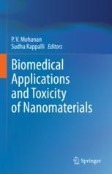
Biomedical applications and toxicity of nanomaterials
Covers the recent trends on the biological applications of nanomaterials, methods for their preparation, and techniques for their characterization. Further, the book examines the fundamentals of nanotoxicity, methods to assess the toxicity of engineered nanomaterials, approaches to reduce toxicity during synthesis. It also provides an overview of the state of the art in the application of Artificial intelligence-based methodologies for evaluation of toxicity of drugs and nanoparticles. The book further discusses nanocarrier design, routes of various nanoparticle administration, nano based drug delivery systems, and the toxicity challenges associated with each drug delivery method. It presents the latest advances in the interaction of nanoparticles with the cellular environment and assess nanotoxicity of these engineered nanoparticles. The book also explores the comparative and mechanistic genotoxicity assessment of the nanomaterials. This book is useful source of information for industrial practitioners, policy makers, and other professionals in the fields of toxicology, medicine, pharmacology, food, and drugs.
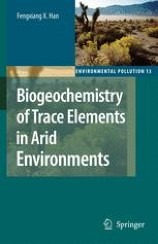
Biogeochemistry of Trace Elements in Arid Environments
Global warming has worsened the water resource crisis in many arid zones worldwide, from Africa to Asia, affecting millions of people and putting them at risk of hunger. Effective management of arid zone resources, including understanding the risks of toxic trace and heavy elements to humans, coupled with the need to produce more food to feed the world’s growing population, has thus become increasingly important. This very timely book, the only one of its kind on the market, fills the gap of our knowledge of trace elements in these regions. This book begins by introducing the nature and properties of arid zone soil, followed by an updated overview and comprehensive coverage of the major aspects of the trace elements and heavy metals of most concern in the world’s arid and semi-arid soils. These aspects include: - content and distribution - solution chemistry - solid-phase chemistry - selective sequential dissolution techniques - transfer fluxes - bioavailability - pollution and remediation In order to illustrate the themes, a comprehensive and focused case study on transfer fluxes of trace elements in Israeli arid soils is presented. Finally it closes with the global perspectives on anthropogenic interferences in the natural trace elements’ distribution.
Biochemical Mechanisms of Detoxification in Higher Plants : Basis of Phytoremediation
Plants play a key role in purifying the biosphere of the toxic effects of industrial activity. This book shows how systematic application of the results of investigations into the metabolism of xenobiotics (foreign, often toxic substances) in plants could make a vastly increased contribution to planetary well-being. Deep physiological knowledge gained from an accumulation of experimental data enables the great differences between the detoxifying abilities of different plants for compounds of different chemical nature to be optimally exploited. Hence planting could be far more systematically adapted to actual environmental needs than is actually the case at present.
