



الصفحة 2
الصفحة 2

Flavonoids as nutraceuticals
Flavonoids are well-known plant metabolites that have extraordinary properties that can be used for treating health issues. The pharmaceutical importance of flavonoids is due to their anti-depressant, anti-viral, anti-inflammatory, and antioxidant capacities. They are also of great importance when it comes to neuroprotection, cardiovascular disorders, and many types of cancer. Flavonoids are also easily available and produce less harmful side effects than some conventional therapeutics. This new volume examines the growing use of flavonoids for prevention and treatment of diseases and discusses their beneficial mechanisms. Chapters in the volume address diverse uses as anti-aging tools, as anti-inflammatory agents, for treating pregnancy-induced disorders, as a promising tool to combat infection of Covid-19, etc. The book explores their specific therapeutic antiviral potentials, the gene expression by flavonoids, and the role of flavonoids in agriculture.

Fetus abnormalities relating drug
Drugs use in pregnancy remains a major public health problem. Fetal teratogenicity results from the effect of these substances during fetal development, particularly when used in combination. Approximately 3-5% of live births are complicated by a birth defect each year totaling around 120,000 babies. Additionally, more women taking any kind of medication has more than doubled in the last 30 years. Current evidence suggests that between 65%-94 % of women take at least one prescription drug during pregnancy. Nearly 70% of women are taking a medication in the first trimester during organogenesis. On average, women are taking 3 medications in pregnancy with over 50% of women using four or more. This includes over the counter medications and herbal supplements. During pregnancy, drugs are often required to treat certain disorders.

Fetal and Neonatal Pathology
The book presenting the same practical approach to the examination of both fetuses and perinatal deaths. It provides essential clinical and pathophysiological information and discusses the pathogenesis of abnormalities as a basis for appropriate methods of investigation. Part 1 deals with the examination of the products of conception after the termination of pregnancy for fetal anomalies. The range of pathological abnormalities is described and their relevance discussed. Special attention is paid to the differences in pathological findings of specific conditions between the second and third trimesters. Part 2 is organised by system, describing and illustrating those pathological problems which are likely to be encountered in the fetus and neonate. Each chapter is introduced by a concise account of the development of the relevant system. There is also a discussion, as appropriate, of changes at birth as well as changes in normal function that may occur during the neonatal period.

Female Pelvic Medicine and Reconstructive Pelvic Surgery
"Female Pelvic Medicine and Reconstructive Pelvic Surgery" is a high level text covering recent advances in the field. It includes anatomy, normal and abnormal physiology, investigation techniques, inflammatory conditions and treatment options.

Familial mediterranean fever
Familial Mediterranean Fever (FMF), a genetic disorder causing recurrent inflammatory attacks. It delves into various aspects of FMF, including: Definition and historical background of FMF Underlying causes, signs, and symptoms of the disease Modes of transmission through autosomal recessive inheritance Diagnostic methods encompassing genetic, urine, blood, and imaging tests, emphasizing the significance of early diagnosis The link between FMF and amyloidosis, a serious complication...

Evidence Based Global Health Manual for Preterm Birth Risk Assessment
This book is based on global literature, published international, national and regional guidance and it is structured into six chapters providing: an overview of the domains for risk assessment and the summary recommendations in greater depth maternal demographics and past pregnancy histories, accurate pregnancy dating, and the contribution of infection, nutritional status and substance misuse to preterm birth risk. Each chapter has structured sections which include a) background information, b) an evidence statement highlighting the risk factors covered, and c) practical recommendations for evaluating those risks as well as the evidenced recommended and effective interventions for women deemed to be at risk.

Early Nutrition and its Later Consequences : New Opportunities; Perinatal Programming of Adult Health - EC Supported Research
Health problems such as hypertension, tendency to diabetes, obesity, blood lipids, vascular disease, bone health, behaviour and learning and longevity may be ‘imprinted’ during early life. This process is defined as ‘programming’ whereby a nutritional stimulus operating at a critical, sensitive period of pre and postnatal life imprints permanent effects on the structure, physiology and metabolism. For this reason, academics and industry set-up the EC supported Scientific Workshop -Early Nutrition and its Later Consequences: New Opportunities. The prime objective of the Workshop was to generate a sound exchange of the latest scientific developments within the field of early nutrition to look for opportunities for new preventive health concepts. Further, a closer look was taken at the development of food applications which could provide (future) mothers and infants with improved nutrition that will ultimately lead to better future health. The Workshop was organised by the Dept. of Pediatrics, University of Munich, Germany in collaboration with the Danone Institutes and the Infant Nutrition Cluster, a collaboration of three large research projects funded by the EU.

Early Life Origins of Health and Disease
Early Life Origins of Health and Disease is a new book which presents and discusses the many factors that may have impact on normal development. In a concise and readable manner, the authors consider both the proven and suggestive evidence that the high prevalence of hypertension, diabetes, obesity and, in some populations, kidney disease, may not be all due to genetics or adult environment alone. There is good evidence that stress and more subtle dietary deficiencies, as well as placental malfunction, may increase the risk that the offspring will develop these problems in later life. Finally, new and emerging evidence for other areas of human health and disease such a motor control and mental health is critically reviewed for the first time. The book is a ‘must’ for all scientists interested in researching these areas, as there is a critical evaluation of the methodology used and suggestions for the ‘optimal’ way in which to investigate these phenomena.

Doppler Ultrasound in Obstetrics and Gynecology
Doppler Ultrasound in Obstetrics & Gynecology encompasses the full spectrum of clinical applications of Doppler ultrasound for the practicing obstetrician-gynecologist, including the latest advances in 3D and color Doppler and the newest techniques in 4D fetal echocardiography. Written by preeminent experts in the field, the book covers the basic and physical principles of Doppler ultrasound; the use of Doppler for fetal examination, including fetal cerebral circulation; Doppler echocardiography of the fetal heart; and the use of Doppler for postdated pregnancy and in cases of multiple gestation. Chapters on the use of Doppler for gynecologic investigation include ultrasound in ectopic pregnancy, for infertility, for benign disorders and for gynecologic malignancies.

Diet and fertility
Infertility and subfertility affect a significant part of the population. Among various definitions of this pathology, the most ommon one is provided by the World Health Organization; it says that infertility is 'a disease of the reproductive system defined by the failure to achieve a clinical pregnancy after 12 months or more of regular unprotected sexual intercourses. The global prevalence of infertility is about 50-70 million couples. Since the process of human reproduction involves a large number of factors, a broad spectrum of infertility tests might be applied. Some of the tests focus directly on the pregnancy, some are only partially effective, whereas others should not be recommended for infertile couples.

Diagnosis of endometrial biopsies and curettings : A practical approach
Diagnosis of Endometrial Biopsies and Curettings, 2nd edition, revised and now with color illustrations, continues the tradition of its predecessor as being the concise and complete diagnostic guide to the endometrial biopsy. The text is structured to present a logical approach to formulating a pathologic diagnosis from the diverse array of tissue received in the surgical pathology laboratory with an emphasis on differential diagnosis. More than 220 illustrations complement the text, with 70 of them in full color throughout. Each chapter includes a section on "Clinical Queries and Reporting", which summarizes the features that must be discussed in the final pathology report. The authors are two prominent gynecologic pathologists, and this book is derived from their long-running Short Course presented at the International Academy of Pathology.

Diagnosis and Management of Pituitary Disorders
This text provides a detailed update on current diagnostic and therapeutic techniques useful in the management of a broad spectrum of pituitary disorders. The book focuses on each pituitary tumor subtype, and contains additional chapters related to other lesions of the sella, including tumor management during pregnancy and in the pediatric age group.

Diabetes in pregnancy
Diabetes mellitus is one of the most common and important medical complications affecting pregnancy and resolves once the pregnancy has ended. However, about 3 per cent of women with a diagnosis of gestational diabetes mellitus have type 2 diabetes diagnosed for the first time in pregnancy and therefore it persists after the pregnancy is over

Dentistry and the pregnant patient
Serves as an easy-to-use guide to help dentists of all specialties provide safe, effective care for their patients during pregnancy. The book is broken down into chapters on general treatment guidelines, pregnancy-related conditions in each organ system that may impact care, and the safety of the use of common dental drugs, including anesthetics, during pregnancy.

Congenital infections : Toxoplasmosis and rubella
Torch syndrome is caused by a uterine infection with one of the factors that cause Torch syndrome, which disrupts the development of the fetus. Torch syndrome can be prevented by treating the infected pregnant woman, and thus preventing transmission of the infection to the fetus. And some of the factors that cause Torch Syndrome can give the mother permanent immunity, preventing the arrival of the disease and thus fetal malformations. They include a group of symptoms caused by a congenital infection such as toxoplasmosis, rubella, CMV and herpes, or due to other organisms such as syphilis, small viruses, and varicella zoster virus. The Toxoplasma parasite and the rubella virus can provide lasting immunity if the mother was infected before pregnancy in both or if she was vaccinated before pregnancy in Rubella.

Color Atlas of Gross Placental Pathology
Careful evaluation of the placenta can often give much insight into disorders of pregnancy in the mother and fetus. The techniques of gross placental examination are not difficult, but a systematic approach is necessary to be complete. It is designed to aid in the careful and thorough gross examination of the placenta by providing an illustrated manual of examination that includes normal variations, abnormal findings, as well as unusual pathology. This Atlas contains 186 illustrations, 154 in color.
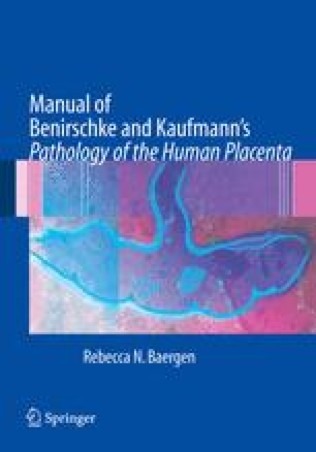
Manual of Benirschke and Kaufmanns Pathology of the Human Placenta
Benirschke and Kaufmann's Pathology of the Human Placenta has long been regarded as the gold standard in the field. It is comprehensive and thorough and contains the detail necessary for those in the subspecialties of placental, perinatal and pediatric pathology. However, placentas are relatively common specimens and are not examined primarily by specialists in the field, but by general pathologists. Thus, there is a need for a more practical and concise manual that can be used by pathology trainees and generalists in their daily work. Manual of Benirschke and Kaufmann's Pathology of the Human Placenta will fill that need. The Manual is a practical, user-friendly guidebook for the general pathologist and pathologist in training for everyday, bench-side use. Organized in 27 chapters, the book will discuss placental development, general features, approach to the specimen by macroscopic and microscopic evaluation, all aspects of placental abnormalities and lesions, disease processes and the placenta, legal aspects of the placental examination, future directions and much more. The sections on macroscopic and microscopic evaluations feature quick-reference tables that allow the reader to identify abnormalities, learn the situations where they occur, and refer back to the text for in-depth discussions. Each chapter will end with selected readings from Pathology of the Human Placenta for more detailed discussions, classic recommended readings, as well as an up-to-date bibliography of current literature. The manual features over 444 illustrations, more than 100 of them in full-color. A must-have for every pathologist and pathology resident.
Management of Acute Pulmonary Embolism
Management of Acute Pulmonary Embolism highlights traditional, novel, and evolving aspects of the diagnosis and treatment of pulmonary embolism (PE). Emphasis is placed on specific issues related to PE, including pregnancy, cancer, thrombophilia, and air travel. The authors critically review and interpret available data, and provide clear recommendations for diagnosis and therapeutic concerns in clinical management of PE patients. Management of Acute Pulmonary Embolism is organized in three precise sections - diagnosis, treatment, and special topics. Each section is up-to-date and detailed, and provides clear recommendations for diagnostic and therapeutic approaches to patients with PE in clinical practice. This practical volume is an essential starting point for future study for both medical students and established investigators.
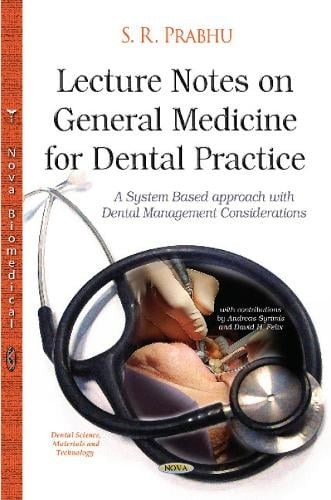
Lecture Notes on General Medicine for Dental Practice : A System based Approach with Dental Management Considerations
Offers a system based approach covering a broad range of topics in general medicine for dental practice. The book includes chapters on history taking and patient interview, general physical examination, system specific examination, common health related complaints, systemic infections, and diseases of the gastrointestinal, cardiovascular, respiratory, neurological, immunological, renal, endocrinal, dermatological and musculoskeletal systems. Nutritional disorders, psychiatric disorders, the female patient with menstrual, menopause and pregnancy related disorders, dental management of patients taking medications for systemic conditions and medical emergencies in dental practice have also been discussed in some detail.
Complications in Gynaecological Surgery
Focusing on a range of gynecological issues, including urinary tract injury, sterilization and assisted pregnancy, as well as the application of cutting-edge laparoscopy, this book will be of great interest and use to the practicing gynecologist or urologist.
