



الصفحة 2
الصفحة 2

Environmental Bioremediation Technologies
Environmental contamination from both natural and anthropogenic sources is, today, a major environmental concern due to pervasiveness and persistence of many toxicants. It is considered as an inevitable evil of our progress and modernization. To decontaminate the soils, sediments and waters, polluted by anthropogenic activities, the scientists and technologists have evolved different technologies over the years. Although we have to pay high cost for physical and chemical environmental technologies, but they are not eco-friendly and safe. Hence, it was deeply realized to develop viable technologies employing microbes and plants to remediate not only metallic residues and radionuclides, but also the xenobiotic compounds like PCBs, PAHs, PCPs, petroleum sludge and the military wastes. No doubt, the scientists have also got some success in this endeavour and as the result, many companies are in place today to promote the sale of plant or microbe-based technologies to deal with specific environmental contamination challenges. Besides, these technologies are se- driven and do not disturb the sites in cleaning process.

Embedded Software and Systems Vol. 3605 ; 1st International Conference, ICESS 2004, Hangzhou, China, December 9-10, 2004, Revised Selected Papers
Welcome to the post proceedings of the First International Conference on Embedded Software and Systems (ICESS 2004), which was held in Hangzhou, P. R. China, 9–10 December 2004. Embedded Software and Systems technology is of increasing importance for a wide range of industrial areas, such as aerospace, automotive, telecommunication, and manufacturing automation. Embedded technology is playing an increasingly dominant role in modern society. This is a natural outcome of amazingly fast developments in the embedded field. The ICESS 2004 conference brought together researchers and developers from academia, industry, and government to advance the science, engineering, and technology in embedded software and systems development, and provided them with a forum to present and exchange their ideas, results, work in progress, and experience in all areas of embedded systems research and development. The ICESS 2004 conference attracted much more interest than expected.

Embedded Software and Systems ; 3rd International Conference, ICESS 2007, Daegu, Korea, May 14-16, 2007, Proceedings
This book introduces sections on embedded architecture, embedded hardware, embedded software, HW-SW co-design and SoC, multimedia and HCI, pervasive/ubiquitous computing and sensor network, power-aware computing, real-time systems, security and dependability, and wireless communication.

Embedded and Ubiquitous Computing ; International Conference, EUC 2006, Seoul, Korea, August 1-4, 2006, Proceedings
Embedded and ubiquitous computing is an exciting new paradigm that p- vides computing and communication services all the time, everywhere. Now we can attach computing and communication devices to human bodies to mo- tor our health, embed computing chips into brains to cure memory losses, or make smart fabrics so they can change colors or generate heat.

Embedded and Ubiquitous Computing - EUC 2005 ; International Conference EUC 2005, Nagasaki, Japan, December 6-9, 2005, Proceedings
Welcome to the proceedings of the 2005 IFIP International Conference on - bedded and Ubiquitous Computing (EUC 2005), which was held in Nagasaki, Japan, December 6–9, 2005. Embedded and ubiquitous computing is emerging rapidly as an exciting new paradigm to provide computing and communication services all the time, - erywhere. Its systems are now pervading every aspect of life to the point that they are hidden inside various appliances or can be worn unobtrusively as part of clothing and jewelry. This emergence is a natural outcome of research and technological advances in embedded systems, pervasive computing and c- munications, wireless networks, mobile computing, distributed computing and agent technologies, etc. Its tremendous impact on academics, industry, gove- ment, and daily life can be compared to that of electric motors over the past century, in fact it but promises to revolutionize life much more profoundly than elevators, electric motors or even personal computers. The EUC 2005 conference provided a forum for engineers and scientists in academia, industry, and government to address profound issues including te- nical challenges, safety, and social, legal, political, and economic issues, and to present and discuss their ideas, results, work in progress, and experience on all aspects of embedded and ubiquitous computing.

Drop acid
Our most respected scientific literature is bursting with evidence that elevated uric acid levels lie at the root of many pervasive health conditions, but mainstream medicine for the most part remains unaware of this connection. This is especially alarming because many people don’t know they are suffering from sky-high levels, putting them at risk for developing or exacerbating potentially life-threatening illnesses.

Dependability Metrics : Advanced Lectures
This tutorial book gives an overview of the current state of the art in measuring the different aspects of dependability of systems: reliability, security and performance.

Data and applications security XXII ; 22nd Annual IFIP WG 11.3 Working Conference on data and applications security London, UK, July 13-16, 2008 Proceedings
This volume contains the papers presented at the 22nd Annual IFIP WG 11.3 Working Conference on Data and Applications Security (DBSEC) held in L- don, UK, July 13–16, 2008.

Current trends in database technology - EDBT 2004 Workshops ; EDBT 2004 Workshops PhD, DataX, PIM, P2P&DB, and ClustWeb, Heraklion, Crete, Greece, March 14-18, 2004, Revised Selected Papers
This volume comprises papers from the following ?ve workshops that were part of the complete program for the International Conference on Extending Database Technology (EDBT) held in Heraklion, Greece, March 2004: • ICDE/EDBT Joint Ph. D. Workshop (PhD) • Database Technologies for Handling XML-information on the Web (DataX) • Pervasive Information Management (PIM) • Peer-to-Peer Computing and Databases (P2P&DB) • Clustering Information Over the Web (ClustWeb) Together, the ?ve workshops featured 61 high-quality papers selected from appr- imately 180 submissions.

Cooperative Information Agents XI ; Matthias Klusch, Koen V. Hindriks, Mike P. Papazoglou, Leon Sterling
In today’s world of ubiquitously connected heterogeneous information systems and computing devices, the intelligent coordination and provision of relevant added-value information at any time, anywhere is of key importance to a va- ety of applications. This challenge is envisioned to be coped with by means of appropriate intelligent and cooperative information agents. An information agent is a computational software entity that has access to one or multiple heterogeneous and geographically dispersed data and infor- tion sources. It pro-actively searches for and maintains information on behalf of its human users, or other agents preferably just in time. In other words, it is managing and overcoming the di?culties associated with information overload in open, pervasive information and service landscapes. Each component of a modern cooperative information system is represented by an appropriate intelligent information agent capable of resolving system and semantic heterogeneities in a given context on demand. Cooperative infor- tion agents are supposed to accomplish both individual and shared joint goals depending on the actual user preferences in line with given or deduced limits of time, budget and resources available.

Constructing Ambient Intelligence ; AmI 2007 Workshops Darmstadt, Germany, November 7-10, 2007 Revised Papers
This book constitutes the refereed proceedings of the workshops of the First European Conference on Ambient Intelligence, AmI 2007, held in Darmstadt, Germany, in November 2007.

Constraint solving and language processing
Contains selected and thoroughly revised papers plus contributions from invited speakers presented at the First International Workshop on C- straint Solving and Language Processing, held in Roskilde, Denmark, September 1–3, 2004. Constraint Programming and Constraint Solving, in particular Constraint Logic Programming, appear to be a very promising platform, perhaps the most promising present platform, for bringing forward the state of the art in natural language processing, this due to the naturalness in speci?cation and the direct relation to e?cient implementation. Language, in the present context, may - fer to written and spoken language, formal and semiformal language, and even general input data to multimodal and pervasive systems, which can be handled in very much the same ways using constraint programming. The notion of constraints, with slightly differing meanings, apply in the characterization of linguistic and cognitive phenomena, in formalized linguistic m- els as well as in implementation-oriented frameworks. Programming techniques for constraint solving have been, and still are, in a period with rapid devel- ment of new eficient methods and paradigms from which language processing can prompt. A common metaphor for human language processing is one big c- straint solving process in which the differently specified linguistic and cognitive phases take place in parallel and with mutual cooperation, which ?ts quite well with current constraint programming paradigms.

Computer Network Security ; 4th International Conference on Mathematical Methods, Models and Architectures for Computer Network Security, MMM-ACNS 2007, St. Petersburg, Russia, September 13-15, 2007, Proceedings
This volume focus on mathematical aspects of information and computer network security addressing the ever-increasing demands for secure computing and highly dependable computer networks.
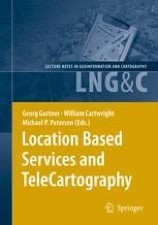
Location Based Services and TeleCartography
Provides for the first time a general overview of research activities related to location and map-based services. These activities have emerged over the last years, especially around issues of positioning, spatial modelling, cartographic communication as well as in the fields of ubiquitious cartography, geo-pervasive services, user-centered modelling and geo-wiki activities. Topics cover an enormous range with heterogenous relationships to the main book issues. Whilst contemporary cartography aims at looking at new and efficient ways for communicating spatial information the development and availability of technologies like mobile networking, mobile devices or short-range sensors lead to interesting new possibilities for achieving this aim.

Location- and Context-Awareness ; Vol. 3987 ; 2nd International Workshop, LoCA 2006, Dublin, Ireland, May 10-11, 2006, Proceedings
Contain the papers presented at the 2 International Workshop on Location- and Context-Awareness in May of 2006. As computing moves increasingly into the everyday world, the importance of location and context knowledge grows. The range of contexts encountered while sitting at a desk working on a computer is very limited compared to the large variety of situations experienced away from the desktop. For computing to be relevant and useful in these situations, the computers must have knowledge of the user’s activity, resources, state of mind, and goals, i.e., the user’s context, of which location is an important indicator. This workshop was intended to present research aimed at sensing, inferring, and using location and context data in ways that help the user.

Location- and Context-Awareness ; Vol. 3479 ; First International Workshop, LoCA 2005, Oberpfaffenhofen, Germany, May 12-13, 2005, Proceedings
The workshop was organized by the Institute of Communications and Navigation of the German Aerospace Center (DLR) in Oberpfa?enhofen, and the Mobile and Distributed Systems Group of the University of Munich. During the workshop, novel positioning algorithms and location sensing techniques were discussed, comprising not only enhancements of singular systems, like positioning in GSM or WLAN, but also hybrid technologies, such as the integration of global satellite systems with inertial positioning. Furthermore, improvements in sensor technology, as well as the integration and fusion of sensors, were addressed both on a theoretical and on an implementation level. Personal and confidential data, such as location data of users, have p- found implications for personal information privacy. Thus privacy protection, privacy-oriented location-aware systems, and how privacy aspects the feasibility and usefulness of systems were also addressed in the workshop.

Location- and context-awareness ; 3rd International Symposium, LoCA 2007, Oberpfaffenhofen, Germany, September 20-21, 2007, Proceedings
These proceedings contain the papers presented at the 3rd International S- posium on Location- and Context-Awareness in September of 2007. Computing has become mobile, wireless, and portable. The rangeof contexts encountered while sitting at a desk working on a computer is very limited c- pared to the large variety of situations experienced away from the desktop.

Autonomic and Trusted Computing ; 5th International Conference, ATC 2008, Oslo, Norway, June 23-25, 2008 Proceedings
This book constitutes the refereed procedings of the 5th International Conference on Autonomic and Trusted Computing, ATC 2008, held in Oslo, Norway, in June 2008, co-located with UIC 2008, the 5th International Conference on Ubiquitous Intelligence and Computing.

Autonomic and Trusted Computing ; 4th International Conference, ATC 2007, Hong Kong, China, July 11-13, 2007, Proceedings
To cope with the growing and ubiquitous complexity, autonomic computing (AC) focuses on se- manageable computing and communication systems that exhibit self-awareness, self-configuration, self-optimization, self-healing, self-protection and other self-x operations to the maximum extenteven without human interventionor guidance. Organiccomputing(OC)additionally emphasizes natural-analogueconceptslike self-organization and controlled emergence. Any autonomic ororganic system must be trus tworthy to avoid the risk of l- ing control and to retain confidence that the system will not fail. Trust and/or distrust relationships on the Internet and in pervasive infrastructures are key factors to enable dynamic interaction and cooperation of various users, systems and services. Trusted/trustworthy computing (TC) aims at making computing and communication systems as well as services available, predictable, traceable, controllable, assessable, sustainable, dependable, persist-able, security/privacy protect-able, etc.

Assessment and remediation of contaminated sediments
Contaminated sediments pose some of the most difficult site remediation issues. Contaminated sediments typically reside in spatially variable and dynamic systems subject to seasonal flow variations and episodic storm events. The volume of sediments that must be managed at particular sites often exceeds one million cubic meters, dwarfing many contaminated soil sites. These sediments are also associated with equally daunting volumes of water and efforts to remove the contamination typically entrains even more water. The environmental security of both NATO and partner countries is at risk due to the pervasive nature of sediment contamination of rivers, lakes and harbors. A NATO Advanced Research Workshop was convened in Bratislava in May 2005 to discuss current approaches to managing contaminated sediments and to identify research necessary to overcome outstanding problems.
