



الصفحة 2
الصفحة 2

Deep margin elevation
Deep margin elevation (DME) is a minimally invasive and successful procedure for deep subgingival caries. and evidence among practitioners. This review aims to assess the feasibility of DME, current clinical concepts, techniques, and materials for DME, and compare it with traditional techniques for cervical margin relocation while also considering various clinical parameters.

Clinicopathological Correlation of Oral Diseases
Represents an innovative approach to the assessment and diagnosis of both common and relatively uncommon oral diseases. It introduces the reader to adopt a systematic, analytical approach to gather clinical information and understand the underlying pathological processes to arrive at an accurate diagnosis to help efficient management of diseases in the oral and maxillofacial region.

Clinician's guide to the diagnosis and management of tooth sensitivity
Tooth sensitivity, or dentin hypersensitivity, has a high prevalence among the general population and is a very common cause of visits to the dentist. This guide provides the clinician with the most important information required for the correct diagnosis and effective management of dentin hypersensitivity.
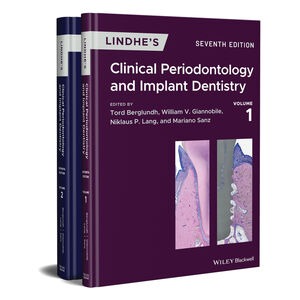
Lindhe's Clinical Periodontology and Implant Dentistry ; 2 Vol. Set ; 7th ed.
Provides an introduction to anatomy, including periodontal tissues, the edentulous ridge, the mucosa at teeth and implants, and osseointegration Discusses the epidemiology of periodontal and peri-implant diseases Explores the microbiology, including dental biofilms and calculus, periodontal infections, peri-implant infections, the pathogenesis of gingivitis and periodontitis, and the genetic susceptibility to periodontal disease Includes the latest perio- and peri-implant disease classifications Contains updated evidence-based preventive and treatment modalities for the treatment of periodontal and peri-implant diseases Features the latest evidence-based therapeutic alternatives on the use of dental implants to rehabilitate the lost dentition

Comprehensive biochemistry for dentistry : Textbook for dental students
Combines fundamental concepts of biochemistry and the dental sciences to provide an authentic, coherent and comprehensive text for dental students. It describes in simple language the intricate pathophysiology of biomolecules in health and in diseases of dental and oral tissues. This book also describes the evolution of biochemistry in a chronological order, provides information about the fundamental chemical structure, classification and biological significance of biomolecules, vitamins and hormones, enriched with flow charts and diagrams for easy understanding and quick reference. It includes chapters on nucleic acids, nutrition and serum enzymes and organ function tests, and offers an innovative approach to familiarize dental students with the biochemical composition of enamel, dentine, cementum and saliva, explaining the biochemical basis of dental caries, periodontal diseases, role of fluorides in caries prophylaxis, fluoride toxicity, and the role of amino acids as anti-hypersensitive agents

Clinical Cases in Periodontics ; 2nd ed.
Clinical Cases in Periodontics offers: A thorough introduction to periodontic examination and diagnosis, including documentation, plaque, and non-plaque induced gingivitis A comprehensive exploration of non-surgical periodontal therapy, including local anatomic factors contributing to periodontal disease and local drug delivery Practical discussions of resective periodontal therapy, including gingivectomy and flap osseous surgery In-depth examinations of regenerative therapy, including the treatment of furcation and guided bone regeneration The latest advances in inter-disciplinary care, encompassing orthodontics, prosthodontics, and implant dentistry
Biomarkers in periodontal health and disease : Rationale, benefits, and Future directions
This book examines all aspects of the progress being made towards the development of highly specific and sensitive biomarkers that will overcome the shortcomings of clinical assessments in periodontics. Readers will find the book to be an ideal summary of the state of the art in the field as biomarkers emerge that promise to facilitate periodontal diagnostics and permit timely, personally tailored interventions.
Angiogenesis in Inflammation : Mechanisms and Clinical Correlates
This volume relates the lessons learned from tumour biology applied to inflammation. This issue of Angiogenesis in Inflammation: Mechanisms and Clinical Correlates develops current knowledge on the mechanisms at the molecular and cellular levels as they relate to inflammation, including acute and chronic inflammation, neurogenic initiation, and the role of the multiple cellular components that comprise inflammation: granulocytes, macrophages, fibroblasts, dendritic cells and lymphocytes. This is related to inflammatory disease: not only the familiar angiogenesis dependent diseases of rheumatoid arthritis and psoriasis, but also loci such as the lung, gastric ulcers, the eye with uveitis, wound healing and periodontal disease and their therapy, how this knowledge may be used in the discovery of novel therapeutics. The volume brings together experts in each of these fields to link the molecular and cellular processes in angiogenesis to those of inflammation and disease, culminating in a discourse on areas for future therapies.
Advances in Periodontal Surgery : A Clinical Guide to Techniques and Interdisciplinary Approaches
This book describes practical, contemporary, and evidence-based surgical approaches for the treatment of diseases and conditions affecting the periodontium, including advanced forms of periodontal disease, gingival recession, and complex cases requiring interdisciplinary management.

A Clinician's guide to systemic effects of periodontal diseases
Serves as an ideal, easy-to-use reference for the practicing health professional. It summarizes the latest research on the systemic effects of periodontal diseases, discusses how the results of this research will impact on clinical practice, and aims to help the clinician to answer questions that may be posed by patients, medical colleagues, and the media.
