



الصفحة 2
الصفحة 2
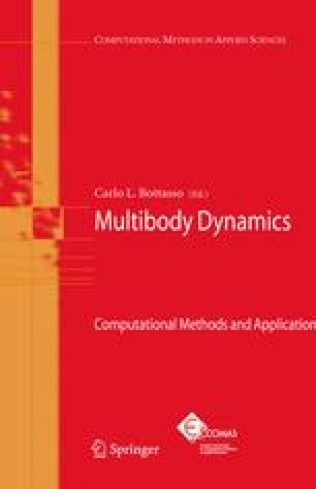
Multibody Dynamics : Computational Methods and Applications
Multibody Dynamics is an area of Computational Mechanics which blends together various disciplines such as structural dynamics, multi-physics - chanics, computational mathematics, control theory and computer science, in order to deliver methods and tools for the virtual prototyping of complex mechanical systems. Multibody dynamics plays today a central role in the modeling, analysis, simulation and optimization of mechanical systems in a variety of ?elds and for a wide range of industrial applications.

Modern Trends in Geomechanics
This book is loaded with rich and stimulating articles by a roster of brilliant scholars, reflecting some recent trends in the frontier research of geomechanics. This collection of 32 contributions stems from an international workshop on "Modern Trends of Geomechanics" held in Vienna. The contributions span a wide range of topics and an enormous range of physical scales, from micromechanics at grain scale to engineering problems at large scale; from laboratory and field testing over constitutive modelling to numerical analysis.
Modellistica numerica per problemi differenziali = Numerical modeling for differential problems
This text introduces the basic concepts for the numerical modeling of partial differential problems. We consider the classic elliptic, parabolic and hyperbolic linear equations, but also other equations, such as those of diffusion and transport, of Navier-Stokes, and the conservation laws, and we provide numerous physical examples underlying these equations. Then we analyze numerical resolution methods based on finite elements, finite differences, finite volumes, spectral methods and domain decomposition methods. In particular, the algorithmic and computer implementation aspects are discussed and various easy-to-use programs are provided.

Modelling and Control of Dynamical Systems : Numerical Implementation in a Behavioral Framework
This book reviews known topics of the Behavioral Approach and offers new theoretic results with the advantage of including control algorithms implemented numerically in the computer. In addition, issues of numerical analysis are also included. The programs and algorithms are MATLAB based.

Méthodes Numériques : Algorithmes, analyse et applications = Numerical Methods : Algorithms, Analysis and Applications
This book aims to present the theoretical and methodological foundations of numerical analysis. Particular attention is paid to the concepts of stability, precision and complexity of algorithms. Modern methods relating to the following topics are presented and analyzed in detail: solving linear and nonlinear systems, polynomial approximation, optimization, numerical integration, orthogonal polynomials, rapid transformations, ordinary differential equations. The techniques presented are illustrated by numerous tables and figures. Many examples and counter-examples are offered to allow the reader to develop his critical sense.

Méthodes mathématiques en chimie quantique : Une introduction = Mathematical methods in quantum chemistry : An introduction
This book presents the mathematical foundations of several models of quantum chemistry. It is intended for graduate students in mathematics (and possibly also for scientists from physics or chemistry interested in understanding the formal underpinnings of their models), and introduces techniques and methods from several mathematical fields, in particular variational techniques, nonlinear analysis, spectral theory and partial differential equations theory.

Matrix-Based Multigrid : Theory and Applications
Multigrid methods are often used for solving partial differential equations. This book introduces and analyzes the multigrid approach. The approach used here applies to both test problems on rectangular grids and to more realistic applications with complicated grids and domains.

Mathematical Tools for Data Mining : Set Theory, Partial Orders, Combinatorics
Mathematics is presented in a thorough and rigorous manner offering a detailed explanation of each topic, with applications to data mining such as frequent item sets, clustering, decision trees also being discussed. More than 400 exercises are included and they form an integral part of the material. Some of the exercises are in reality supplemental material and their solutions are included. The reader is assumed to have a knowledge of elementary analysis.

Inverse Problems : Mathematical and Analytical Techniques with Applications to Engineering
This book presents the theory of inverse spectral and scattering problems and of many other inverse problems for differential equations in an essentially self-contained way. An outline of the theory of ill-posed problems is given, because inverse problems are often ill-posed.

Introduzione al Calcolo Scientifico : Esercizi e problemi risolti con MATLAB = Introduction to scientific computing : Exercises and problem solved with MATLAB
Introduces the fundamental concepts for the numerical modeling of partial differential problems. We consider the classic linear elliptic, parabolic and hyperbolic equations, but also other equations, such as those of diffusion and transport, of Navier-Stokes, and the conservation laws. Numerous physical examples underlying these equations are provided, their main mathematical properties are studied, then numerical resolution methods based on finite elements, finite differences, finite volumes and spectral methods are proposed and analyzed. In particular, the algorithmic and computer implementation aspects are discussed and some easy-to-use programs in C ++ language are provided. The text does not presuppose an advanced mathematical knowledge of partial differential equations: the strictly indispensable concepts in this regard are reported in the Appendix. THE VOLUME is therefore suitable for students of scientific degree courses (Engineering, Mathematics, Physics, Chemistry, Information Sciences) and recommended for researchers from the academic and extra-academic world who want to approach this interesting branch of applied mathematics.

Introduction to the Tools of Scientific Computing
The book provides an introduction to common programming tools and methods in numerical mathematics and scientific computing. Unlike widely used standard approaches, it does not focus on any particular language but aims to explain the key underlying concepts. In general, new concepts are first introduced in the particularly user-friendly Python language and then transferred and expanded in various scientific programming environments from C / C ++, Julia and MATLAB to Maple. This includes different approaches to distributed computing.
Introduction to finite element analysis : A textbook for engineering students
Covers the basic concepts and applications of finite element analysis. It is specifically aimed at introducing this advanced topic to undergraduate-level engineering students and practicing engineers in a lucid manner. It also introduces a structural and heat transfer analysis software FEASTSMT which has wide applications in civil, mechanical, nuclear and automobile engineering domains.

Introduction to Bayesian Scientific Computing : Ten Lectures on Subjective Computing
Inverse problems are closely related to statistical inference problems, where the observations are used to infer on an underlying probability distribution. This connection between statistical inference and inverse problems is a central topic of the book. Inverse problems are typically ill-posed: small uncertainties in data may propagate in huge uncertainties in the estimates of the unknowns. To cope with such problems, efficient regularization techniques are developed in the framework of numerical analysis. The counterpart of regularization in the framework of statistical inference is the use prior information.

Instability in Models Connected with Fluid Flows II
Instability in Models Connected with Fluid Flows II presents chapters from world renowned specialists. The stability of mathematical models simulating physical processes is discussed in topics on control theory, first order linear and nonlinear equations, water waves, free boundary problems, large time asymptotics of solutions, stochastic equations, Euler equations, Navier-Stokes equations, and other PDEs of fluid mechanics. Fields covered include: the free surface Euler (or water-wave) equations, the Cauchy problem for transport equations, irreducible Chapman--Enskog projections and Navier-Stokes approximations, randomly forced PDEs, stability of equilibrium figures of uniformly rotating viscous incompressible liquid, Navier-Stokes equations in cylindrical domains, Navier-Stokes-Poisson flows in a vacuum.

Infinite matrices and their finite sections : An introduction to the limit operator method
In this book we are concerned with the study of a certain class of infinite matrices and two important properties of them: their Fredholmness and the stability of the approximation by their finite truncations. Let us take these two properties as a starting point for the big picture that shall be presented in what follows. Stability Fredholmness We think of our infinite matrices as bounded linear operators on a Banach space E of two-sided infinite sequences.The class of operators we are interested in consists of those bounded and linear operatorson E which can be approximated in the operator norm by b and matrices. We refer to them as band-dominated operators. Of course, these considerations 2 are not limited to the space E = . We will widen the selection of the underlying space E in three directions: p

Hierarchical Matrices : A Means to Efficiently Solve Elliptic Boundary Value Problems
Hierarchical matrices are an efficient framework for large-scale fully populated matrices arising, e.g., from the finite element discretization of solution operators of elliptic boundary value problems. In addition to storing such matrices, approximations of the usual matrix operations can be computed with logarithmic-linear complexity, which can be exploited to setup approximate preconditioners in an efficient and convenient way. Besides the algorithmic aspects of hierarchical matrices, the main aim of this book is to present their theoretical background. The book contains the existing approximation theory for elliptic problems including partial differential operators with nonsmooth coefficients.

Handbook of mathematics
This guide book to mathematics contains in handbook form the fundamental working knowledge of mathematics which is needed as an everyday guide for working scientists and engineers, as well as for students. Easy to understand, and convenient to use, this guide book gives concisely the information necessary to evaluate most problems which occur in concrete applications. In the newer editions emphasis was laid on those fields of mathematics that became more important for the formulation and modeling of technical and natural processes, namely Numerical Mathematics, Probability Theory and Statistics, as well as Information Processing. For the 5th edition, the chapters "Computer Algebra Systems" and "Dynamical Systems and Chaos" were fundamentally revised, updated and expanded. In the chapter "Algebra and Discrete Mathematics" a section on "Finite Fields and Shift Registers" was added.

Guidelines for the use of advanced numerical analysis
It is an authoritative guide that explains in detail the potential restrictions and pitfalls and so help engineers undertake advanced numerical analysis. It discusses the major approximations involved in nonlinear numerical analysis and describes some of the more popular constituitive models currently available and explores their strengths and weaknesses.

Global Smoothness and Shape Preserving Interpolation by Classical Operators
This monograph examines and develops the Global Smoothness Preservation Property (GSPP) and the Shape Preservation Property (SPP) in the field of interpolation of functions. The study is developed for the univariate and bivariate cases using well-known classical interpolation operators of Lagrange, Grünwald, Hermite-Fejér and Shepard type. One of the first books on the subject, it presents interesting new results alongwith an excellent survey of past research.

Frontiers of Numerical Analysis : Durham 2004
Contains lecture notes on four topics at the forefront of research in computational mathematics. This book presents a self-contained guide to a research area, an extensive bibliography, and proofs of the key results. It is suitable for professional mathematicians who require an accurate account of research in areas parallel to their own.
