



الصفحة 2
الصفحة 2
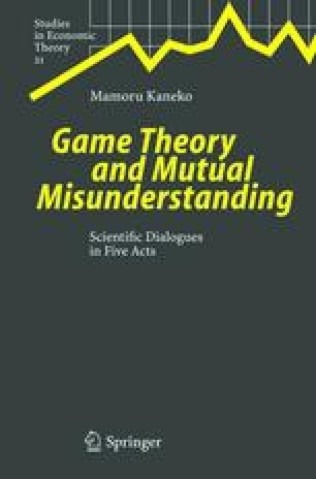
Game Theory and Mutual Misunderstanding : Scientific Dialogues in Five Acts
This book consists of five acts and two interludes, which are all written as dialogues between three main characters and other supporting characters. Each act discusses the epistemological, institutional and methodological foundations of game theory and economics, while using various stories and examples. A featured aspect of those discussions is that many forms of mutual misunderstanding are involved in social situations as well as in those fields themselves. One Japanese traditional comic story called the Konnyaku Mondo is representative and gives hints of how our thought is constrained by incorrect beliefs. Each dialogue critically examines extant theories and common misunderstanding in game theory and economics in order to find possible future developments of those fields.

Fuzzy-Neuro Approach to Agent Applications : From the AI Perspective to Modern Ontology
The book provides a full explanation of the concepts and theories of intelligent agents and agent-based systems. Providing a comprehensive theoretical background, the author covers modern artificial intelligence topics such as ontologies, neural networks, chaos theory, fuzzy logics and genetic algorithms. Finally, the author details how the iJADK toolkit (intelligent Java agent development kit for intelligent e-business applications) can be used in the design and implementation phases of real applications.
Fundamental networking in Java
This book is an in-depth learning and teaching resource for the understanding and programming of TCP/IP networking in Java. It covers 'everything you can do to a socket in Java' and explains when and why you might - or might not - want to do that. The book covers TCP and UDP using both blocking streams and non-blocking channels, and also SSL secure sockets in both blocking and non-blocking modes, unravelling the mysteries of the SSLEngine in the process. Particular attention is paid to the neglected topics of multi-homing and multicast. A unique chapter on client and server architectures uses a quantitative approach rather than the usual design-patterns approach, leading to architectures with predictable performance rather than just coding elegance.

Fruits and Nuts
Genome Mapping and Molecular Breeding in Plants presents the current status of the elucidation and improvement of plant genomes of economic interest. The focus is on genetic and physical mapping, positioning, cloning, monitoring of desirable genes by molecular breeding and the most recent advances in genomics. The series comprises seven volumes: Cereals and Millets; Oilseeds; Pulses, Sugar and Tuber Crops; Fruits and Nuts; Vegetables; Technical Crops; and Forest Trees. Fruits and nuts form the largest group among crop plants. Several constraints such as long life cycle, heterozygosity and large plant size caused comparatively slow research progress in the past. The chapters on 20 fruit and nut crops authored by 56 renowned scientists from 12 countries include for the first time comprehensive reviews on mango, banana, olive, pineapple, pistachio, persimmon and papaya. Other crops covered are apple, grape, cherry, plum, peach, pear, apricot, strawberry, raspberry, blueberry, almond, citrus and avocado.

FPGA Implementations of Neural Networks
During the 1980s and early 1990s there was signi?cant work in the design and implementation of hardware neurocomputers. Nevertheless, most of these efforts may be judged to have been unsuccessful: at no time have have ha- ware neurocomputers been in wide use. This lack of success may be largely attributed to the fact that earlier work was almost entirely aimed at developing custom neurocomputers, based on ASIC technology, but for such niche - eas this technology was never suf?ciently developed or competitive enough to justify large-scale adoption. On the other hand, gate-arrays of the period m- tioned were never large enough nor fast enough for serious arti?cial-neur- network (ANN) applications.

Flow cytometry in hematopathology : A visual approach to data analysis and interpretation
Although instrumentation and laboratory techniques for flow cytometry (FCM) immunophenotyping of hematopoietic malignancies are well documented, there is relatively little information on how best to perform data analysis, a critical step in FCM testing. In Flow Cytometry in Hematopathology: A Visual Approach to Data Analysis and Interpretation, three physicians highly experienced in laboratory hematopathology and FCM offer a unique systematic approach to FCM data analysis and interpretation based on the visual inspection of dual parameter FCM graphics. This step-by-step approach to optimal FCM data analysis is demonstrated by means of numerous FCM graphics derived from actual well-documented clinical cases.The focus of the additional material is on the TCR-Vb eight-tube kit which has greatly facilitated the evaluation mature T-cell disorders, and on the DNA dye DRAQ5 for improved grading of malignant lymphoma. The authors also include notes on "tricks of the trade" and pitfalls to avoid. The discussion, covering leukemias, lymphomas, and other conditions, moves from simple to complex specimens, with an emphasis on visual pattern analysis.

Finite Elements III : First-Order and Time-Dependent PDEs
Volume III is divided into 28 chapters. The first eight chapters focus on the symmetric positive systems of first-order PDEs called Friedrichs' systems. This part of the book presents a comprehensive and unified treatment of various stabilization techniques from the existing literature. It discusses applications to advection and advection-diffusion equations and various PDEs written in mixed form such as Darcy and Stokes flows and Maxwell's equations. The remainder of Volume III addresses time-dependent problems: parabolic equations (such as the heat equation), evolution equations without coercivity (Stokes flows, Friedrichs' systems), and nonlinear hyperbolic equations (scalar conservation equations, hyperbolic systems). It offers a fresh perspective on the analysis of well-known time-stepping methods. The last five chapters discuss the approximation of hyperbolic equations with finite elements. Here again a new perspective is proposed.

Financial mathematics, derivatives and structured products
Introduces readers to the financial markets, derivatives, structured products and how the products are modelled and implemented by practitioners. In addition, it equips readers with the necessary knowledge of financial markets needed in order to work as product structurers, traders, sales or risk managers. As the book seeks to unify the derivatives modelling and the financial engineering practice in the market, it will be of interest to financial practitioners and academic researchers alike. Further, it takes a different route from the existing financial mathematics books, and will appeal to students and practitioners with or without a scientific background. The book can also be used as a textbook for the following courses: Financial Mathematics (undergraduate level) Stochastic Modelling in Finance (postgraduate level) Financial Markets and Derivatives (undergraduate level) Structured Products and Solutions (undergraduate/postgraduate level)

Evolution of Teaching and Learning Paradigms in Intelligent Environment
This book is a fascinating window on the evolution of teaching and learning paradigms in intelligent environments. The three Australian authors include a number of chapters on issues of real relevance to today's teaching practice, including an introduction to the evolution of teaching and learning paradigms

Evidence-Based Orthodontics ; 2nd ed.
Offers practical strategies for professionals to incorporate EBO in their daily practices Presents brief summaries of the best evidence for a wide range of clinical topics Incorporates information from over 400 systematic reviews, listed by topic

European Oncology Leaders : The CancerFutures Collection 2001-2004
CancerFutures was launched in 2001 with the aim of increasing knowledge about the complex world of cancer care through people and facts. Cover Story and Masterpiece are two key sections of the magazine that have featured in-depth interviews with some of Europe’s most influential oncology leaders – people who have been pioneers of the art and science of oncology over the past 30 years. These interviews comprise a unique collection of stories that give insight into the many personal and professional challenges these leaders have faced in building their careers and pushing forward the boundaries of oncology practice. The European School of Oncology is pleased to launch the CancerFutures Collection which will be of interest to all members of the European oncology community, both today and in the future. This collection acknowledges the tremendous contribution that these leaders have made to cancer care and pays tribute to their dedication and drive. It will provide encouragement for all those confronted with difficulties in building their careers, and will give some inspiration for future leaders.

EQ-5D value sets
For various reasons, cost benefit analysis is usually rejected in favour of cost-effectiveness or cost-utility analyses, often involving the estimation of the incremental cost per Quality Adjusted Life Year (QALY) gained (Drummond et al, 2005). The estimation of QALYs gained requires valuations for all relevant health states on a scale anchored at 1 = Full health and 0 = Dead. The EQ-5D is widely used in this context and a number of value sets are available for all the health states generated by the EQ-5D descriptive system. These can be readily applied to health outcomes measured as EQ-5D profiles. EQ-5D has become one of the valuation approaches recommended by several reimbursement authorities and academic bodies in European countries

Enzymes and drugs
Enzyme dysfunction, an essential catalyst for the smooth running of biochemical reactions and the maintenance of vital processes, is at the root of many pathologies that have paved the way for the development of numerous drugs. Aimed at pharmacists, biologists, biochemists, doctors, veterinarians, medicinal chemists and students from a wide range of disciplines, Enzymes and Drugs brings together, for the first time, extensive documentation highlighting the relationships between a large number of drugs and enzymes. The book also highlights new prospects for therapeutic discoveries offered by enzyme targeting. Numerous applications have been developed thanks to strategies for studying enzyme inhibition or activation, as well as the development of allosteric effectors, presented with their advantages and disadvantages. Various rare diseases, known as "orphan" diseases, have resulted from enzyme deficiency or absence. For their treatment, the introduction of substitute enzymes has led to major therapeutic advances.

English, French & German comparative law
This comparative analysis considers the differing approaches to important areas of law in England, France and Germany. In particular, constitutions, sources of law, rights against the state to prevent abuse of power, and rights of private individuals and organisations against each other in tort and contract are examined and compared, and the system of courts is also considered. Updated and revised, each sub-topic is introduced with the relevant material in the English system.

English in the German-Speaking World
Borrowings from English in present-day German, as well as the use of English in public places, is also discussed, as is the use of English by non-Germans living in Germany, and the situation of Germany as a country with English as a foreign language.

English Grammar in Use Supplementary Exercises Book with Answers : To Accompany English Grammar in Use
The first choice for intermediate (B1-B2) learners. This book contains 200 varied exercises to provide learners with extra practice of the grammar they have studied.

Employment Law for Business and Human Resources Professionals
"The revised fourth edition features changes in the Employment Standards Act and Bill 148 (Fair Workplaces Better Jobs Act). Bill 148's passage also impacts the content in numerous other chapters and the changes to the ESA resulting from Bill 47 will result in updates to the Employment Standards Act chapter.
Elements of Robotics
Bridges the gap between playing with robots in school and studying robotics at the upper undergraduate and graduate levels to prepare for careers in industry and research. Robotic algorithms are presented formally, but using only mathematics known by high-school and first-year college students, such as calculus, matrices and probability. Concepts and algorithms are explained through detailed diagrams and calculations.
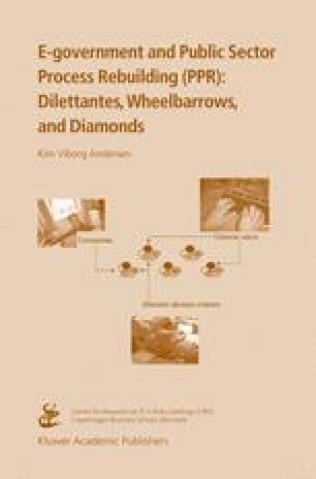
E-government and public sector process rebuilding : Dilettantes, wheel Barrows, and Diamonds
E-government and Public Sector Process Rebuilding: Dilettantes, Wheelbarrows, and Diamonds provides an input to rebuild and improve the processes in which the public sector perform activities and interact with the citizens, companies, and the formal elected decision-makers. Through eleven chapters, the book emphasizes information systems (IS) as the vehicle for redirecting the public sector towards its key customers. The book stresses serious capability challenges inhibiting the digital transformation using activity and customer centric applications.
Education and the knowledge society : Information technology supporting human development
Engineering the Knowledge Society (EKS) - Event of the World Summit on the Information Society (WSIS) This book is the result of a joint event of the World Federation of Engineering Organisations (WFEO) and the International Federation for Information Processing (IFIP) held during the World Summit on the Information Society (WSIS) in Geneva, Switzerland, December 11 - 12, 2003. The organisation was in the hands of Mr. Raymond Morel of the Swiss Academy of Engineering Sciences (SATW). Information Technology (or Information and Communication Technology) cannot be seen as a separate entity. Its application should support human development and this application has to be engineered. Education plays a central role in the engineering of Information and Communication Technology (ICT) for human support.
