



الصفحة 2
الصفحة 2

Internal friction in metallic materials : A handbook
This book is a unique collection of experimental data in the field of internal friction, anelastic relaxation, and damping properties of metallic materials. It reviews virtually all anelastic relaxation phenomena ever published, and also most of the internal friction effects based on other types of dissipation of mechanical (elastic) energy. Furthermore, the reader is also supplied with explanations of the basic physical mechanisms of internal friction, a summary of typical effects for different groups of metals, and more than 2000 references to original papers.

Interfacial Nanochemistry : Molecular Science and Engineering at Liquid-Liquid Interfaces
The presence of liquid-liquid interface means that real liquids are far from ideal liquids that must be miscible with any kinds of liquids and have no interface. Thus it can be said that the non-ideality of liquids might generate the liquid-liquid interface indeed and that biological systems might be generated from the non-ideal interface. The liquid-liquid interface has been, therefore, studied as a model of biological membrane. From pairing two-phases of gas, liquid and solid, nine different pairs can be obtained, which include three homo-pairs of gas-gas, liquid-liquid and solid-solid pairs. The gas-gas interface, however, is practically no use under the ordinary conditions. Among the interfaces produced by the pairing, the liquid-liquid interface is most slippery and difficult to be studied experimentally in comparison with the gas-liquid and solid-liquid interfaces, as the liquid-liquid interface is flexible, thin and buried between bulk liquid phases. Therefore, in order to study the liquid-liquid interface, the invention of innovative measurement methods has a primary importance.

Integral Foam Molding of Light Metals : Technology, Foam Physics and Foam Simulation
This book shows in three parts the technology, the fundamentals and the simulation models for the Integral Foam Molding of Light Metals Part I: “Technology” shows for the first time that foaming of metals is possible by applying molding techniques very similar to polymer integral foam molding. Part II: “Physics” is devoted to the physics of foaming with special emphasis on the very short time scale which is characteristic for integral foam molding. Part III: “Numerical Simulation” presents a new lattice Boltzmann approach for the treatment of free surfaces is developed and applied on foam evolution problems. For the first time, the numerical simulation of foam evolution starting from nucleation until decay is accessible.

Inorganic and Organometallic Macromolecules : Design and Applications
Polymers containing metals and metal-like atoms are essential materials for the extended opportunities and demands of the 21st century. This book describes the synthesis of some of these polymers and their potential application in many fields such as materials, biomedicine, engineering, communications, and ceramics.

Inelastic analysis of solids and structures
This book presents computational procedures for the stress integration of inelastic constitutive relations within the incremental-iterative finite element analysis and general strain-driven problems of solids and structures.

Industrial Project Management : Planning, Design, and Construction
This book describes – in a precise but practical way – the most recent principles and techniques of project management, at the highest international standards, with a fully company-wide, process-based, multi-project approach. It is unique because of the integration of project management fundamentals with the practices of international contracting, which characterize planning, design and construction of large works (such as plants and machinery) in the industrial sectors. The rigorous academic approach is mixed with the managerial contribution of Danieli, one of the largest worldwide suppliers of equipment and plants to the metals industry. The project management of the latter is described alongside how it can be effectively applied to win and manage large international contracts.

Hydrogen Materials Science and Chemistry of Carbon Nanomaterials
The 2005 International Conference “Hydrogen Materials Science and Chemistry of Carbon Nanomaterials” (ICHMS’2005) was held in September 5-11, 2005 in the remarkable city Sevastopol (Crimea, Ukraine) known for its heroic and unusual th fate. In the tradition of the earlier ICHMS conferences, this 9 ICHMS’2005 meeting served as an multidisciplinary forum for the presentation and discussion of the most recent research on transition to hydrogen-based energy systems, technologies for hydrogen production, storage, utilization, materials processing and chemical behavior, energy and environmental problems. The aim of ICHMS’2005 was to provide the wide overview of the latest scientific results on basic research and technological applications of hydrogen interactions with metals and other materials.

Heterocyclic Supramolecules I
Contributing to this book of six chapters were 14 scientists working in the field of supramolecular chemistry, with a special focus on molecular recognition, functional materials, and nanocarbon science. … Overall, this book is an informative summary on the progress that researchers have made over the past decade toward generating useful functional materials from heterocyclic supramolecules. This is an advanced text that should be most useful to those with an established background in supramolecular sciences and engineering.

Handbook of Practical X-Ray Fluorescence Analysis
X-Ray Fluorescence analysis (XRF) is a reliable multi-elemental and nondestructive analytical method widely used in research and industrial applications. This practical handbook provides self-contained modules featuring XRF instrumentation, quantification methods, and most of the current applications. The book gives a survey of the theoretical fundamentals, analytical instrumentation, software for data processing, various excitation regimes including gracing incidents and microfocus measurements, quantitative analysis, applications in routine and micro analysis, mineralogy, biology, medicine, criminal investigations, archeology, metallurgy, abrasion, microelectronics, environmental air and water analysis. It gives the basic knowledge on this technique, information on analytical equipment and guides the reader to the various applications.

Handbook of damage mechanics : Nano to macro Scale for materials and structures
A wide range of materials that engineers may encounter are covered, including metals, composites, ceramics, polymers, biomaterials, and nanomaterials. The internationally recognized team of contributors employs a consistent and systematic approach, offering readers a user-friendly reference that is ideal for frequent consultation.

Half-metallic Alloys : Fundamentals and Applications
Half-metals are particular ferromagnetic materials which can be considered as hybrids between metals and semiconductors. A particular feature of these materials is that electrons at the Fermi level show complete spin polarization making them prime targets for research into suitable divices for spin electronics. This book is both an introduction and state-of-art survey of the latest advances in the understanding and applications of Heusler alloys and related compounds.
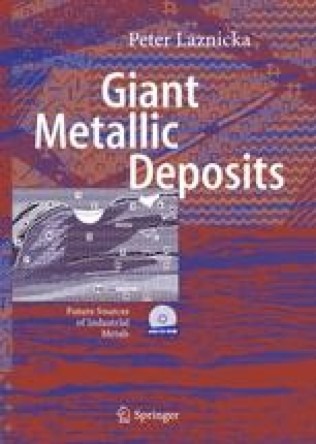
Giant Metallic Deposits : Future Sources of Industrial Metals
Geological characteristics of giant metallic deposits and their setting and the politico-economic constraints of access to and exploitation in prospective areas have been a "hot topic" in the past fifteen years, but the knowledge generated and published has been one-sided, scattered and fragmented. This is the first comprehensive book on the subject that provides body of solid facts rather than rapidly changing theories, written by author of the Empirical Metallogeny book series and founder of the Data Metallogenica visual knowledge system on mineral deposits of the world, who has had an almost 40 years long international academic and industrial experience. The book will provide abundant material for comparative research in metallogeny, practical information for the explorationists as to where to look for the "elephants", and some inspiration for commodity investors.

Fundamentals of Radiation Materials Science : Metals and Alloys
adiation Materials Science teaches readers the fundamentals of the effects of radiation on metals and alloys. When energetic particles strike a solid, numerous processes occur that can change the physical and mechanical properties of the material. Metals and alloys represent an important class of materials that, by virtue of their use in nuclear reactor cores, are subject to intense radiation fields. Radiation causes metals and alloys to swell, distort, blister, harden, soften and deform. This textbook and reference covers the basics of particle-atom interaction for a range of particle types, the amount and spatial extent of the resulting radiation damage, the physical effects of irradiation and the changes in mechanical behavior of irradiated metals and alloys. Concepts are developed systematically and quantitatively, supported by examples, references for further reading and problems at the end of each chapter

Fuel Cell Technology : Reaching Towards Commercialization
The Engineering Materials and Processes series focuses on all forms of materials and the processes used to synthesise and formulate them as they relate to the various engineering disciplines.The series deals with a diverse range of materials: ceramics, metals (ferrous and non-ferrous), semiconductors, composites, polymers biomimetics, etc. Each monograph in the series is written by a specialist and demonstrates how enhancements in materials and the processes associated with them can improve performance in the field of engineering in which they are used.

Ferro- and Antiferroelectricity : Order/Disorder versus Displacive
Solid-state systems are frequently classi?ed according to their physical, str- tural or chemical properties. Such schemes are extremely helpful since pr- erties related to any such classi?cation are typically known and facilitate id- tifying solids with special material classes. The best-known examples of these schemes are conductivity or resistivity measurements by means of which m- als are easily distinguishable from insulators. However, frequently clear-cut decisions between material classes are not possible, since anisotropy, chemical composition, binding forces and local effects wash out distinct properties and lead to competition or coexistence. Such unresolved situations are especially typical for transition metal oxides that exhibit a variety of ground-state properties in a fascinating way.

Environmental Risk Assessment : Quantitative Measures, Anthropogenic Influences, Human Impact
The world is a dirty place and getting dirtier all the time. The reasons for this ever-increasing lack of cleanliness are not hard to find, being basically caused by the actions of the six billion people who inhabit the planet. The needs of the people for air, water, food, housing, clothing, heating, materials, oil, gas, minerals, metals, chemicals, and so forth have, over the centuries, given rise to a variety of environmental problems that have been exacerbated or been newly created by the industrialization of the world, the increase in population, and the increase in longevity of the population. The costs of cleaning even fractions of the known environmental problems are truly enormous, as detailed in the volume Environmental Risk Analysis (I. Lerche and E. Paleologos, 2001, McGraw-Hill). The chances of causing new environmental problems, and their associated costs of clean up, are equally challenging in terms of anthropogenic influences and also of the natural environmental problems that can be triggered by humanity.

Environmental Chemistry : Green Chemistry and Pollutants in Ecosystems
Environmental chemistry is a new, fast developing science aimed at deciphering fundamental mechanisms ruling the behaviour of pollutants in ecosystems. Applying this knowledge to current environmental issues leads to the remediation of environmental media, and to new, low energy, low emission, sustainable processes. This book describes the state-of-the-art advances regarding the pollution of water, soils, atmosphere, food and living organisms by toxic metals, fossil fuels, pesticides and other organic pollutants. Furthermore, the eco-toxicology section presents novel bio-assays to assess the toxicity of various pollutants such as dioxins and endocrine disrupters within complex media. The green chemistry section highlights novel chemical reactions based upon environmentally friendly conditions. The analytical chemistry section describes very sensitive methods which trace the fate of pollutants in complex ecosystems.

Engineering Damage Mechanics : Ductile, Creep, Fatigue and Brittle Failures
Engineering Damage Mechanics is deliberately oriented toward applications of Continuum Damage Mechanics to failures of mechanical and civil engineering components in ductile, creep, fatigue and brittle conditions depending upon the thermomechanical loading and the materials: metals and alloys, polymers, elastomers, composites, concretes. Nevertheless, to help engineers, researchers, beginners or not, the first two chapters are devoted to the main concepts of damage mechanics and to the associated computational tools.

Electrochemical processes and corrosion in reinforced concrete
Some reinforced concrete structures prematurely corrode as they age, with significant financial implications, but it is not immediately clear why some are more durable than others. This book looks at the various mechanisms for corrosion and how what seemed to be a relatively simple matter has become more complex the further it is understood due to the properties of concrete, steel and the way reinforced concrete structures are constructed. The significance of electrochemical processes is identified with recent research using new technology discussed.

Ecological and Health Effects of Building Materials
Deals with the present adverse effects of using precarious building materials on the ecology and human health. Also, the detailed discussions on the novel and greener construction materials and their utilization as an alternative to the conventional harmful existing methods and materials are also presented in the subsequent chapters. This book helps to fill the research gaps in the existing prior-art knowledge in the field of sustainable construction and green building materials and methods giving due importance to ecology and health, specifically to the fields of sustainable structural engineering, sustainable geotechnical engineering, sustainable road engineering, etc.
