



الصفحة 2
الصفحة 2

Metalliferous Sediments of the World Ocean : Fundamental Theory of Deep-Sea Hydrothermal Sedimentation
Dramatic advances in understanding global tectonics have been made in the last half century and the information and specific data acquired on the floor of the World Ocean by the scientific community probably has exc- ded that available in all previous time. With the benefit of new technology and advanced concepts in the earth sciences extensive exploration of the deep seabed became possible, and has been carried out in many parts of the world. Many features have been recognized and data recorded that are vital for understanding the fundamental processes that shape the earth=s surface and control the habitable environment. The data collected to date on the o- an floor and its physical environment greatly exceeds our understanding and appreciation of their fundamental importance in the earth sciences, and our ability to apply this knowledge effectively in improving our way of life.

Metal-containing molecules and nanomaterials : from diagnosis to therapy
Since the discovery and successful deployment of salvarsan to treat syphilis, as well as cisplatin as a cancer drug, the field of metallodrugs has been flourishing. In addition to therapeutic applications, metals and metal-containing molecules have properties, such as an electrochemical or an optical signal, used to diagnose biologically relevant molecules or unravel cellular metabolism. Metals are part of the essential elements for life, and of increased attention in nutraceuticals. Most of the current diagnosis processes, therapeutics and nutraceuticals are based on organic molecules. MILS-26 reviews the most recent metal-containing molecules and nanomaterials for diagnosis and therapy

Metal Oxide Nanoparticles : Formation, Functional Properties, and Interfaces ; 2 Volume Set
Metal oxide nanoparticles are integral to a wide range of natural and technological processes—from mineral transformation to electronics. Additionally, the fields of engineering, electronics, energy technology, and electronics all utilize metal oxide nanoparticle powders. Metal Oxide Nanoparticles: Formation, Functional Properties, and Interfaces presents readers with the most relevant synthesis and formulation approaches for using metal oxide nanoparticles as functional materials. It covers common processing routes and the assessment of physical and chemical particle properties through comprehensive and complementary characterization methods.

Metal Catalyzed Reductive C-C Bond Formation : A Departure from Preformed Organometallic Reagents
The prototypical catalytic reductive C–C bond formations, the Fischer-Tropsch reaction [1] and alkene hydroformylation [2], were discovered in 1922 and 1938, respectively [3,4]. These processes, which involve reductive coupling to carbon monoxide, have long been applied to the industrial manufacture of commodity chemicals [5]. Notably, alkene hydroformylation, also known as the oxo-synthesis, has emerged as the largest volume application of homogeneous metal catalysis, accounting for the production of over 7 million metrictons of aldehyde annually. Despite the impact of these prototypical reductive C–C bond formations, this field of research lay fallow for several decades.

Metal Catalyzed Cascade Reactions
Transition metal-catalyzed cascade reactions are an elegant approach to complex molecular scaffolds. Besides their esthetics and increase in structural complexity, they have also become mechanistic challenges for the combination of organometallic elementary steps. As a consequence, cascade reactions have revolutionized synthetic strategies and conceptual thinking. The authors highlight cyclization via carbopalladation and acylpalladation and Heck-pericyclic sequences. They discuss p-allyl palladium-based cascade reactions, Michael-type additions as an entry to transition-metal-promoted cyclizative transformations, and sequential or consecutive palladium-catalyzed processes, and show Pauson-Khand cascades, metal-catalyzed cyclizations of acyclic precursors, as well as cascade and sequential ruthenium-catalyzed transformations. Therefore, the reader finds overview of an exciting and highly dynamic field of a new and innovative methodological concept

Mechanochemistry in Nanoscience and Minerals Engineering
Mechanochemistry as a branch of solid state chemistry enquires into processes which proceed in solids due to the application of mechanical energy. This provides a thorough, up to date overview of mechanochemistry of solids and minerals. Applications of mechanochemistry in nanoscience with special impact on nanogeoscience are described. Selected advanced identification methods, most frequently applied in nanoscience, are described as well as the advantage of mechanochemical approach in minerals engineering. Examples of industrial applications are given. Mechanochemical technology is being applied in many industrial fields: powder metallurgy (synthesis of nanometals, alloys and nanocompounds), building industry (activation of cements), chemical industry (solid waste treatment, catalyst synthesis, coal ashes utilization), minerals engineering (ore enrichment, enhancement of processes of extractive metallurgy), agriculture industry (solubility increase of fertilizers), and pharmaceutical industry (improvement of solubility and bioavailability of drugs).

Matrix Metalloproteinases in Tissue Remodelling and Inflammation
Matrix metalloproteinases (MMPs) are proteolytic enzymes believed to be involved in many physiological and pathological processes associated with inflammatory reactions. This volume presents new advances in the involvement of MMPs in various diseases associated with inflammatory processes. Moreover, the recent development of selective and non selective inhibitors of MMPs provides new insights in the relationship between activation of inflammatory cells and tissue remodelling and advises new therapeutic possibilities for the treatment of inflammatory diseases.

Internal friction in metallic materials : A handbook
This book is a unique collection of experimental data in the field of internal friction, anelastic relaxation, and damping properties of metallic materials. It reviews virtually all anelastic relaxation phenomena ever published, and also most of the internal friction effects based on other types of dissipation of mechanical (elastic) energy. Furthermore, the reader is also supplied with explanations of the basic physical mechanisms of internal friction, a summary of typical effects for different groups of metals, and more than 2000 references to original papers.

Inorganic and Organometallic Polymers
This book has its origins in courses taught by the author to various und- graduate and graduate students at the Indian Institute of Technology, K- pur, India. The diversity of inorganic chemistry and its impact on polymer chemistry has been profound. This subject matter has grown considerably in the last decade and the need to present it in a coherent manner to young minds is a pedagogic challenge. The aim of this book is to present to the students an introduction to the developments in Inorganic and - ganometallic polymers. This book is divided into eight chapters. Chapter 1 provides a general overview on the challenges of Inorganic polymer synthesis. This is f- lowed by a survey of organic polymers and also includes some basic f- tures of polymers. Chapters 3-8 deal with prominent families of inorganic and organometallic polymers. Although the target group of this book is the undergraduate and graduate students of chemistry, chemical engineering and materials science it is also hoped that chemists and related scientists in industry would find this book useful.

Inorganic and Organometallic Macromolecules : Design and Applications
Polymers containing metals and metal-like atoms are essential materials for the extended opportunities and demands of the 21st century. This book describes the synthesis of some of these polymers and their potential application in many fields such as materials, biomedicine, engineering, communications, and ceramics.

Hot cracking phenomena in welds II
This is the second in a series of compendiums devoted to weld hot cracking phenomena, where this subject has been further scrutinized, bringing to bare the most current thoughts on this complex and diverse subject. With 22 technical papers in total, this book is divided in such a way that specific classifications of hot cracks are examined in detail, including solidification, liquation, and ductility dip cracking. The first chapter looks at solidification cracking theory, applying the most modern approaches to modelling weld solidification. Also provided here is a comprehensive review of cracking models. This is followed by two chapters characterizing solidification cracking behaviour for specific alloy systems: ferrous plus nickel-based alloys and aluminium alloys, respectively. The fourth chapter considers liquation cracking in ferrous alloys, and the fifth examines ductility-dip cracking.

Hot cracking phenomena in welds
The first chapter provides an overview of the various hot cracking phenomena. Different mechanisms of solidification cracking proposed in the past decades are summarized and new insight is particularly given into the mechanism of ductility dip cracking. The effects of different alloying elements on the hot cracking resistance of various materials are shown in the second chapter and, as a special metallurgical effect, the initiation of stress corrosion cracking at hot cracks has been highlighted. The third chapter outlines how numerical analyses and other modelling techniques can be utilized to describe hot cracking phenomena and how such results might contribute to the explanation of the mechanisms. Various hot cracking test procedures are presented in the final chapter with a special emphasis on standardization. For the engineering and natural scientists in research and development the book provides both, new insight and a comprehensive overview of hot cracking phenomena in welds. The contributions additionally give numerous individual solutions and helpful advice for international welding engineers to avoid hot cracking in practice. Furthermore, it represents a very helpful tool for upper level metallurgical and mechanical engineering students.

Handbook of Practical X-Ray Fluorescence Analysis
X-Ray Fluorescence analysis (XRF) is a reliable multi-elemental and nondestructive analytical method widely used in research and industrial applications. This practical handbook provides self-contained modules featuring XRF instrumentation, quantification methods, and most of the current applications. The book gives a survey of the theoretical fundamentals, analytical instrumentation, software for data processing, various excitation regimes including gracing incidents and microfocus measurements, quantitative analysis, applications in routine and micro analysis, mineralogy, biology, medicine, criminal investigations, archeology, metallurgy, abrasion, microelectronics, environmental air and water analysis. It gives the basic knowledge on this technique, information on analytical equipment and guides the reader to the various applications.

Handbook of Instruments in Dentistry
Instrumentation is an important aspect of surgical and dental clinical practice. The instruments have evolved over the period of time in terms of metallurgy, design and cost effectiveness. Many types of instruments are commercially available but it is a big dilemma for the clinician to decide as to which is the best. To optimise the clinical results, choice of proper instruments and its proper and effective utilization is of immense importance. This aspect is badly neglected in the curricula and no structured training is offered. The clinician develops the skill of instrumentation by self-perception or by imitation. The choice of instrument also varies from clinician to clinician as it depends upon the skill and convenience of the individual clinician.

Half-metallic Alloys : Fundamentals and Applications
Half-metals are particular ferromagnetic materials which can be considered as hybrids between metals and semiconductors. A particular feature of these materials is that electrons at the Fermi level show complete spin polarization making them prime targets for research into suitable divices for spin electronics. This book is both an introduction and state-of-art survey of the latest advances in the understanding and applications of Heusler alloys and related compounds.
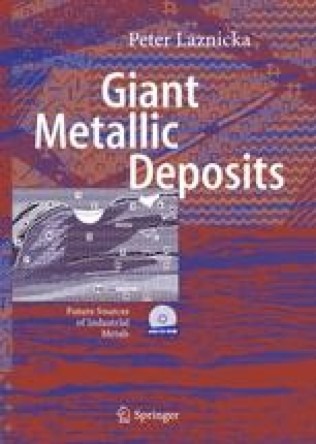
Giant Metallic Deposits : Future Sources of Industrial Metals
Geological characteristics of giant metallic deposits and their setting and the politico-economic constraints of access to and exploitation in prospective areas have been a "hot topic" in the past fifteen years, but the knowledge generated and published has been one-sided, scattered and fragmented. This is the first comprehensive book on the subject that provides body of solid facts rather than rapidly changing theories, written by author of the Empirical Metallogeny book series and founder of the Data Metallogenica visual knowledge system on mineral deposits of the world, who has had an almost 40 years long international academic and industrial experience. The book will provide abundant material for comparative research in metallogeny, practical information for the explorationists as to where to look for the "elephants", and some inspiration for commodity investors.
Functional Biomaterials : Drug Delivery and Biomedical Applications
Explores in depth a wide range of functional biomaterials-based systems for drug, gene delivery, and biomedical aspects. The chapters cover newer technologies such as polymeric micelle, pH-responsive biomaterials, stimuli-responsive hydrogels, silk fibroin, inorganic biomaterials, synthetic biomaterials, 3D printed biomaterials, metallic biomaterials, ceramic and hybrid biomaterials. It also describes the theranostic approaches for cancer therapy, the biomaterials-based nanofibers scaffolds in tissue engineering, as well as the strategies applications of metallic biomaterials for the medical and dental prosthetic field.

Flux Pinning in Superconductors
Covers the flux pinning mechanisms and properties and the electromagnetic phenomena caused by the flux pinning common for metallic, high-Tc and MgB2 superconductors. The condensation energy interaction known for normal precipitates or grain boundaries and the kinetic energy interaction proposed for artificial Nb pins in Nb-Ti, etc., are introduced for the pinning mechanism.

Ferrous Materials : Steel and Cast Iron
This book closes the gap in the treatment of steel and cast iron. Each chapter takes into account the gradual transitions between the two types of ferrous materials. The authors demonstrate that steel and cast iron are versatile and customisable materials which will continue to play a key role in the future.

Equilibrium Between Phases of Matter : Phenomenology and Thermodynamics
The phase behaviour of materials and their thermodynamic properties are a central subject in all fields of materials research. The first Volume of the work, meant for graduate students in chemistry, geology, physics, and metallurgy, and their engineering counterparts, is split up in three levels, such that from level to level the portion and importance of thermodynamics and mathematics are increased. In the ground level it is shown that the basic principles of phase equilibria can be understood without the use of thermodynamics – be it that the concept of chemical potential is introduced right from the beginning. The intermediate level is an introduction to thermodynamics; culminating in the Gibbs energy as the arbiter for equilibrium – demonstrated for systems where the phases in equilibrium are pure substances. In the third level the accent is on binary systems, where one or more phases are solutions of the components.
