



الصفحة 2
الصفحة 2

Frontiers in Materials Research
This book covers recent progress in advanced materials research as reviewed by forefront researchers in contributions which would also be suitable for researchers and postgraduates in a related field. It starts with comprehensive reviews of exotic materials for electronic devices, such as wide gap semiconductors and organic materials. They are followed by recent topics on eco- and bio-friendly materials, which attract more and more attention in the materials research community. Atomic scale characterization and control of nanostructured materials are discussed in later chapters that review the general possibilities for precise control of structures and properties in the developments of advanced materials.
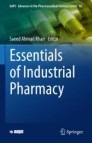
Essentials of industrial pharmacy
Presents various pharmaceutical processes and equipment that are frequently used for production of pharmaceutical dosage forms, along with quality control tests of these dosage forms. Pictorial/graphical illustrations provide easier understanding of complex pharmaceutical concepts, manufacturing processes of pharmaceutical dosage forms. Since it is imperative for pharmacy students to have a clear understanding of the basic concepts used in development of drugs into suitable and stable dosage forms.

Emerging Technologies in Knowledge Discovery and Data Mining ; PAKDD 2007 International Workshops, Nanjing, China, May 22-25, 2007, Revised Selected Papers
The objective of this volume is to offer the excellent presentations to the public, and to promote the study exchange among researchers worldwide.The first part of this volume contains industrial track. This track was organized to attract papers on new technology trends and real-world solutions in different industry sectors. The succeeding chapters include Data Mining for Biomedical Applications aimed at attracting top researchers, practitioners and students from around the world to discuss data mining applications in the field of bioinformatics

Embedded System Design : Topics, Techniques and Trends; IFIP TC10 Working Conference: International Embedded Systems Symposium (IESS), May 30 - June 1, 2007, Irvine (CA), USA
Embedded systems have gained an enormous amount of processing power and functionality. Many of the formerly external components can now be integrated into a single System-on-Chip. This tendency has resulted in a dramatic reduction in the size and cost of embedded systems. As a unique technology, the design of embedded systems is an essential element of many innovations. This book including design methodology, specification and modeling, embedded software and hardware synthesis, networks-on-chip, distributed and networked systems, and system verification and validation. Particular emphaisis is paid to automotive and medical applications. A set of actual case studies and special aspects in embedded system design are included as well.
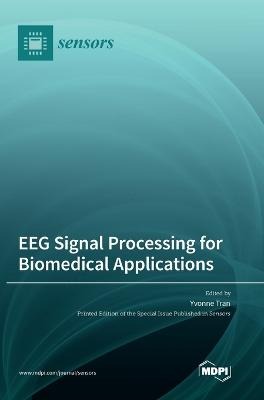
EEG signal processing for biomedical applications
Focuses on electroencephalography (EEG) signal processing in biomedical engineering applications. EEG signals are used widely in clinical and research settings to provide cognitive and emotional state information. In addition to capturing complex neural patterns at high speeds, EEG signals are a reliable and non-invasive way of measuring the electrical activity in the brain. By examining various novel analysis and signal processing methods, this collection of papers provides a better understanding of cognitive states and brain activity.

Digital Anatomy : Applications of Virtual, Mixed and Augmented Reality
This book offers readers fresh insights on applying Extended Reality to Digital Anatomy, a novel emerging discipline. Indeed, the way professors teach anatomy in classrooms is changing rapidly as novel technology-based approaches become ever more accessible. Recent studies show that Virtual (VR), Augmented (AR), and Mixed-Reality (MR) can improve both retention and learning outcomes.

Dental gold alloys and gold nanoparticles for biomedical applications
Focuses on recent advances in dental gold alloys and gold nanoparticles (GNPs) for biomedical applications. Dental gold alloys combine several highly desirable mechanical properties, such as high strength, ductility, and elasticity, with an extremely robust chemical stability in the mouth.

Deep Learning, Machine Learning and IoT in Biomedical and Health Informatics : Techniques and Applications
Examines and demonstrates state-of-the-art approaches for IoT and Machine Learning based biomedical and health related applications. This book aims to provide computational methods for accumulating, updating and changing knowledge in intelligent systems and particularly learning mechanisms that help us to induce knowledge from the data. It is helpful in cases where direct algorithmic solutions are unavailable, there is lack of formal models, or the knowledge about the application domain is inadequately defined. In the future IoT has the impending capability to change the way we work and live. These computing methods also play a significant role in design and optimization in diverse engineering disciplines. With the influence and the development of the IoT concept, the need for AI (artificial intelligence) techniques has become more significant than ever.

Data Warehousing and Knowledge Discovery ; Vol.4081 ; 8th International Conference, DaWaK 2006, Krakow, Poland, September 4-8, 2006, Proceedings
DaWaK aimed at providing the right and logical balance between data warehousing and knowledge discovery. In data warehousing the papers cover different research problems, such as advanced techniques in OLAP visuali- tion and multidimensional modelling, innovation of ETL processes and integration problems, materialized view optimization, very large data warehouse processing, data warehouses and data mining applications integration, data warehousing for real-life applications, e. g. , medical applications and spatial applications. In data mining and knowledge discovery, papers are focused on a variety of topics from data streams analysis and mining, ontology-based mining techniques, mining frequent item sets, clustering, association and classification, patterns and so on.
Data Mining for Biomedical Applications ; PAKDD 2006 Workshop, BioDM 2006, Singapore, April 9, 2006, Proceedings
This book constitutes the refereed proceedings of the International Workshop on Data Mining for Biomedical Applications, BioDM 2006, held in Singapore in conjunction with the 10th Pacific-Asia Conference on Knowledge Discovery and Data Mining (PAKDD 2006). The 14 revised full papers presented together with 1 keynote talks were carefully reviewed and selected from 35 submissions. The papers are organized in topical sections on protein-protein interactions, database and search, bio data clustering, and in-silico diagnosis.

Computer recognition systems 2
Computer recognition systems are nowadays one of the most promising directions in artificial intelligence. This book presents actual comprehensive study of this field. It contains a collection of over one hundred carefully selected articles contributed by experts of pattern recognition. It reports on current research with respect to both methodology and applications. In particular, it includes the following sections: Features, learning and classifiers / Image processing and computer vision / Speech and word recognition / Medical applications / Various applications. This book is a great reference tool for scientists who deal with the problems of designing computer pattern recognition systems. Its target readers can be the as well researchers as students of computer science, artificial intelligence or robotics.

Computational Discovery of Scientific Knowledge : Introduction, Techniques, and Applications in Environmental and Life Sciences
Advances in technology have enabled the collection of data from scientific observations, simulations, and experiments at an ever-increasing pace. For the scientist and engineer to benefit from these enhanced data collecting capabilities, it is becoming clear that semi-automated data analysis techniques must be applied to find the useful information in the data. Computational scientific discovery methods can be used to this end: they focus on applying computational methods to automate scientific activities, such as finding laws from observational data. In contrast to mining scientific data, which focuses on building highly predictive models, computational scientific discovery puts a strong emphasis on discovering knowledge represented in formalisms used by scientists and engineers, such as numeric equations and reaction pathways. This state-of-the-art survey provides an introduction to computational approaches to the discovery of scientific knowledge and gives an overview of recent advances in this area, including techniques and applications in environmental and life sciences.

Cold atmospheric plasma (CAP)
Plasma medicine is an innovative research field combining plasma physics, life science, and clinical medicine. It is mainly focused on the application cold atmospheric plasma (CAP) in therapeutic settings. Based on its ability to inactivate microorganisms but also to stimulate tissue regeneration, current medical applications are focused on the treatment of wounds and skin diseases. Since CAP is also able to inactivate cancer cells, its use in cancer therapy is expected to be the next field of clinical plasma application. Other promising applications are expected in oral medicine and ophthalmology

Mathematical Modeling of Biological Systems ; Vol. I : Cellular Biophysics, Regulatory Networks, Development, Biomedicine, and Data Analysis
This two-volume, interdisciplinary work is a unified presentation of a broad range of state-of-the-art topics in the rapidly growing field of mathematical modeling in the biological sciences. Highlighted throughout both works are mathematical and computational approaches to examine central problems in the life sciences, ranging from the organizational principles of individual cells to the dynamics of large populations.

Materials for medical applications : Principles and practices
Discusses advanced knowledge about the synthesis and application of materials in the medical field for diagnostic and therapeutic conditions. These materials have been extensively used in various biological and medical applications, especially in drug delivery, tumor screening, bioimaging, diagnosis, and therapies. Materials for Medical Applications provides comprehensive but concise information about materials and their medical applications. The readers will get information about the trends in materials and their medical applications, as well as current material-based products that are used in the medical field. The book also discusses how materials are tested in research laboratories, preclinical (animal) trials, and clinical (human) trials, and how material-based products go through various regulatory and safety phases before reaching patients. It also discusses topics such as materials delivery, imaging, and treatments for various diseases. It includes a chapter dedicated to regulatory guidelines and policies in the application of nanomaterials and will include current clinical trial information on the materials. Finally, the book has topics such as health safety, toxicity, dosages, and long-term implications of materials.

Marine bioactive molecules for biomedical and pharmacotherapeutic application
Explores cutting-edge research on the discovery and application of marine bioactive molecules for biomedical and pharmacotherapeutic purposes. The book begins by delving into the bioprospection of marine sponge microbiomes for bioactive metabolites using advanced metagenomics tools. It then explores metagenome mining approaches for the discovery of marine microbial natural products. The use of marine-derived fungi as a source of anticancer secondary metabolites is also discussed. The book then turns to the biomedical applications of marine-derived biomaterials, including marine biopolymers in tissue engineering and regenerative medicine. Marine-derived pharmaceuticals and polymeric nanostructures for cancer treatment are also examined.
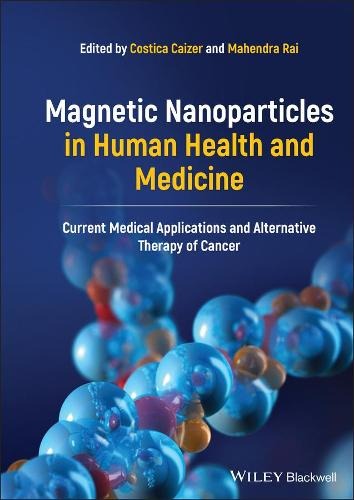
Magnetic nanoparticles in human health and medicine : Current medical applications and alternative therapy of cancer
Progress in improving diagnosis by magnetic resonance imaging (MRI) and using non-invasive and non-toxic magnetic nanoparticles for targeted drug delivery. Focusing on cancer diagnosis and therapy, the book covers both fundamental principles and advanced theoretical and experimental research on the magnetic properties, biocompatibilization, biofunctionalization, and application of magnetic nanoparticles in nanobiotechnology and nanomedicine.
Machine learning for neurodegenerative disorders : advancements and applications
Explores the application of machine learning to the understanding, early diagnosis, and management of neurodegenerative disorders. With a specific focus on its role in ongoing clinical trials, the book covers essential topics such as data collection, pre-processing, feature extraction, model development, and validation techniques. It delves into the applications of neuroimaging techniques like magnetic resonance imaging (MRI), computed tomography (CT), and positron emission tomography (PET) in the diagnosis and understanding of neurodegenerative disorders. Additionally, the book examines various machine-learning algorithms employed for biomarker discovery in neurodegenerative disorders. It highlights the role of neuroinformatics and big data analysis in advancing the understanding and management of neurodegenerative disorders. Furthermore, the book reviews future prospects and presents the ethical considerations and regulatory challenges associated with implementing machine learning approaches in the diagnosis, treatment, and prevention of neurodegenerative disorders.

Machine learning for biomedical application
Biomedicine is a multidisciplinary branch of medical science that consists of many scientific disciplines, e.g., biology, biotechnology, bioinformatics, and genetics; moreover, it covers various medical specialties. In recent years, this field of science has developed rapidly. This means that a large amount of data has been generated, due to (among other reasons) the processing, analysis, and recognition of a wide range of biomedical signals and images obtained through increasingly advanced medical imaging devices. The analysis of these data requires the use of advanced IT methods, which include those related to the use of artificial intelligence, and in particular machine learning. It is a summary of the Special Issue “Machine Learning for Biomedical Application”, briefly outlining selected applications of machine learning in the processing, analysis, and recognition of biomedical data, mostly regarding biosignals and medical images.
Java for Bioinformatics and Biomedical Applications
Illustrates how individual bioinformatics applications (such as BLAST and Genscan) can be stitched together into a pipeline so that users can direct the output of one tool (for example, gene predictions using Genscan) to perform further analysis (say, homology searching using BLAST).
