



الصفحة 2
الصفحة 2

Energy methods in structural mechanics : A comprehencive introduction to matrix and finite element methods of analysis
Provides a basic and clear introduction to the principles underlying finite elements and the computer based methods of the analysis of structures commonly used in industry. There can be a danger that, without such an understanding, engineers will use these computer based analysis tools as black boxes and accept results without being aware of the real significance of the information obtained.
Elements of Robotics
Bridges the gap between playing with robots in school and studying robotics at the upper undergraduate and graduate levels to prepare for careers in industry and research. Robotic algorithms are presented formally, but using only mathematics known by high-school and first-year college students, such as calculus, matrices and probability. Concepts and algorithms are explained through detailed diagrams and calculations.

Eigenvalues, Inequalities, and Ergodic Theory
A problem of broad interest – the estimation of the spectral gap for matrices or differential operators (Markov chains or diffusions) – is covered in this book. The area has a wide range of applications, and provides a tool to describe the phase transitions and the effectiveness of random algorithms. In particular, the book studies a subset of the general problem, taking some approaches that have, up till now, only appeared largely in the Chinese literature.Eigenvalues, Inequalities and Ergodic Theory serves as an introduction to this developing field, and provides an overview of the methods used, in an accessible and concise manner.

Constraint Theory : Multidimensional Mathematical Model Management
The enormous potential of digital computation to manage new complex systems is impeded by exponential increases in complexity. As the model's dimensionality increases from hundreds to thousands of variables, and as submodels constructed by diverse technical teams are integrated into the total model, the model is likely to become inconsistent and even more likely, the computational requests on the model become unallowable. This text analyzes the way constraint theory employs bipartite graphs and constraint matrices to detect and correct these well-posed problems. It also presents the process of locating the "kernel of constraint", literally trillions of times faster than a random search, determining consistency and compatibility within seconds.

Computational Electromagnetics
Computational Electromagnetics is a young and growing discipline, expanding as a result of the steadily increasing demand for software for the design and analysis of electrical devices. This book introduces three of the most popular numerical methods for simulating electromagnetic fields: the finite difference method, the finite element method and the method of moments. In particular it focuses on how these methods are used to obtain valid approximations to the solutions of Maxwell's equations, using, for example, "staggered grids" and "edge elements." The main goal of the book is to make the reader aware of different sources of errors in numerical computations, and also to provide the tools for assessing the accuracy of numerical methods and their solutions. To reach this goal, convergence analysis, extrapolation, von Neumann stability analysis, and dispersion analysis are introduced and used frequently throughout the book. Another major goal of the book is to provide students with enough practical understanding of the methods so they are able to write simple programs on their own. To achieve this, the book contains several MATLAB programs and detailed description of practical issues such as assembly of finite element matrices and handling of unstructured meshes.

Mathematical methods for engineers and scientists 1 : Complex analysis, determinants and matrices
Pedagogical insights gained through 30 years of teaching applied mathematics led the author to write this set of student oriented books. Topics such as complex analysis, matrix theory, vector and tensor analysis, Fourier analysis, integral transforms, ordinary and partial differential equations are presented in a discursive style that is readable and easy to follow.
Mathematical Formulas for Economists
This collection of formulas constitutes a compendium of mathematics for eco nomics and business. It contains the most important formulas, statements and algorithms in this significant subfield of modern mathematics and addresses primarily students of economics or business at universities, colleges and trade schools. But people dealing with practical or applied problems will also find this collection to be an efiicient and easy-to-use work of reference. First the book treats mathematical symbols and constants, sets and state ments, number systems and their arithmetic as well as fundamentals of com binatorics. The chapter on sequences and series is followed by mathematics of finance, the representation of functions of one and several independent vari ables, their differential and integral calculus and by differential and difference equations. In each case special emphasis is placed on applications and models in economics. The chapter on linear algebra deals with matrices, vectors, determinants and systems of linear equations. This is followed by the representation of struc tures and algorithms of linear programming. Finally, the reader finds formu las on descriptive statistics (data analysis, ratios, inventory and time series analysis), on probability theory (events, probabilities, random variables and distributions) and on inductive statistics (point and interval estimates, tests). Some important tables complete the work.
Mathematical Analysis : Linear and Metric Structures and Continuity
The book is divided into three parts. The first part introduces the basic ideas of linear and metric spaces, including the Jordan canonical form of matrices and the spectral theorem for self-adjoint and normal operators. The second part examines the role of general topology in the context of metric spaces and includes the notions of homotopy and degree. The third and final part is a discussion on Banach spaces of continuous functions, Hilbert spaces and the spectral theory of compact operators.
Logica Universalis : Towards a General Theory of Logic
Modern logic has been intimately connected with algebra since its origins in figures such as Boole, De Morgan, and Peirce. But while universal algebra is a long recognized field, universal logic has only recently been named as such. This is perhaps because classical logic was until relatively recently taken by many as the "one true logic". But with the proliferation of special purpose non-classical logics in recent years, universal logic is clearly a field whose time has come. This book contains many excellent papers demonstrating the value of this approach.
Logica Universalis : Towards a General Theory of Logic
Signifies the arrival of a new renaissance in logic, a new revival not only of logic, but of the vision of logic as a unifying tool for science as a whole, including mathematics, physics, cosmology, computer science and AI. The book and the vision behind it give logic, conceived as a scientific study of rationality, new unifying power, new perspectives, and new horizons.Universal Logic is not a new logic, but a general theory of logics, considered as mathematical structures. The name was introduced about ten years ago, but the subject is as old as the beginning of modern logic: Alfred Tarski and other Polish logicians such as Adolf Lindenbaum developed a general theory of logics at the end of the 1920s based on consequence operations and logical matrices. The subject was revived after the flowering of thousands of new logics during the last thirty years: there was a need for a systematic theory of logics to put some order in this chaotic multiplicity.
Linear Models and Generalizations : Least Squares and Alternatives
Gives an up-to-date account of the theory and applications of linear models. The book can be used as a text for courses in statistics at the graduate level and as an accompanying text for courses in other areas. Some of the highlights in this book are as follows. A relatively extensive chapter on matrix theory (Appendix A) provides the necessary tools for proving theorems discussed in the text and offers a selection of classical and modern algebraic results that are useful in research work in econometrics, engineering, and optimization theory. The matrix theory of the last ten years has produced a series of fundamental results aboutthe de?niteness ofmatrices,especially forthe di?erences ofmatrices, which enable superiority comparisons of two biased estimates to be made for the ?rst time. We have attempted to provide a uni?ed theory of inference from linear models with minimal assumptions

Biomineralization : From molecular and nano-structural analyses to environmental science
Over the past 45 years, biomineralization research has unveiled details of the characteristics of the nano-structure of various biominerals; the formation mechanism of this nano-structure, including the initial stage of crystallization; and the function of organic matrices in biominerals, and this knowledge has been applied to dental, medical, pharmaceutical, materials, agricultural and environmental sciences and paleontology. As such, biomineralization is an important interdisciplinary research area, and further advances are expected in both fundamental and applied research.
Applications of random matrices in physics
Random matrices are widely and successfully used in physics for almost 60-70 years, beginning with the works of Dyson and Wigner. Although it is an old subject, it is constantly developing into new areas of physics and mathematics. It constitutes now a part of the general culture of a theoretical physicist. Mathematical methods inspired by random matrix theory become more powerful, sophisticated and enjoy rapidly growing applications in physics. Recent examples include the calculation of universal correlations in the mesoscopic system, new applications in disordered and quantum chaotic systems, in combinatorial and growth models, as well as the recent breakthrough, due to the matrix models, in two dimensional gravity and string theory and the non-abelian gauge theories. The book consists of the lectures of the leading specialists and covers rather systematically many of these topics.

Applications of Mass Spectrometry in Life Safety
MS is continuously developing as one of the most re- able analytical method for elucidating the structure of molecules originating from various biological matrices. The potential of MS for high-sensitive structural a- lyses became unsurpassable after the introduction of electrospray (ESI) and matrix assisted laser/desorption ionization (MALDI) methods, on one hand, and the pos- bility to deduce in detail unknown biopolymer structures by highly accurate mo- cular mass measurement followed by sequencing using dissociation techniques based on multiple stage MS, on the other.
Analysis of Toeplitz Operators
Since the late 1980s, Toeplitz operators and matrices have remained a feld of extensive research and the development during the last nearly twenty years is impressive. One encounters Toeplitz matrices in plenty of applications on the one hand, and Toeplitz operators con?rmed their role as the basic elementary building blocks of more complicated operators on the other. Several monographs on Toeplitz and Hankel operators were written d- ing the last decade. These include Peller’s grandiose book on Hankel ope- tors and their applications and Nikolski’s beautiful easy reading on operators, functions, and systems, with emphasis on topics connected with the names of Hardy, Hankel, and Toeplitz.
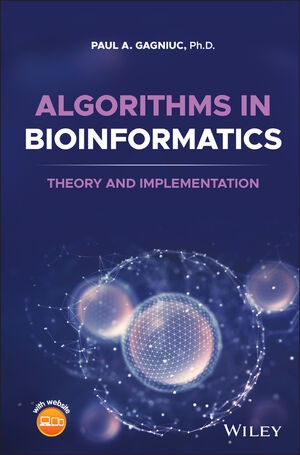
Algorithms in Bioinformatics : Theory and Implementation
Explores a comprehensive and insightful treatment of the practical application of bioinformatic algorithms in a variety of fields. Delivers a fulsome treatment of some of the main algorithms used to explain biological functions and relationships. It introduces readers to the art of algorithms in a practical manner which is linked with biological theory and interpretation. The book covers many key areas of bioinformatics, including global and local sequence alignment, forced alignment, detection of motifs, Sequence logos, Markov chains or information entropy. Other novel approaches are also described, such as Self-Sequence alignment, Objective Digital Stains (ODSs) or Spectral Forecast and the Discrete Probability Detector (DPD) algorithm. Readers will also benefit from the inclusion of: A detailed presentation of new methods, such as Self-sequence alignment, Objective Digital Stains and Spectral Forecast ; A treatment of sequence alignment, including local sequence alignment, global sequence alignment and forced sequence alignment with full implementations ; Discussions of position-specific weight matrices, including the count, weight, relative frequencies, and log-likelihoods matrices ; A detailed presentation of the methods related to Markov Chains as well as a description of their implementation in Bioinformatics and adjacent fields ; An examination of information and entropy, including sequence logos and explanations related to their meaning ; A chapter on philosophical transactions that allows the reader a broader view of the prediction process ; Extensive worked examples with detailed case studies that point out the meaning of different results
Algebra lineare = Linear Algebra : per tutti
Provides the first mathematical tools related to a chapter of science called Linear Algebra. The notes were written by a mathematician who tried to get out of his character to meet a wide audience. The challenge is to make accessible to all the first rudiments of a fundamental knowledge for science and technology.
Advanced Multivariate Statistics with Matrices
Presents important tools and techniques for treating problems in m- ern multivariate statistics in a systematic way. The ambition is to indicate new directions as well as to present the classical part of multivariate statistical analysis in this framework.

Adipose-derived stem cells : Methods and protocols
Discusses of the latest technology and advancements in the field of human-derived ASC and SVF. The chapters in this book are organized into four parts. Part One focuses on human ASC’s isolation, characterization, and differentiation. Part Two describes the isolation and characterization of ASC and SVF from canine, feline, and murine tissues. Part Three looks at hydrogels, scaffolds, and microphysiological systems, and Part Four talks about the new assays and applications using ASC. Written in the highly successful Methods in Molecular Biology series format, chapters include introductions to their respective topics, lists of the necessary materials and reagents, step-by-step, readily reproducible laboratory protocols, and tips on troubleshooting and avoiding known pitfalls.
